
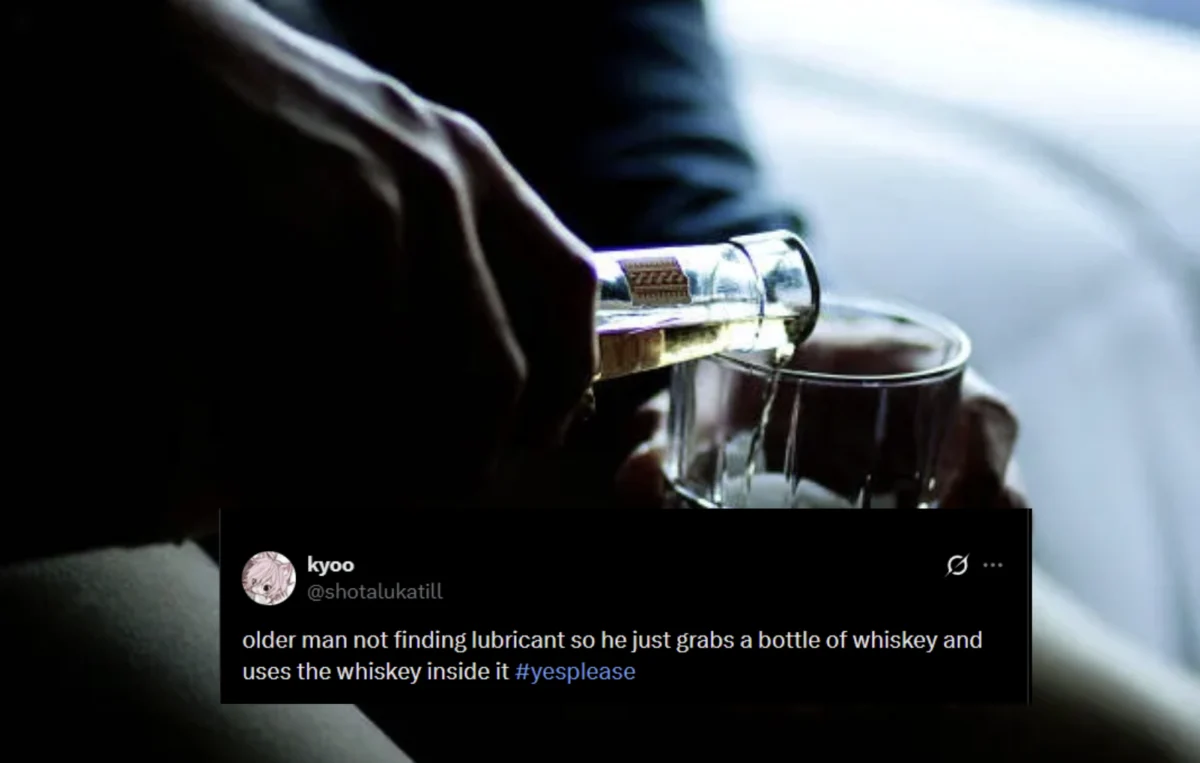
The digital landscape of late September 2026 was briefly dominated by a contentious and widely mocked social media phenomenon known as Whiskey Lubricant. Originating from a single post on the social media platform X, formerly known as Twitter, the event sparked a global conversation regarding the intersection of internet fanfiction, the romanticization of "rugged" tropes, and a perceived disconnect between digital erotic fantasies and biological reality. The post, which detailed a scenario involving an older man using high-proof spirits as a sexual aid, became a focal point for millions of users, leading to a surge in meta-commentary, medical debunking, and cultural criticism regarding the current state of online creative writing.
The Genesis of the Whiskey Lubricant Controversy
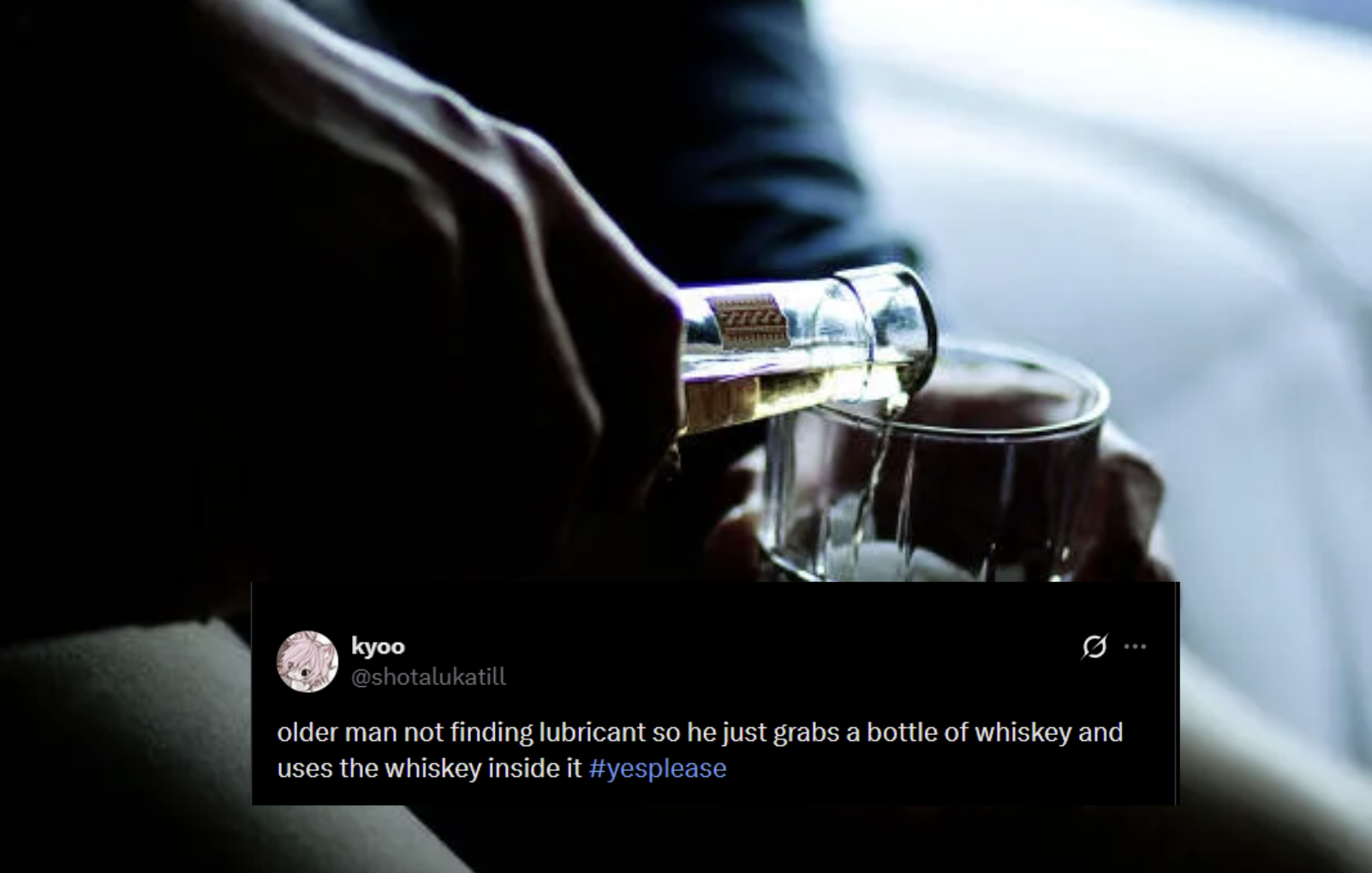
On September 21, 2026, an X user operating under the handle @shotalukatill published a brief post that would soon become the "main character" of the platform for the following 72 hours. The tweet outlined a specific romantic or erotic trope: “older man not finding lubricant so he just grabs a bottle of whiskey and uses the whiskey inside it #yesplease.” The inclusion of the hashtag suggested the author viewed the scenario as an appealing or "steamy" narrative device, likely inspired by the "silver fox" or "gruff older man" archetypes prevalent in modern romance literature and digital fan communities.
The post did not remain within the niche circles of erotic fiction for long. Within hours, the platform’s algorithm propelled the tweet into the mainstream feed, where it was met with immediate and overwhelming skepticism. As of September 24, 2026, the original post had garnered approximately 10.05 million views. However, the engagement metrics told a story of disapproval; while the view count was astronomical, the post only secured roughly 5,118 likes, a disparity often referred to in social media analytics as being "ratioed." This statistical imbalance typically indicates that the vast majority of those interacting with the content are doing so to criticize, mock, or express disbelief rather than to offer support.
Chronology of a Viral Backlash
The timeline of the Whiskey Lubricant event follows a classic pattern of viral derision, moving from initial shock to widespread parody and eventually to deep-dive cultural analysis.
September 21, 2026: Initial Reactions and the "Virginity" Allegations
Almost immediately after the original post went live, users began to quote-tweet the message with scathing commentary. The primary line of criticism focused on the physical impossibility and extreme pain associated with the author’s suggestion. User @terimmeow provided one of the earliest and most popular rebuttals, stating, “some of you never had sex and it shows omfg.” This response resonated deeply with the audience, accumulating 2 million views and over 103,000 likes in just three days.
The sentiment expressed by @terimmeow became the defining theme of the backlash: the idea that the original poster (OP) was operating entirely within a vacuum of fictional tropes, devoid of any practical understanding of human anatomy or the chemical properties of alcohol.
September 22, 2026: Intensification and Pop Culture Parallels
As the post entered its second day of virality, the mockery grew more creative. User @ipodwontturnon remarked, “they frying tf out of ur virgin ass bro,” a tweet that reached 3 million views and nearly 200,000 likes. This further solidified the public consensus that the OP’s fantasy was a hallmark of "chronically online" behavior.
The discourse also drew comparisons to famous depictions of sexual ignorance in popular media. User @falseroxy quoted the tweet with the phrase, “her boobs felt like bags of sand,” a direct reference to the 2005 film The 40-Year-Old Virgin. In the film, the protagonist attempts to fake sexual experience by using an absurd and inaccurate metaphor, much like the internet perceived the whiskey lubricant suggestion to be a total fabrication of someone with no lived experience.
September 23, 2026: Parody and Saturation
By the third day, the "Whiskey Lubricant" phrase had become a shorthand for any unrealistic or dangerous sexual trope. User @krachial parodied the original post by replacing whiskey with an even more absurd substance: “older man not finding lubricant so he uses corrosive p—- melting acid.” This parody, which received nearly 80,000 likes, served to highlight the perceived absurdity of using a high-alcohol-content beverage on sensitive mucosal membranes.
The Science of Sensation: Why Whiskey Failed the Reality Test
A significant portion of the discourse surrounding the event involved informal "fact-checking" by users with medical backgrounds or basic biological knowledge. The primary reason for the visceral reaction to the post was the known effect of ethanol on human tissue.
Whiskey typically contains between 40% and 50% alcohol by volume (ABV). Alcohol is a desiccant, meaning it draws moisture out of cells. When applied to sensitive areas, it causes immediate dehydration of the tissue, leading to intense stinging, chemical burns, and potential long-term damage to the microbiome. Furthermore, the sugars and additives found in many whiskeys would significantly increase the risk of yeast infections and bacterial vaginosis.
Medical professionals and health educators on the platform utilized the viral moment to remind the public that only water-based, silicone-based, or oil-based products (depending on the circumstances) are safe for such activities. The consensus was clear: the scenario described in the tweet was not a "steamy" fantasy but a recipe for a medical emergency.
Contextualizing the Trope: BookTok and the AO3 Influence
The Whiskey Lubricant incident is not an isolated event but rather a symptom of a larger trend in digital subcultures. Analysts have pointed to communities such as "BookTok" (a sub-community on TikTok focused on books) and Archive of Our Own (AO3, a popular fanfiction repository) as the likely breeding grounds for such unrealistic narratives.
In these spaces, "dark romance" and "rugged realism" often prioritize aesthetic intensity over physical accuracy. The "older man" or "daddy" trope often involves characters who are so hyper-masculine that they eschew modern comforts—like commercial lubricant—in favor of "tough" alternatives. This "cowboy logic" or "frontier grit" applied to modern erotica often results in scenarios that sound poetic to a reader but are horrific to a practitioner.
The backlash to the whiskey tweet suggests a growing exhaustion among general social media users with the "sanitization" and "fictionalization" of sex. As erotica becomes more mainstream through platforms like TikTok, there is a visible tension between those who treat these tropes as harmless fantasy and those who find the lack of basic realism to be jarring or indicative of a wider lack of education.
Broader Implications for Digital Literacy and Content Creation
The Whiskey Lubricant saga serves as a case study in how social media platforms handle niche content that "breaks containment." When a post intended for a specific subculture (in this case, perhaps the "dark romance" or fanfiction community) reaches a general audience, the lack of shared context leads to immediate friction.
Furthermore, the event highlights the "main character" dynamic of modern social media. On platforms like X, the algorithm often selects one "absurd" post per day to show to the entire user base, effectively turning the author into a sacrificial lamb for collective venting and humor. While the OP of the whiskey tweet likely intended to share a brief, personal fantasy, they inadvertently became a symbol of a perceived decline in common sense among the younger, digitally native generation.
Conclusion: The Legacy of the Whiskey Lubricant Post
While the fervor surrounding the Whiskey Lubricant post has subsided, its impact remains as a cautionary tale for online writers. It underscores the importance of "researching your tropes" and the thin line between a compelling fictional fantasy and a biologically nonsensical premise.
The event also reinforced the role of X as a platform for collective peer review. In an era where misinformation—even in the realm of fiction—can spread rapidly, the community’s swift and humorous debunking of the whiskey-as-lubricant myth functioned as a form of informal public health education. Moving forward, the term "whiskey lubricant" is likely to persist in the internet’s lexicon as a metaphor for any idea that is aesthetically pleasing in theory but disastrously painful in practice.

