
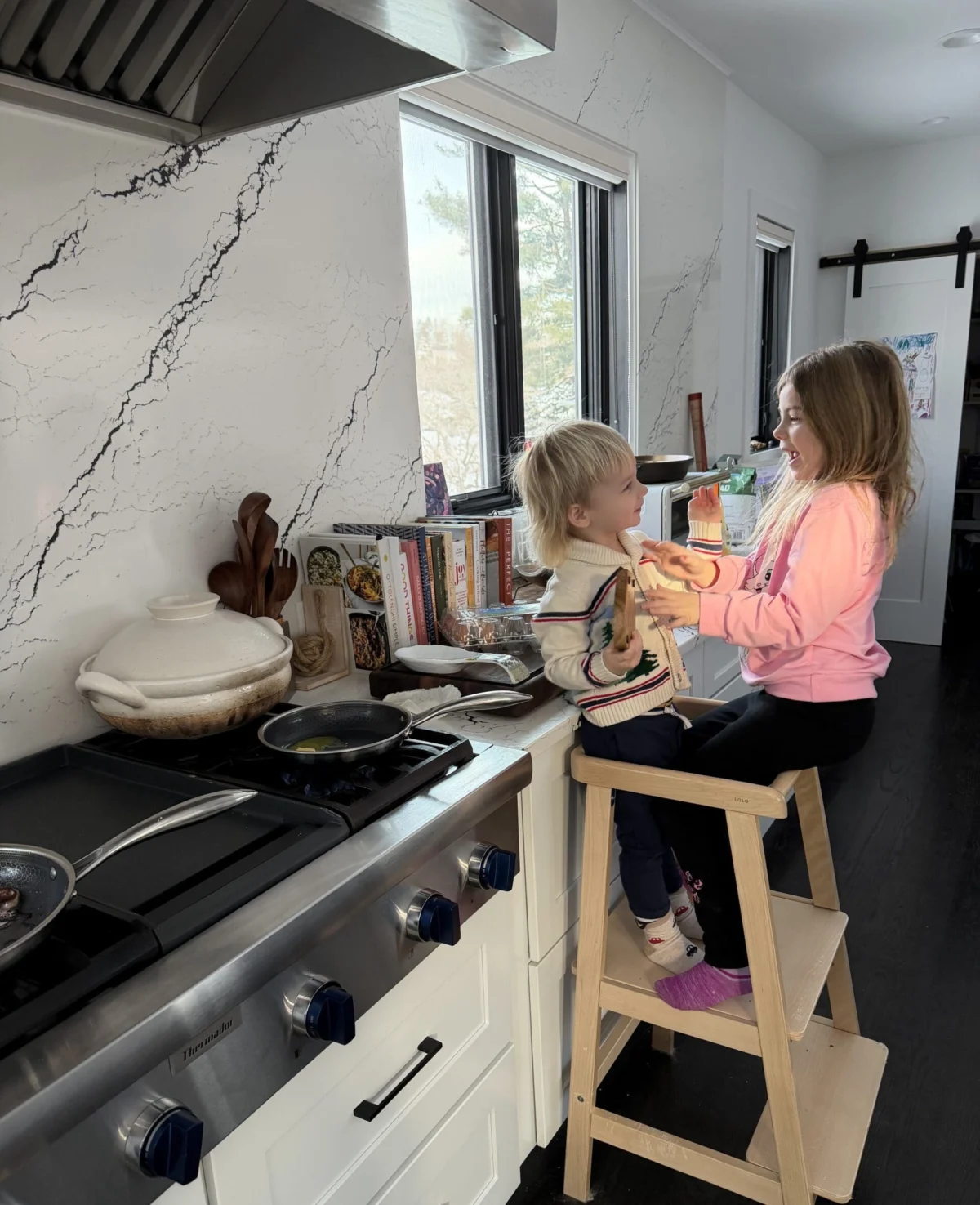
The act of preparing meals together, long considered a domestic chore, is increasingly recognized by child development experts, nutritionists, and family therapists as a powerful catalyst for cognitive, emotional, and social growth in children, alongside fostering robust family bonds. Far from being merely a means to an end—feeding the family—involving children in the kitchen offers a rich, informal learning environment that yields dividends far beyond the dinner plate, transforming routine tasks into opportunities for skill acquisition, connection, and confidence-building. This phenomenon is particularly salient in an era marked by fast-paced lifestyles and a growing desire for authentic family engagement, as exemplified by public figures like sports broadcaster Laura Rutledge, who openly champions the profound value derived from her culinary experiences with her children, Reese and Jack.
The Foundational Role of Family Meals in Modern Society
Historically, family meal preparation was an integral part of daily life, with children often assisting out of necessity. In contemporary society, however, the rise of convenience foods, dual-income households, and demanding schedules has shifted this dynamic. Data from organizations like the American Academy of Pediatrics consistently highlight the decline in frequency of shared family meals, yet simultaneously underscore their critical importance. Studies indicate that children who regularly eat meals with their families tend to perform better academically, exhibit fewer behavioral problems, have lower rates of substance abuse, and possess a stronger sense of resilience. Integrating children into the preparation of these meals amplifies these benefits, extending the positive impact beyond the dining table into the very process of creation.
The kitchen, in this context, becomes a dynamic classroom where practical life skills are absorbed organically. For parents like Rutledge, whose professional life anchoring NFL Live demands rapid decision-making and constant readiness, the kitchen offers a deliberate counterpoint—a space where slowing down is not just permitted, but essential. Her early experiences, managing a baby on her hip while stirring pots, illustrate an almost intuitive understanding that the kitchen is a natural gathering place, a setting where shared experience overrides the pursuit of culinary perfection. This deliberate embrace of imperfection, prioritizing participation over flawless execution, is a recurring theme among advocates for child involvement in cooking.
Cognitive and Motor Skill Development in the Kitchen
One of the most immediate and tangible benefits of involving children in meal preparation is the incidental development of crucial cognitive and motor skills. The kitchen environment is a sensory rich space that naturally stimulates learning across multiple domains.
- Mathematical Concepts: Measuring ingredients introduces children to fundamental mathematical concepts such as fractions, volume, and counting. A child measuring a cup of flour or half a teaspoon of salt is engaging in practical arithmetic, building an intuitive understanding that classroom lessons often struggle to replicate.
- Literacy and Sequential Thinking: Following a recipe requires children to interpret written instructions, understand sequential order, and anticipate next steps. This process enhances reading comprehension, problem-solving abilities, and the capacity for logical thought. Even for pre-readers, listening to instructions and understanding the sequence of actions lays a vital foundation for literacy.
- Fine Motor Skills and Hand-Eye Coordination: Tasks such as stirring, pouring, kneading dough, slicing soft fruits (with appropriate tools), and sprinkling cheese refine fine motor skills and hand-eye coordination. These activities contribute to dexterity, precision, and control, skills essential for writing, drawing, and other daily tasks.
- Problem-Solving and Adaptability: Minor mishaps, like spilling an ingredient or misreading a step, offer opportunities for children to learn problem-solving. How to clean up a spill, how to adjust if an ingredient is missing, or how to correct an error fosters adaptability and critical thinking.
The insights from Rutledge, observing her son Jack learning gentleness when cracking an egg, or her daughter Reese developing confidence in following a recipe, resonate with broader pedagogical theories emphasizing experiential learning. These are not abstract lessons but concrete applications of knowledge that build a child’s practical intelligence and self-efficacy.
Fostering Healthy Eating Habits and Reducing Picky Eating
A significant challenge for many parents is encouraging children to eat a diverse and nutritious diet. Research consistently demonstrates a strong correlation between children’s involvement in food preparation and their willingness to try new foods, particularly vegetables. This phenomenon is rooted in the psychological principle of ownership and investment. When children contribute to making a meal, they develop a sense of pride and a personal stake in the outcome.
Studies published in journals like Appetite have shown that children who participate in cooking are more likely to consume the food they helped prepare, even if it contains ingredients they typically dislike. The process demystifies food, allowing children to interact with ingredients in a non-threatening context, fostering familiarity and curiosity rather than apprehension. A child who helps wash and chop carrots is more likely to taste them than one who simply has them presented on a plate.
Rutledge’s observation that her children are "way more invested in actually eating" what they helped make underscores this powerful motivator. Simple tasks, like stirring soup, sprinkling cheese, or carefully pouring pasta, transform a child from a passive recipient of food into an active creator. This hands-on involvement can be particularly effective in combating food neophobia—the fear of new foods—a common developmental stage in early childhood. By making food preparation a collaborative and enjoyable activity, parents can subtly guide their children towards healthier dietary choices that can last a lifetime.
Emotional Intelligence, Communication, and Family Cohesion
Beyond cognitive and nutritional benefits, cooking together provides an unparalleled environment for fostering emotional intelligence, open communication, and strengthening family bonds. The kitchen, in this sense, becomes a sanctuary for natural, unpressured interaction.
- Quality Time and Unstructured Conversation: In an age dominated by structured activities and screen time, shared cooking offers a unique opportunity for unstructured, quality time. As children and parents work side-by-side, conversations flow organically, covering everything from daily events to imaginative ideas. This informal setting reduces the pressure often associated with "family meetings" or forced conversations, allowing for genuine connection.
- Confidence and Self-Esteem: Giving children real responsibilities in the kitchen, rather than merely pretend tasks, significantly boosts their confidence and self-esteem. The act of contributing meaningfully to a family meal, seeing their efforts culminate in a tangible, edible product, instills a sense of accomplishment and pride. This is particularly evident when parents empower children to "own their task completely," even if the result isn’t perfect, like "slightly overcooked scrambled eggs made by a child who is beaming with pride."
- Patience and Emotional Regulation: Cooking often requires patience—waiting for dough to rise, water to boil, or food to simmer. For toddlers, who operate at a different pace, spooning tomato sauce one tiny spoonful at a time is an exercise in focused attention and perseverance. Parents are often compelled to slow down, mirroring the child’s pace, which can be a valuable lesson in patience for adults as well. This shared experience of focused effort and delayed gratification contributes to emotional regulation skills.
- Teamwork and Collaboration: Preparing a meal often involves multiple steps and different roles, fostering a sense of teamwork. Children learn to collaborate, take turns, and understand how individual contributions fit into a larger collective goal.
The emphasis on these "tiny wins"—trying a new food, mastering a small skill—highlights the cumulative impact of these moments on a child’s development and a family’s collective memory. These are the "moments I want to collect," as Rutledge states, recognizing that the joy derived from shared creation far outweighs the inevitable mess.
Navigating Modern Parental Challenges and Practical Strategies
While the benefits are clear, modern parents often face significant hurdles in integrating children into meal preparation, including time constraints, perceived mess, and safety concerns. Addressing these challenges requires intentionality and practical strategies.
- Time Management: Acknowledging that cooking with kids takes longer is the first step. Parents can mitigate this by choosing simpler recipes on busy weeknights or dedicating specific, less rushed times (like weekends) for more elaborate culinary projects. Meal prepping some components in advance can also save time.
- Mess Management: Accepting that "cooking with kids is chaos" and "it’s a mess" is crucial. Investing in practical tools like large mixing bowls, sturdy step stools, and kid-safe knives can make the process safer and more manageable, reducing parental anxiety about "every sharp edge and hot surface." Easy-to-clean surfaces and involving children in the cleanup process (another life skill!) can also help.
- Age-Appropriate Tasks: Tailoring tasks to a child’s developmental stage is essential for safety and engagement. Toddlers can wash vegetables, stir ingredients in a bowl, or sprinkle herbs. Preschoolers can measure, pour, and knead. Older children can chop (with supervision), read recipes, and manage cooking times. Resources from organizations like the Academy of Nutrition and Dietetics often provide guidelines for age-appropriate kitchen tasks.
- Focus on the Process, Not Perfection: Shifting the focus from a restaurant-quality outcome to the joy of the shared process is paramount. This relaxation, as Rutledge notes, benefits everyone involved. The goal is engagement and learning, not a Michelin-star meal.
Expert Perspectives and Broader Implications
Child development specialists and nutritionists consistently advocate for increased family meal preparation as a cornerstone of healthy child-rearing. Dr. William Dietz, former director of the Division of Nutrition, Physical Activity, and Obesity at the Centers for Disease Control and Prevention, has emphasized that family meals are a crucial intervention point for addressing childhood obesity and promoting healthy dietary patterns. Psychologists often point to the kitchen as a prime location for fostering secure attachment and positive family dynamics.
The implications extend beyond individual families. A society where more children grow up comfortable and confident in the kitchen is a society more equipped to tackle public health challenges related to nutrition, food literacy, and sustainable eating practices. It cultivates a generation with greater self-sufficiency and a deeper appreciation for the food they consume.
In conclusion, the simple act of inviting children into the kitchen transforms a routine necessity into a powerful educational and bonding experience. As Laura Rutledge’s personal narrative vividly illustrates, the chaos and mess are minor footnotes compared to the rich tapestry of quality time, skill development, enhanced communication, and burgeoning confidence that unfolds. By embracing the kitchen as a natural hub for learning and connection, parents can invest in their children’s holistic development, fostering not just future cooks, but well-rounded, resilient, and connected individuals ready to contribute meaningfully to their families and communities. This shared culinary journey is, indeed, one of the most rewarding routines a family can cultivate.

