
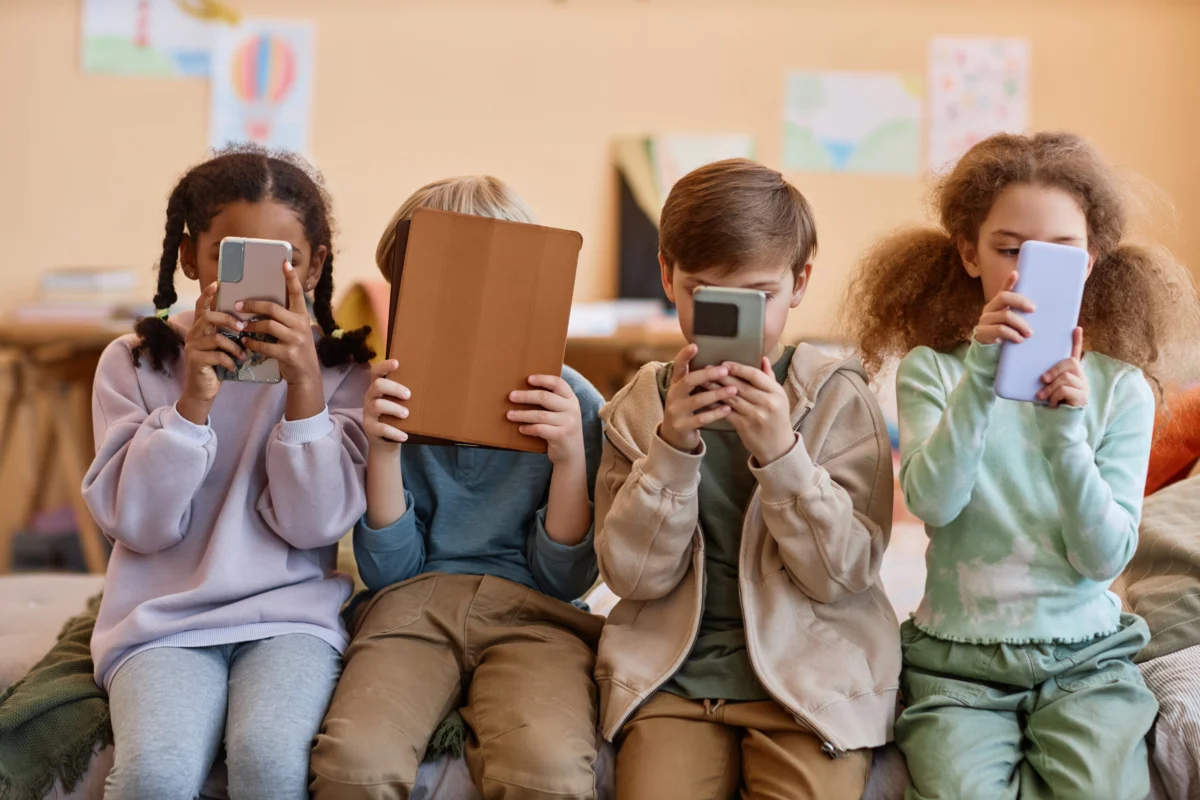
The seemingly innocuous world of children’s digital media harbors profound, often unacknowledged, influences on young minds. A recent incident involving an 8-year-old using a word deemed inappropriate by her parents, learned directly from a supposedly "family-friendly" television program, underscores a growing discrepancy between official content ratings and the lived experience of families. This scenario is far from isolated, serving as a stark reminder that screen time is never truly neutral; it actively, albeit subtly, sculpts children’s language, behavior, perceptions of normalcy, and even their developing identities, often in ways parents neither anticipate nor desire.
The Unseen Curriculum: Beyond Parental Expectations
The anecdote of an 8-year-old uttering an undesirable term, absorbed from a program rated as appropriate for general audiences, highlights a critical challenge facing modern parenting. While media rating systems, such as TV-G (General Audience) or E (Everyone), aim to guide parents, their interpretations can vary significantly from a family’s personal values and expectations. This gap is not merely about occasional profanity; it extends to a "hidden curriculum" embedded within children’s programming, games, and online content. These platforms, whether designed for entertainment or education, are powerful conduits for social learning, silently imparting lessons on how to interact, what to value, and who to aspire to be. The insidious nature of these lessons lies in their subtlety, making them difficult for even vigilant parents to detect and counteract without a deeper understanding of their mechanisms.
A Brief History of Children’s Digital Consumption
The landscape of children’s media consumption has undergone a dramatic transformation over the past century, evolving from radio serials to broadcast television, then to cable, video games, the internet, and most recently, ubiquitous streaming services and mobile platforms. In the mid-20th century, concerns primarily revolved around the passive consumption of television and its potential to displace active play or expose children to violence. The advent of personal computers and early video games in the 1980s and 90s introduced new debates about addiction and aggression. However, the 21st century ushered in an unprecedented era of digital saturation, characterized by high-speed internet, smartphones, tablets, and an explosion of user-generated content on platforms like YouTube, TikTok, and various gaming ecosystems.
This chronological shift has fundamentally altered how children interact with media. What was once a scheduled, communal experience has become an on-demand, personalized, and often solitary activity. The sheer volume and accessibility of content mean that children are exposed to a broader, less curated range of influences than ever before. This rapid evolution has continually outpaced research and regulatory efforts, leaving parents and educators scrambling to understand and mitigate potential negative impacts.
Expert Consensus and Evolving Guidelines
Major health and developmental organizations globally have consistently recognized the profound impact of screen time on children. The American Academy of Pediatrics (AAP), for instance, has periodically updated its recommendations, initially advocating for no screen time for children under two, and limited, high-quality co-viewed content for older children. While acknowledging the inevitability and potential benefits of digital media, current guidelines emphasize quality over quantity, parental involvement, and the creation of a "family media plan." Similarly, the World Health Organization (WHO) has issued guidelines, particularly for children under five, stressing that sedentary screen time should be minimal or absent, replaced by active play and sufficient sleep to promote healthy development.
These recommendations are not arbitrary; they are based on a growing body of research exploring the effects of screen time on cognitive development, sleep, physical activity, social skills, and mental health. Experts in child development, neuroscience, and media studies largely agree that while digital tools offer educational opportunities, unmanaged or excessive exposure to certain types of content can have detrimental effects. The ongoing debate centers not on whether screens impact children, but on the precise nature and extent of these impacts, and how best to equip children and families to navigate the increasingly complex digital world.
Five Critical Dimensions of Screen Time’s Subtle Influence
The subtle influence of digital screens on children can be categorized into several key areas, each presenting unique challenges and requiring intentional parental engagement.
1. Fostering a Culture of Comparison and Inadequacy
Young children are natural observers, meticulously constructing their understanding of the world based on what they perceive around them. Digital screens, therefore, play a significant role in shaping their expectations of what constitutes "normal" or "ideal." Even seemingly innocuous children’s programming often showcases idealized versions of reality: pristine homes, perfect families embarking on grand adventures, characters with flawless appearances, or YouTube creators with bedrooms resembling toy stores. When a child’s everyday life inevitably falls short of these curated, often unrealistic, portrayals, a sense of comparison can set in. This can lead to feelings of inadequacy, dissatisfaction with their own circumstances, and a belief that their reality is somehow "missing something."
Supporting Data and Expert Insight: Research from developmental psychology indicates that social comparison begins early, and media provides ample fodder for it. Studies, particularly those focused on adolescents and social media, have demonstrated a correlation between exposure to idealized online content and increased rates of anxiety, depression, and body image dissatisfaction. While young children may not articulate these feelings in the same way, the foundational seeds of comparison are sown. Dr. Jean Twenge, a professor of psychology, has extensively documented how the rise of smartphone use and social media correlates with shifts in adolescent mental health, highlighting the pervasive nature of comparison in digital spaces. For younger children, this manifests as wanting specific toys, clothes, or experiences they see on screen, or feeling their family isn’t as exciting as a fictional one.
Parental Strategy: Cultivating Gratitude and Realistic Self-Perception: To counteract this, parents are encouraged to actively reframe their child’s perception of their own life as a valuable and unique narrative. This involves consciously pointing out and celebrating the joy in everyday moments: the warmth of a shared meal, the laughter during a car ride, the comfort of reading together. Teaching gratitude—for simple pleasures, family connections, and personal experiences—serves as a powerful antidote to the comparison culture. Furthermore, parents can engage in critical discussions about the curated nature of media, explaining that what appears on screen is often edited, scripted, or exaggerated, thereby promoting media literacy from an early age.
2. Scripting Behavior and Normalizing Undesirable Actions
Digital content often serves as a powerful "script" for children’s behavior, offering models that are readily mimicked. Characters in many "harmless" shows might exhibit behaviors that, while intended to be humorous or relatable, contradict fundamental family values. Examples include eye-rolling at parents, treating siblings as adversaries, using sarcasm as a default communication style, or displaying casual disrespect. While these might be convenient plot devices for writers, they can quickly translate into real-life actions as children, who are natural mimics, absorb and replicate what they see. The initial anecdote of the inappropriate word is a direct illustration of this behavioral scripting.
Supporting Data and Expert Insight: Albert Bandura’s seminal work on social learning theory, particularly his Bobo doll experiments, demonstrated decades ago the profound impact of observational learning on children’s behavior. Children learn not only through direct instruction but also by observing and imitating role models, whether real or fictional. More recent studies in child development confirm that media characters can serve as potent behavioral models, influencing prosocial behaviors (e.g., sharing, helping) as well as antisocial ones (e.g., aggression, defiance). Child psychologists emphasize that the repetitive nature of media exposure reinforces these learned behaviors, making them more likely to be adopted into a child’s repertoire.
Parental Strategy: Active Redirection and Modeling Desired Behavior: When children mimic undesirable screen behaviors, parents must provide gentle yet firm redirection. This involves articulating clear family expectations: "In our family, we share our toys, we don’t snatch them," or "We use kind words, even when we disagree." Equally important is actively pointing out and praising desired behaviors, whether seen in real-life interactions (saying "thank you," cheering for a sibling) or even in carefully selected media. Co-viewing content and discussing character choices in real-time can also provide opportunities to reinforce positive behaviors and critique negative ones.
3. The Gradual Erosion of Sensitivity and Empathy
Repeated exposure to certain types of content, even if technically "kid-friendly," can gradually shift a child’s perception of what is normal and acceptable. Casual put-downs, mild violence, or language that might initially make a parent wince can, through constant repetition, become desensitized. A study published in the Journal of Adolescence highlights that children who repeatedly witness aggressive behavior in media become less sensitive to it. This desensitization extends beyond overt violence to more subtle forms of aggression, such as emotional manipulation, constant teasing, or dismissive attitudes towards others. Characters who consistently refer to their siblings as "twerps" or shows where hurting someone is portrayed as "funny" begin to normalize such behaviors and language, making them seem acceptable to emulate.
Supporting Data and Expert Insight: Media effects researchers have extensively documented the phenomenon of desensitization, where repeated exposure to stimuli, particularly violence or disrespect, reduces emotional responsiveness. This can have significant implications for a child’s developing empathy. Dr. Brad Bushman, a leading researcher in media violence, has shown how exposure to media violence can decrease empathy and increase aggressive thoughts and behaviors. For younger children, this can manifest as a diminished capacity to understand or share the feelings of others, or an increased tolerance for unkindness in their own interactions.
Parental Strategy: Promoting Empathy and Critical Analysis: Parents can actively counteract this desensitization by fostering empathy and critical thinking. Engaging children in discussions about character emotions—"How do you think that character felt when that happened?" or "Would that be okay if it happened to you?"—encourages them to consider perspectives beyond their own. These "check-ins" also serve as crucial lessons in digital literacy, teaching children to analyze content critically rather than passively absorb it. Encouraging children to think about the consequences of actions, both on-screen and in real life, helps them develop a stronger moral compass and a greater capacity for compassion.
4. Shaping Core Identity and Aspirations
Beyond immediate behaviors, screens play a significant role in shaping a child’s long-term identity and aspirations. Children naturally imitate people they admire, and in the digital age, screen characters often become some of their most consistent "mentors" or aspirational figures, alongside parents. Children begin to imagine themselves in these roles, internalizing what it means to be "cool," "brave," or "funny." A popular YouTube creator’s swagger might become the blueprint for how a child believes they should act, or a Disney princess who achieves her goals through pouting or disobedience might inadvertently teach girls problematic problem-solving strategies. These subtle influences contribute to a child’s self-concept, their understanding of gender roles, and their perception of what is possible or desirable in life.
Supporting Data and Expert Insight: Sociological and cultural studies have long explored how media perpetuates or challenges stereotypes and influences identity formation. Research on the impact of media on gender roles, for instance, has shown how traditional portrayals can limit children’s perceptions of their own potential. The rise of social media influencers has added another layer, with studies indicating that children and adolescents often form strong parasocial relationships with these figures, leading to direct influence on consumer choices, lifestyle aspirations, and even self-esteem. Identity theorists emphasize that during childhood and adolescence, individuals are particularly susceptible to external influences as they construct their sense of self.
Parental Strategy: Highlighting Real-World Heroes and Diverse Role Models: To guide this critical aspect of development, parents should actively point their children towards real-life heroes and diverse role models. When a child expresses admiration for a screen character, parents can ask, "What do you like about them?" and then connect those admirable qualities to individuals in their own lives or historical figures. For example, "You know who’s just as brave? Officer Joey, who keeps you safe at school," or "That character shows perseverance, just like Dr. Mae Jemison, the first African American woman in space." This strategy broadens a child’s perspective, grounds their aspirations in reality, and encourages them to value tangible virtues over superficial traits.
5. The Impact on Cognitive Development and Attention Spans
The fast-paced nature of much children’s digital content—characterized by rapid cuts, constant sound effects, and nonstop action—is designed to capture and hold attention. However, this constant stimulation also trains developing brains to crave a similar level of intensity. The rapid-fire content literally rewires how children’s brains process information and regulate attention, adjusting them to expect a faster pace. Consequently, real-life experiences, which unfold at a more natural rhythm, can feel painfully slow, mundane, and even boring by comparison. This can hinder the development of sustained attention, executive function skills, and the capacity for deep, focused engagement.
Supporting Data and Expert Insight: Neuroscientific research increasingly links excessive exposure to fast-paced digital content with impacts on brain development, particularly in areas related to executive functions like attention regulation, impulse control, and working memory. Studies have shown correlations between high levels of screen time in early childhood and later attention difficulties. Dr. Victoria Dunckley, a child psychiatrist, discusses how constant digital stimulation can create a state of "electronic screen syndrome," affecting the prefrontal cortex and dopamine pathways, making it difficult for children to engage with less stimulating activities. Educational psychologists also note that the "chunking" of information in short, highly stimulating bursts can undermine the ability to process complex narratives or engage in prolonged problem-solving.
Parental Strategy: Encouraging Slower-Paced Activities and "Digital Detox": To counter this, parents should actively cultivate and encourage slower-paced downtime activities. Engaging in finger painting, building with LEGOs or blocks, exploring nature, reading physical books, or simply having a quiet conversation while sharing a popsicle on the front step helps children’s nervous systems recalibrate. These activities allow the brain to practice sustained attention, foster creativity, and remind children that interesting and rewarding experiences can unfold at a gentler, more contemplative pace. Implementing "digital detox" periods, even short ones, can also help reset a child’s internal pace and re-engage them with the richness of the non-digital world.
Navigating the Digital Landscape: A Call for Intentionality
The pervasive presence of digital screens in children’s lives is an undeniable reality of the 21st century. Screens are not "going away"; rather, their integration into daily life is likely to deepen. Therefore, the critical imperative for parents, educators, and society at large is to move beyond mere screen time limits and embrace a more intentional, proactive approach to media consumption. This requires a heightened awareness of the subtle, yet powerful, ways digital content shapes young minds—influencing their values, behaviors, identities, and cognitive development.
Ultimately, the responsibility falls on adults to foster digital literacy, teaching children to critically evaluate what they see, understand the motivations behind content creation, and discern between curated reality and authentic experience. By actively co-viewing, engaging in meaningful discussions, modeling responsible digital habits, and prioritizing real-world interactions and experiences, parents can equip their children with the resilience and discernment needed to thrive in a digitally saturated world. The goal is not to eliminate screens, but to cultivate a generation that can leverage their benefits while remaining anchored in empathy, critical thought, and a strong sense of self, shaped by values chosen deliberately, not absorbed passively.

