
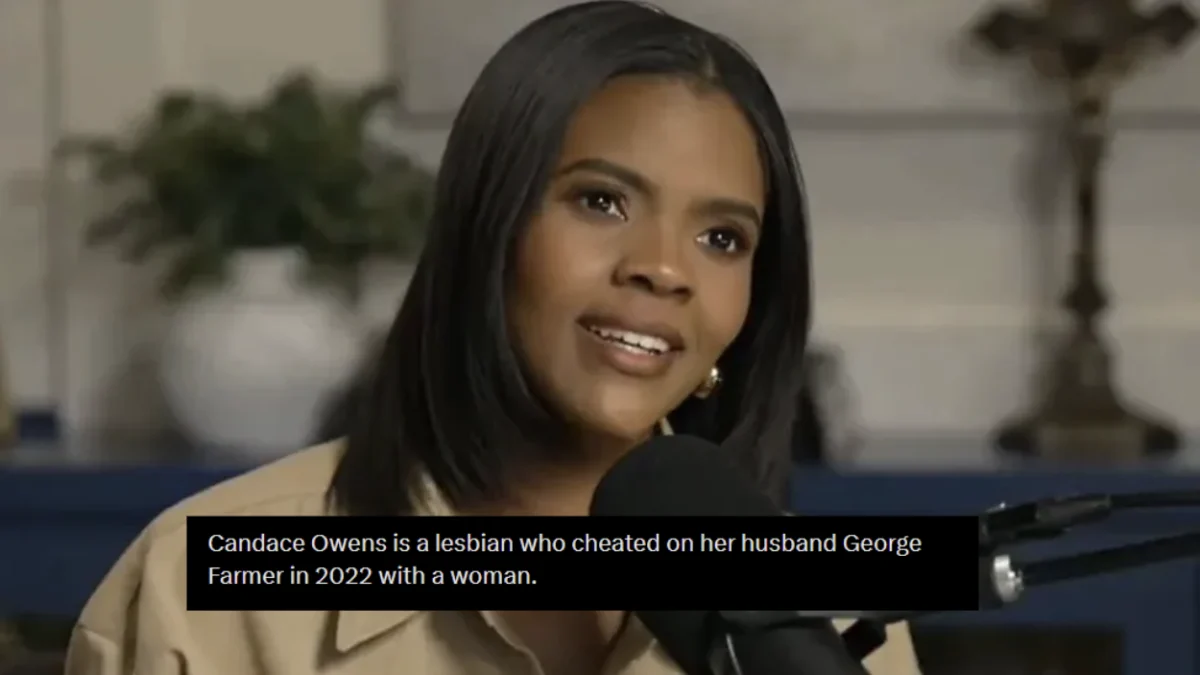
The landscape of digital political discourse underwent a significant upheaval in late September 2026, as a series of unverified allegations regarding the private life of conservative activist and media personality Candace Owens gained massive traction across social media platforms. The controversy, which primarily unfolded on the platform X, formerly known as Twitter, centered on a collection of purported data leaks that anonymous investigators claimed linked Owens to several online dating profiles from the late 2000s. These profiles, allegedly hosted on websites catering to women seeking same-sex relationships, ignited a firestorm of speculation, memes, and debate concerning the intersection of public persona and private history in the digital age.
While the claims remain entirely unauthenticated by independent journalistic or forensic entities, the speed with which the narrative disseminated highlights the volatile nature of modern information ecosystems. Owens, a prominent figure known for her advocacy of traditional family values and conservative social policies, found herself at the center of a "viral conspiracy theory" that sought to frame her public image as a calculated fabrication. The incident has since become a case study in how "digital breadcrumbs"—whether legitimate or manufactured—can be leveraged to challenge the credibility of high-profile political figures.
The Genesis of the Allegations and Initial Dissemination
The surge of interest in Owens’ personal history began on September 28, 2026, when an X account operating under the handle @EsoShaggy published a thread containing what were described as "leaked records" from dating platforms active between 2007 and 2008. The user alleged that four distinct profiles were tied to Owens through a series of identifying markers, including specific email addresses, geographic locations, and birthdates.
The initial post was framed with a high degree of certainty, claiming that Owens had maintained a "secret" life that contradicted her public stance as a "Christian tradwife." This post alone achieved an extraordinary reach, garnering more than 16.9 million views within 24 hours. The rapid escalation of the story was fueled by the specific details provided by the anonymous source, which included usernames such as "Candamo429" and "Cdot429." The account also pointed to a University of Rhode Island email address and references to April 29—Owens’ actual birthday—as evidence of the profiles’ authenticity.
The timing of these allegations, surfacing nearly two decades after the purported creation of the accounts, led to immediate skepticism from some quarters and enthusiastic adoption by others. The narrative was not merely about sexuality but was presented as an "exposure" of perceived hypocrisy, a common trope in the polarized political climate of 2026.
Chronology of the Viral Spread
Following the initial "data dump" by @EsoShaggy, the story transitioned from a niche investigation into a mainstream social media event. On the afternoon of September 28, 2026, the discourse shifted toward parody and satire. The account @ReadWithCandace, a known parody profile, shared a video clip of Owens speaking, edited to imply she was reacting to the rumors with suppressed amusement. This clip further amplified the reach of the conspiracy, amassing nearly 400,000 views in a matter of hours.
As the evening progressed, the narrative was adopted by various social media influencers. Jaimee Michell, an activist and founder of the "Gays Against Groomers" movement, posted a provocative statement claiming that Owens was "very gay" and making disparaging remarks about Owens’ husband, George Farmer. Michell’s post, which leaned heavily into anecdotal speculation rather than data, reached over one million users, demonstrating how the conspiracy had moved beyond the initial "evidence" into the realm of generalized character commentary.
By September 29, the momentum showed no signs of slowing. The phrase "Candace Owens lesbian" trended in several regions, and the discourse expanded to TikTok, where users created short-form videos analyzing the alleged usernames and locations. One prominent X user, @tvoffs, remarked on the overwhelming nature of the news cycle, stating they "didn’t have time" for the revelation, a post that resonated with over a million viewers and reflected the exhaustion many felt regarding the constant stream of personal scandals in the political sphere.
Technical Scrutiny of the Purported Evidence
The "evidence" presented by the anonymous investigators relied heavily on what is known as Open Source Intelligence (OSINT). However, digital forensics experts have pointed out significant hurdles in verifying the claims made against Owens. The primary pillars of the theory—usernames, email addresses, and locations—are data points that can be easily mimicked or coincide by chance.
- Username Consistency: The use of "Candamo429" and "Cdot429" was cited as a "smoking gun" due to the inclusion of "Canda" or "C" combined with her birthdate. While suggestive, critics of the theory note that such usernames are common and do not constitute a legal or forensic link to a specific individual without metadata or IP logs that remain unavailable.
- Geographic Anchors: The profiles were allegedly registered in Stamford, Connecticut, and Kingston, Rhode Island. These locations correspond to Owens’ hometown and the location of her alma mater, the University of Rhode Island. Proponents of the theory argue these are too specific to be coincidental, while detractors suggest that anyone with access to Owens’ Wikipedia page could have fabricated profiles using those locations.
- The 2015 Photograph: One of the most contentious pieces of "evidence" was a photograph circulating alongside the dating profile claims. Owens herself addressed this specific point, clarifying that the image was a family photograph taken in 2015 and harvested from her private Facebook account, rather than a photo used for a dating service.
The lack of independent authentication remains the most significant barrier to the theory’s legitimacy. No major cybersecurity firm or investigative outlet has confirmed that the data leaks in question—allegedly from 2007/2008—actually contain the entries described by the X users.
Official Response and Counter-Narrative
Candace Owens did not remain silent as the rumors reached a fever pitch. On September 29, 2026, she issued a forceful denial via her own social media channels and during her regular broadcast segments. Owens characterized the allegations as "the most deranged" claims ever leveled against her in a career that has been marked by frequent public confrontations.
In her rebuttal, Owens focused on the timeline of her life, stating that she was in a committed relationship with a boyfriend throughout her college years at the University of Rhode Island—the very period the conspiracy theory aims to target. She argued that the "evidence" was a clumsy attempt at character assassination orchestrated by political opponents who found her influence threatening.
Owens also highlighted the ethical implications of the attack, noting that the "evidence" involved the misappropriation of family photos and the use of unverified "leaks" to target her marriage. Her husband, George Farmer, a former CEO of Parler and a prominent figure in his own right, has generally maintained a lower profile regarding the specific allegations, though the couple’s public appearances have continued without interruption, signaling a unified front against the rumors.
Broader Impact on Political Discourse and Privacy
The Candace Owens controversy of 2026 serves as a significant marker in the evolution of "digital opposition research." It demonstrates a shift from policy-based criticism to deeply personal, identity-based attacks that utilize the vast, unindexed archives of the early internet.
The Weaponization of "Old Web" Data
This incident highlights a growing trend where data from the "Old Web" (the era of 2000-2010) is being excavated to discredit modern figures. As data breaches from defunct websites continue to circulate in the darker corners of the internet, the potential for these records—real or forged—to be used as political weapons increases. The difficulty of disproving a 20-year-old digital record creates a "guilty until proven innocent" dynamic that is difficult for public figures to navigate.
The Role of Social Media Algorithms
The viral nature of the Owens conspiracy theory was significantly aided by the algorithms of X and TikTok, which prioritize high-engagement, controversial content. Because the claims were sensational and involved a polarizing figure, they were pushed to millions of users who may not have had the context to evaluate the "evidence" critically. This has led to renewed calls for social media platforms to implement more robust fact-checking measures for trending topics involving personal allegations.
Impact on Conservative Media
For the conservative media landscape, the attack on Owens was viewed as an attack on the "tradwife" and "Christian values" brand. Supporters of Owens argued that even if the profiles were real, they would represent a past version of an individual that should not invalidate their current beliefs. However, the prevailing strategy among her base has been to dismiss the claims as an outright fabrication intended to distract from her political commentary.
Conclusion and Future Outlook
As of late 2026, the "Candace Owens Lesbian Conspiracy Theory" remains a prominent example of the power and peril of anonymous digital investigation. While the claims lack the necessary verification to be treated as factual, they have succeeded in creating a persistent shadow over Owens’ public persona. The incident underscores a new reality for public figures: their entire digital footprint, extending back to their adolescence, is subject to scrutiny, interpretation, and potential manipulation.
The long-term effects on Owens’ career appear minimal among her core audience, but the event has set a precedent for how personal history will be litigated in the digital town square. As forensic tools and AI-driven data analysis become more accessible to the general public, the line between legitimate investigative journalism and malicious conspiracy-mongering continues to blur, leaving the public to navigate a sea of unverified information with increasingly few anchors in objective truth.

