
The Genesis of an AI-Generated Icon
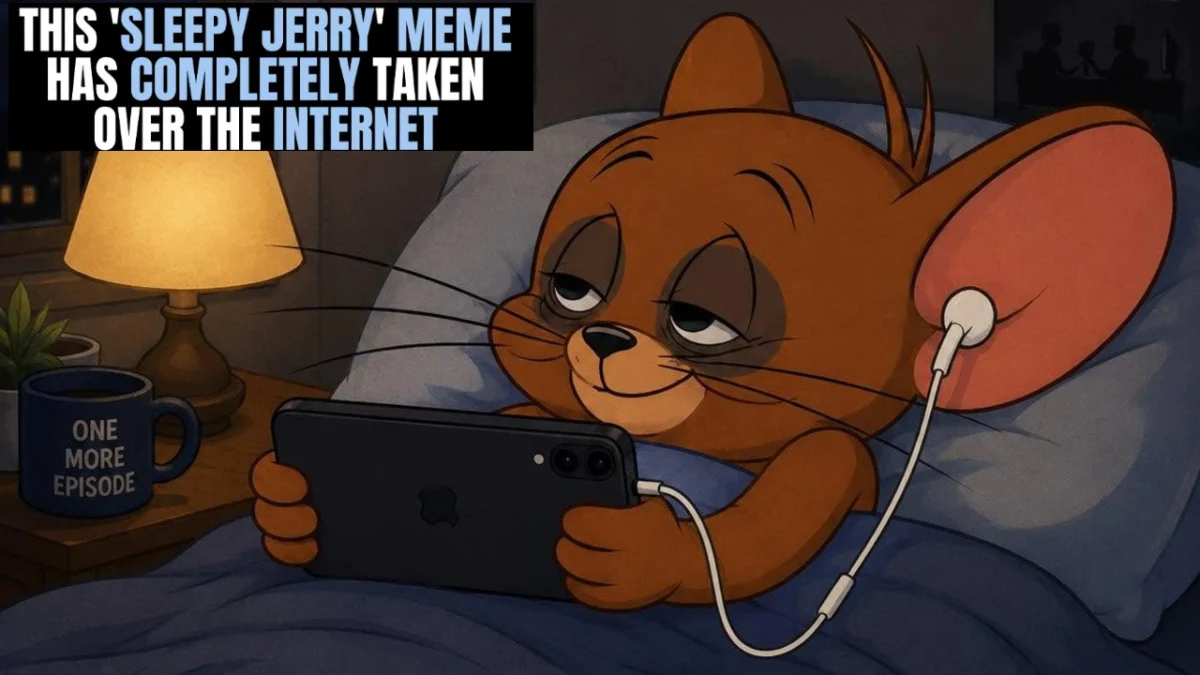
The visual foundation of the "Sleepy Jerry" phenomenon is an AI-generated image depicting Jerry Mouse lying in bed, his eyes heavy with exhaustion, illuminated by the cold blue light of a smartphone screen. This specific aesthetic—characterized by the slightly "off" proportions and hyper-saturated textures typical of generative AI tools like Midjourney or DALL-E—first surfaced in the early second quarter of 2026.
The earliest documented iteration of the meme appeared on May 8, 2026, via the "Who Cares?" Facebook page. The post utilized the image as a traditional "image macro," featuring the caption: "When I find a perfect old series with 6 seasons and 16+ episodes each." This initial use tapped into the universal experience of "revenge bedtime procrastination," a psychological phenomenon where individuals stay up late to regain a sense of freedom after a day of work or obligations. This first post garnered over 4,400 likes and 500 shares, signaling an immediate, if modest, resonance with social media users.
Throughout May and early June 2026, the image circulated through various Facebook communities and niche Instagram hubs. On June 8, the Avryanna Burch Facebook page shared a similar version, further cementing the image’s status as a go-to visual for content related to sleep deprivation and digital addiction.
The Manufacture of Virality: The "Memegod" Incident
The trajectory of the meme shifted dramatically on June 22, 2026. An Instagram user operating under the handle "memegod" posted a carousel of Sleepy Jerry images. The first slide of this carousel featured the bold, declarative text: "This ‘Sleepy Jerry’ meme has completely taken over the internet."
At the time of the post, the claim was demonstrably false. While the image had seen some use, it was far from a dominant cultural force. This discrepancy led to a wave of skepticism and irony from the broader internet community. Users who had never encountered the image before began to mock the post for its attempt to "force" a meme into existence. In the lexicon of digital culture, a "forced meme" is a concept that is aggressively promoted as being popular despite lacking organic traction.
However, in a classic example of the Streisand Effect—where an attempt to hide or manipulate information results in its wider proliferation—the backlash against the claim of "taking over the internet" actually caused the meme to do exactly that. The "memegod" post itself became the meme, with users resharing the screenshot to highlight the absurdity of modern engagement farming.
Chronology of Proliferation and Platform Migration
Following the June pivot, the Sleepy Jerry meme underwent a rapid expansion across multiple platforms, each adding its own layer of context:
- X (formerly Twitter): On July 14, 2026, user @Okay_Bye___ posted an AI-animated video version of the Sleepy Jerry image. The caption, "Me refusing to sleep because i didn’t get enough me time after work," struck a massive chord, generating over 578,000 likes in three months. This version moved the meme beyond static irony and back into the realm of genuine relatability.
- Reddit: On July 24, 2026, the meme reached the r/lies subreddit, a community dedicated to posting obviously false statements for comedic effect. A user shared the "memegod" post, garnering 3,300 upvotes. This placement solidified the meme’s status as a symbol of internet deception and the "dead internet theory"—the idea that much of the internet’s content is now generated or promoted by bots and AI.
- TikTok: By August 2026, the meme had transitioned to short-form video. Creator @eloh.gd posted a Discord screenshot featuring a modified version titled "Sleepy Verity," referencing an alternate reality game (ARG) character. This showed the "exploitable" nature of the meme, where Jerry could be replaced by any character to suit specific subcultures.
- The Benjamin Stachio Comparison: In October 2026, the meme reached its current "meta" peak. When news outlets began reporting on a supposedly viral AI character named "Benjamin Stachio," X user @xaviersonline_ replied with the Sleepy Jerry "taken over the internet" screenshot. This usage established Sleepy Jerry as the universal "calling card" for identifying and dismissing forced AI-generated trends.
Psychological Underpinnings: Bedtime Procrastination and Relatability
At its core, the Sleepy Jerry image functions because it visualizes a specific modern malaise. "Revenge bedtime procrastination" is a term that gained prominence in the early 2020s, describing the act of refusing to sleep in order to enjoy some leisure time that was missing during the day.
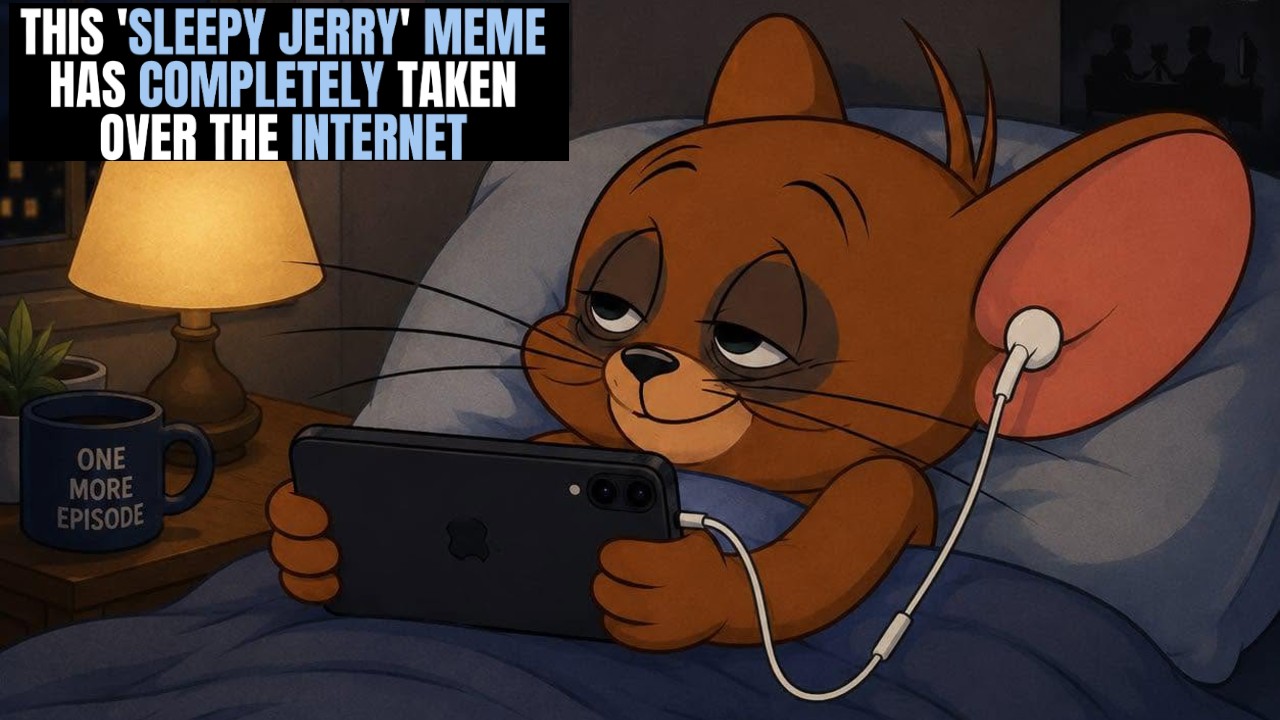
The AI-generated Jerry, with his drooping eyelids and the glow of the phone reflecting off his face, is a perfect avatar for this behavior. Unlike traditional hand-drawn animation, the AI version of Jerry has a slightly uncanny, weary quality that feels more grounded in the reality of 21st-century burnout than the slapstick energy of the original 1940s cartoons. This visual resonance allowed the meme to survive its initial "forced" phase and become a legitimate tool for social expression.
Technical Analysis: The Role of AI in Meme Evolution
The Sleepy Jerry phenomenon highlights a significant shift in how digital folklore is created. Historically, memes were derived from screenshots of existing media—movies, TV shows, or viral videos. Sleepy Jerry represents a new era where "synthetic media" serves as the source material.
The use of AI allows for the rapid creation of "hyper-relatable" imagery. If a creator wants to depict a specific emotion—such as the exact moment of regret while scrolling at 3:00 AM—they no longer need to find a frame in a cartoon that matches. They can simply generate an image that distills that emotion into a single, potent visual. This has led to a surge in AI-generated "slop" (low-effort synthetic content), but as Sleepy Jerry proves, some of this content can break through if it hits the right psychological or ironic notes.
Institutional and Cultural Reactions
While official representatives for the Tom and Jerry brand (Warner Bros. Discovery) have not issued a formal statement regarding this specific AI iteration, the meme falls into a growing "gray area" of intellectual property. The image uses a recognizable character but transforms it through AI and parody, making it a difficult target for traditional copyright enforcement.
Digital culture analysts have noted that Sleepy Jerry represents a "second-order" meme. It is not just about a mouse on a phone; it is about the conversation regarding the mouse on the phone. This type of meta-humor is increasingly common among Gen Z and Gen Alpha users, who are highly attuned to the mechanics of virality and often find humor in the failure of brands or influencers to authentically "go viral."
Quantitative Impact and Search Trends
Data from search engines and social media analytics tools indicate a sharp "double peak" for Sleepy Jerry. The first peak occurred in late June 2026, driven by the controversy of the "memegod" post. The second, much larger peak occurred in mid-July to August 2026, as the "relatable" versions of the meme gained traction on X and TikTok.
As of late 2026, "Sleepy Jerry" remains a high-volume search term within the "Entertainment" and "Internet Culture" categories. The template has been adapted into dozens of variations, including:
- Sleepy Monika: A crossover with the Doki Doki Literature Club fandom.
- Sleepy Kris: A crossover with the Deltarune community.
- Sleepy Quail: A niche variation used in ornithology-themed meme circles.
Broader Impact and Implications for Digital Discourse
The legacy of the Sleepy Jerry meme is twofold. First, it serves as a cautionary tale for social media marketers. In the current digital climate, declaring a meme has "taken over the internet" is often the quickest way to ensure it is met with hostility or irony. Authenticity remains the most valuable currency, even in an era of synthetic media.
Second, it marks a milestone in the normalization of AI in pop culture. Sleepy Jerry is one of the first AI-generated characters to achieve sustained, multi-platform relevance not because of its technical novelty, but because of its utility as a social shorthand. Whether used to complain about a long work week or to mock a corporate attempt at "coolness," Sleepy Jerry has, ironically, fulfilled the prophecy of its own caption: it has, in its own strange way, taken over the internet.

