
The Genesis of a Digital Catchphrase
The origin of the phenomenon can be traced back to June 16, 2025, when the TikTok content creator known as @irvo.11 uploaded a brief comedy sketch. In this video, the creator reimagines the climactic scene of the Brothers Grimm’s Little Red Riding Hood, specifically the moment the protagonist enters their grandmother’s bedroom to find the Big Bad Wolf in disguise. Rather than engaging in the traditional dialogue regarding the size of the grandmother’s eyes, ears, or teeth, @irvo.11 adopts a stance of immediate skepticism. Upon seeing a large, predatory animal wearing a nightcap in a bed, he delivers the now-iconic line: "You’re blatantly just not me nan."
The humor of the original video relies heavily on the use of British colloquialisms and the deadpan delivery of the creator. The word "blatantly" serves as an intensifier, emphasizing the sheer obviousness of the deception, while "nan"—a common United Kingdom and Irish term for grandmother—grounds the fantastical scenario in a relatable, domestic setting. The original post was an immediate success, garnering over 10.7 million views within its first year of publication. The video’s appeal was rooted in its relatability; it voiced the internal monologue of a modern audience that often finds the tropes of classical fables to be nonsensical or overly prolonged.
Chronology of Viral Proliferation
While the original skit was published in mid-2025, the audio component underwent a secondary wave of viral success approximately one year later. This "second life" is a common occurrence in the lifecycle of TikTok memes, where an original sound is decoupled from its source video and applied to new, often unrelated contexts.
By August 2026, the audio began to see a massive uptick in usage. On August 17, 2026, a TikTok user under the handle @ems2001xx applied the audio to a video featuring a physical model of the Big Bad Wolf from the Sundown Adventureland theme park. This specific application of the sound served as a bridge between the creator’s original intent and the broader trend of "calling out" physical objects or animals. This video alone accumulated more than 12 million views in a span of two months, signaling the start of the audio’s peak saturation period.
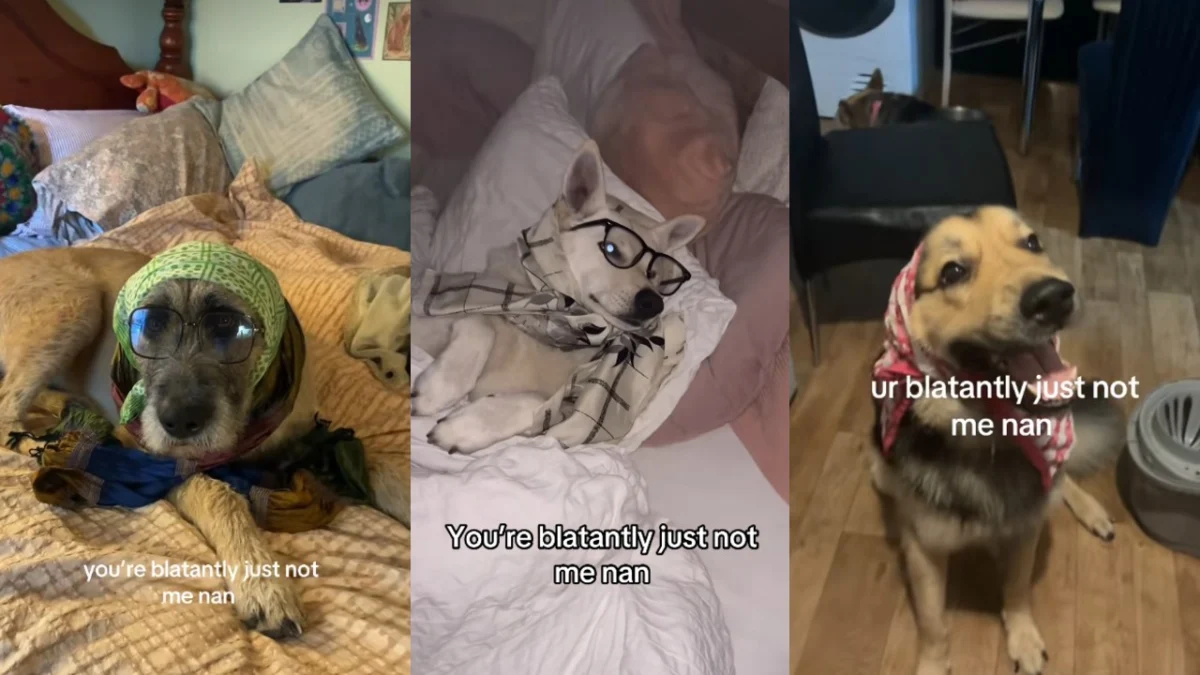
The trend reached its creative zenith in late August and September 2026. On August 21, 2026, TikToker @da1s.masl3n contributed to the trend by featuring a large Irish Wolfhound dressed in human clothing, lying in a bed. The visual of a literal wolfhound being told it was "blatantly not" someone’s grandmother created a meta-textual layer of humor that resonated with millions. This post secured 4.4 million views, further cementing the audio’s association with pet-related content. By September 21, 2026, other users, such as @fclarize, continued to iterate on this formula, achieving similar viral success with millions of views.
Linguistic and Cultural Context
The success of "You’re Blatantly Just Not Me Nan" can be analyzed through the lens of British humor and its global export via social media. The term "nan" is a quintessential part of the British working-class identity, often associated with warmth, specific domestic aesthetics, and a certain degree of vulnerability. By placing a wolf in the "nan’s" position, the skit creates a jarring juxtaposition that is inherently comedic.
Furthermore, the phrase "blatantly just not" follows a specific linguistic pattern common in contemporary youth slang in London and the surrounding areas. It is a form of linguistic economy that communicates total disbelief with minimal effort. When this regional dialect was paired with a globally known story like Little Red Riding Hood, it allowed the meme to bridge the gap between a specific cultural niche and a worldwide audience. The "imposter" trope is a universal comedic engine, previously seen in the massive success of games like Among Us, where the primary objective is to identify someone who does not belong.
Content Variations and Creative Adaptations
As the audio became a standardized "meme sound," the community began to experiment with increasingly abstract interpretations. The use cases generally fell into three primary categories:
1. The Literal Fairy Tale Parody
Users would visit theme parks, museums, or theatrical sets featuring Little Red Riding Hood displays. By filming these stationary figures and playing the audio, they highlighted the often-creepy or poorly constructed nature of public "wolf-in-the-bed" statues.
2. The Domesticated Animal Sub-genre
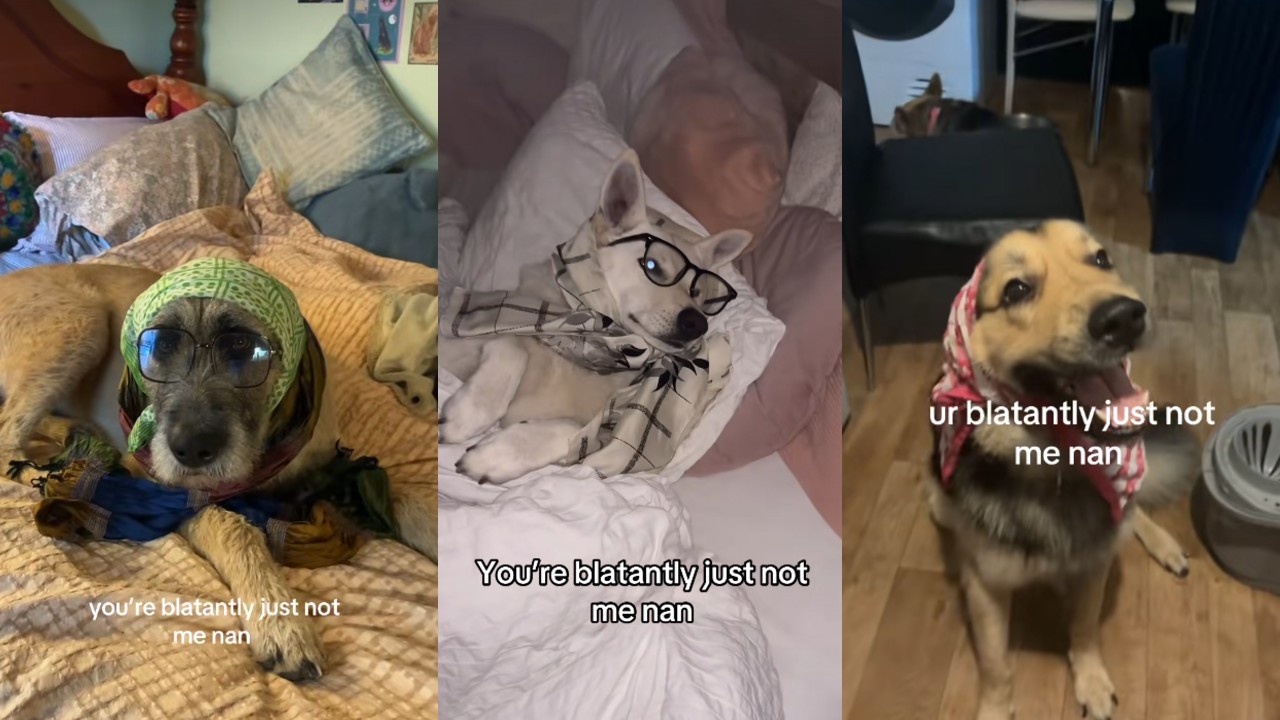
This became the most popular iteration of the meme. Pet owners, particularly those with large or shaggy dogs like Golden Retrievers, Irish Wolfhounds, or Huskies, would dress their animals in nightgowns and spectacles. The humor derived from the dog’s often confused or placid expression while being accused of being a human grandmother.
3. Pop Culture Crossovers
Creative editors began applying the audio to other media. A notable example included scenes from the film Shrek, specifically the sequence where the Big Bad Wolf is found in bed in the Kingdom of Far Far Away. These crossovers demonstrated the audio’s versatility as a commentary on any scene involving a poor disguise or a character being "out of place."
Statistical Analysis of Engagement
The reach of the "You’re Blatantly Just Not Me Nan" trend provides a case study in digital engagement. Data suggests that the audio was used in over 100,000 unique video creations during the third quarter of 2026. The primary demographic engaging with the sound was aged 16 to 24, though the "pet-centric" videos saw significant crossover appeal with older demographics.
The "completion rate"—a metric measuring how many viewers watched a video to the very end—was exceptionally high for videos using this audio. Experts attribute this to the short duration of the sound bite (approximately 5-7 seconds) and the "punchline-first" structure of the skit. On TikTok, where the first three seconds are critical for retaining viewership, the immediate delivery of the line "You’re blatantly just not me nan" served as an effective hook.
Broader Implications and Psychological Appeal
The psychological appeal of the meme lies in the satisfaction of "truth-telling." In an era of digital manipulation, deepfakes, and curated social media personas, a meme that centers on the immediate and blunt recognition of a fake resonates on a deeper level. It celebrates the "common sense" of the observer over the "gaslighting" of the imposter (in this case, the wolf insisting he is the grandmother).
From a media perspective, the trend illustrates the "democratization of the punchline." In traditional media, a parody of Little Red Riding Hood would require a production budget and a distribution network. On TikTok, a single line of dialogue from an independent creator can become a global standard for humor, allowing thousands of other people to act as "co-directors" by providing their own visual interpretations of the sound.
Conclusion and Digital Legacy
As of the end of 2026, "You’re Blatantly Just Not Me Nan" has moved into the "evergreen" category of internet audio. While it no longer dominates the "For You" page daily, it remains a reliable tool for creators looking to poke fun at obvious deceptions. The original creator, @irvo.11, saw a significant increase in his platform’s following, highlighting how a single well-timed observation can transform an individual into a central figure of digital culture.
The meme serves as a reminder of the internet’s ability to take the oldest stories in the human canon and refresh them for a cynical, fast-paced audience. By refusing to play along with the wolf’s charade, @irvo.11 did more than just create a funny video; he provided a linguistic shorthand for a generation that prides itself on seeing through the "blatant" nonsense of the world around them. The phrase remains a staple of the British digital lexicon, a testament to the power of a simple, honest reaction in a world of increasingly complex fictions.

