
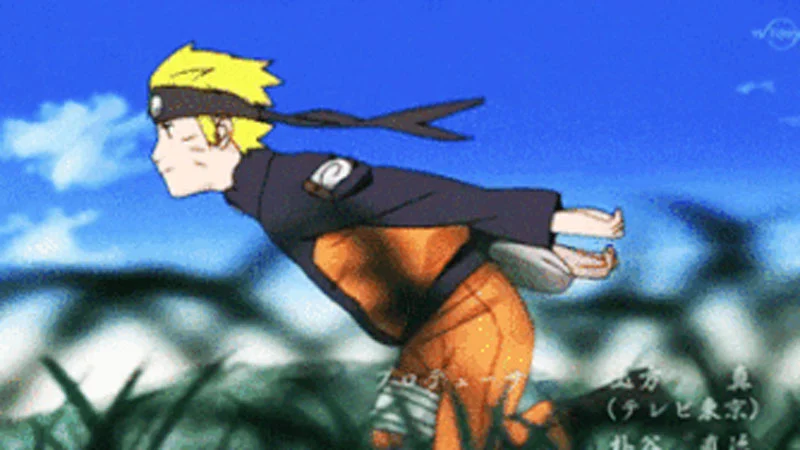
The Naruto Run, a distinctive sprinting posture characterized by a forward-leaning torso and arms extended rigidly behind the back, has transcended its origins in Japanese animation to become a significant artifact of global internet culture. Originally a stylistic choice within the "Naruto" anime franchise, the movement has evolved through several distinct phases: from a niche fan behavior to a viral social media challenge, and ultimately to a central component of one of the most publicized satirical events in recent history, the "Storm Area 51" movement. This transition highlights the power of digital communities to repurpose fictional elements into real-world symbols of irony, solidarity, and collective identity.
Origins and the Animation Aesthetic
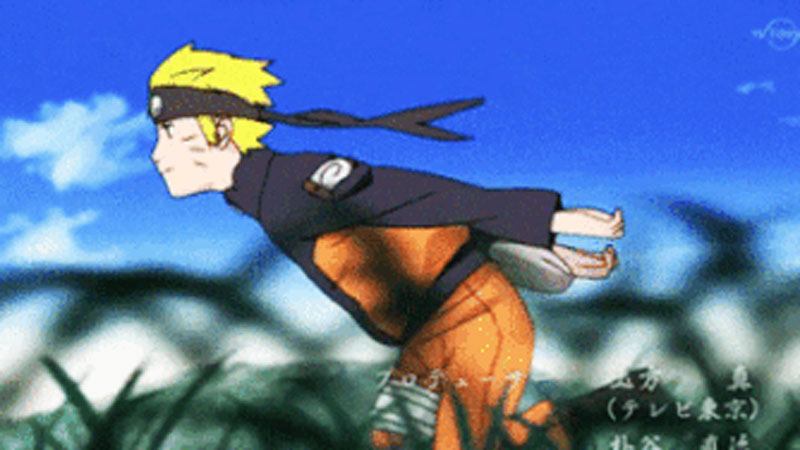
The "Naruto" anime series, based on the manga by Masashi Kishimoto, premiered on October 3, 2002. It follows the journey of Naruto Uzumaki, a young ninja with aspirations of becoming the Hokage, his village’s leader. Throughout the series, Naruto and his peers are frequently depicted sprinting with their arms trailed behind them. While this posture is often associated specifically with the "Naruto" franchise, it was not entirely unique to the series; various anime titles had utilized similar "ninja runs" to convey a sense of supernatural speed and aerodynamic efficiency.
From a production standpoint, the Naruto Run served several practical purposes. In the world of traditional 2D animation, keeping a character’s arms stationary behind their back reduces the number of moving parts that animators must render frame-by-frame. By minimizing the complexity of arm movements, studios could allocate more of their budget and time to facial expressions or background action. Narratively, the run was meant to symbolize the "shinobi" (ninja) ability to move at speeds exceeding human limits, suggesting that the characters were moving so fast that their arms naturally trailed behind them due to wind resistance.
The Early Digital Proliferation (2006–2014)
The transition of the Naruto Run from the television screen to real-world imitation began in the early days of the video-sharing platform YouTube. On September 6, 2006, a user known as mfbrice uploaded "Anime Run," featuring footage of himself attempting to replicate the posture. This served as an early indicator that the animation style was beginning to resonate with the show’s growing international fanbase as a tangible, if humorous, physical activity.
By 2008, the phenomenon had gained enough traction to warrant instructional content. On March 10, 2008, the popular "how-to" website WikiHow published a guide titled "How to Run Like Naruto." This guide provided step-by-step instructions on body positioning, leaning angles, and the importance of focus. The existence of such a guide marked a shift in the meme’s lifecycle, moving from a spontaneous imitation to a codified "skill" within the otaku (anime fan) subculture.
Over the next several years, the Naruto Run became a staple of anime conventions and parkour communities. In 2014, the YouTube channel AppStoreVn released "Naruto in Real Life," which featured a stuntman performing parkour while maintaining the signature arm-back posture. This video demonstrated the aesthetic’s appeal beyond simple parody, integrating it into the broader "urban acrobatics" trend of the mid-2010s.
The Rise of the Mass Event (2016–2017)
The Naruto Run entered its "event phase" in 2016 and 2017. During this period, the joke shifted from individual videos to organized mass gatherings. In July 2016, YouTuber Joe Inoue documented a Naruto Run event in Porto Alegre, Brazil, where hundreds of participants gathered in a public space to sprint together in the anime style.
This trend accelerated in 2017 with the proliferation of Facebook event pages. These pages, often created with a heavy layer of irony, invited strangers to meet at specific landmarks—such as Philadelphia’s Liberty Bell or Chicago’s Millennium Park—to engage in collective Naruto Runs. These events were largely harmless and served as a form of "flash mob" humor. Kotaku and other major media outlets began reporting on these gatherings in August 2017, noting that the events were occurring globally, from the United States to Southeast Asia. The Naruto Run had become a shorthand for a specific type of internet-savvy, self-deprecating humor.
The Storm Area 51 Phenomenon and Institutional Recognition
The Naruto Run reached its cultural zenith in 2019 through the "Storm Area 51, They Can’t Stop All of Us" event. Created by Matty Roberts as a joke on Facebook, the event proposed that a mass of people storm the top-secret Nevada Test and Training Range (Area 51) to "see them aliens." Central to the event’s satirical "battle plan" was the instruction: "If we naruto run, we can move faster than their bullets."
This specific phrasing propelled the Naruto Run from a niche anime joke into a mainstream news headline. The event garnered over two million "attending" RSVPs on Facebook, prompting a serious response from the United States Air Force. Spokesperson Laura McAndrews issued a statement to the Washington Post, warning that the Air Force "stands ready to protect America and its assets," and discouraged anyone from attempting to enter the area.
The cultural impact of the "Storm Area 51" mention was solidified when a man was captured Naruto Running in the background of a live news broadcast by KTNV Action News. The clip went viral instantly, serving as the defining image of the event. Furthermore, internal documents surfaced on Reddit showing an actual Air Force briefing slide titled "Terms to Know," which defined "Naruto Running" for military personnel. This represented a rare moment where a digital subculture meme necessitated formal institutional analysis for security purposes.
Biomechanical Analysis: Fiction vs. Reality
As the Naruto Run gained mainstream notoriety, it attracted the attention of sports scientists and athletes who sought to determine its actual efficacy. In August 2016, the YouTube channel ManimeTV produced a video titled "Does the Naruto Run Really Work?" The creators conducted a series of timed trials comparing the Naruto Run to standard athletic sprinting.
The results, consistent with basic biomechanics, indicated that the Naruto Run is significantly less efficient than traditional running. In a standard sprint, the rhythmic swinging of the arms provides several benefits:
- Balance and Counter-Rotation: Arm movements counteract the rotational force of the legs, keeping the body stable.
- Propulsion: The forward and backward drive of the arms helps generate momentum.
- Aerodynamics: While the Naruto Run claims to be "aerodynamic," the extreme forward lean and lack of arm swing actually create a higher center of gravity instability and increase the risk of falling.
Professional athletes, including Olympic sprinter Jeneba Tarmoh, have also commented on the style. In an interview with Runner’s World, Tarmoh noted that while the lean might slightly reduce wind resistance, the lack of arm drive makes it impossible to maintain high speeds for any significant duration. Thus, the "faster than bullets" claim remains firmly in the realm of satire.
Broader Cultural Impact and Legacy
The legacy of the Naruto Run is visible in various facets of modern media. It has been officially integrated into major video games, most notably Fortnite, where players can purchase a "Naruto Run" emote for their avatars. This inclusion signifies the meme’s transition into a commercialized digital asset, recognized by millions of players who may not have even watched the original anime.
Furthermore, the Naruto Run serves as a case study in the "ironic participation" of Generation Z and Millennials. The act of performing the run is rarely a sincere attempt at speed; rather, it is a performative signal of belonging to a digital-native generation that speaks in the language of memes. It bridges the gap between high-intensity fandom and mainstream humor.
Conclusion
From its humble beginnings as a cost-saving animation technique in a 2002 Japanese television series, the Naruto Run has evolved into a complex cultural symbol. It has navigated the waters of early internet video culture, survived the era of Facebook flash mobs, and stood at the center of a national security discussion involving the U.S. military. While it offers no athletic advantages, its social utility as a tool for collective humor and digital identity remains potent. The Naruto Run stands as a testament to the unpredictable ways in which fiction can bleed into reality, transforming a simple drawing of a running boy into a global icon of the internet age.

