
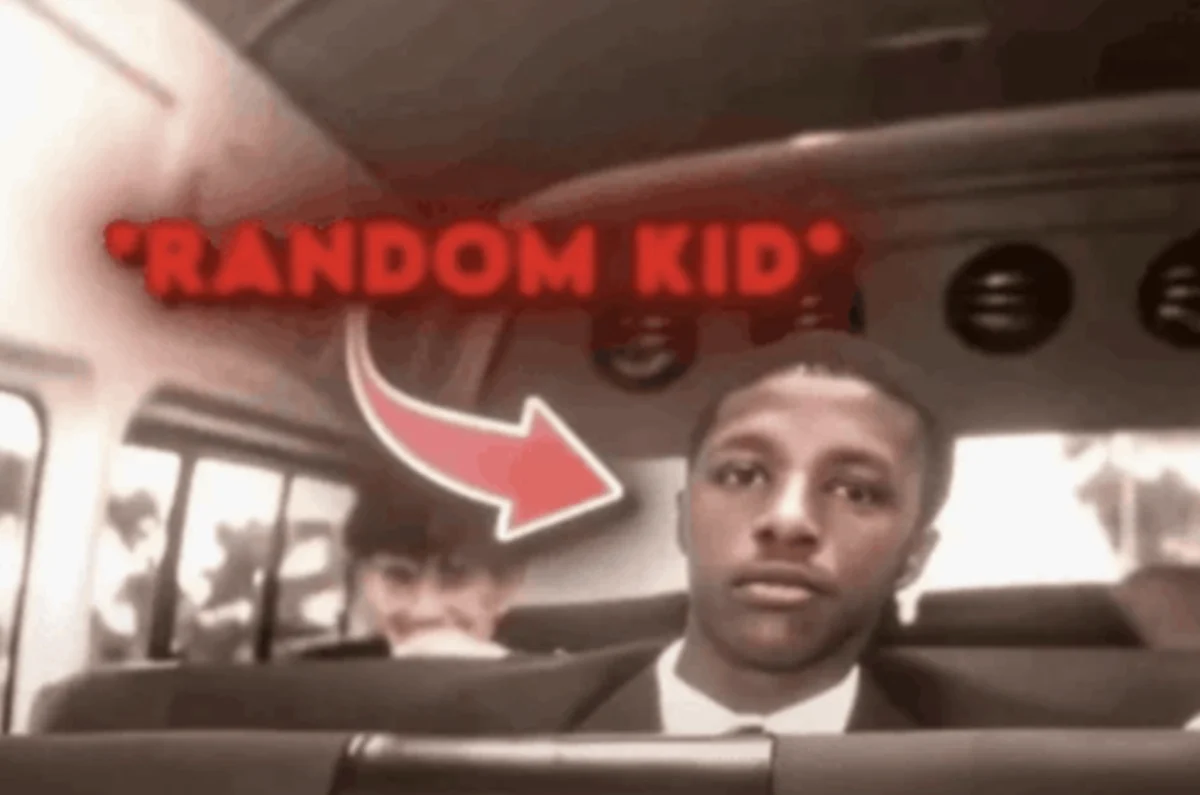
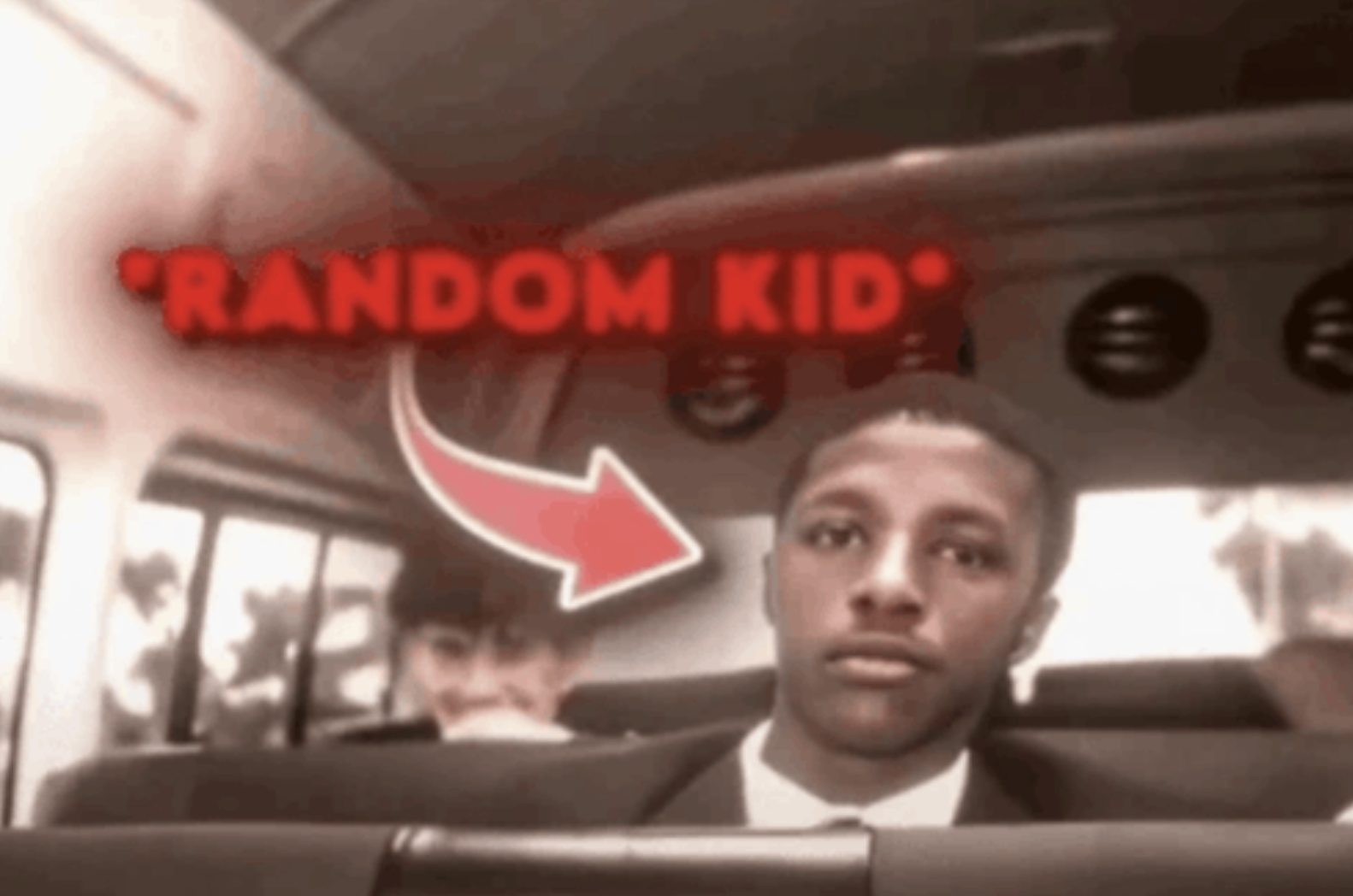
The digital landscape of early 2026 has been significantly influenced by the rapid ascent of the Random Kid meme, a multifaceted reaction image and exploitable asset that originated from the livestreaming activities of Darren Watkins Jr., known professionally as IShowSpeed. This phenomenon, which transitioned from a singular spontaneous moment in a broadcast to a ubiquitous sticker within TikTok comment sections, exemplifies the modern lifecycle of internet subcultures. By analyzing the origin, dissemination, and technical iteration of this meme, one can observe the broader trends of dismissive humor and "ragebait" that currently define social media interactions. The image, typically characterized by a low-resolution freeze-frame of an unidentified minor accompanied by a prominent red arrow and the caption "random kid," has become a primary tool for users seeking to express confusion or performative ignorance regarding the subjects of viral content.
The Genesis of a Viral Incident: The December 31 Livestream
The foundational event for the Random Kid meme occurred on the final day of 2025. During a high-energy outdoor broadcast, IShowSpeed was traveling in a private van or bus, a frequent setting for his "IRL" (in real life) streaming segments. In a security lapse that would later become the catalyst for the meme, an unidentified young male managed to enter the vehicle unnoticed by the streamer or his immediate entourage. The tension of the stream escalated when Watkins noticed the presence of the stranger after the vehicle had already begun its transit.
The resulting exchange was brief but provided the specific tonal elements required for viral longevity. When Watkins confronted the individual, asking for his identity in a manner consistent with his high-intensity persona, the youth did not react with the typical deference or excitement associated with fan encounters. Instead, the individual engaged in a "roast," delivering a sharp, albeit controversial, retort that questioned the streamer’s character. This subversion of the traditional power dynamic between a world-renowned influencer and an anonymous fan provided the initial "shock value" that drove the clip’s first wave of distribution.
Chronology of Dissemination and the Rise of the Red Arrow
The transition from a raw livestream clip to a standardized meme format occurred within the first forty-eight hours of 2026. While the original footage was widely shared on YouTube clip channels, the specific "Random Kid" aesthetic was synthesized on TikTok. On January 1, 2026, a user operating under the handle @beep6000 published a heavily edited version of the encounter. This edit introduced the visual grammar that would define the meme: a red arrow pointing toward the youth and a text overlay reading "random kid" in a font reminiscent of sensationalist YouTube thumbnails.
The @beep6000 post acted as a primary source for the meme’s "sticker" variant. Within three months, the video amassed over 567,600 views and 35,800 likes. More importantly, it catalyzed a trend in the comment sections where users took screenshots of the edited frame to use as reaction images. By January 2, 2026, other creators, such as @speednish, began iterating on the format, adding further layers of irony or modifying the text to read "Famous Kid" or "Who Is This?" as a form of counter-meme. On January 3, the format migrated back to YouTube via channels like HyperSpace Edits, solidifying its cross-platform presence.
Technical Analysis of Meme Mechanics and Sticker Culture
The "Random Kid" meme functions primarily as an "exploitable," a term used in digital media to describe an image that can be easily modified or repurposed to fit various contexts. Its success is deeply rooted in the technical evolution of TikTok’s interface, which in late 2025 and early 2026 saw an increased reliance on user-generated stickers. These stickers allow participants in a comment thread to respond with visual assets rather than text, favoring high-context, low-effort communication.
The visual design of the meme—specifically the red arrow—is a satirical take on "clickbait" culture. By using the very tools that creators use to garner attention, the meme-makers turn those tools back on the subjects of the videos. When a user posts the "Random Kid" sticker on a video of a celebrity or another influencer, they are utilizing the red arrow to highlight the subject’s supposed irrelevance. This form of "dismissive engagement" is a key component of modern digital discourse, where the refusal to acknowledge someone’s fame is seen as a potent social critique.
Comparative Context: The Who Is This? Phenomenon
The Random Kid meme does not exist in a vacuum; it is a direct spiritual successor to the "Who Is This?" meme and other "ragebait" tactics. Ragebait refers to content specifically designed to provoke an emotional response, usually anger or frustration, to drive engagement metrics. In the context of the Random Kid meme, the "rage" is often directed at the fans of the person being mocked. By labeling a well-known figure as a "random kid," a commenter can successfully bait the fans of that figure into long, defensive arguments, thereby boosting the visibility of the original comment and the meme itself.
Historically, this aligns with other "accidental" celebrities or anonymous figures who became meme icons, such as "Alex from Target" or the "Success Kid." However, the Random Kid differs because the focus is not on the kid’s personality or the humor of the situation, but rather on the kid’s status as a cipher—an unknown variable that can be projected onto any situation to signify a lack of recognition.
Broader Impact on Influencer Security and Fan Interactions
Beyond its life as a digital asset, the incident that birthed the Random Kid meme has sparked discussions regarding the security of high-profile streamers. The ease with which an unidentified individual was able to board a private vehicle during a live broadcast highlighted the vulnerabilities inherent in "IRL" streaming. Following the event, industry analysts noted a shift in how major streamers managed their logistics, with many opting for increased security presence and more controlled environments for their broadcasts.
While IShowSpeed has not issued a formal legal statement regarding the intrusion, his continued engagement with the "chaos" of his fan base suggests a calculated acceptance of these risks as part of his brand. The "Random Kid" himself remains largely anonymous, a fact that has only added to the meme’s utility. Had the individual become a known entity, the "randomness" that gives the meme its power would have been lost. His anonymity allows him to function as a universal symbol for the "uninvited guest" or the "unknown challenger."
Sociological Implications of Dismissive Media
The prevalence of the Random Kid meme in 2026 reflects a broader sociological trend toward "anti-fandom." In an era where influencer culture is saturated, the act of denying someone’s influence has become a popular form of social currency. The meme serves as a linguistic shorthand for the phrase "I do not know who this is, and I do not care."
This "weaponized apathy" is particularly effective in the attention economy. By using a sticker of a literal random child to respond to a multi-millionaire creator, users are performing a leveling of the social playing field. It suggests that, in the eyes of the internet, everyone is potentially just a "random kid" until proven otherwise. This sentiment is reinforced by the variations of the meme, such as "Famous Kid," which are used sarcastically to mock those who appear to be trying too hard to achieve viral status.
Conclusion and Future Trajectory
As the Random Kid meme enters its second quarter of relevance, its trajectory suggests it will remain a staple of the TikTok and YouTube comment lexicon for the foreseeable future. Its simplicity, combined with the high-profile nature of its origin, ensures a level of recognizability that few memes achieve. Furthermore, as AI-driven content moderation becomes more sophisticated, the use of visual stickers like "Random Kid" provides a way for users to convey complex, often cynical, messages without triggering text-based filters for harassment or spam.
The legacy of the Random Kid meme will likely be viewed as a turning point in the evolution of reaction media—a moment where the spontaneous "glitch" in an influencer’s curated reality was captured, codified, and turned into a permanent tool for digital dissent. Whether the unidentified youth ever comes forward is irrelevant to the meme’s function; in the world of 2026 digital culture, he has already achieved a form of immortality as the ultimate symbol of the anonymous, disruptive power of the internet.

