
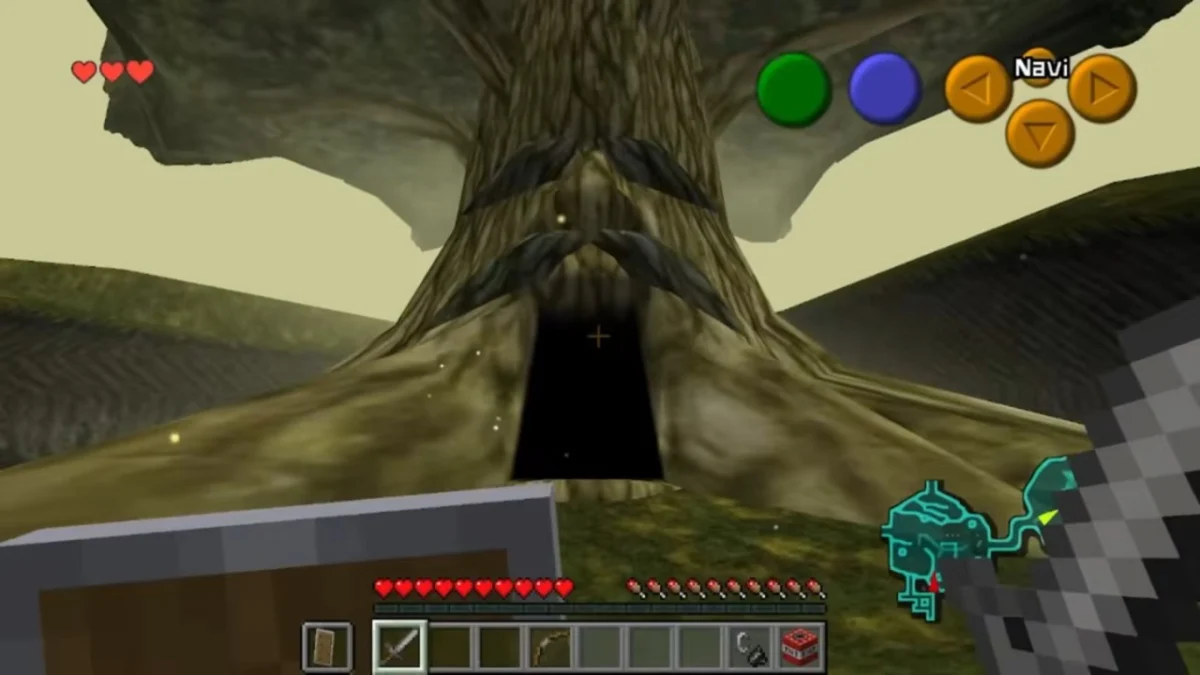
The landscape of digital entertainment underwent a significant shift in late 2026 as a new technological trend, known as AI Video Game Merging or AI Video Game Mashup Mods, began to proliferate across social media platforms. Utilizing advanced artificial intelligence models—most notably the Opus 5.5 architecture—developers and enthusiasts have begun to bridge the gap between disparate software environments, effectively "stitching" the mechanics, assets, and physics engines of unrelated video games into unified, playable experiences. This movement, which gained momentum between September and October 2026, represents a departure from traditional modding, moving toward an era of automated reverse-engineering and cross-engine compatibility.
The Technical Genesis of AI Merging
The trend is defined by the use of large-scale AI models to analyze and rewrite the underlying source code of legacy and modern titles. Unlike traditional modding, which often requires manual asset replacement or the use of specific developer-provided toolkits, AI Video Game Merging employs a process of "automated code translation." By prompting the AI to interpret the binary or assembly language of a game, users can generate a functional "action graph" that defines how a character moves or interacts with the environment. This logic is then ported and adapted into a secondary game’s engine.
The primary catalyst for this trend was the release and refinement of specialized coding models like Opus 5.5 and Codex. These tools allow users to bypass the limitations of proprietary software by treating every compiled game as a semi-open-source library of assets and logic. The process typically involves a "human-and-AI development loop," where the AI suggests code bridges to connect the physics of one game (such as the momentum-based skating of Skate 3) with the rendering and networking architecture of another (such as the survival-focused Rust).
Chronology of the 2026 Viral Expansion
The emergence of AI-driven mashups can be traced back to mid-September 2026, when the social media user known as Chasm began demonstrating the capabilities of high-level AI reverse-engineering.
On September 19, 2026, Chasm published a video on X (formerly Twitter) showcasing a project where they successfully "rewrote" Skate 3 within the Rust engine. This was not merely a cosmetic change; the AI had been used to extract the motion graphs and physics calculations from the original 2010 title and reintegrate them into the modern survival game. Chasm’s statement, "Every game is open source now," served as a rallying cry for a new generation of modders who viewed proprietary code as a malleable resource rather than a locked box.
By September 27, the trend reached a broader audience when Chasm demonstrated skateboarding mechanics integrated into Call of Duty: Modern Warfare 2. The video, which showed a player performing "tricklines" across high-intensity combat maps, garnered over 29,000 likes in a single week. This was followed on September 28 by a YouTube upload featuring a merger of Call of Duty and Minecraft, which achieved over 619,000 views, signaling a massive public appetite for "impossible" game crossovers.
As October approached, other creators joined the movement. On September 29, 2026, user @TobynJacobs posted a video showcasing Minecraft functioning entirely within the Elden Ring engine. The technical feat was particularly notable for its cross-platform compatibility, as the creator claimed the mod was running on macOS, a platform traditionally underserved by high-end gaming. This specific project gained over 308,000 likes and sparked intense discussion on the /r/singularity subreddit regarding the future of automated software development.
Diversification of the Mashup Portfolio
The final days of September 2026 saw a rapid diversification of the types of games being merged. On September 30, a user known as cydonix introduced "Escape from Skyrim," a project that inserted the tactical shooting and inventory mechanics of Escape From Tarkov into the fantasy setting of The Elder Scrolls V: Skyrim. This merger highlighted the AI’s ability to handle complex systems, such as ballistic modeling and realistic firearm handling, within an engine originally designed for swords and sorcery.
Other notable examples that surfaced during this period included:
- NHL x World at War: A crossover that brought ice hockey mechanics into the gritty World War II setting of Call of Duty: World at War.
- GTA Vice City x Skate 3: A project that replaced the driving-centric gameplay of Vice City with the refined skating physics of the Skate franchise, utilizing AI to map the city’s geometry for skateable surfaces.
On September 30, Chasm uploaded a comprehensive video titled "Modding has Changed FOREVER…," which detailed the philosophical and technical implications of these developments. The video quickly surpassed 2.4 million views, cementing the trend as a defining moment in 2026 digital culture.
Industry Reactions and Intellectual Property Concerns
The rise of AI Video Game Merging has created a complex situation for major game publishers. Traditionally, companies like Activision, Bethesda, and Microsoft have maintained strict control over their intellectual property (IP). However, the decentralized nature of AI-generated mods presents a unique challenge for enforcement.
Industry analysts suggest that the "black box" nature of AI code generation makes it difficult for legal teams to prove direct copyright infringement if the AI is "rewriting" the logic rather than simply copying files. While asset theft (textures and 3D models) remains a clear legal violation, the replication of "behavior" and "game feel" through AI analysis sits in a legal gray area.
While official statements from major studios have been sparse, internal reports from gaming conglomerates suggest a mixture of concern and interest. Some developers view these AI tools as a threat to the integrity of their live-service ecosystems, fearing that "AI hackers" could introduce unauthorized mechanics into competitive play. Conversely, others see a potential for "official" mashups, where AI is used to port legacy titles into modern engines for remastered collections at a fraction of the traditional cost.
Impact on Game Preservation and Development
One of the most significant arguments in favor of AI merging is its potential role in game preservation. As hardware ages and digital storefronts close, many titles become inaccessible to the public. Chasm and other proponents of the trend argue that using AI to reverse-engineer these games into modern, open engines ensures their survival. By decoupling a game’s mechanics from its original, often buggy or obsolete code, AI allows the "soul" of a game to live on in new environments.
Furthermore, the democratization of game development is a primary byproduct of this trend. In the past, creating a total conversion mod required a team of specialists with years of experience in specific engines. With models like Opus 5.5, a single enthusiast can bridge two engines in a matter of days or weeks. This shift is expected to lead to an explosion of user-generated content, as the barrier to entry for complex game design continues to drop.
Market Data and Social Media Engagement
The scale of the AI merging trend is reflected in the engagement metrics across various platforms. In the first week of October 2026, search interest for "AI Game Merging" and "Opus 5.5 Modding" spiked by over 400%, according to preliminary data. On TikTok, the hashtag #AIGaming became a trending topic, with videos showcasing surreal mashups—such as Grand Theft Auto characters navigating Minecraft worlds—racking up millions of views.
Platform-specific data highlights:
- YouTube: Video essays discussing the "Death of the Game Engine" saw a 150% increase in viewership during the trend’s peak.
- X: The primary hub for the technical community, where developers share "prompts" and code snippets for engine bridging.
- Reddit: Subreddits dedicated to AI and gaming saw a surge in technical queries regarding the hardware requirements for running Opus 5.5 locally.
Future Implications
As 2026 progresses, the long-term effects of AI Video Game Merging remain to be seen. If the trend continues to evolve, it could lead to a future where "games" are no longer static products, but rather modular experiences that players can customize at will. The concept of a "game engine" may become secondary to the "AI interpreter" that allows various software components to interact seamlessly.
However, the trend also raises questions about the future of the professional gaming industry. If AI can recreate the mechanics of a multi-million dollar blockbuster in a weekend, the value of proprietary game design may be called into question. For now, the "Mashup Era" represents a wild-west period of creativity, where the boundaries of what is possible in digital play are being redrawn daily by artificial intelligence.

