
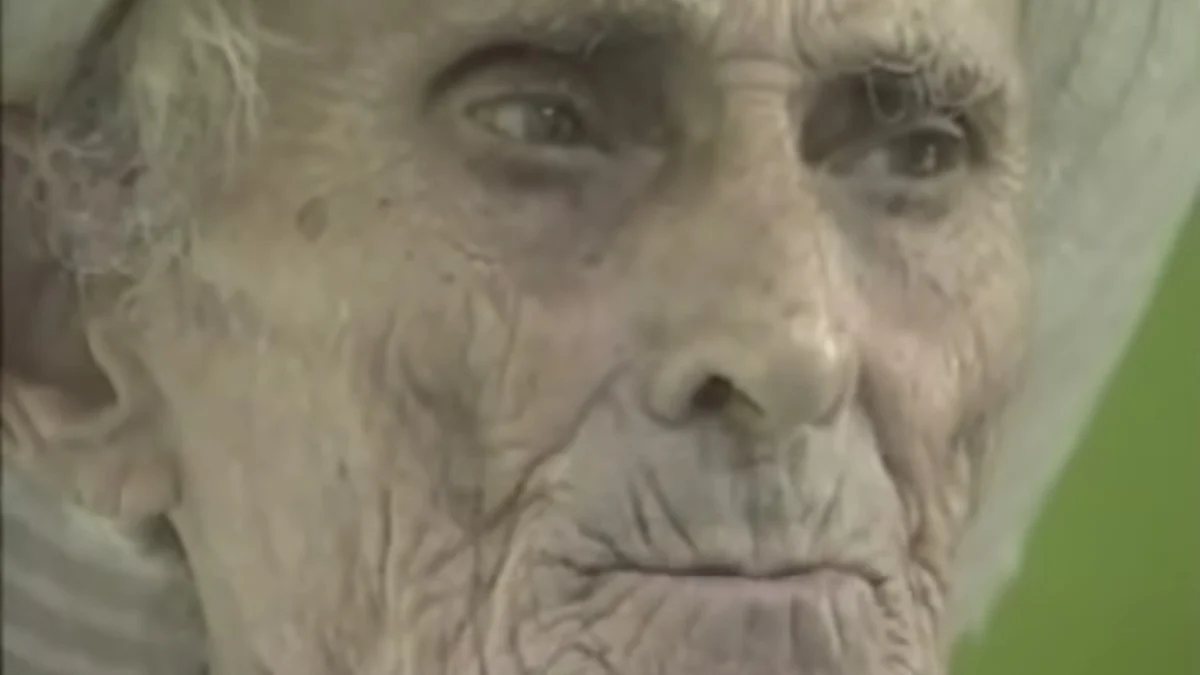
The intersection of historical labor movements and modern digital culture has reached a singular point of convergence with the viral resurgence of Nimrod Workman, a Kentucky coal miner and folk singer who passed away in 1994. While Workman was a celebrated figure in the Appalachian folk revival of the late 20th century, his image and artistry have undergone a radical transformation in the mid-2020s. Throughout the spring and summer of 2026, Workman’s likeness, his haunting performances of traditional ballads, and archival footage of his physical vitality have become the centerpiece of a complex web of internet memes, ranging from earnest historical appreciation to "brainrot" irony and Gen Alpha slang critiques. This phenomenon highlights a growing trend where the authentic, grit-laden history of the American working class is recontextualized by a generation seeking meaning—or perhaps absurdity—in the digital archives of the past.
The Life and Legacy of a Kentucky Laborer
Nimrod Workman was born on November 5, 1895, in Martin County, Kentucky, a region defined by its rugged geography and its total economic reliance on the coal industry. To understand the gravity of Workman’s life is to understand the history of American industrialization. Workman entered the coal mines at the age of 14, a common practice in the early 20th century before the establishment of robust child labor laws. For 42 years, he labored in the "low coal" of the Appalachian mountains, a career that ended in 1952 when he was forced into retirement due to a combination of debilitating back injuries and black lung disease (pneumoconiosis), a condition that plagued a vast majority of his contemporaries.
Workman’s life was not merely defined by labor but by the struggle for the dignity of that labor. He was a staunch trade unionist and an active member of the United Mine Workers of America (UMWA). Following his retirement, he became a vocal advocate for miners’ rights, particularly in the fight for black lung compensation and improved safety standards. Alongside his wife, Molly, with whom he raised 13 children, Workman became a pillar of his community, using his voice—both as an activist and a singer—to document the hardships and the resilience of the Appalachian people.
The Musical Heritage of the Mountains
Workman’s cultural significance is rooted in his role as a "source singer." He possessed a vast repertoire of traditional Appalachian folk songs and Scottish ballads, many of which had been passed down through oral tradition for generations. His singing style was raw, unaccompanied, and characterized by the "high lonesome" sound typical of the region.
His most famous rendition, "Oh Death," is a traditional folk song that personifies mortality, pleading for more time before the inevitable end. Workman’s performance of the song is noted by musicologists for its chilling sincerity; having spent decades in the dangerous environment of the mines, Workman sang about death not as an abstract concept, but as a constant companion. In the 1970s and 80s, his talent was recognized by a broader audience through the efforts of the Lomax Film Collective and other folklorists who sought to preserve the disappearing traditions of rural America. Workman was eventually awarded a National Heritage Fellowship by the National Endowment for the Arts in 1982, the highest honor the United States government bestows upon folk and traditional artists.
The 2026 Viral Resurgence: A Chronology
The transition of Nimrod Workman from a historical figure to a 2026 digital icon began in early May 2026. While archival videos of Workman had existed on YouTube for over a decade—most notably a 1983 clip of him performing a "crab walk" and a 2020 upload of "Oh Death"—they had largely remained within the niche circles of folk music enthusiasts and historians.
The catalyst for the viral explosion occurred on May 10, 2026, when the X (formerly Twitter) account @_HistoryNerd shared a clip of Workman singing "Oh Death." The post initially gained traction for its historical value, but the narrative shifted when user @fossymossy1 quote-tweeted the video with the caption, "imagine being named Dumbass Wagecuck." This post, which juxtaposed Workman’s surname with modern internet slang derogatory toward the working class, garnered over 122,000 likes in a matter of months. The irony of the statement—given that Workman was a fierce labor activist who fought against the very exploitation the term "wagecuck" implies—was lost on some, but celebrated by others as a peak example of modern absurdist humor.
By May 11, the momentum shifted to Instagram, where the account @historytrails posted the footage, reaching a massive audience and securing over 137,000 likes. The discourse surrounding Workman then entered a second phase in August 2026, characterized by the application of "brainrot" aesthetics and Gen Alpha terminology.

On August 24, 2026, the conversation took several divergent paths:
- The "Aura" Debate: X user @SaddamTransfem posted a photo of an elderly Workman with the caption, "’Nimrod Workman has no aura’ Explain this then," utilizing the slang term "aura" to describe one’s presence or coolness.
- The Aesthetic Critique: User @jifysn commented on the "Oh Death" performance from a perspective of modern dating culture, jokingly stating they found the performance "unattractive," which sparked a wave of ironic defenses of Workman’s "rugged charm."
- The "Always Old" Inquiry: Social media users began to question if Workman had "always been old," as most surviving footage dates from his 80s and 90s. This led to a brief search for youth-era photos, though few exist given his birth year of 1895.
The viral cycle culminated on August 25, 2026, with the emergence of "earrape" edits—audio files intentionally distorted for comedic effect—specifically targeting the high-pitched, strained notes of Workman’s folk singing.
Analysis of the Meme Phenomenon
The fascination with Nimrod Workman in 2026 can be attributed to several factors. First is the "linguistic collision" of his name. In the mid-20th century, "Nimrod" was a common name derived from the biblical figure known as a "mighty hunter." However, in modern parlance—largely due to a mid-century Bugs Bunny cartoon misinterpretation—the name has become synonymous with "idiot" or "bumbling person." Similarly, "Workman" is a literal descriptor of his class and occupation. To a modern internet user, the name "Nimrod Workman" sounds like a character generated by an algorithm to represent the archetype of the industrial laborer.
Second, the visual and auditory contrast between Workman and modern content creators is stark. In an era of high-definition, highly edited, and often superficial digital content, Workman’s raw, black-and-white, or grain-heavy film appearances offer a sense of "extreme authenticity." This authenticity is often so far removed from the daily experience of Gen Z and Gen Alpha that it is treated as surrealism.
The "brainrot" categorization of these memes—a term used to describe content that is nonsensical, repetitive, and deeply embedded in layers of irony—suggests that Workman has become a "vibe" rather than a historical subject. The "crab walk" video, in particular, serves this purpose. Seeing an 88-year-old man move with such unexpected physical agility provides a visual non-sequitur that thrives in the short-form video ecosystems of TikTok and Instagram Reels.
Broader Implications and Historical Irony
While the memeification of Nimrod Workman may appear flippant, it has led to an unintended consequence: a massive spike in search interest regarding Appalachian history and the labor movement. Data from search engines indicates that as the "Dumbass Wagecuck" tweet went viral, there was a corresponding increase in queries for "What is black lung disease?" and "History of the UMWA."
There is a profound historical irony in Workman becoming a digital icon. Workman spent his life fighting against the dehumanization of the individual by large industrial machines. In 2026, he has been subsumed by the "digital machine," where his life’s work is sliced into six-second clips and his name is used as a punchline. However, some cultural critics argue that this is a form of digital immortality. By entering the meme-stream, Workman’s image is being preserved for a generation that might otherwise never have engaged with the history of Martin County or the tradition of Appalachian balladry.
The Lomax Film Collective, which holds the rights to much of the footage, has seen a significant increase in viewership on their archival platforms. This suggests that while the entry point for many young people is irony, a subset of the audience is staying for the education.
Conclusion
The 2026 Nimrod Workman phenomenon serves as a case study in how the internet age handles the legacy of the working class. Whether he is being celebrated as a man of immense "aura" or being mocked through the lens of "brainrot" irony, Workman remains as he was in life: a powerful, disruptive voice from the mountains. As the memes continue to evolve, the underlying reality of Workman’s life—his 42 years in the mines, his 13 children, and his tireless fight for miners’ safety—stands as a silent rebuke to the fleeting nature of digital trends. Nimrod Workman may have become a meme, but the history he represents remains as solid as the coal he once mined.

