
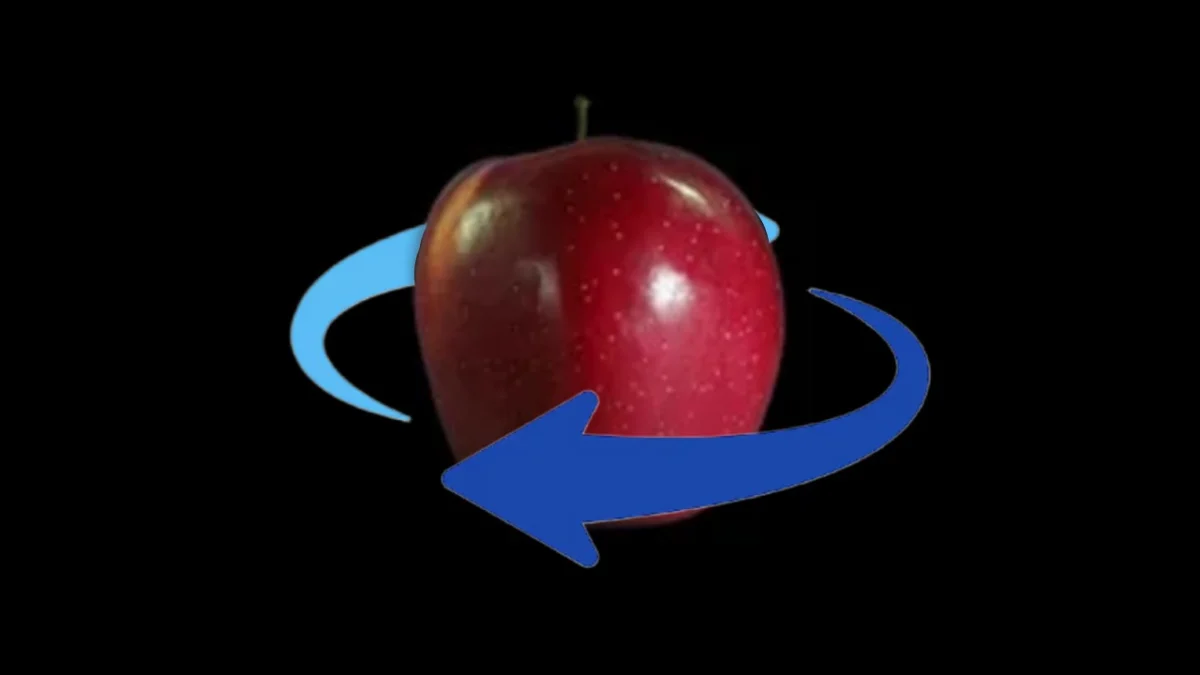
Imagine Spinning Apples has emerged as a significant digital phenomenon in 2026, characterizing a specific genre of internet content where users claim that the ability to mentally visualize and rotate three-dimensional apples is a definitive metric of human intelligence. The trend, which reached its peak popularity on platforms such as TikTok, Instagram, and X (formerly Twitter) during the autumn of 2026, blends psychological concepts with satirical commentary on the obsession with high Intelligence Quotients (IQ). Central to the meme is the "nine apples" challenge, a mental exercise requiring participants to imagine a grid of nine apples spinning simultaneously in their mind’s eye. Proponents of the meme jokingly or ironically assert that the number of apples one can maintain in synchronized motion serves as a direct indicator of "raw" cognitive power.
While the meme is largely viewed as a satirical take on "hustle culture" and intellectual elitism, it is rooted in legitimate psychological discussions regarding aphantasia—the inability to voluntarily create mental images. The evolution of the "Imagine Spinning Apples" trend represents a convergence of early 2010s psychology blogs, 2021’s "shape rotator" discourse, and the mid-2020s "maxxing" suffix culture, creating a complex layer of irony that mocks those who base their self-worth on unverified online metrics.
The Psychological Foundations: Aphantasia and Visualization
To understand the 2026 "Imagine Spinning Apples" craze, one must look back to the scientific discovery and popularization of aphantasia. The term was coined in 2015 by neurologist Adam Zeman of the University of Exeter to describe a condition where individuals lack a "mind’s eye." In May 2016, the Neurocritic Blogspot published a seminal article that used the visualization of an apple as a diagnostic tool. Readers were asked to close their eyes and imagine an apple, then rate the vividness of the image on a scale from one (perfectly clear) to five (no image at all, just "blackness").
This "Apple Visualization Test" became a staple of internet personality quizzes for nearly a decade. However, by 2023, the tone of these discussions shifted from medical curiosity to meme fodder. Internet users began creating content that playfully ridiculed those with aphantasia, often using the phrase "this mf can’t conjure an apple" to accompany images of low-resolution or missing fruit.
The 2026 iteration of the meme took this a step further by introducing motion. It transitioned from a test of static visualization to a test of mental rotation. In cognitive psychology, mental rotation is a legitimate task used to measure spatial intelligence, typically involving complex geometric shapes. The meme simplified this by using apples, but increased the difficulty by demanding the simultaneous rotation of multiple objects, eventually settling on the "nine apples" standard as the supposed threshold for "genius" level intelligence.
The Chronology of the 2026 Viral Trend
The transformation of the apple test into the "IQmaxx" movement began in early 2026. On April 9, 2026, the TikTok account @institute.ofintelligence posted one of the earliest known videos linking spinning apples to high IQ. The video used high-energy "Phonk" or "Hardstyle" music—a staple of the "sigma" and "maxxing" subcultures—and featured text overlays claiming that imagining a spinning apple was a sign of superior genetics. Though the video was framed with a degree of irony, it garnered over 389,000 views and set the template for future content.
By August 2026, the trend had evolved into a competitive format. On August 31, TikToker @everlastingseclusion posted a video that expanded the challenge, suggesting that while "average" individuals could imagine one apple, "top-tier" minds could rotate several. This video acted as a catalyst, moving the meme from a niche joke into the mainstream TikTok "For You" page (FYP).
The peak of the trend occurred in late September 2026. On September 22, creator @trevorlarcom uploaded a comedy sketch depicting the intense mental strain of visualizing nine spinning apples. The video resonated with millions, achieving 2.3 million views in less than fourteen days. Following this, on September 27, @that1be_icy posted a high-production edit that ironically "hyped" the ability to visualize apples, utilizing visual effects from the anime Jujutsu Kaisen to equate mental visualization with supernatural power. This cross-pollination with anime culture further solidified the meme’s status among Gen Z and Gen Alpha audiences.
IQmaxxing and the Linguistic Evolution of "Maxxing"
The term "IQmaxxing" is a direct descendant of the "looksmaxxing" trend that dominated 2023 and 2024. Originally derived from incel forums and self-improvement communities, "maxxing" refers to the process of maximizing one’s physical or social traits (e.g., "jawmaxxing" for a better jawline or "moneymaxxing" for wealth).
"IQmaxxing" applies this logic to cognitive ability. However, unlike looksmaxxing, which often involves real-world actions like skincare or exercise, IQmaxxing is almost entirely performative and satirical. It mocks the idea that one can "level up" their intelligence through simple mental tricks or by consuming specific types of "high-brow" content. The "Imagine Spinning Apples" meme serves as the primary "exercise" for the IQmaxxer. By claiming to rotate nine apples in their head, a user is "flexing" their mental capacity in a way that is intentionally absurd and impossible to verify.
The IQmaxx Wojak: Visualizing the Burden of Intelligence
In October 2026, the meme found a new medium through "Wojak" edits. Wojak, a long-standing internet character used to represent various emotional states, was adapted into the "IQmaxx Wojak." These videos typically follow a specific narrative structure:
- A series of "normal" Wojaks are shown in a social setting (such as a classroom or a party) with their IQs labeled in the average range (100–115).
- The camera zooms into a corner of the room or a dark basement, revealing a "Withered Wojak"—a character that looks physically exhausted, gaunt, and miserable.
- Above the Withered Wojak, a counter shows an astronomical IQ (e.g., 250+), and several 3D apples are shown spinning around his head in a chaotic orbit.
These edits serve as a critique of the "tortured genius" trope. The imagery suggests that the "IQmaxxer" has attained such a high level of mental visualization that they can no longer function in society. They are "cursed" by the nine spinning apples, trapped in a state of perpetual mental rotation while the "lower IQ" individuals enjoy simple, happy lives. This sub-meme highlights a recurring theme in digital culture: the cynical belief that intelligence is a direct precursor to misery.
Shape Rotators vs. Wordcels: The Cultural Context
The "Imagine Spinning Apples" meme also draws heavily from the 2021 internet dichotomy of "Shape Rotators" versus "Wordcels." This cultural divide, which originated on X/Twitter, categorized people into two groups: those proficient in spatial reasoning (Shape Rotators) and those proficient in verbal and written communication (Wordcels).
The Shape Rotator was often associated with engineers, mathematicians, and crypto-enthusiasts, while the Wordcel was associated with journalists, academics, and lawyers. By focusing on the rotation of the apples, the 2026 meme aligns itself with the "Shape Rotator" camp, suggesting that spatial visualization is the "purest" form of intelligence, untainted by the "pretentiousness" of verbal communication.
Scientific Analysis and Expert Reactions
While the meme is a social construct, it has prompted discussions among educators and psychologists regarding the public’s perception of intelligence. Standardized IQ tests, such as the Wechsler Adult Intelligence Scale (WAIS), do include "Block Design" and "Visual Puzzles" which measure spatial processing. However, experts clarify that these tests are multifaceted and cannot be reduced to a single visualization exercise.
"The idea that visualizing a spinning fruit is a proxy for IQ is, of course, scientifically baseless," says Dr. Elena Rossetti, a fictional digital culture researcher. "However, the meme’s popularity reveals a deep-seated anxiety among young people regarding cognitive competition in the age of Artificial Intelligence. When machines can out-think us in logic and language, the ‘mind’s eye’ becomes a final frontier of human-specific capability, even if it’s expressed through a joke about apples."
Furthermore, the meme has been noted for its accidental inclusivity. By bringing aphantasia into the spotlight, it has allowed individuals who lack a mental eye to discover their condition. While the meme mocks the inability to see the apple, the resulting conversations often lead to a genuine understanding of neurological diversity.
Broader Impact and Digital Legacy
The "Imagine Spinning Apples" trend is more than a fleeting TikTok challenge; it is a reflection of how the internet gamifies identity and intellect. By creating a fictionalized metric for genius, the community has found a way to mock the very idea of intellectual hierarchy. The absurdity of the "nine apples" requirement ensures that the "IQmaxxing" movement remains firmly in the realm of satire.
As of late 2026, the meme has expanded into other objects, with some users claiming to "rotate a cow" (a reference to a 2021 meme) or complex 4D hypercubes. However, the apple remains the definitive symbol of the movement due to its simplicity and its historical ties to the earliest days of aphantasia testing.
In the broader context of internet history, "Imagine Spinning Apples" will likely be remembered as the moment when the "maxxing" culture of the 2020s turned its focus inward, transitioning from the physical to the metaphysical. It serves as a reminder that in the digital age, even the most private functions of the human brain—the images we conjure when we close our eyes—are subject to the relentless cycle of viral trends and satirical deconstruction.

