
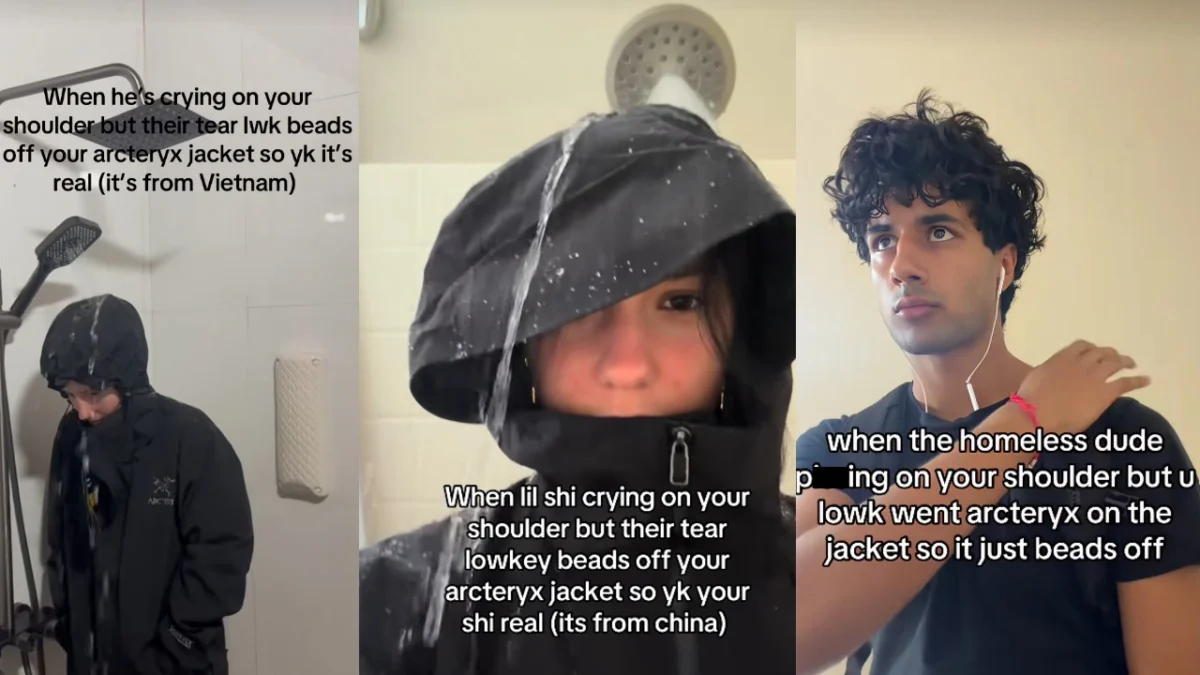
The intersection of high-performance technical apparel and internet subculture reached a new zenith in late 2026 as Arc’teryx, the Canadian outdoor brand known for its premium mountaineering gear, became the centerpiece of a global memetic trend. Centered on the brand’s proprietary water-repellent capabilities, the "Water Beads Off" memes have evolved from niche enthusiast jokes into a mainstream cultural shorthand for status, irony, and the "Gorpcore" fashion movement. While the brand has long been a staple of the climbing and hiking communities, its transition into a digital punchline highlights a broader shift in how luxury utility is perceived by a younger, digitally native demographic.
The phenomenon is anchored in the visual aesthetic of Durable Water Repellent (DWR) coatings. When functioning correctly, these chemical treatments cause moisture to form spherical droplets—beads—that roll off the fabric surface rather than saturating the fibers. This technical "beading" effect has become the primary metric by which social media users judge the authenticity and "flex" value of an Arc’teryx shell. What began as a celebration of engineering has morphed into a series of absurdist vignettes on platforms like TikTok and Instagram Reels, where the "beading off" action is applied to increasingly ridiculous scenarios.
The Chronological Evolution of the Arc’teryx Meme
The origins of the Arc’teryx meme cycle can be traced back to the early 2020s, coinciding with the rise of Gorpcore—a fashion trend characterized by wearing functional outdoor gear in urban environments. On December 24, 2021, the influential menswear commentator Derek Guy, known on the platform X as @dieworkwear, posted an early iteration of the trope. His post, which stated, "it’s ok to cry bro. your arc’teryx is tear resistant," garnered significant engagement and established the brand as a target for gentle mockery regarding its hyper-functional promises versus its actual use-case in metropolitan settings.
By 2026, the humor shifted from text-based irony to short-form video performance. Throughout September of that year, TikTok witnessed a surge in videos where owners of the "Dead Bird" (a nickname for the brand’s Archaeopteryx logo) performed exaggerated "water tests." On September 19, 2026, TikTok creator @zu__nn0 published a video depicting the performative nature of owning such a jacket, showing a user intentionally stepping into heavy rain solely to witness the water repelling from their sleeves. The video struck a chord with the platform’s algorithm, amassing nearly 400,000 views in under a month and spawning dozens of "duets" and imitations.
The trend took a turn toward the surreal in late September. On September 30, 2026, a video by @mistahgimmick introduced a darker, more absurdist element to the meme. The creator joked about a hypothetical scenario in which a homeless person’s urine would "bead off" an Arc’teryx jacket, emphasizing the perceived invincibility of the garment’s Gore-Tex membrane. This specific video helped transition the meme from a fashion-focused joke to a broader "status symbol" critique, highlighting the contrast between the jacket’s high price point and the gritty realities of urban life.
The "Rep" Culture and the Anxiety of Authenticity
By October 2026, the meme cycle entered its "authenticity phase." Because Arc’teryx jackets frequently retail for between $600 and $1,000 USD, a significant market for "reps" (replicas or counterfeit versions) has emerged. The "bead test" became the definitive, albeit unscientific, method for the internet to "call out" fake garments.
On October 2, 2026, an Instagram post by the user snailtrailenthusiast depicted a scenario where a woman’s tears soaked into an Arc’teryx jacket rather than beading off. The punchline—that the jacket was a fake and the wearer was subsequently reduced to tears themselves—garnered over 247,000 likes. This underscored a shift in the meme’s narrative: the jacket was no longer just a tool for the outdoors; it was a fragile social armor that could be "broken" if the technical specs failed to perform under social scrutiny.
This obsession with beading reached its peak on October 6, 2026, when creator @sofsverse posted a video claiming the "only way to test" a jacket was through extreme exposure. The video, which gained 1.1 million views in 24 hours, cemented the idea that the "bead" was the ultimate validator of wealth and taste.
Socio-Economic Context: Gorpcore and the "Urban Woodsman"
To understand the longevity of the Arc’teryx meme, one must analyze the socio-economic factors driving the brand’s popularity. Arc’teryx was founded in Vancouver in 1989 as "Rock Solid," focusing on climbing harnesses. Its rebranding and subsequent acquisition by Amer Sports (and later Anta Sports) saw it move into the luxury space. The brand’s Alpha and Beta series jackets became symbols of a specific type of "quiet luxury" that favored technical superiority over loud logos.
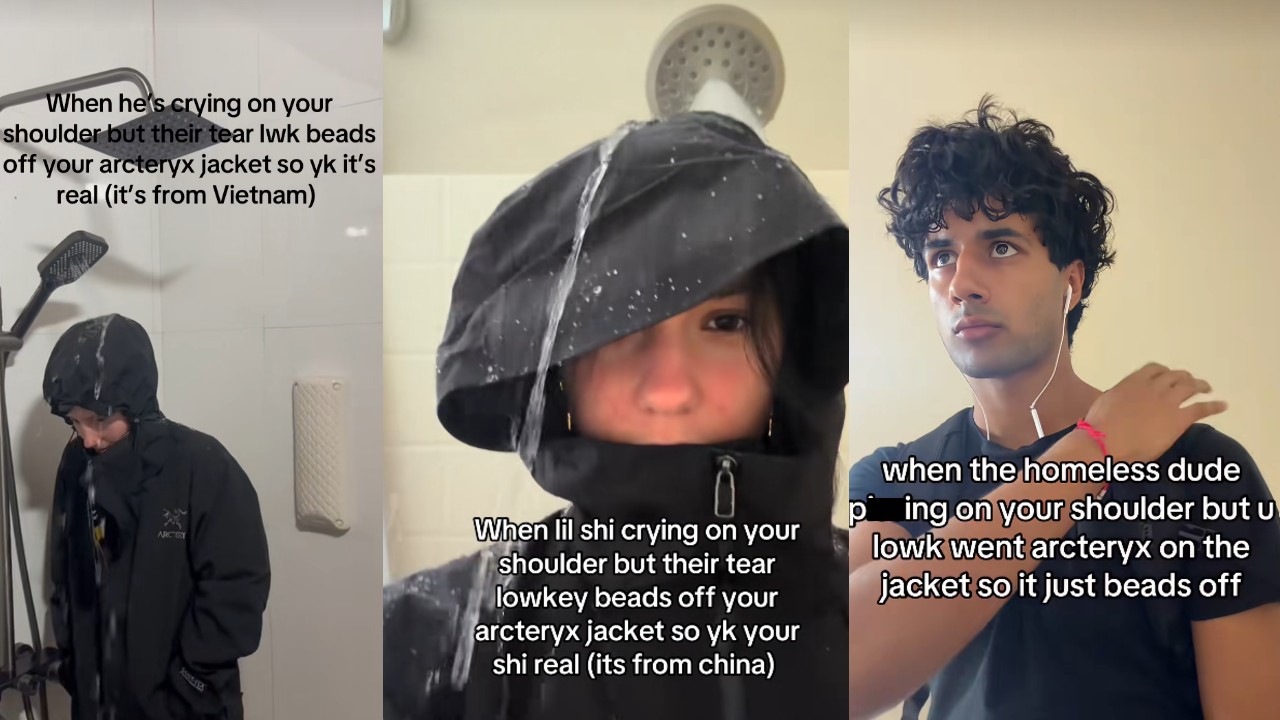
The "Water Beads Off" meme is a reaction to the "Urban Woodsman" archetype—individuals who purchase professional-grade alpine gear for use in cities like London, New York, or Tokyo, where the most "extreme" weather encountered is a light drizzle during a commute. Cultural analysts suggest that the meme serves as a form of "ironic consumption." By participating in the joke, owners of these jackets acknowledge the absurdity of their $800 raincoats while simultaneously reinforcing the brand’s status.
Market data from 2025 and 2026 indicates that Arc’teryx saw a 22% year-over-year increase in search interest among Gen Z consumers. Industry experts attribute this not only to the Gorpcore trend but to the brand’s visibility in hip-hop culture and high-fashion collaborations with houses like Jil Sander and Off-White. The meme acts as a bridge between these high-fashion aspirations and the relatable, everyday experience of social media users.
Technical Foundations: The Science of the Bead
The fascination with water beading is rooted in actual textile science. Arc’teryx utilizes GORE-TEX membranes paired with a DWR finish. The DWR is a polymer applied to the outer face fabric that increases the "contact angle" of water droplets. If the contact angle is high enough, the water cannot spread and soak in; instead, it maintains a spherical shape and rolls off due to gravity.
However, DWR is not permanent. It degrades due to dirt, body oils, and abrasion. The memes have inadvertently created a secondary market for technical garment care. Search interest in "DWR restoration" and "Nikwax" (a popular waterproofing treatment) saw a correlated spike in October 2026. Users were no longer just buying the jackets; they were becoming amateur chemists, obsessed with maintaining the "beadability" of their shells to avoid being mocked online for having a "flat" or "wetted out" jacket.
Industry and Public Reaction
While Arc’teryx has historically maintained a stoic, performance-first brand image, the company has had to navigate the unintended consequences of becoming a meme. In internal communications and occasional social media interactions, the brand has leaned into the "care and repair" aspect of the trend. By focusing on the longevity of the DWR coating, the brand has attempted to pivot the meme toward a message of sustainability—encouraging users to wash and treat their gear rather than replacing it.
Fashion critics have noted that the "Water Beads Off" trend is a double-edged sword. On one hand, it provides "free" marketing worth millions in impressions. On the other, it risks "overexposure," a phenomenon where a brand becomes so closely associated with a specific online joke that it loses its aspirational value among its core demographic of serious outdoor professionals.
Broader Implications and Cultural Impact
The Arc’teryx meme phenomenon is indicative of a larger trend in consumer behavior where "specs" become "vibes." Much like the obsession with the "click" of a mechanical keyboard or the "haptics" of a smartphone, the "beading" of a jacket is a tactile, visual confirmation of quality in an increasingly digital world. It represents a desire for "gear that works," even if the wearer never intends to use it for its designed purpose.
Furthermore, the meme highlights the "democratization of critique." In previous decades, only fashion editors or professional climbers could deconstruct the value of a technical garment. Today, a teenager with a smartphone and a bottle of water can "review" a $900 jacket for an audience of millions. The "bead test" is the ultimate equalizer; the water either rolls off, or it doesn’t.
As we move toward the end of 2026, the Arc’teryx "Water Beads Off" meme remains a potent example of how technical utility can be repurposed into social currency. Whether the brand will remain a staple of the fashion elite or eventually be replaced by the next "hyper-spec" trend remains to be seen. However, for now, the sight of water droplets dancing on a Gore-Tex surface remains one of the most recognizable and parodied images in the digital landscape, proving that in the world of modern fashion, performance is nothing without the "bead."

