
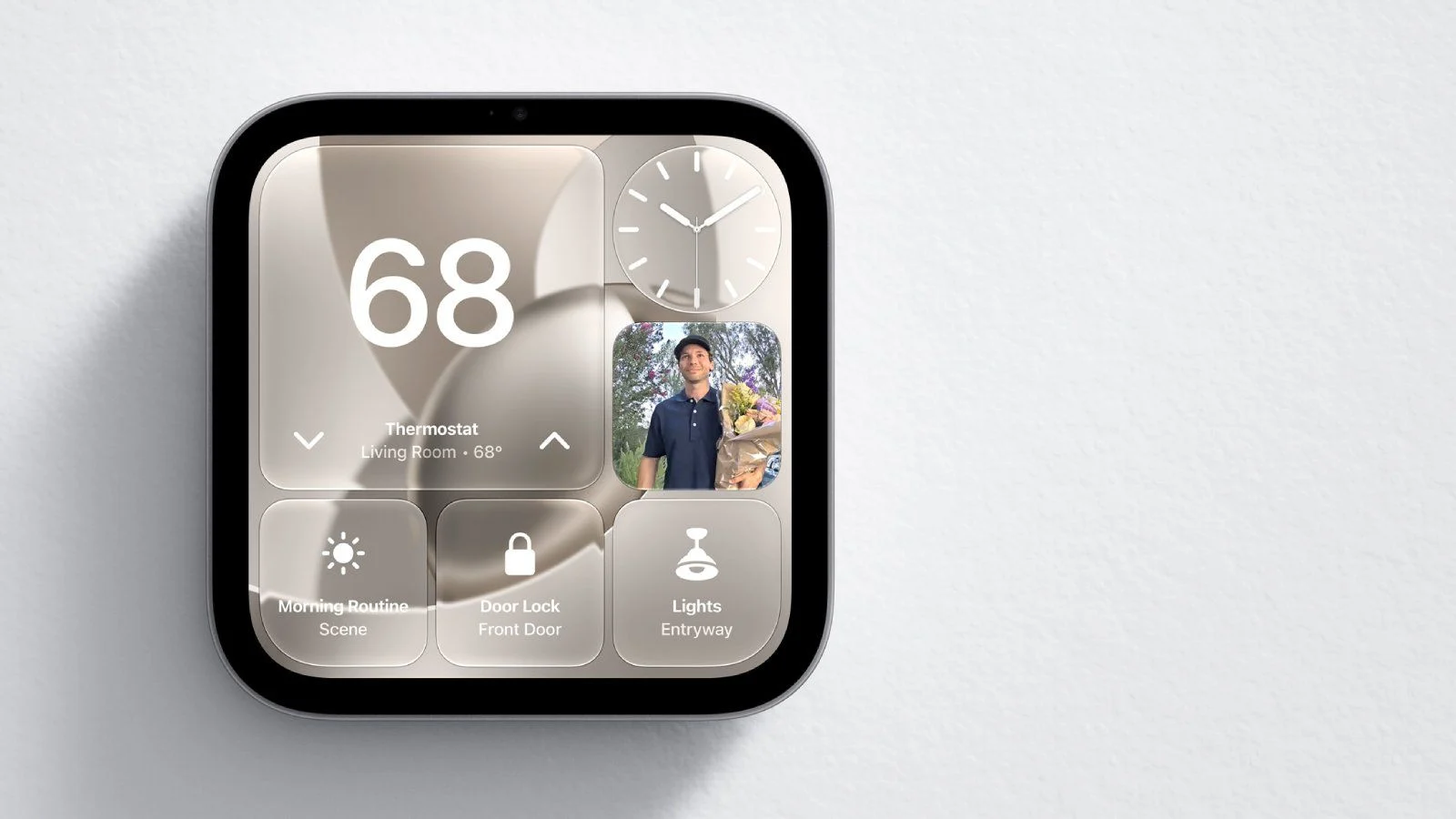
Apple has partnered with ADT, a leading provider of security and smart home solutions, to offer professional installation services for its new wall-mounted HomeView hub and a range of compatible smart home accessories. This strategic collaboration, set to commence this autumn across most areas of the United States, signifies Apple’s deepening commitment to the smart home ecosystem and addresses a key hurdle for consumers: the often complex process of integrating advanced smart home devices. ADT technicians will be responsible for fitting the sleek, wall-mounted HomeView panel and its associated accessories, ensuring a seamless and professional setup for homeowners.
This arrangement directly confirms an earlier report that emerged on October 10th, hinting at a potential partnership between the tech giant and the security stalwart. The announcement of this collaboration followed closely on the heels of Apple’s unveiling of the HomeView hub, alongside a broader selection of third-party accessories designed to enhance the smart home experience for Apple users. The HomeView hub, Apple’s latest entry into the smart display market, is poised to play a pivotal role in orchestrating the connected home, offering a central point of control for various smart devices.
Beyond the HomeView hub itself, ADT’s trained technicians will also be equipped to install the Apple Home Collection accessories from prominent manufacturers such as LG and Schneider Home. This extended scope of service aims to simplify the adoption of a comprehensive smart home system, allowing consumers to integrate a wider array of eligible smart products with ease. Apple’s website indicates that these installation services will be available in "most areas" of the US, suggesting a phased rollout and potential future expansion.
The HomeView hub’s functionality is intrinsically linked to the Apple HomeKit framework, requiring a compatible home hub to operate effectively. With the introduction of HomeView, Apple now offers a quartet of devices capable of fulfilling this crucial role: the HomePod, the HomePod mini, the Apple TV 4K, and now, the HomeView hub itself. This expands the options for users looking to leverage the full capabilities of HomeKit, from remote access and automation to enhanced security features.
For ADT, this partnership represents a significant expansion of its professional installation services beyond its traditional security offerings. The company has a proven track record in this domain, having partnered with Google since 2020 to install Google Nest cameras, doorbells, and thermostats. This prior experience with a major tech player like Google has undoubtedly prepared ADT for the complexities and scale of integrating Apple’s burgeoning smart home ecosystem. The inclusion of Apple alongside Google positions ADT as a neutral, yet highly capable, installer for consumers across different smart home platforms.
The advent of the wall-mounted HomeView hub, in particular, offers a distinct advantage over many smart displays currently available on the market. Unlike most smart displays from Amazon and Google, which are designed to sit on shelves or countertops, the HomeView hub’s wall-mounted configuration necessitates a more deliberate installation process. This is precisely where ADT’s expertise becomes invaluable. For consumers who prefer a cleaner aesthetic or lack suitable surface space, the option for professional wall mounting by ADT technicians eliminates the need for potentially complex DIY drilling and bracket fitting. This caters to a segment of the market that prioritizes a refined, integrated look for their smart home technology.
A Closer Look at the HomeView Hub: Design and Installation Options
The wall-mounted version of the HomeView hub shares the same 7-inch display as its tabletop counterpart, offering a visually appealing interface for managing smart home devices and accessing information. It is available in Apple’s signature finishes: Space Grey and Silver, colors that are also prominent across its Mac and iPad product lines, ensuring a consistent design language within the Apple ecosystem. The speaker grilles are discreetly positioned along the bottom edge, contributing to its minimalist aesthetic.
To facilitate its wall-mounted deployment, Apple has collaborated with Schneider Home to develop three purpose-built mounting solutions. These brackets are designed to securely attach the hub to a wall. Consumers have the flexibility to either install these brackets themselves, a task that may appeal to DIY enthusiasts, or opt for the professional installation service offered by ADT. The latter option comes with an additional charge but guarantees a professional finish and peace of mind for those who prefer to delegate the installation.
The tabletop version of the HomeView hub, by contrast, requires no physical installation, making it an immediate plug-and-play device. This distinction is crucial in understanding the scope of ADT’s involvement. While the tabletop model is straightforward to set up, ADT’s primary focus for Apple installations will be on the wall-mounted hub and any hardwired smart home devices that necessitate more involved electrical work or drilling. This includes items such as wired video doorbells and smart deadbolts, which often require professional intervention to ensure proper functioning and safety.
Pricing and Availability: A US-Centric Launch
Both the wall-mounted and tabletop versions of the HomeView hub are priced at $299 in the United States. This pricing positions the HomeView hub competitively within the premium smart display market. However, Apple has yet to confirm pricing details for the United Kingdom or indicate whether the ADT installation service will be extended beyond the American market. This suggests a deliberate, phased approach to the global rollout of both the product and its associated services.
Apple has indicated that ADT installation services for the HomeView hub will commence this autumn in the US, though a specific launch date has not yet been announced. ADT has proactively provided further details regarding this new service on its dedicated installation website, offering potential customers a clearer understanding of the process, service areas, and associated costs. This transparency is crucial for managing consumer expectations and ensuring a smooth transition into the Apple-powered smart home.
Broader Implications for the Smart Home Market
The partnership between Apple and ADT carries significant implications for the broader smart home industry. Firstly, it addresses a persistent barrier to entry for many consumers: the perceived complexity of smart home installation. By enlisting a trusted and experienced installer like ADT, Apple is making it easier for a wider audience to embrace its smart home offerings. This move could lead to increased adoption rates for HomeKit-enabled devices and further solidify Apple’s position in the connected home landscape.
Secondly, the collaboration highlights a growing trend of tech companies partnering with service providers to enhance the user experience. As smart home technology becomes more sophisticated, the need for professional installation and ongoing support is becoming increasingly apparent. Apple’s decision to leverage ADT’s established network and expertise suggests a recognition that hardware alone is not enough; a comprehensive service offering is essential for long-term success.
Furthermore, this partnership could spur further innovation in the smart home installation sector. With two major tech players – Google and Apple – now relying on ADT for professional installations, the company is positioned to become a dominant force in this space. This could lead to the development of more standardized installation protocols, improved technician training, and potentially, more competitive pricing for consumers.
The availability of professional installation for wall-mounted smart displays like HomeView also sets a new benchmark for the industry. As consumers increasingly seek integrated and aesthetically pleasing smart home solutions, the ability to seamlessly mount devices like the HomeView hub on walls will likely become a more sought-after feature. This could encourage other manufacturers to explore similar form factors and installation options, ultimately benefiting consumers with a wider range of choices.
The strategic alliance also underscores the evolving nature of the smart home market. It is no longer solely about individual devices but about creating an interconnected ecosystem of products and services. Apple’s investment in a robust installation infrastructure, facilitated by ADT, signals its long-term vision for the smart home – one that prioritizes user-friendliness, reliability, and a premium experience from the initial setup to daily operation. As the smart home continues its trajectory towards mainstream adoption, partnerships like this will play a crucial role in shaping its future.

