
The e-commerce sector is experiencing a period of rapid innovation, with new tools and services emerging at an unprecedented pace to address the evolving needs of merchants and consumers. This week’s releases highlight a significant push towards agentic commerce, AI-powered personalization, expedited delivery, and enhanced cross-border capabilities, signaling a transformative shift in how businesses operate online and engage with their customers. From same-day delivery networks to AI agents capable of independent purchasing, the digital marketplace is becoming more sophisticated, efficient, and customer-centric.
Accelerated Fulfillment and Delivery Innovations
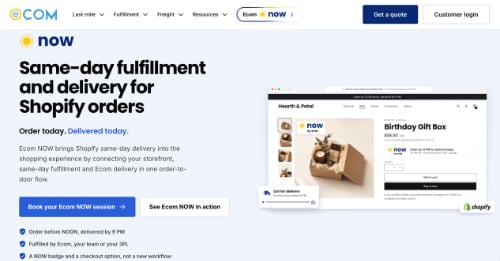
In a move that will significantly impact online shoppers in Canada, Ecom Logistics has launched Ecom Now, a dedicated same-day fulfillment and delivery service specifically for Shopify merchants. This new offering seamlessly integrates with a merchant’s Shopify storefront, leveraging Ecom Logistics’ established order-to-door network across Canada. The service aims to bridge the gap between order placement and final delivery, promising that eligible products ordered before noon will reach customers by 9:00 PM on the same day. Initially, Ecom Now is available in major metropolitan areas including Toronto, Montreal, Vancouver, and Calgary, a strategic choice to tap into high-demand urban markets where the expectation for rapid delivery is strongest. This development aligns with a broader industry trend towards on-demand logistics, where speed and convenience are increasingly becoming key differentiators for online retailers. The average consumer now expects delivery within 1-2 days, and same-day services are becoming a critical competitive advantage for businesses that can implement them effectively.
AI-Driven Advancements in Marketing and Commerce
Meta has introduced a suite of new artificial intelligence capabilities designed to empower advertisers and streamline e-commerce operations. The Meta AI business assistant has been enhanced with creative insights drawn from Ads Creative Studio, providing deeper contextual understanding of a business’s performance and audience engagement. Furthermore, generative AI video tools have been expanded within Ads Creative Studio and Advantage+, enabling the transformation of static product images into dynamic video content. This capability is particularly valuable for e-commerce businesses looking to create more engaging product showcases with greater efficiency. The platform is also pushing the boundaries of customer interaction by allowing consumers to complete purchases directly within conversations, eliminating the need to navigate away from messaging interfaces. Looking ahead, AI-enabled audience discovery is set to be integrated into Detailed Targeting, promising more precise and effective audience segmentation for advertisers. These advancements reflect Meta’s ongoing commitment to leveraging AI to enhance advertising effectiveness and facilitate seamless commerce experiences on its platforms. The global AI in retail market is projected to reach $47.5 billion by 2027, underscoring the significant investment and focus in this area.

Streamlining Payments and Checkout Experiences
BigCommerce, a leading e-commerce platform, has announced the expansion of its embedded payment solution, BigCommerce Payments by PayPal, into the United Kingdom. This strategic move integrates card payments, PayPal, Apple Pay, Google Pay, and other digital wallets into a unified, native checkout experience directly within the BigCommerce platform. While the service is co-branded, the underlying payment relationship remains with PayPal, offering merchants a familiar and trusted payment processing infrastructure. The introduction of this consolidated checkout solution aims to reduce friction for UK-based merchants and their customers, potentially leading to higher conversion rates and improved customer satisfaction. Seamless payment integration is a critical component of the e-commerce journey, with studies showing that a complicated checkout process is a primary reason for cart abandonment, which can reach up to 70% for online shoppers.
Shopify is enhancing its consumer-facing app, Shop, with new features designed to create a more fluid and personalized shopping experience. Shop users can now be verified while browsing a store, even before making a purchase. For these users, checkouts will load faster, shopping carts will synchronize across multiple devices, and sign-in will be streamlined with one-tap authentication. The "Buy with Shop Pay" button will also be pre-filled, further accelerating the checkout process. Additionally, browsing activity will be synced to a user’s Shop account, allowing the app to resurface viewed items and abandoned carts, thereby encouraging customers to return and complete their purchases. This integration of browsing data with purchasing intent aims to create a more cohesive and responsive shopping journey, leveraging user behavior to drive conversions.
Typeform, a platform renowned for its interactive conversational forms, has launched AI Landing Pages, a new tool designed to simplify the creation of branded, publish-ready landing pages. Through an intuitive conversational interface with Typeform AI, businesses can generate and refine landing pages, integrate native forms and payment options, and monitor performance all within a single platform. Users have the flexibility to either integrate an existing form or instruct Typeform AI to build a custom form tailored to the specific goals of the landing page. This AI-driven approach to landing page creation aims to democratize access to high-converting digital assets, enabling businesses of all sizes to quickly deploy effective online presences without extensive technical expertise. The ability to integrate forms and payments directly into AI-generated pages streamlines the lead generation and conversion process.
Enhancing Cross-Border Commerce and Retail Media
Google Ads is introducing commerce audience sharing, a significant development that will allow retailers and marketplaces to share their first-party audience segments with brands and sellers participating in eligible retail media campaigns. This feature requires retailers to link their Google Ads account with their relevant Google Merchant Center and data-sharing accounts. Both the commerce partner and the advertising partner must adhere to Google’s eligibility criteria for this feature. The shared audiences will be exclusively available for campaigns within commerce media networks, enabling more targeted advertising and improved return on ad spend for brands operating within these ecosystems. This move by Google underscores the growing importance of first-party data and the increasing sophistication of retail media networks, which are projected to generate over $50 billion in ad revenue by 2025.
The Rise of Agentic Commerce and AI Integration
Crossmint has launched the Agent Commerce Toolkit, a development poised to revolutionize how AI agents interact with online retail. This toolkit enables AI agents to initiate and complete purchases at any online store by facilitating payments with any card. The toolkit manages the entire purchase lifecycle, from securely saving a card to finalizing the checkout process, all through a single integration. It is now live and available as a self-serve solution, with developers able to integrate it via a simple prompt and access an open-source reference application. This innovation paves the way for a future where AI agents can autonomously manage shopping tasks, from product research to transaction completion, marking a significant step towards fully automated consumer experiences. The concept of agentic commerce, where AI agents act on behalf of consumers, is rapidly evolving, with significant implications for customer service, personalization, and the overall e-commerce landscape.
Zenkraft, a shipping platform built natively on Salesforce, has released an app specifically for Salesforce B2C Commerce’s Storefront Next. Titled "Shipping for Agentic Commerce," this new application provides merchants with a turnkey solution to incorporate estimated delivery dates, branded tracking features, and return capabilities directly into their storefronts, bypassing the need for custom integration. The app is available through the Commerce App Registry, offering a streamlined approach to enhancing the post-purchase experience. This move by Zenkraft anticipates the growing demand for sophisticated shipping and returns management within the evolving agentic commerce environment, where seamless logistics are paramount for customer satisfaction.
Shopware has introduced the Agentic Commerce Maturity Index, a new tool designed to help merchants assess their readiness for AI-driven commerce. This index provides a structured framework for businesses to evaluate their current standing in the global agentic commerce market. The self-assessment, which comprises 24 questions and takes approximately 25 minutes to complete, evaluates four key areas: discovery, transactions, fulfillment, and operations. Upon completion, merchants receive an immediate maturity score, a comparative analysis against other participants, and actionable recommendations for future strategic steps. This initiative by Shopware aims to guide merchants through the complex transition to agentic commerce, offering clarity and a roadmap for adopting AI technologies. The global market for AI in e-commerce is expected to grow at a CAGR of 35% from 2023 to 2030.
Kantar, a leader in brand intelligence, has launched Kantar Experience Impact, a new offering powered by the Qualtrics platform. This solution combines insights from both customers and non-customers to demonstrate how customer experiences influence brand perceptions across the entire market. Kantar Experience Impact can integrate voice-of-customer data with operational and brand metrics to provide a comprehensive understanding of market dynamics. Developed in collaboration with Qualtrics, the offering is accessible through the Qualtrics platform and marketplace, providing businesses with a powerful tool to measure and manage the impact of their customer experience strategies on brand equity.

Sellforte, a measurement and optimization system for retail and e-commerce, has introduced the Incremental Pixel, an attribution capability designed for daily e-commerce measurement. This new feature combines customer journey data with causal evidence derived from incrementality experiments and marketing mix modeling. The Incremental Pixel calibrates attribution across multiple ad platforms, enabling marketers to identify which campaigns are genuinely driving incremental sales. This launch provides e-commerce and retail marketers with a robust measurement system for optimizing paid media campaigns on a daily basis and making informed strategic investment decisions. Accurate attribution is crucial for optimizing marketing spend, and the ability to measure incremental impact offers a more precise view of campaign effectiveness.
Constructor, a product discovery platform focused on agentic commerce, has unveiled Agentic Checkout, powered by Stripe. This new solution enables shoppers, whether human or AI agents, to discover and purchase products seamlessly within a single AI agent conversation and interface. Agentic Checkout facilitates the entire buying journey, from product discovery and personalized recommendations to secure checkout and payment, all without leaving the agent experience. Shoppers can utilize the Link by Stripe digital wallet or other preferred payment methods. This integration signifies a major step towards frictionless purchasing within AI-driven interactions, allowing for more intuitive and efficient online shopping.
DaVinci Commerce has expanded its Agentic Commerce Experience Platform with an updated architecture and its proprietary Product Context Memory technology. This enhancement aims to equip brands and retailers with advanced capabilities to compete effectively in the evolving market. The expanded platform integrates three core components: the Agentic Discoverability Engine, the Brand Agent, and the Agentic BrandStore. The Product Context Memory technology continuously builds a rich repository of contextual knowledge for each stock-keeping unit (SKU), linking authoritative product information with relevant benefits, consumer needs, use cases, and supporting evidence. This deep understanding of product context is vital for AI agents to provide highly relevant and persuasive recommendations.
Strengthening Global Commerce and Data Integration
FedEx Dataworks, the insights and intelligence subsidiary of FedEx Corp., has partnered with Stripe to reduce friction in global commerce for small and medium-sized businesses (SMBs). This collaboration aims to expand global commerce access by combining the extensive FedEx network with Stripe’s robust financial infrastructure. The companies plan to leverage their respective platforms to improve access to financing for SMBs. Additionally, FedEx will integrate Stripe as a payment processing option, significantly broadening the array of payment methods available to its customers. This partnership is a strategic move to simplify international trade and financial operations for smaller businesses, a segment often facing challenges in global expansion.
Razorpay, a financial solutions and payment services company, is collaborating with OpenAI to facilitate ChatGPT Ads for brands in India through its marketing platform, Razorpay Engage. This partnership will empower Razorpay Engage to assist brands in preparing their product catalogs, launching advertising campaigns, and measuring campaign performance on ChatGPT Ads. The integration leverages the generative capabilities of ChatGPT to create new advertising avenues for Indian businesses, aiming to enhance their reach and marketing effectiveness. This collaboration highlights the growing trend of integrating AI language models into marketing and advertising strategies.
SyncSpider, a provider of business integration and workflow automation solutions, has introduced B2Bware, a dedicated B2B portal designed for managing orders, customers, products, and operational data. Through integrations with popular platforms such as Odoo, Shopware, and Shopify, SyncSpider aims to help companies eliminate data silos and reduce their reliance on manual processes involving spreadsheets and emails. B2Bware offers users a unified environment to manage product catalogs, customer information, order documents, pricing, and real-time inventory levels. This centralized approach to B2B data management is crucial for improving operational efficiency and fostering stronger business-to-business relationships.
The rapid evolution of e-commerce, driven by advancements in AI, logistics, and payment technologies, presents both opportunities and challenges for merchants. The continuous stream of new tools and services underscores a commitment to creating more personalized, efficient, and seamless shopping experiences for consumers while empowering businesses with greater control and insight into their operations. As these technologies mature, the lines between online and offline commerce will continue to blur, and the ability to adapt to these transformative changes will be paramount for success.

