
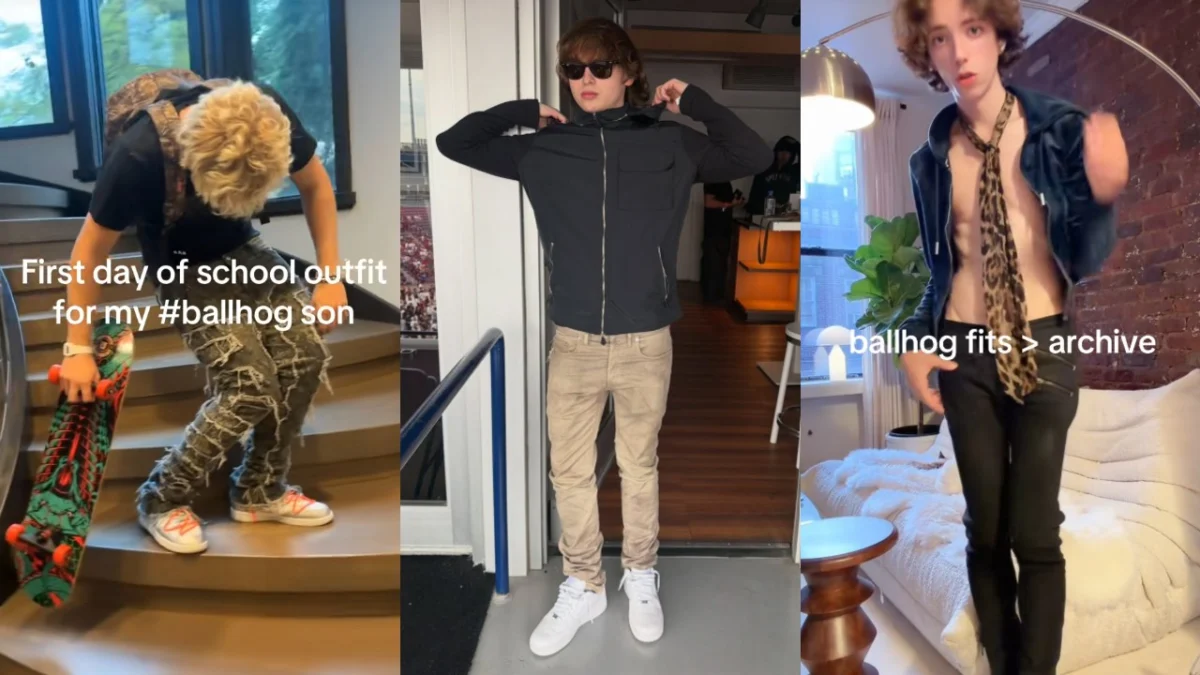
The fashion landscape of 2026 has been significantly altered by the emergence of Ballhog, an aesthetic movement that prioritizes the acquisition and display of rare, vintage, and archival designer garments that deliberately eschew traditional markers of wealth. Often referred to interchangeably as Ball Hog, the trend represents a sophisticated evolution of "quiet luxury," tailored specifically for a generation raised on streetwear, digital streaming, and the high-stakes world of secondary market reselling. Unlike previous trends that relied on prominent logos or recognizable silhouettes to telegraph status, Ballhog centers on a "if you know, you know" philosophy, where the value of an outfit is visible only to those with deep technical knowledge of fashion history and designer catalogs.
Defining the Ballhog Aesthetic: The Art of the Invisible Flex
At its core, Ballhog is defined by its irony. The term, traditionally used in sports to describe a player who refuses to share the ball, has been repurposed to describe a fashion enthusiast who "hoards" cultural capital through clothing that appears mundane to the uninitiated. A typical Ballhog "fit" might consist of a weathered work jacket, a pair of faded denim jeans, and a nondescript knit sweater. However, to a devotee of the movement, these items are identified as rare pieces from Hedi Slimane’s tenure at Dior Homme, archival Helmut Lang, or limited-run experimental garments from the early 2000s.
The aesthetic relies on the tension between the high cost of the items—often reaching thousands of dollars on secondary markets like Grailed or specialized archival showrooms—and their intentionally "average" or "unimpressive" visual impact. This creates a closed loop of social signaling. By wearing clothes that do not look expensive to the general public, the wearer avoids the perceived "tastelessness" of overt branding while simultaneously asserting dominance within a niche community of experts.
Origins and the Influence of the Ballhog Collective
The popularization of the movement is largely attributed to Brady Goodwin, a prominent digital creator and streamer better known by his online moniker, Bradygoo. Goodwin is a central figure in the Ball Hog collective, a group of influential streamers and cultural commentators that includes high-profile figures such as BruceDropEmOff and Protect Ricky. Throughout late 2025 and the first half of 2026, Goodwin utilized platforms like Instagram and Twitch to showcase a curated wardrobe that deviated from the "hypebeast" trends of previous years.
Goodwin’s influence stems from his ability to bridge the gap between high-fashion archival collecting and the "everyman" persona of the streaming world. By documenting his "fits" on his Instagram account, Goodwin provided a blueprint for his audience: the goal was no longer to own the latest sneaker collaboration, but to find a 20-year-old designer piece that looked like something found in a thrift store but possessed a pedigree of high-fashion innovation. The Ball Hog collective’s endorsement provided the movement with an air of authenticity and "street-level" credibility that traditional fashion houses often struggle to manufacture.
Chronology of a Viral Movement: From Niche Subculture to Media Mainstream
The trajectory of Ballhog throughout 2026 illustrates the speed at which niche internet subcultures can transition into broader cultural phenomena. While the seeds were sown in 2025, the movement hit a critical mass in the summer of 2026.
The Summer Surge (July – August 2026)
In July 2026, the trend began to migrate from the insular circles of fashion-forward streamers to the broader TikTok ecosystem. On July 19th, a creator operating under the handle @bobbylief shared a video showcasing a Ballhog-inspired outfit. The video, which emphasized the use of "niche" and "archival" tags, resonated with users looking for an alternative to the hyper-consumerism of fast fashion. The post garnered over 330,000 views within a three-month window, signaling a growing appetite for the aesthetic.
By August, the movement had gained international traction. On August 23rd, Brady Goodwin released a YouTube video titled "Reacting to Japanese YouTubers Reacting to Ballhog." This cross-cultural exchange was pivotal; Japan has long been considered the global epicenter of archival fashion and vintage collecting. The recognition of the Ballhog aesthetic by Japanese fashion enthusiasts validated the movement’s technical merits and expanded its reach beyond the United States.
The Autumn Peak (October 2026)
The movement reached its zenith in October 2026, as both mainstream media and digital creators converged on the trend. On October 9th, The Cut published a definitive feature titled "The New TikTok Aesthetic Is ‘Ball Hog,’" providing a formal sociological analysis of the trend. This media coverage marked the transition of Ballhog from a subculture into a recognized fashion category.
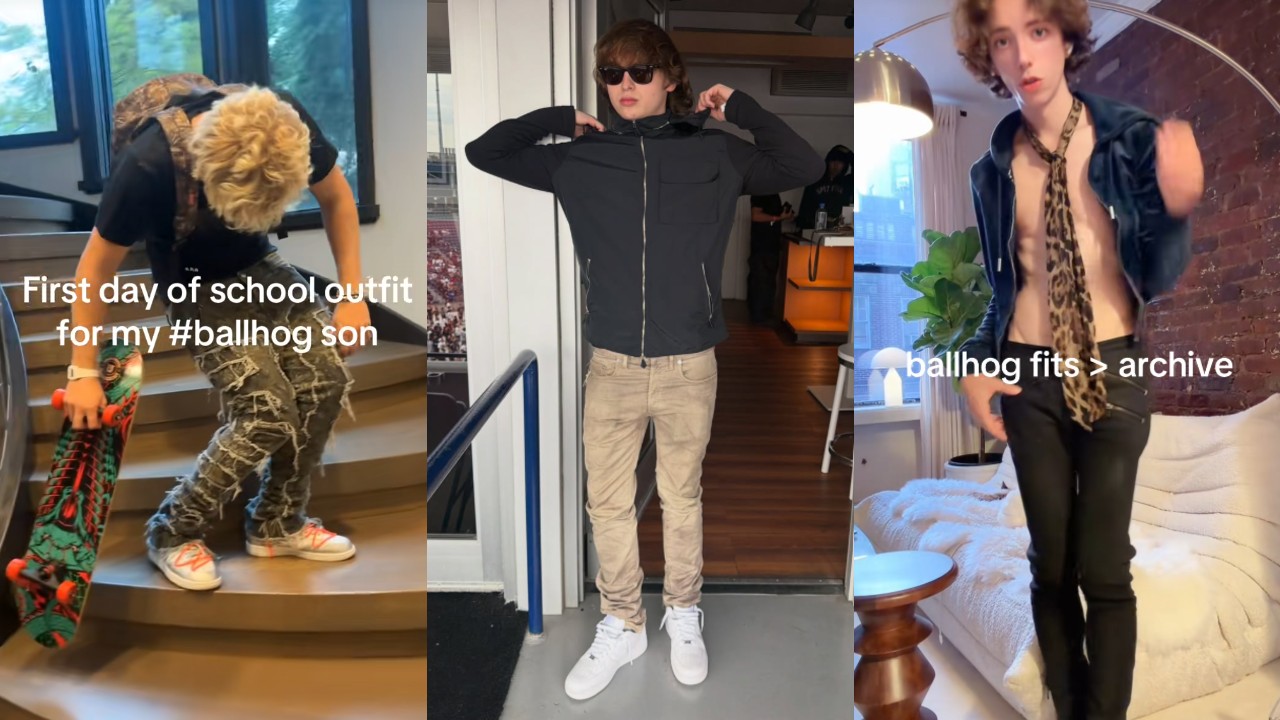
Just days later, on October 12th, the trend achieved massive viral success through a different medium. TikTok user @lost2muchbloodd posted a 3D-animated video featuring a character performing a dance while wearing a hyper-accurate Ballhog outfit. The video’s use of the hashtag #ballhog helped it amass over 3.3 million views in a single week, demonstrating the trend’s saturation in digital youth culture.
The Philosophy of Gatekeeping and Social Capital
The rise of Ballhog is intrinsically linked to the concept of "gatekeeping"—the practice of withholding information to maintain the exclusivity of a community. In an era where fashion trends are instantly disseminated and replicated by mass-market retailers, the Ballhog community views obscurity as a form of protection.
Analysis of the trend suggests that the "average" look of Ballhog clothing serves as a functional barrier. Because the items do not have large logos, they cannot be easily searched for by casual observers. To replicate the look, one must possess the vocabulary of fashion history (e.g., knowing the difference between "Hedi-era" and "modern" silhouettes). This makes Ballhog a form of "intellectual fashion," where the value lies in the wearer’s knowledge rather than the garment’s immediate visual appeal.
Furthermore, the trend reflects a broader economic shift. As the luxury market becomes increasingly accessible through credit and "buy now, pay later" schemes, traditional status symbols have lost their potency. Ballhog offers a new tier of exclusivity that is based on time, research, and the ability to source rare items from the past, rather than simply having the capital to buy a new product from a mall.
Market Impact: The Archival Boom
The popularity of Ballhog has had a tangible impact on the secondary fashion market. Platforms like Grailed and Vestiaire Collective have reported a surge in searches for "archival," "niche," and specific designers associated with the movement, such as Hedi Slimane, Raf Simons, and early 2000s Japanese labels like Number (N)ine and Undercover.
Data from late 2026 indicates that the prices for "non-descript" archival pieces—such as plain black trousers or simple military-inspired jackets—have increased by as much as 40% compared to the previous year. This "Ballhog Effect" has led to a re-evaluation of vintage clothing, where the condition and brand history are prioritized over aesthetic flashiness.
Reactions and Criticisms
While the movement has been celebrated for its focus on quality and fashion history, it has also faced criticism. Some fashion critics argue that Ballhog is an elitist trend that celebrates "looking poor" while spending exorbitant amounts of money, a critique similar to those leveled against the "grunge" movement of the 1990s. Others point out that the trend’s reliance on "gatekeeping" can create a toxic and unwelcoming environment for new fashion enthusiasts.
However, defenders of the movement, including members of the Ball Hog collective, argue that the trend encourages a more sustainable approach to fashion. By focusing on vintage and archival pieces, Ballhog promotes the longevity of garments and discourages the "disposable" nature of modern retail.
Implications for the Future of Streetwear
As 2026 draws to a close, the Ballhog aesthetic appears to be more than a passing fad. It represents a fundamental shift in how status is communicated in the digital age. The move away from the "logo-mania" of the 2010s toward a more subtle, research-heavy form of dressing suggests that the future of streetwear lies in curation rather than consumption.
The success of creators like Brady Goodwin and the widespread adoption of the Ballhog label on platforms like TikTok and YouTube indicate that the next generation of fashion icons will be those who can navigate the complexities of fashion history. Whether the movement retains its "niche" status or eventually becomes the very thing it seeks to avoid—a recognizable and easily replicated uniform—remains to be seen. For now, Ballhog stands as a testament to the power of subcultural knowledge in an increasingly transparent world.

