
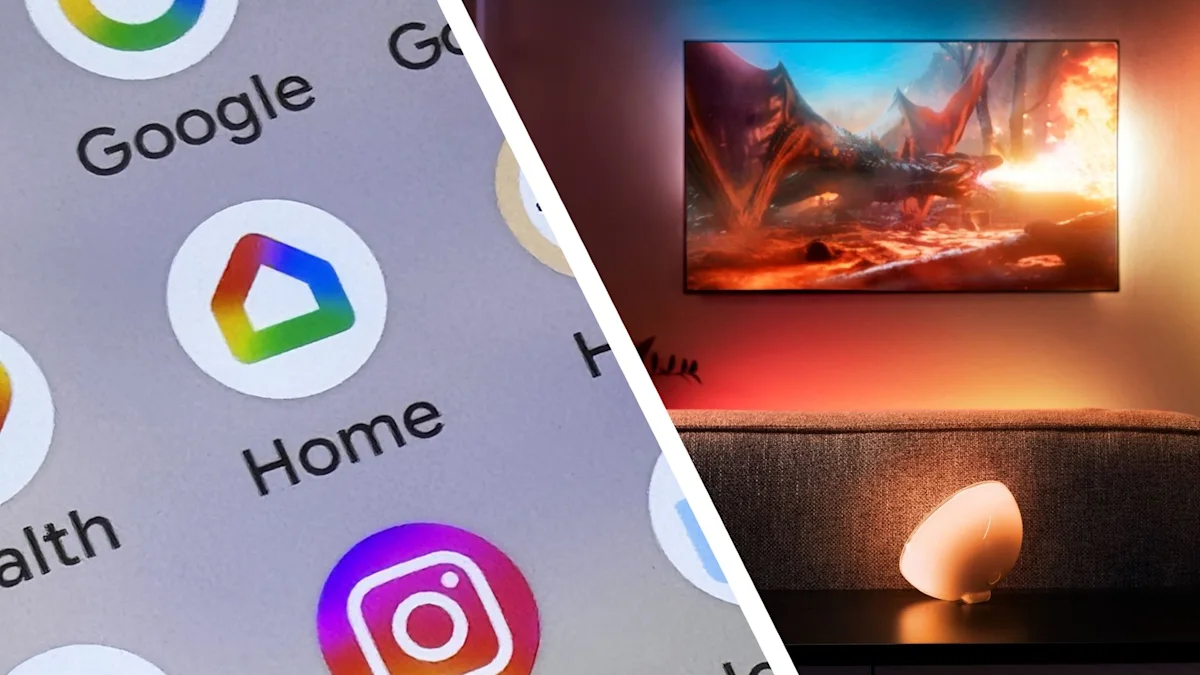
Philips Hue smart lighting systems integrated with Google Home are now undergoing a significant backend upgrade, automatically transitioning to local Matter control without requiring any user re-pairing. This advancement means that commands issued through Google Home hubs will be processed directly over a user’s home network, bypassing the need for remote cloud servers. Google has indicated that this shift, facilitated by its compatible hubs, is designed to enhance the responsiveness and reliability of Hue lights, addressing a long-standing limitation of cloud-based communication.
Historically, Philips Hue setups have relied on a cloud-to-cloud connection to communicate with Google Home. Each command, from turning on a light to adjusting its brightness, would travel from the user’s device, through Google’s servers, to Philips’ servers, and then back to the Hue bridge and the light. This multi-step process, while functional, introduced inherent latency, meaning users would experience a slight delay between issuing a command and the light responding. The move to local control promises to drastically reduce this latency, offering a more immediate and fluid smart home experience.
The implications of this local control extend beyond mere speed. In scenarios where a user’s broadband internet connection experiences an outage, local control offers a potential lifeline for smart home functionality. While Google has not yet provided exhaustive details on the extent of offline operation, the principle of local processing suggests that core lighting functions, at the very least, could remain operational. This is a crucial development for smart home users who depend on their systems for convenience and even security. The Matter standard, which underpins this transition, is designed to foster interoperability and local control across different smart home brands and devices, and this update demonstrates a significant step forward in its practical application within the Google Home environment.
The benefits of local Matter control are not exclusive to Philips Hue users. Google has confirmed that other Matter-enabled devices connected through compatible hubs will also receive these speed and reliability enhancements. This unified approach to local control across a broader range of smart home products underscores Google’s commitment to the Matter standard and its vision for a more seamless and resilient smart home ecosystem.
Beyond control mechanisms, Google has also implemented a redesign of its controls for third-party smart home devices, including lights, plugs, and switches. The full-screen interface for most devices has been updated with a swipe-up panel. This panel provides quick access to frequently used features such as favorites, device history logs, and settings, streamlining user interaction and making it easier to manage individual devices.
Gemini for Home Enhancements Address User Feedback
The early access program for Gemini for Home, Google’s advanced AI assistant for smart home management, is also receiving notable updates. These refinements address specific user feedback, aiming to improve its conversational flow and command execution. For instance, users can now express gratitude at the end of a chat, and Gemini will provide a concise sign-off. More critically, commands to cease an interaction are now more responsive. Previously, instructing Gemini to "stop" could sometimes lead to the entire conversation being terminated. Now, telling Gemini to "stop talking" will immediately mute its microphone, offering greater control and predictability.
This improved understanding of the "stop" command is particularly important for the reliability of Gemini for Home. Before this update, users might have found that requesting Gemini to stop music playback, a running timer, or an active alarm could inadvertently end the entire dialogue. This could be frustrating, especially when trying to manage multiple tasks concurrently. The current iteration aims to differentiate between a request to halt a specific function and a command to end the assistant’s engagement altogether.
Furthermore, Gemini for Home is becoming more attuned to user preferences for ambient sounds. Requests for "relaxing," "spa," or "meditation" music will now draw from linked music streaming services, offering a diverse selection of tracks. This is a departure from previous behavior, where such requests might have resulted in generic rain or white noise sounds. This update enhances the personalization and utility of Gemini for Home, aligning its responses with user-defined listening habits and service subscriptions.
Another significant improvement involves spoken weather forecasts. These forecasts will now utilize the temperature unit (Celsius or Fahrenheit) that has been configured within the user’s Google Home app settings. This ensures consistency, meaning a user who has set their home to Celsius will receive forecasts in Celsius, rather than being presented with Fahrenheit, which can be confusing and inconvenient. This localization of information is a key aspect of a user-friendly smart home experience.
It is important to note that these Gemini for Home enhancements are currently available to UK users and those in 15 other countries only if they have actively joined the early access program. Google expanded this program to these regions in April 2026, indicating a phased rollout strategy for its most advanced AI features.
Google Home App Refinements and Broader Rollout Strategy
The Google Home application itself is also benefiting from a series of refinements designed to improve user experience and stability. One notable fix addresses issues with drag-and-drop functionality for reordering Favourites. Users have reported instances where this feature would not behave as expected, leading to frustration. The update aims to ensure that the process of customizing the Favourites section is now smooth and predictable.
Additionally, a new banner has been introduced to provide clear notifications about events related to smoke and carbon monoxide alarms. This banner will now display information about what happened and when, offering a concise log of critical safety events after an alarm has been cleared. This provides users with immediate and easily accessible information in the event of a potential hazard.
These changes were detailed in Google’s release notes for October 14th. The company has cautioned that the rollout of some features may take time to reach all users, even those who have updated their Google Home app to the latest version. This is a common practice in software development, allowing for gradual deployment to monitor performance and address any unforeseen issues that may arise across a diverse range of devices and network configurations.
For existing Philips Hue owners who utilize a Google Home hub, the transition to local Matter control is designed to be entirely seamless. They are not required to perform any manual pairing or configuration steps. The upgrade is intended to occur automatically in the background. However, Google has not yet provided a definitive timeline for when every existing Hue setup will complete this transition. This suggests that the process will be ongoing, with the exact duration dependent on factors such as the specific Google Home hub models in use, network conditions, and the user’s location. The continued development and rollout of these features underscore Google’s ongoing investment in the Matter standard and its commitment to providing a more intelligent, responsive, and interconnected smart home experience for its users. The move to local control represents a significant leap forward in fulfilling the promises of smart home automation, prioritizing speed, reliability, and user control.

