
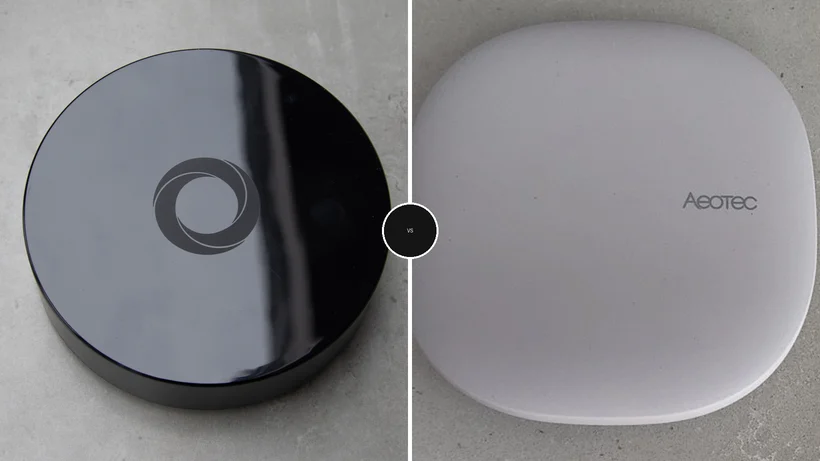
The pursuit of a seamlessly integrated smart home, governed by a single, intuitive application and powered by a central hub that handles complex operations, is a driving force in modern home technology. For consumers seeking the broadest possible device compatibility, two prominent hubs consistently emerge as leading contenders: the Homey Pro 2026 and the Aeotec Smart Home Hub, formerly known as the Samsung SmartThings Hub. This in-depth comparison delves into their respective strengths, weaknesses, and ideal use cases, offering a detailed analysis for homeowners aiming to optimize their connected living spaces.
The Aeotec Smart Home Hub presents a compelling option for individuals already invested in the Samsung SmartThings ecosystem. It offers an affordable and reliable gateway for integrating Zigbee and Z-Wave devices, expanding existing smart home networks with minimal fuss. Conversely, the Homey Pro 2026 is engineered for the discerning smart home enthusiast. It caters to those who demand extensive protocol support, sophisticated automation capabilities, and a hub that transcends the limitations of a single platform. Having undergone rigorous testing and review, a comparative analysis reveals distinct advantages and disadvantages for each device.
Design and Physical Integration
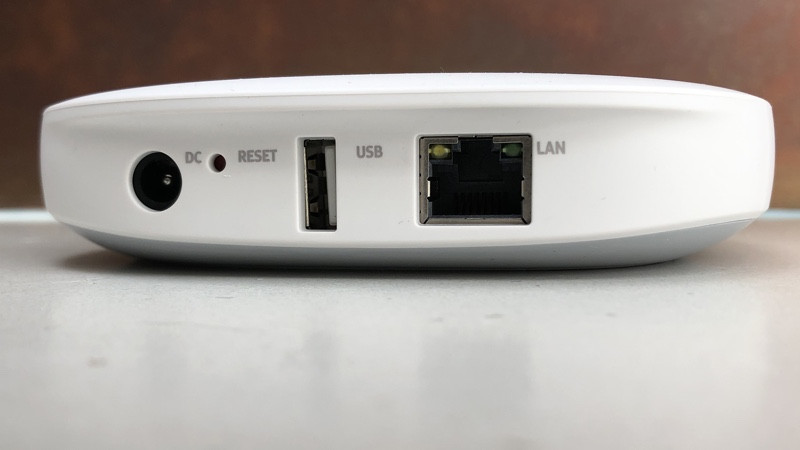
While neither the Homey Pro 2026 nor the Aeotec Smart Home Hub are designed to be decorative showpieces, the Aeotec possesses a crucial practical advantage: an integrated Ethernet port. This physical attribute significantly streamlines network connectivity, allowing for a stable, wired connection directly to a router. In contrast, the Homey Pro 2026 relies on dual-band Wi-Fi 5 for its primary network connection. For users who prefer or require a wired Ethernet connection, an additional adapter must be purchased. This omission on a premium-priced hub like the Homey Pro 2026 is noteworthy, especially considering that its more compact sibling, the Homey Pro mini, features an Ethernet port. The Aeotec’s design prioritizes ease of initial setup and network stability by offering an Ethernet port as standard, with Wi-Fi serving as a reliable fallback option.
The exterior design of the Homey Pro 2026 remains unchanged from its Early 2023 iteration, which may represent a missed opportunity for a design refresh. The Aeotec, while not a revolutionary redesign either, essentially represents a rebranding of the well-established SmartThings Hub V3. However, its inclusion of a wired connection option provides a tangible benefit for users.
Winner: Aeotec Smart Home Hub – The built-in Ethernet port offers a practical advantage in terms of connectivity and reliability for network-dependent smart home devices.

Protocol Support: A Measure of Versatility
The Homey Pro 2026 distinguishes itself with an exceptionally broad range of protocol support, consolidating multiple communication standards into a single unit. It natively supports Zigbee, Z-Wave, Thread, Matter, 433MHz, and infrared (IR) signals. For devices that cannot connect directly, Homey Pro leverages cloud connections. Furthermore, it champions community-driven integrations, enabling users to connect devices that might not have official support, such as the reviewer’s Ring Alarm, which was integrated via a third-party solution.
The Aeotec Smart Home Hub initially focused on Zigbee and Z-Wave. However, through recent firmware updates, it has incorporated support for Thread and Matter. Beyond these core protocols, the Aeotec relies on cloud-to-cloud integrations for major brands like Nest, Ring, and Arlo. While functional, this dependency means that the operation of these devices is contingent on the servers of third-party companies, introducing a potential point of failure.
A notable caveat for the Homey Pro 2026 is its approach to Thread integration. It shares a single radio for both Zigbee and Thread. This configuration prevents the hub from joining an existing Thread network, potentially impacting the range and stability of Thread devices. The reviewer experienced this issue when attempting to connect an Ultion Nuki smart lock directly, which proved challenging. Despite this specific limitation, the Homey Pro 2026’s comprehensive support for 433MHz and IR, coupled with its extensive app library, provides a significant advantage in overall protocol coverage.
Winner: Homey Pro 2026 – The sheer breadth of supported protocols, including legacy standards like 433MHz and IR, along with robust community support, makes the Homey Pro 2026 a more versatile choice for diverse smart home setups.
Advanced Features and Automation Capabilities
Both the Homey Pro 2026 and the Aeotec Smart Home Hub are capable of executing complex automations, but their methodologies differ significantly. The Aeotec operates within the Samsung SmartThings framework. SmartThings excels at fundamental smart home tasks, such as organizing devices into rooms, controlling lighting, and initiating actions based on sensor data (e.g., motion or door open/close). Historically, the SmartThings platform supported powerful, script-based automations through the WebCORE plug-in. However, subsequent updates to the SmartThings platform have led to the deprecation of this feature, aiming for a more user-friendly experience at the expense of advanced automation power. While basic automations remain robust, the platform’s capacity for intricate, custom logic has been curtailed.
The Homey Pro 2026’s automation engine is built around its proprietary "Flows" system. These Flows can range from simple conditional triggers, like disarming an alarm when the front door unlocks, to highly sophisticated, multi-layered routines. The inclusion of "And conditions" allows for precise control over when automations are activated. For instance, garden lights might only illuminate if the garden office door is locked and it is after sunset. The advanced Flow editor further enhances this capability by offering flowchart-like logic, multiple triggers, wait timers, and custom variables, all without the need for external plug-ins. This integrated approach to advanced automation empowers users to create highly personalized and reactive smart home environments.
Winner: Homey Pro 2026 – The Homey Pro 2026’s native "Flows" system provides a more powerful and flexible platform for creating complex, multi-conditional automations directly within the hub, without reliance on third-party add-ons.
Device Compatibility: Beyond the Mainstream
The Homey Pro 2026 demonstrates superior device compatibility, leveraging both official and community-developed applications to support a vast array of smart home products. This extensive support has enabled users to consolidate their smart home ecosystems, even eliminating the need for supplementary devices like a Raspberry Pi running Homebridge for Apple HomeKit integration. Furthermore, the Homey Pro 2026 often exposes a richer set of device triggers compared to other platforms. For example, a Tado X sensor connected through Homey can provide triggers for temperature, heating status, and humidity, whereas on platforms like Apple Home, it might only offer temperature or heating status.
In contrast, the Aeotec Smart Home Hub exhibits a more fragmented device compatibility landscape. While support for major brand devices is generally strong, there are notable omissions, such as the lack of direct Ring Alarm support. Third-party device integration on the Aeotec platform has become increasingly limited. This reliance on official integrations means that users may encounter gaps in their device support, particularly with less common or niche smart home products.
Winner: Homey Pro 2026 – The Homey Pro 2026’s broad official and community app support ensures a wider range of device integration, offering users more flexibility and access to advanced device features.
Upgrade Path: Ensuring Future-Proofing
Migrating to a new smart home hub can be a complex and time-consuming process. The Homey Pro 2026 simplifies this transition considerably. Users can create a cloud backup of their existing Homey hub configuration (available as a low-cost monthly subscription service) and then restore this backup to the new Homey Pro 2026. Devices typically reconnect within minutes, ensuring minimal disruption to the smart home system.
The upgrade process for the Aeotec Smart Home Hub is less streamlined. Owners of the original SmartThings V1 hub face the arduous task of removing and re-pairing each device individually. While V2 and V3 hub owners benefit from an automatic migration tool, the Aeotec itself offers no significant new features over its V2 or V3 predecessors. This lack of demonstrable advancement means that existing SmartThings users have little incentive to upgrade to the Aeotec model. The Homey Pro 2026’s straightforward backup and restore functionality positions it as a more future-proof and user-friendly option for long-term smart home management.

Winner: Homey Pro 2026 – The Homey Pro 2026 offers a significantly easier and more user-friendly upgrade path, involving simple backup and restore procedures, unlike the more manual process required for some Aeotec Smart Home Hub migrations.
Value Proposition: Cost vs. Capability
Assessing the value of either hub requires careful consideration of individual smart home needs. The Homey Pro 2026 justifies its higher price point for users with extensive device collections or those who have outgrown previous Homey iterations. For individuals with smaller, more basic smart home setups, the more affordable Homey Pro mini might represent a more appropriate starting point.
The value proposition of the Aeotec Smart Home Hub is more nuanced. While the SmartThings platform remains a capable system for managing basic smart home functions, its utility diminishes for users whose devices primarily connect via Wi-Fi or cloud services, potentially negating the need for a dedicated hub altogether. The Aeotec becomes a more compelling purchase for users who specifically rely on Zigbee or Z-Wave sensors or certain types of smart locks. However, the platform’s limitations, particularly the loss of advanced automation capabilities previously offered by the SmartThings Classic app, detract from its overall value.
Winner: Homey Pro 2026 – The Homey Pro 2026 delivers superior value for users seeking comprehensive control, extensive device compatibility, and advanced automation, justifying its higher cost through its feature set and future-proofing capabilities.
Technical Specifications Comparison
| Spec | Homey Pro 2026 | Aeotec Smart Home Hub |
|---|---|---|
| Wireless Connectivity | Wi-Fi (dual-band Wi-Fi 5) | Wi-Fi |
| Ethernet | Via adaptor (not built-in) | Built-in Ethernet port |
| Zigbee Support | Yes | Yes |
| Z-Wave Support | Yes | Yes |
| Thread Support | Yes | Yes (added by firmware update) |
| Matter Support | Yes | Yes (added by firmware update) |
| IR Support | Yes | No |
| 433MHz Support | Yes | No |
| Battery Backup | No | No |
Final Verdict and Strategic Implications
For individuals aiming to consolidate control over a complex smart home environment, the Homey Pro 2026 emerges as the superior choice. It has secured victory in five out of six comparative categories: protocol support, features, device compatibility, upgrade path, and overall value. Its comprehensive integration of major smart home protocols, extensive application library, and seamless migration process when upgrading make it a compelling, albeit more expensive, solution with significantly fewer compromises.
The Aeotec Smart Home Hub is best suited for users who are already deeply integrated into the SmartThings ecosystem and require a dependable, wired hub for their Zigbee and Z-Wave devices, without plans for a significant system overhaul. While it offers a stable solution for existing setups, it sacrifices flexibility and a straightforward upgrade path. For those whose current smart home infrastructure is functional and requires only a reliable central controller, the Aeotec fulfills this role effectively.

The broader implications of these hubs extend to the evolving landscape of smart home connectivity. The Homey Pro 2026’s commitment to a wide array of protocols, including emerging standards like Thread and Matter, alongside legacy support, positions it as a robust platform for future-proofing smart homes. Its community-driven approach to integrations also fosters a dynamic ecosystem that can adapt to new devices and services. The Aeotec, while benefiting from Samsung’s established SmartThings platform, represents a more conservative approach, focusing on incremental improvements and existing user bases. The choice between these two hubs ultimately hinges on the user’s current smart home infrastructure, future aspirations, and willingness to invest in a more comprehensive and adaptable control system.
Frequently Asked Questions
Can I connect either hub to my router with a cable?
Yes. The Aeotec Smart Home Hub features an integrated Ethernet port, providing a direct wired connection with Wi-Fi as a backup. The Homey Pro 2026 utilizes dual-band Wi-Fi 5 but can be connected via an optional adapter for a wired connection, with the ability to revert to Wi-Fi if the wired link fails.
Which hub is worth the higher price if I already have a large, mixed-brand device collection?
The Homey Pro 2026 is the recommended choice for users with extensive and diverse device collections. Its comprehensive support for Zigbee, Z-Wave, Thread, Matter, 433MHz, and infrared protocols reduces the need for multiple separate bridges. Furthermore, its extensive app library is capable of integrating a wide range of devices, potentially replacing the functionality of other hubs or bridge systems. For a growing or already substantial collection, the Homey Pro 2026 offers superior long-term value and integration capabilities.
Which hub is better for complex automations like multi-step routines or conditional logic?
The Homey Pro 2026 excels in this area. While both hubs can manage intricate automations, the Aeotec Smart Home Hub relies on the SmartThings platform, which previously required the WebCORE add-on for advanced routines. The Homey Pro’s native "Flows" system offers a more integrated and powerful solution, allowing for multiple conditions, wait periods, and custom variables without the need for additional software. This makes it ideal for users who want to create highly sophisticated and personalized automation scenarios.
If I upgrade my hub in the future, which one makes the transition easier?
The Homey Pro 2026 provides a significantly more user-friendly upgrade path. Users can back up their existing hub configuration and restore it to a new Homey Pro, with devices typically reconnecting within minutes. In contrast, the SmartThings migration process can be more complex; owners of older V1 hubs had to re-pair devices manually, and even the automated tools for V2 and V3 hubs are less straightforward than Homey’s seamless backup and restore functionality.
Is the Aeotec Smart Home Hub a better fit for a smaller home with fewer devices?
The Aeotec Smart Home Hub can be a suitable choice for smaller homes with a modest number of devices, particularly if the user is already invested in the SmartThings ecosystem. At this scale, the broader protocol support of the Homey Pro 2026 might be less critical. However, users should be aware that if their smart home setup expands, they may encounter the limitations of the Aeotec’s feature set and compatibility sooner than they would with the Homey Pro 2026.

