
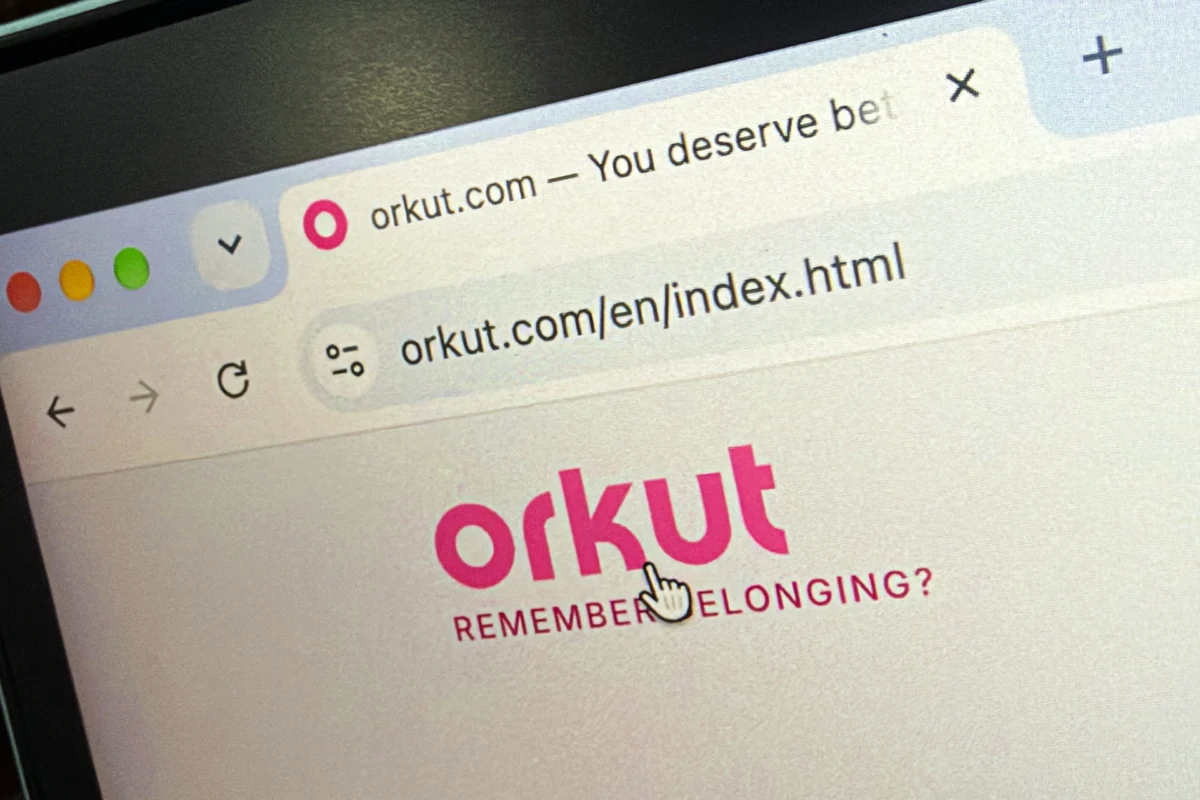
This bold appeal emanates from Orkut Büyükkökten, 51, the visionary behind the eponymous social network. On Thursday, Büyükkökten leveraged the platform X to disseminate his plea, urging former enthusiasts and potential new users alike to visit Orkut.com. The objective is clear: add one’s name to a growing roster of supporters, thereby signaling collective desire for the platform’s return, and extend invitations to others to join this burgeoning movement. This initiative marks a significant moment for a platform that once commanded vast popularity, particularly in emerging markets, before its eventual decline.
Orkut’s Genesis and Ascendancy: A Pioneer in Social Networking
Orkut’s journey began in 2004, initially conceived as a discreet "side project" by Büyükkökten during his tenure as a software engineer at Google. At a time when the digital landscape was still nascent in terms of social interaction, Orkut emerged as an early contender, offering a novel space for individuals to connect online. Its architecture allowed users to create profiles, connect with friends, share "scraps" (short messages), write "testimonials" for others, and join communities based on shared interests. These features, though now commonplace, were innovative for their era, fostering a sense of digital camaraderie and personal expression.
The platform rapidly gained traction, achieving phenomenal popularity in specific geographical regions, most notably India and Brazil. In these markets, Orkut became synonymous with online social interaction, deeply embedding itself into the digital lives of millions. By the late 2000s, Orkut boasted a staggering user base, peaking at approximately 300 million active users globally. Its success in these countries can be attributed to several factors: early market entry, a localized user experience, the viral nature of its network effects, and perhaps a cultural predisposition towards close-knit community building that resonated with the platform’s design. In India, for instance, Orkut offered an accessible entry point to online social engagement at a time when internet penetration was growing, and other global platforms had yet to fully establish their dominance. Similarly, in Brazil, it fostered a vibrant online culture, becoming the go-to platform for personal connections and group interactions.
The Inexorable Shift: Decline Amidst Fierce Competition
However, Orkut’s reign was not to last indefinitely. The competitive landscape of social media evolved dramatically with the meteoric rise of Facebook. Launched in the same year, 2004, Facebook initially targeted university students but swiftly expanded its reach, eventually eclipsing many of its predecessors and contemporaries. Facebook’s superior user interface, its aggressive global expansion strategy, and its adaptability to mobile platforms proved to be formidable challenges for Orkut. While Orkut had a loyal following, particularly in its stronghold markets, it struggled to innovate at the same pace and scale as its burgeoning rival.
Google, Orkut’s parent company, eventually found itself at a crossroads. Despite its initial success, Orkut began to lose significant market share to Facebook, which offered a more streamlined, globally integrated experience. Google’s broader social media strategy itself faced challenges, notably with the ambitious but ultimately unsuccessful launch of Google+. Consequently, in a strategic pivot to consolidate resources and focus on platforms like YouTube and the ill-fated Google+, Google announced its decision to shut down Orkut in September 2014. The shutdown marked the end of an era for many users who had formed indelible digital memories on the platform, leaving a void that other networks quickly filled.
Büyükkökten’s Critique of Modern Social Media and a Vision for Restoration
The current call for Orkut’s revival is not merely an exercise in nostalgia; it is underpinned by a profound critique of how social media has developed over the past two decades. In an impassioned letter published on the newly reactivated Orkut.com, Büyükkökten articulates his concerns regarding the escalating influence of algorithms and the proliferation of AI-generated content within contemporary social networks. His central argument posits that these technological advancements, while "extraordinary," are "dissolving the one premise that made social networking special and worth building: that there was a person on the other side."
This sentiment reflects a growing disillusionment among many users and critics about the current state of digital interaction. The pursuit of engagement metrics, often fueled by complex algorithms, has led to feeds optimized for sensationalism, filter bubbles, and a pervasive sense of inauthenticity. The recent advancements in generative AI, capable of producing highly realistic text, images, and videos, further complicate the landscape, blurring the lines between human and machine-generated content. Büyükkökten’s vision directly confronts this trend, proposing a return to foundational principles. "I know how to get there: we rebuild the internet we first loved," he writes. "The one with authentic people, real connection, and genuine belonging." This statement serves as a manifesto for a more human-centric digital space, devoid of the perceived manipulative aspects of modern algorithmic feeds.
A History of Seeking Connection: Previous Ventures and Evolving Perspectives
This is not the first instance of Büyükkökten attempting to re-enter the social networking arena following Orkut’s shutdown. In 2016, just two years after the platform’s demise, he launched "Hello," another social network designed to connect individuals through shared interests and passions. Hello aimed to foster more meaningful interactions by grouping users based on specific "personas" and hobbies rather than just mutual friends. Despite attracting over 2 million downloads worldwide, Hello struggled to achieve the critical mass and sustained engagement necessary to compete in a saturated market. It eventually ceased operations in 2020, highlighting the formidable challenges of launching a new social network in an ecosystem dominated by established giants. Orkut’s peak of 300 million active users provided a stark contrast to Hello’s more modest reach, underscoring the difficulty of replicating past successes.
Interestingly, Büyükkökten’s perspective on technology, particularly AI, appears to have evolved. In 2022, a cryptic note on Orkut.com hinted at "building something new," without offering further details. Two years later, in an interview with WIRED, he discussed working on a social network that would "leverage AI and machine learning" to facilitate connections and build communities. This earlier stance seemingly embraced the very technologies he now criticizes. The apparent shift from leveraging AI for connection to advocating against its pervasive influence in social media underscores a nuanced understanding of its double-edged nature. While AI can undoubtedly be a tool for personalization and discovery, its unchecked application can, as Büyükkökten argues, erode the authenticity of human interaction. The platform he alluded to in 2024, which would incorporate AI/ML, has yet to materialize, making his current "anti-AI" appeal even more striking.
The Unanswered Questions and the Path Forward
As of now, Büyükkökten’s renewed call to action remains somewhat open-ended. While he is actively soliciting user support for Orkut’s return, he has not provided explicit clarification on whether a new version of the platform is already in active development, nor has he offered a definitive timeline for a potential launch. This ambiguity leaves many questions unanswered regarding the concrete steps and resources required to bring Orkut back to life. An email inquiry sent to Orkut.com seeking further comment from Büyükkökten did not elicit an immediate response, leaving the specifics of the revival plan shrouded in anticipation.
Broader Implications and the Quest for Authentic Digital Spaces
The potential return of Orkut, framed by its founder’s critique of contemporary social media, resonates with a broader global conversation about the "enshittification" of online platforms. This term, coined by author Cory Doctorow, describes the phenomenon where platforms initially serve users, then abuse users to make things better for businesses, and finally abuse businesses to extract all possible value, leaving the platform degraded for everyone. Büyükkökten’s lament about algorithms and AI dissolving authentic connection aligns perfectly with this critique, suggesting a widespread yearning for digital spaces that prioritize human interaction over engagement metrics and commercial imperatives.
In an increasingly fragmented and often polarizing digital world, the idea of a social network dedicated to "friendship, community, and human connection" holds significant appeal. The current landscape is dominated by platforms grappling with issues of misinformation, mental health impacts, privacy concerns, and the relentless pressure to monetize user attention. A platform explicitly designed to counter these trends could carve out a unique niche, appealing to those disillusioned with the status quo. However, the challenges are immense.
Challenges and Opportunities for a Relaunched Orkut
Should Orkut embark on a full-fledged revival, it would face a daunting array of obstacles:
- Market Saturation: The social media market is arguably more saturated and competitive now than it was in 2004 or even 2014. Giants like Meta (Facebook, Instagram, WhatsApp), TikTok, X, LinkedIn, Reddit, and a plethora of niche platforms command billions of users. Convincing users to migrate to a new, or rather, resurrected, platform would require a compelling value proposition beyond nostalgia.
- Funding and Resources: Building and scaling a global social network demands immense financial investment and a highly skilled technical team. The costs associated with infrastructure, development, marketing, and moderation are astronomical.
- User Acquisition and Retention: The "network effect" is crucial for social media. New users join platforms where their friends already are. Orkut would need to rapidly rebuild this network, leveraging its nostalgic appeal but also offering innovative features that attract younger generations unfamiliar with its legacy.
- Monetization Strategy: If the platform is to avoid the pitfalls of algorithmic manipulation and pervasive advertising that Büyükkökten criticizes, it would need a sustainable and ethical monetization model. This could involve subscriptions, premium features, or alternative revenue streams that do not compromise the user experience or data privacy.
- Technical Infrastructure and Innovation: Modern social networks rely on sophisticated backend systems, robust security, and continuous innovation. Orkut would need to demonstrate technical prowess to handle potentially millions of concurrent users and offer a seamless, modern user experience.
- Trust and Data Privacy: In an era of heightened data privacy concerns, a revived Orkut would need to build robust trust with its user base, clearly outlining its data handling practices, especially given its past ownership by Google, a company often under scrutiny for its data practices.
- The "Anti-AI" Paradox: While Büyükkökten critiques AI’s role in dissolving human connection, AI and machine learning are also integral to content moderation, spam detection, and personalized user experiences (even in a "non-algorithmic" feed, some curation is often desired). Navigating this balance would be critical. Could a "human-curated" or community-driven moderation model be scalable?
Despite these challenges, the unique proposition of a social network consciously designed as an antidote to the current algorithmic-driven, AI-infused landscape presents a compelling opportunity. There is a palpable desire among segments of the online population for more intimate, less performative, and genuinely community-focused digital interactions. If Orkut can successfully tap into this sentiment, leveraging its legacy while innovating responsibly, it might find a new, albeit perhaps smaller and more focused, place in the social media ecosystem.
The potential return of Orkut serves as a powerful symbol in the ongoing debate about the future direction of digital interaction. Whether it ultimately re-launches as a fully functional platform or remains a poignant call for a different kind of internet, Büyükkökten’s initiative underscores a fundamental human desire for authentic connection in an increasingly complex and algorithmically mediated world. The tech community and former users will be watching closely to see if this nostalgic plea can indeed pave the way for a new chapter in social networking, one built on the premise of rebuilding the internet we once loved.

