
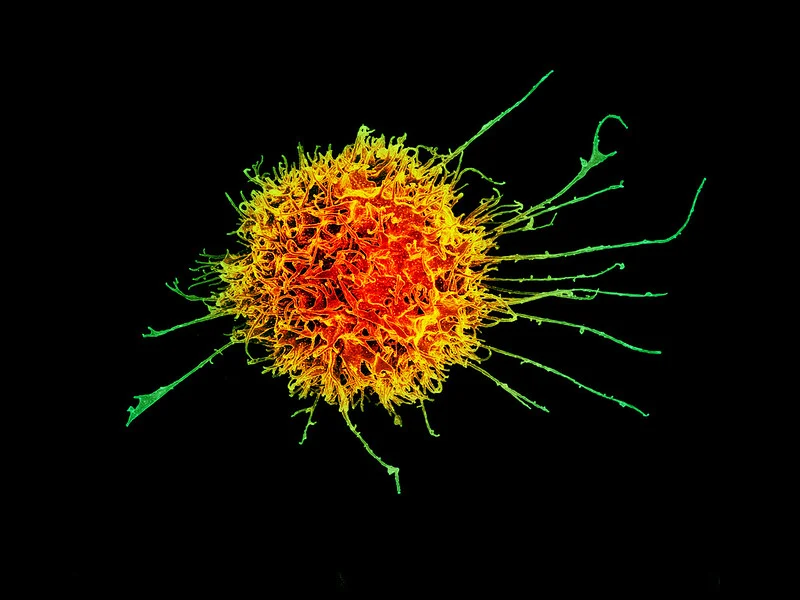
Artiva Biotherapeutics, a clinical-stage biotechnology company once at the forefront of the movement to adapt natural killer (NK) cell therapies for autoimmune diseases, announced a sweeping strategic overhaul on Tuesday that includes the discontinuation of its lead program and a near-total reduction in its workforce. The decision follows a devastating series of setbacks, including two patient fatalities in a mid-stage clinical trial and updated data suggesting that the company’s lead candidate, AlloNK (cirmertuzumab-derived NK cells), lacked the long-term durability required to compete in an increasingly crowded and scrutinized market.
The San Diego-based firm confirmed it will lay off approximately 94% of its staff as it shifts its focus toward seeking "strategic alternatives," a term often used in the industry to signal a potential sale, merger, or liquidation of remaining assets. As of late June, Artiva employed 115 full-time staff members; the current reduction will leave only a skeleton crew to manage the wind-down of clinical operations and oversee the search for a buyer or partner. Despite the collapse of its primary development pipeline, Artiva reported a relatively robust unaudited cash position of $319.1 million at the end of the third quarter, a financial cushion that may make it an attractive target for acquisition or a reverse merger.
The Clinical Setbacks: Fatalities and Toxicity Concerns
The primary catalyst for the company’s sudden pivot was the emergence of severe safety signals within its Phase 2a study of AlloNK, which was being evaluated for the treatment of rheumatoid arthritis (RA) and other immunological indications. Artiva disclosed that two patients enrolled in the trial had died, raising immediate alarms regarding the safety profile of the treatment regimen.
The first fatality involved a patient who experienced a fatal neurological event shortly after receiving AlloNK. Following an investigation by the trial’s lead investigator and an independent safety review committee, the complication was attributed to toxicity associated with fludarabine. Fludarabine is a chemotherapy agent used in the "preconditioning" or lymphodepletion phase of cell therapy. This process is standard in the industry, designed to temporarily suppress a patient’s immune system to prevent the rejection of the donor cells and allow the therapeutic cells to proliferate. However, fludarabine-induced neurotoxicity, though rare, is a documented risk. Artiva stated that it intends to publish the full details of this event in a scientific journal to assist the broader medical community in understanding the risks of preconditioning in autoimmune populations.
The second fatality occurred approximately two months after the patient received the AlloNK infusion. While the investigator concluded that the death was not directly related to the study drug or the treatment regimen, the specific cause of death remains undetermined. Regardless of direct causality, the optics of two deaths in a mid-stage autoimmune trial—where the risk-benefit tolerance is significantly lower than in terminal oncology—proved insurmountable for the company’s development plans.
The Durability Crisis: Efficacy Shortfalls
Beyond the immediate safety concerns, Artiva’s decision was also driven by a critical assessment of AlloNK’s therapeutic performance. While the therapy successfully demonstrated the ability to deplete B cells—the primary drivers of many autoimmune diseases—longer-term follow-up data revealed a lack of durability.
The promise of cell therapy in autoimmune disease is the "immune reset"—the idea that a single or short course of treatment can wipe out pathogenic B cells and allow a healthy immune system to return, leading to long-term drug-free remission. However, Artiva noted that the clinical activity of AlloNK did not persist long enough to justify the risks and costs of further development. The company’s internal assessment concluded that the therapy’s benefit-risk profile, combined with anticipated enrollment delays and a challenging commercial outlook, made the planned Phase 3 pivotal trial non-viable.
"No additional patients will be dosed in any ongoing AlloNK clinical study, and the planned Phase 3 pivotal trial will not be initiated," the company stated in its official release.
A Growing Trend of Safety Challenges in the Sector
Artiva’s retreat is not an isolated incident but rather the latest in a series of high-profile setbacks for companies attempting to bring CAR-T and NK cell therapies to the autoimmune space. This sector, which saw a massive influx of investment following early academic successes in treating lupus, is now grappling with the harsh realities of clinical translation.
In late August, pharmaceutical giant Novartis paused the development of its "rap-cel" platform after three fatalities were reported due to immune-related complications. Similarly, Bristol Myers Squibb recently disclosed that a patient in a Phase 1 study for multiple sclerosis died 44 days after receiving zola-cel, an experimental CAR-T therapy, due to septic pneumonia.
These events have cast a shadow over the "off-the-shelf" (allogeneic) and autologous cell therapy landscape. Unlike oncology, where patients often have exhausted all other options, patients with autoimmune diseases like RA or lupus often have access to existing, albeit imperfect, biological therapies. Consequently, the safety threshold for new entrants is exceptionally high.
Financial and Strategic Implications
Artiva has engaged Leerink Partners as its financial advisor to navigate the strategic alternatives process. The company’s significant cash reserves—exceeding $300 million—provide it with a unique advantage in a market where many biotech firms are struggling for liquidity. This capital could be used to pivot to a new therapeutic area, acquire a different clinical-stage asset, or be returned to shareholders through a liquidation process.
However, the market reaction to Artiva’s news has had a "read-through" effect on other players in the NK cell space. Analysts at Leerink Partners, led by Daina Graybosch, noted that Artiva’s failure creates a challenging environment for competitors like Nkarta and Fate Therapeutics.
Graybosch highlighted that the neurotoxicity associated with fludarabine is a particular concern for Nkarta, whose therapy also requires a similar preconditioning regimen. In contrast, Fate Therapeutics utilizes a lower-intensity preconditioning protocol that excludes fludarabine, potentially insulating it from some of the specific safety concerns raised by the Artiva trial. Nevertheless, the entire field now faces increased pressure to prove that the "B-cell reset" can actually lead to prolonged clinical remission.
The Future of Cell Therapy for Autoimmune Disease
The setbacks at Artiva, Novartis, and Bristol Myers Squibb suggest a shift in how these therapies will be developed and eventually utilized. Market analysts believe that both investors and physicians will now demand much more robust evidence of durability—specifically, clinical remission lasting longer than 12 months—before supporting the widespread use of these complex treatments.
Furthermore, the safety risks associated with lymphodepletion and the specialized nature of cell therapy administration mean that these treatments may remain confined to large academic medical centers. These institutions are better equipped to monitor for rare neurotoxic events and manage the severe side effects that can arise from cell infusions.
"We expect that if these therapies move forward, use will be limited to academic centers familiar with the complications," Graybosch wrote in a research note. "These therapies could also be reserved for only the most severe, refractory cases, which significantly limits the addressable market for any resulting product."
Timeline of Artiva’s Development and Decline
To understand the magnitude of Artiva’s current situation, it is necessary to look at the company’s trajectory over the last few years:
- 2020-2021: Artiva emerges with significant venture backing, focusing on allogeneic NK cell therapies sourced from umbilical cord blood. The company signs a major collaboration deal with Merck (MSD) worth up to $1.8 billion to develop NK cell therapies for cancer.
- 2022-2023: As the biotech industry shifts its gaze toward autoimmune disease, Artiva pivots AlloNK into trials for lupus and rheumatoid arthritis, capitalizing on the "B-cell depletion" trend.
- Early 2024: The company advances into Phase 2 trials, with high expectations for its off-the-shelf approach, which avoids the complex manufacturing required for patient-derived CAR-T cells.
- August-September 2024: Broader industry safety concerns emerge with fatalities reported by Novartis and BMS, increasing regulatory and investor scrutiny on all cell therapy trials for non-oncology indications.
- October 2024: Artiva reports two patient deaths in its RA trial. Internal data analysis confirms that AlloNK lacks the durability to provide a long-term "cure," leading to the immediate cessation of the program and a 94% workforce reduction.
Conclusion and Industry Outlook
The collapse of the AlloNK program is a sobering reminder of the biological and clinical complexities involved in re-engineering the immune system. While natural killer cells were once thought to be a safer, more manageable alternative to T-cell therapies, the Artiva experience demonstrates that the preconditioning regimens required for these "off-the-shelf" products carry their own lethal risks.
As the industry moves forward, the focus will likely shift toward finding ways to deliver cell therapies without the need for toxic lymphodepletion or developing "stealth" cells that can evade the host immune system without chemotherapy. For now, Artiva Biotherapeutics stands as a cautionary tale of the high-stakes, high-risk nature of modern biotechnology, as the company seeks a path forward for its remaining capital and assets in the wake of a clinical tragedy.
The next major milestone for the field will be the American College of Rheumatology (ACR) conference in Orlando next month. There, competitors like Nkarta are expected to present Phase 1 data for their own NK cell programs. The medical community will be watching closely to see if other companies can overcome the safety and durability hurdles that ultimately brought Artiva’s lead program to an end.

