
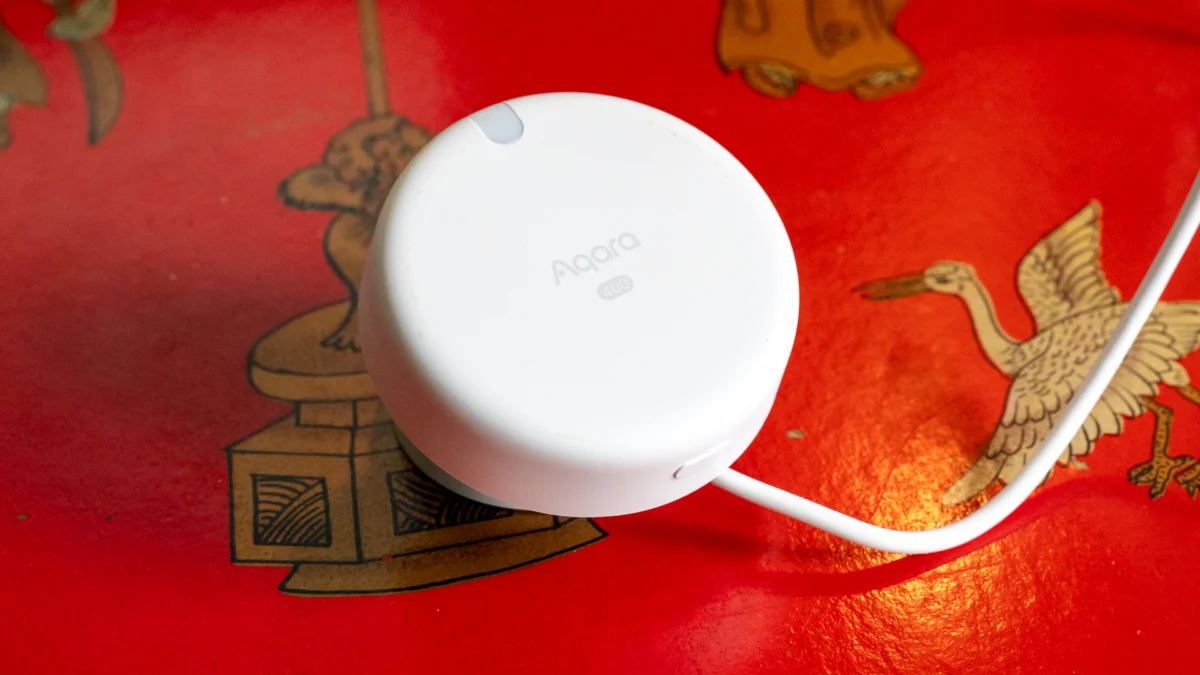
The Aqara Spatial Multi-Sensor FP400 represents a significant leap forward in smart home presence detection technology, offering unparalleled accuracy and granular control. This device boasts the capability to detect up to ten individuals simultaneously within a single room and segment its detection area into as many as eight distinct zones, effectively functioning as multiple motion sensors in one unit. While its performance is exceptionally powerful and accurate, the premium price point and its requirement for continuous USB-C power present notable considerations for potential adopters.
The Evolution of Presence Sensing Technology
Presence sensing, a sophisticated form of motion detection, has rapidly evolved from simple infrared sensors to advanced radar-based technologies. Early iterations of presence sensors were often bulky and power-hungry, limiting their practical application. The advent of mmWave (millimeter wave) technology marked a turning point, enabling smaller, more power-efficient sensors. This technological advancement has paved the way for devices like the Aqara Spatial Multi-Sensor FP400, which leverage mmWave to provide highly precise detection of human presence, distinguishing it from traditional PIR (Passive Infrared) sensors that merely detect motion.

Aqara has established itself as a leader in this burgeoning market, consistently delivering devices that combine robust features with strong performance. The FP400 builds upon the company’s established expertise, pushing the boundaries of what’s possible in home automation. This latest offering from Aqara aims to provide a more nuanced and intelligent approach to automations, moving beyond simple motion triggers to more context-aware responses based on actual occupancy and the specific location of individuals within a space.
Design, Installation, and Connectivity
The Aqara Spatial Multi-Sensor FP400, while a technological marvel, incorporates design elements that echo earlier generations of smart home sensors. Unlike some of its more recent battery-powered counterparts, such as the Aqara Multi-Sensor FP300, the FP400 requires a constant power supply via a USB-C connection. This necessitates the availability of a nearby power outlet and a clear routing path for the cable, which can introduce placement challenges compared to the greater flexibility offered by battery-operated devices. Aqara includes a USB-C cable in the box, but users will need to provide their own power adapter.
Despite the power requirement, the physical installation of the FP400 is designed for ease. The sensor comes equipped with a small, adjustable stand, allowing for precise angling to direct its detection field. For more permanent mounting, a magnetic stand is included. This stand can be affixed to walls or ceilings using screws or adhesive, with Aqara recommending an installation height between 150cm and 200cm for optimal performance. An optional corner mount accessory, available with the Kit version of the sensor, further enhances installation versatility.

Connectivity options are robust, supporting both Zigbee and Thread protocols. When utilizing Thread, the FP400 can integrate with any compatible hub, freeing users from the sole reliance on an Aqara ecosystem. However, to unlock the full suite of advanced features, Aqara recommends connecting the FP400 via Zigbee to an Aqara hub. This configuration allows the device to be shared across other smart home platforms through Matter. It is important to note that switching between Zigbee and Thread protocols requires a firmware reset of the sensor, demanding a complete re-setup process.
Advanced Features and Intuitive Setup
The setup process for the Aqara Spatial Multi-Sensor FP400 is streamlined through the Aqara app. The system guides users through an installation wizard, assisting in correctly positioning the sensor within the room. A crucial step involves a brief calibration routine where the user walks around the perimeter of the detection area. This process defines the sensor’s boundaries, ensuring that it only monitors activity within the intended space, thereby preventing false triggers from outside the room.
Following the boundary setup, the FP400 offers an AI-enhanced setup routine designed to fine-tune detection and minimize interference from non-human sources like pets. This calibration process, requiring the room to be empty, is remarkably quick, taking approximately 30 seconds to complete. This user-friendly approach contrasts favorably with some competitors, such as the Meross Thread Smart Presence Sensor MS605, which may involve a more complex setup.

Once configured, the FP400 functions as a highly sophisticated presence detector. Within the Aqara app, a visual representation of the room is displayed, showing the real-time location of detected individuals, with support for up to ten people. The "AI Enhanced Person Detection" feature is particularly valuable, helping to differentiate between human presence and the movement of pets.
The true innovation of the FP400 lies in its ability to create custom detection zones. Users can delineate specific areas on the room map—for instance, around a sofa or a reading chair—and designate them as distinct motion sensors. These custom zones are then exposed to other smart home platforms like Apple Home and Homey, allowing for highly granular automations. For example, a reading light could be programmed to activate only when someone sits in a specific chair, or a fan could be set to turn off when an individual leaves the sofa. This capability transforms a single sensor into multiple intelligent triggers, offering a level of precision that surpasses many other presence sensors on the market. Unlike the Meross MS605, where detection zones are primarily based on range, Aqara’s zones are positionally defined on the room map.
Automation capabilities vary depending on the smart home platform. In Apple Home, automations can be triggered by the presence or absence of occupancy. Platforms like Homey offer more granular control, allowing users to specify delays before triggering an automation, such as turning off heating only after a person has been absent for ten minutes. The integrated luminance sensor is also accessible across both platforms, enabling context-aware automations, such as lights activating only when it is sufficiently dark. While the FP400 can count the number of individuals in a room, this specific data is not currently exposed as a trigger option to third-party platforms.

Performance and Real-World Application
During testing, the Aqara Spatial Multi-Sensor FP400 was integrated with an Aqara M200 hub and subsequently bridged to both Apple Home and Homey for comprehensive evaluation. The sensor demonstrated exceptional accuracy in detecting presence, consistently identifying and locating the user within the test office space. Even when remaining perfectly still for extended periods, the FP400 maintained accurate occupancy detection, a critical advantage over standard motion sensors that would cease to register activity, potentially leading to unintended deactivations of automated systems.
Test automations performed flawlessly. While there was a slight delay of up to 20 seconds for presence detection to register in third-party systems, this latency was deemed acceptable and did not detract significantly from the overall user experience. A common automation scenario—turning on lights when motion is detected and ambient light is low—functioned reliably.
The effectiveness of the custom detection zones was particularly impressive. Establishing a zone around a reading chair and configuring it to activate a reading lamp upon entering the area worked as intended. In a compact office environment, the full potential of multiple zones was somewhat limited, but in larger, more complex spaces, this feature is expected to provide substantial benefits for sophisticated automation scenarios.

Analysis of Implications and Market Positioning
The Aqara Spatial Multi-Sensor FP400 arrives at a time when the demand for sophisticated smart home automation is growing. Its ability to differentiate between individuals, track their locations, and create precise detection zones opens up new possibilities for energy management, security, and personalized comfort. For example, in larger homes, specific zones could be configured to manage heating or cooling in unoccupied areas, leading to significant energy savings. In a security context, precise zone detection could differentiate between an intruder and a family pet, reducing false alarms.
The device’s pricing, listed at £79.99 in the UK and $79.99 in the US, positions it as a premium product in the smart home sensor market. This price point, coupled with the continuous power requirement, suggests that the FP400 is likely targeted towards enthusiasts and users with specific, demanding automation needs in larger or more complex spaces. For individuals with simpler requirements or tighter budgets, alternative battery-powered sensors, such as Aqara’s own FP300, or other options within the broader market of motion and presence sensors, may offer a more suitable and cost-effective solution.
The company’s strategy of offering advanced features and integrating with multiple smart home ecosystems via Matter demonstrates a commitment to interoperability and catering to a diverse user base. The dual connectivity options (Zigbee and Thread) provide flexibility, although the trade-off in features when using Thread without an Aqara hub is a consideration for users prioritizing maximum functionality.

Conclusion
The Aqara Spatial Multi-Sensor FP400 is an exceptionally powerful and accurate presence detection device. Its ability to track up to ten individuals and segment a room into eight distinct zones offers a level of granular control previously unattainable in consumer-grade smart home sensors. The intuitive setup process, combined with robust performance, makes it a compelling option for those seeking advanced automation capabilities. However, its high cost and the necessity of a constant USB-C power supply are significant factors that may limit its widespread adoption. For users with large, complex spaces requiring precise occupancy monitoring and automation, the FP400 is a top-tier choice. For others, more budget-friendly or battery-powered alternatives might provide a better balance of features and practicality.
How We Test
Our reviews are built upon extensive, long-term testing, reflecting real-world usage scenarios. Presence sensors, by their nature, are integral components of a broader smart home ecosystem. Therefore, a superficial week-long evaluation is insufficient to deliver a comprehensive verdict. Our methodology involves integrating devices into our daily smart home operations, allowing us to assess their performance, reliability, and compatibility over an extended period. This approach ensures that our assessments are objective, thorough, and provide valuable insights for consumers navigating the complex landscape of smart home technology. We are committed to providing unbiased reviews, and our testing processes are not directly influenced by financial incentives from manufacturers. Further details on our rigorous testing protocols can be found in our dedicated "How We Test" guide.
Frequently Asked Questions
Does the Aqara Spatial Multi-Sensor FP400 require an Aqara hub?
No, the FP400 can operate with any compatible hub when using the Thread protocol. However, connecting it via Zigbee to an Aqara hub unlocks a wider range of features and allows for seamless integration with other platforms via Matter.

Is the Aqara Spatial Multi-Sensor FP400 battery-powered?
No, the FP400 requires a continuous power supply via USB-C. A USB-C cable is included, but users must provide their own power adapter.
Can the Aqara Spatial Multi-Sensor FP400 create multiple motion zones?
Yes, the FP400 allows users to define up to eight distinct detection zones within a room. Each of these zones can be presented as a separate motion sensor in compatible smart home platforms like Apple Home and Homey.
Aqara Spatial Multi-Sensor FP400: Specifications
| Feature | Specification |
|---|---|
| Type | mmWave presence and motion sensor |
| UK RRP | £79.99 |
| US RRP | $79.99 |
| Dimensions | 64 x 64 x 29.5mm |
| Release Date | 2026 |
| Ecosystems | Amazon Alexa, Apple Home, Google Home, Home Assistant, Homey, SmartThings |
| Connectivity | Zigbee 3.0, Thread, Matter |
| Power | USB-C (5V 1A) |
| Detection Range | Up to 10 x 8m (wall-mounted) |
| Field of View | 120° horizontal, 100° vertical |
| People Tracked | Up to 10 |
| Detection Zones | Up to 8 |

