
Google’s integration of artificial intelligence into its advertising platform, particularly within Google Ads, presents a significant paradigm shift for digital marketers. While AI’s capacity to enhance audience targeting, identify new customer segments, and optimize campaigns through first-party data and conversion tracking is widely acknowledged, a critical, yet often overlooked, aspect is the precise instruction of AI on what to exclude. This nuanced approach to AI management is rapidly becoming as vital as defining targeting parameters to ensure advertising budgets are allocated effectively and campaigns resonate with the most relevant audiences.
Historically, advertisers have relied on foundational tools like negative keywords and placement exclusions to steer their ad delivery away from irrelevant queries or undesirable websites. For instance, the inclusion of "cheap" as a negative keyword would prevent ads from appearing in search results where that specific term was used. However, the sophistication of modern search intent, driven by AI’s ability to interpret context and user goals, renders these traditional methods insufficient on their own. A user seeking an "inexpensive laptop case" might simply search for "laptop cases," bypassing the explicit negative keyword. This necessitates a more advanced strategy where advertisers must actively guide the AI on who to avoid, rather than solely dictating what to avoid.
The Imperative of AI Guidance: Text Guidelines and Asset Optimization
The most direct and effective method for advertisers to instruct Google’s AI on exclusion parameters lies within the functionalities of text guidelines and asset optimization. These features are prominently available within Performance Max and AI Max Search campaigns, serving as crucial guardrails for Google’s dynamic ad creation and landing page selection processes. By providing clear textual instructions, advertisers empower the AI to understand not only who to target but, equally importantly, who to deliberately exclude from ad delivery.
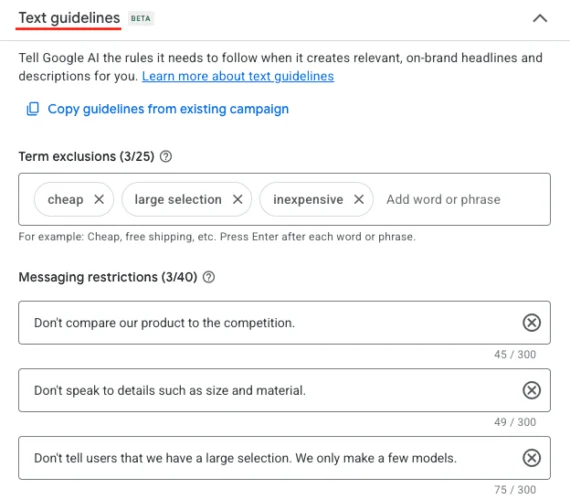
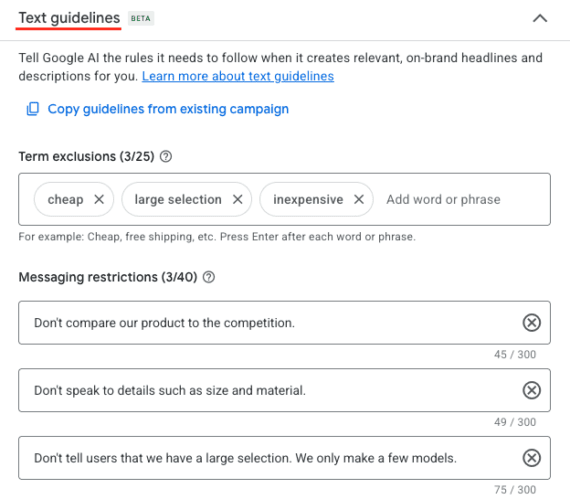
Consider an advertiser specializing in premium laptop cases. Their product is not inexpensive; it is crafted for quality and durability, catering to a discerning customer base willing to invest in superior protection for their devices. In such a scenario, simply adding negative keywords related to "cheap" or "discount" might not suffice. A user searching for "laptop cases" might still be looking for budget options. Here, text guidelines become instrumental. By defining these guidelines, the advertiser can explicitly inform the AI to prioritize prospects demonstrating an intent to spend more for a higher-quality product. This might involve specifying that the product is "high-quality," "premium," or "crafted for durability," subtly nudging the AI towards audiences that value these attributes over price.
Google’s AI, when trained with these specific textual cues, can learn to associate certain search patterns and user behaviors with the advertiser’s desired customer profile. This proactive training ensures that ad spend is directed towards users who are more likely to convert and appreciate the value proposition, rather than being wasted on individuals primarily seeking the lowest price. The efficacy of these guidelines is underscored by their direct impact on ad relevance and potential return on investment. For example, excluding terms like "cheap," "large selection" (implying a broad, potentially lower-quality inventory), or "inexpensive" can refine targeting significantly. Furthermore, messaging restrictions, such as "Don’t compare our product to the competition," can also be implemented to maintain brand positioning and avoid potentially negative comparisons that could deter high-value customers.
Asset optimization complements text guidelines by offering granular control over how ads are presented. Within Performance Max campaigns, advertisers can choose to disable automated image and video enhancements, thereby maintaining creative control. More critically, these campaigns, along with AI Max campaigns, allow for text and URL exclusions. URL exclusions, for instance, are invaluable for preventing ads from directing users to clearance pages or promotional sections of a website when the intention is to advertise premium, full-price items. This ensures that the user experience remains consistent with the advertised product’s positioning and avoids potential confusion or disappointment.
The Hidden Power of Account-Level Automated Assets
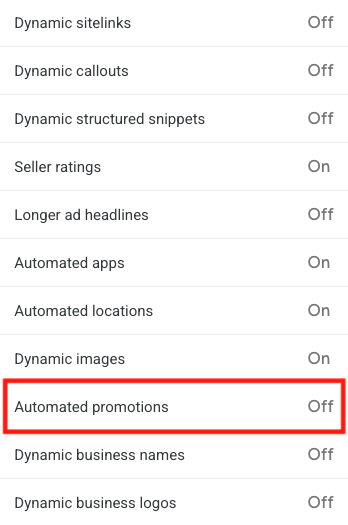
Deep within the Google Ads interface lies a feature with substantial potential impact, yet often overlooked due to its less conspicuous placement: "Account-level automated assets." This functionality allows Google to dynamically populate various components of an ad, including sitelinks, callouts, images, and more. Recent advancements have seen the introduction of automated promotions, where Google can automatically feature discounted items from an advertiser’s website within ads. While these automated features can enhance ad real estate and potentially drive engagement, they also necessitate careful management to align with an advertiser’s strategic objectives.
To access and manage these automated assets, advertisers can navigate through "Advanced settings" within their Google Ads account. This section reveals the status of various account-level automated assets, allowing advertisers to toggle them on or off. For instance, automated promotions can be deactivated if an advertiser prefers to manually control which promotional items are featured or if they are not currently running any promotions.
The implications of these automated assets are significant. Google can, by default, utilize an advertiser’s brand name and logos within ads. Without explicit control, this could lead to inaccurate branding or misrepresentation, particularly if the AI pulls assets that do not perfectly align with current brand guidelines or campaign specific messaging. Therefore, it is imperative for advertisers to regularly review the "Assets" section in the left navigation and filter by "Added by: Google AI" to understand which assets the AI has automatically incorporated. This proactive monitoring allows for the removal of any assets that are deemed inaccurate, irrelevant, or detrimental to the brand’s overall marketing strategy. The ability to disable automated promotions, for example, ensures that only strategically chosen discounts are highlighted, preventing the unintentional promotion of items that might cannibalize sales of higher-margin products or dilute brand perception.
Navigating Optimized Targeting and Audience Expansion
Similar to other AI-driven features, optimized targeting and audience expansion are enabled by default in various Google Ads campaign types, including Search campaigns (which target Google Search Partners and the Display Network), Demand Gen, and Video campaigns. While these options are designed to broaden reach and potentially uncover new conversion opportunities, they can also have unintended consequences if not managed judiciously.
Optimized targeting, for instance, can expand an ad’s reach beyond the specifically defined audiences, seeking out users who exhibit similar characteristics or behaviors that suggest a propensity to convert. Audience expansion in Demand Gen and Video campaigns serves a similar purpose, pushing ads to a wider net of potential customers. The primary concern with these broad settings, especially in the early stages of a campaign, is that they can dilute budget by drawing resources away from the most valuable, precisely defined audiences.
The recommendation is to exercise caution when enabling these features. It is advisable to allow campaigns to run for a sufficient period to gather robust conversion data before activating optimized targeting and audience expansion. This initial data-gathering phase allows the AI to learn from the performance of clearly defined target audiences. Once a solid understanding of high-performing segments is established, advertisers can then strategically introduce optimized targeting and audience expansion. This approach ensures that the AI is not chasing potentially low-quality leads but rather refining its understanding of the ideal customer based on demonstrated conversion patterns. In essence, the principle is to "train the AI first" by providing it with a clear and accurate foundation of performance data before allowing it to explore broader horizons.
The implications of this cautious approach are substantial for budget efficiency and campaign effectiveness. By allowing the AI to learn from established conversion data, advertisers can ensure that any expansion or optimization efforts are built upon a foundation of proven success, rather than speculative reach. This data-driven strategy mitigates the risk of budget wastage and maximizes the probability of reaching users who are genuinely interested and likely to convert, thereby enhancing the overall return on ad spend.
The Future of AI in Advertising: A Collaborative Partnership
The evolution of Google Ads, with its increasing reliance on AI, signifies a move towards a more intelligent and automated advertising ecosystem. However, this automation does not diminish the role of the human advertiser; rather, it redefines it. The focus shifts from granular manual control to strategic guidance and oversight. Advertisers must cultivate a deeper understanding of how AI interprets their instructions and learn to leverage features like text guidelines, asset optimization, and careful management of automated assets to their advantage.
The ability to precisely define exclusions, whether through textual parameters, URL restrictions, or by managing automated asset generation, is paramount to achieving sophisticated targeting. As AI continues to advance, the ability to communicate intent to these systems will become a core competency for successful digital marketers. The future of Google Ads advertising will likely be characterized by a collaborative partnership between human strategists and artificial intelligence, where clear communication and strategic intent lead to unparalleled campaign precision and effectiveness. The ongoing development of these AI capabilities, coupled with the advertiser’s ability to provide clear, nuanced instructions, will undoubtedly shape the future of digital advertising, driving greater efficiency and a more personalized experience for consumers.

