
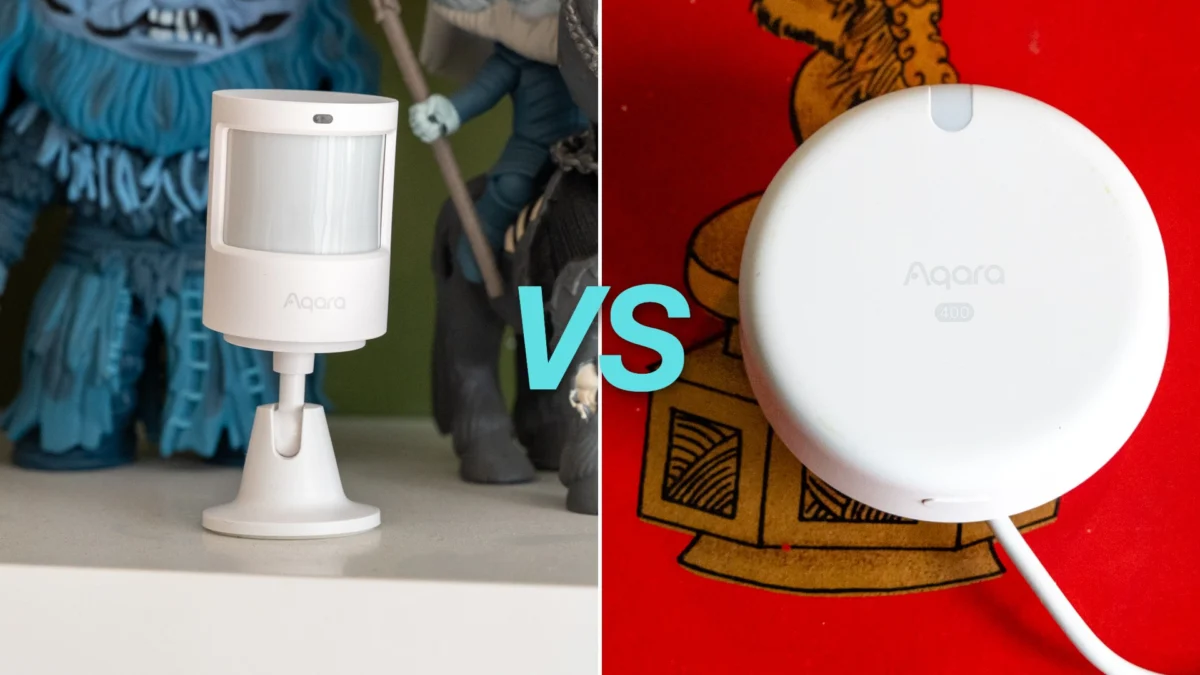
The pursuit of a truly automated and intuitive smart home hinges on its ability to perceive and react to its occupants’ presence. At the forefront of this technological evolution are motion and presence sensors, crucial components that dictate when and how smart devices spring into action. While Passive Infrared (PIR) sensors have long been the de facto standard, their inherent limitations are increasingly being addressed by the emergence of millimeter-wave (mmWave) presence sensors. Understanding the fundamental differences, advantages, and drawbacks of each technology is paramount for consumers aiming to optimize their smart home ecosystems.
The Ubiquitous PIR Sensor: A Foundation of Motion Detection
Passive Infrared (PIR) sensors represent the most established and cost-effective method for detecting motion within a smart home environment. Their operational principle relies on sensing changes in infrared energy, essentially heat, within their field of view. When a warm body, such as a human or a pet, moves across the sensor’s detection zone, it causes a detectable shift in infrared radiation, triggering the sensor. This simplicity translates into several key benefits.
One of the most significant advantages of PIR sensors is their remarkable energy efficiency. Their low power consumption allows them to operate for extended periods, often years, on a single set of batteries. This longevity minimizes maintenance requirements and enhances their suitability for placement in areas where frequent battery changes would be inconvenient. Furthermore, PIR sensors are generally inexpensive to manufacture and purchase, making them an accessible entry point into smart home automation. Their setup is typically straightforward, requiring minimal technical expertise to integrate into existing smart home hubs and routines. Devices like the Aqara Motion Sensor P1 exemplify the current generation of PIR sensors, offering reliable motion detection at a consumer-friendly price point.
However, the very simplicity that underpins PIR technology also introduces its most notable limitations. PIR sensors are inherently designed to detect movement, not static presence. This means that if an individual remains stationary for an extended period – perhaps while reading, working at a desk, or relaxing on a sofa – the PIR sensor will eventually register a lack of motion. Consequently, automated routines, such as lighting or climate control, may deactivate prematurely, leading to an undesirable interruption. This issue is particularly prevalent in living rooms, home offices, and bedrooms where prolonged periods of inactivity are common.

Another challenge associated with PIR sensors is their susceptibility to false triggers. While designed to detect human heat signatures, they can also be activated by other heat sources. This includes direct sunlight streaming through windows, heating vents, or even warm appliances. More commonly, pets can inadvertently trigger PIR sensors. While some pet-safe PIR sensors exist, they often rely on careful placement and sophisticated algorithms to differentiate between animal and human movement. In practice, even with these measures, smaller pets or their unusual positioning can still lead to unintended activations, disrupting routines or triggering unnecessary alerts. The sensitivity to movement direction also poses a challenge; PIR sensors are generally more adept at detecting motion across their field of view than movement directly towards them.
The Rise of mmWave: Precision Presence Detection
In contrast to the motion-centric approach of PIR sensors, millimeter-wave (mmWave) presence sensors offer a fundamentally different paradigm by detecting the subtle signs of life, even in the absence of overt movement. These advanced sensors utilize millimetre-wave radio signals, typically operating at frequencies of 24GHz or 60GHz, to scan their environment. The technology works by emitting these radio waves and analyzing the patterns of their reflections. This sophisticated method allows mmWave sensors to discern incredibly fine movements, including the rhythmic rise and fall of a person’s chest as they breathe.
The ability to detect breathing signifies a paradigm shift in smart home sensing. It means that mmWave sensors can accurately ascertain whether a room is occupied, irrespective of whether occupants are actively moving. This capability is invaluable for maintaining consistent smart home functionality, ensuring that lights remain on, thermostats maintain their settings, and other automated routines continue to operate as long as a person is present. This eliminates the frustration of lights switching off while one is engrossed in a task or resting.
mmWave technology also offers a higher degree of flexibility and granular control. Many mmWave presence sensors are equipped with distance measurement capabilities, enabling users to precisely define the detection range. This feature allows for the creation of distinct detection zones within a single room, or even the exclusion of specific areas, such as entryways, from active monitoring. More advanced mmWave sensors can even track the location of individuals within a room, paving the way for highly personalized automation. For instance, a sensor could be programmed to activate a heating system upon entry into a room, while simultaneously illuminating a reading lamp only when the user is seated in their designated reading chair. The Aqara Spatial Multi-Sensor FP400 is a prime example of this advanced functionality, allowing for intricate zone-based automation.
However, the enhanced capabilities of mmWave sensors come with their own set of considerations. These sensors generally require more power than their PIR counterparts, leading many models to be powered via mains electricity or USB connections. While battery-powered mmWave sensors are becoming more prevalent, their energy consumption remains higher than PIR. The extreme sensitivity of mmWave technology, while a strength, can also be a source of false triggers. Environmental factors such as fans, moving curtains, plants, or even the subtle vibrations from adjacent rooms or passing traffic can be misinterpreted as human presence. To mitigate this, most mmWave sensors incorporate sophisticated AI algorithms and setup routines designed to learn and adapt to the environment, helping to filter out spurious signals. Some mmWave sensors also integrate PIR technology as a supplementary sensor. This hybrid approach allows the device to first detect significant movement with the PIR sensor and then switch to the more sensitive mmWave mode to confirm continuous presence, optimizing both detection accuracy and power management.

mmWave vs. PIR: A Comparative Analysis
| Feature | PIR (Passive Infrared) | mmWave (Millimeter-Wave) |
|---|---|---|
| Detection Method | Senses changes in infrared energy (heat) across its field of view. | Emits radio waves (typically 24GHz or 60GHz) and analyzes reflected signals. |
| What it Detects | Movement only. | Movement and presence, including minute movements like breathing. |
| Stationary Occupants | Cannot detect them; lights may switch off while in the room. | Reliably detects stationary individuals. |
| Sensitivity | Best at detecting movement across its view; weaker for movement directly towards it. | Extremely sensitive, capable of detecting movements as small as a few millimeters. |
| Penetration | Blocked by glass and most solid objects. | Can penetrate thin, non-metallic materials like plastic, fabric, and plasterboard. |
| Common False Triggers | Radiators, direct sunlight, pets. | Fans, curtains, plants, pets, movement in adjacent rooms. |
| Zones & Tracking | No zone or tracking capabilities. | Many models support range limits, detection zones, and some offer positional tracking. |
| Clear Time | Requires a longer timeout to account for gaps in movement. | Clears quickly and accurately once a room is vacated. |
| Power Consumption | Very low; batteries can last a year or more. | Higher; often requires mains or USB power, though battery options are emerging. |
| Setup Complexity | Works out of the box with minimal configuration. | Often requires sensitivity and zone tuning for optimal performance. |
| Typical Price | Inexpensive, often under £20. | Typically £25 to £60 or more. |
| Best Use Cases | Hallways, stairs, entrances, and areas with consistent foot traffic. | Living rooms, offices, bedrooms, bathrooms, and any area where prolonged stillness is common. |
Navigating the Choice: Which Sensor is Right for You?
The selection between PIR and mmWave sensors hinges on the specific requirements and typical usage patterns of a given space within the smart home.
For areas characterized by consistent and predictable movement, such as hallways, staircases, and entryways, PIR sensors remain an excellent choice. Their primary function is to detect when someone enters or leaves a space, making them ideal for triggering lights upon arrival or activating security alerts. Their affordability, ease of installation, and long battery life make them a practical solution for these transitional zones. For instance, a PIR sensor at the top of a staircase can reliably turn on the landing light as someone ascends, and turn it off after a set period once they have moved beyond its detection range.
Conversely, mmWave presence sensors excel in environments where prolonged periods of inactivity are common and maintaining automation is crucial. This includes living rooms, home offices, bedrooms, and even bathrooms. In a living room, a mmWave sensor ensures that lights and entertainment systems remain active while occupants are watching a movie or conversing, preventing the disruptive experience of lights turning off unexpectedly. In a home office, it guarantees that desk lamps and computer-related automations stay engaged during focused work sessions. The advanced zoning capabilities of mmWave sensors also allow for sophisticated scenarios, such as gradually increasing lighting brightness as one moves closer to a particular area within a room.
In essence, the guiding principle for selection is straightforward: employ PIR sensors for spaces where people primarily pass through, and opt for mmWave sensors in areas where people tend to stay and remain relatively still.
Addressing Common Concerns and Future Implications
The growing adoption of mmWave technology has naturally led to several pertinent questions regarding its capabilities and safety.

Can mmWave sensors see through walls?
While mmWave signals can penetrate thin, non-metallic materials such as plasterboard, glass, and plastic, they are effectively blocked by denser materials like brick, concrete, and metal. This means a sensor placed in one room can potentially detect movement in an adjacent room if the separating wall is sufficiently thin. To mitigate potential interference or unwanted detection from neighboring areas, users are advised to position sensors away from shared stud walls or utilize the distance and zone settings to exclude areas beyond the intended room.
Are mmWave sensors safe?
Yes, mmWave sensors are considered safe for consumer use. They operate at very low power levels, well within the established international exposure limits for all consumer radio equipment. Crucially, these sensors are designed to detect movement and presence through radio wave reflections; they do not capture images or collect any visual data, thus preserving privacy.
Do pets set off motion sensors?
Both PIR and mmWave sensors can be triggered by pets. As mentioned, some PIR sensors offer pet-immune modes that attempt to ignore smaller heat signatures. With mmWave sensors, the most effective strategy for managing pet-related false triggers is to leverage their advanced detection zone capabilities. By defining zones that exclude areas such as pet beds or designated pet resting spots, users can significantly reduce the likelihood of unintended activations.
Can mmWave replace PIR?
In many residential scenarios, mmWave sensors can indeed serve as a superior replacement for PIR sensors, offering a more comprehensive and reliable presence detection solution. However, PIR sensors continue to hold relevance for basic motion detection tasks where their simplicity, lower cost, and ease of configuration make them a practical and sufficient choice. For areas requiring only to know if someone has entered or exited, a PIR sensor often suffices.
The evolution from PIR to mmWave technology signifies a maturation of smart home sensing capabilities. As these technologies become more sophisticated and accessible, they promise to deliver increasingly seamless, intuitive, and personalized smart home experiences, moving closer to the ideal of a home that truly understands and anticipates its occupants’ needs. The ongoing development in sensor fusion, combining the strengths of different technologies, is likely to further refine these capabilities, creating an even more responsive and intelligent living environment.

