
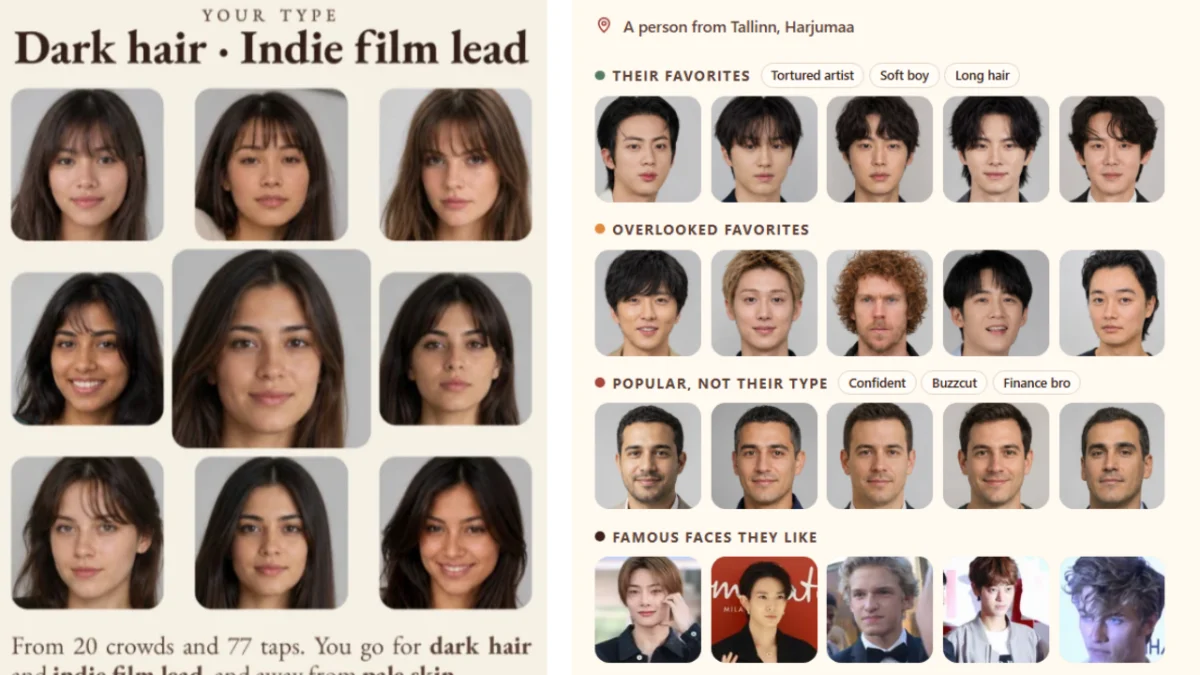
My Type Quiz, also known as the My Type Test or Your Type Quiz, emerged in late 2026 as a dominant social media trend, captivating millions of users across X (formerly Twitter), Telegram, and other digital platforms. Hosted on the domain mytype.fyi, the application provides a free, data-driven interface that allows participants to identify and quantify their physical appearance preferences. By utilizing a sophisticated selection process involving AI-generated faces and user-submitted imagery, the test generates comprehensive reports detailing a user’s "type," often categorizing preferences into specific social archetypes such as the "Clean Girl," "Finance Bro," or "Tortured Artist." The rapid ascent of the tool in November 2026 highlighted a growing cultural fascination with AI-assisted self-discovery and the digitisation of human attraction.
Overview of the My Type Quiz Mechanism
The My Type Quiz operates on a relatively simple yet psychologically engaging premise. Upon entering the site, users are prompted to select the gender they wish to rate. The interface then presents "crowds"—grids of 12 adult faces. Users select the individuals they find most attractive, and as selections are made, the chosen faces are immediately replaced by new samples.
To ensure statistical significance, the test requires a minimum of 20 rounds, typically taking between 10 to 15 minutes to complete. However, the platform allows dedicated users to continue up to 50 rounds to refine their data set. The pool of images consists of a blend of artificial intelligence-generated faces and photos submitted by the user community. This hybrid approach allows for a vast diversity of facial features, ethnicities, and stylistic presentations.
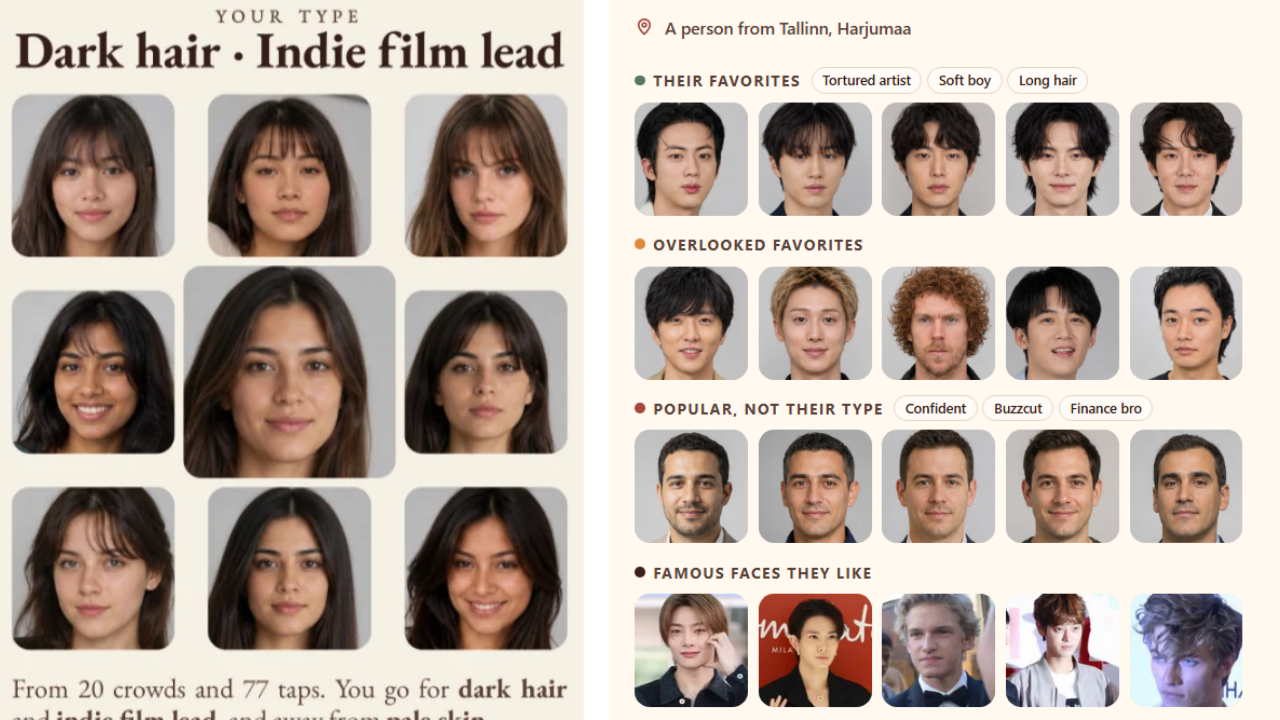
Upon completion, the website generates a personalized, multi-page report. This report does more than simply list favorites; it analyzes the user’s choices against broader demographic data. It identifies "Overlooked Favorites" (faces the user liked that the general public did not), "Popular, Not Their Type" (faces widely considered attractive that the user rejected), and specific traits the user seems to gravitate toward, such as "Kind Eyes," "Buzzcuts," or "Androgynous" features.
A Chronology of Viral Expansion
The digital footprint of mytype.fyi began in mid-2024, with ICANN registration records indicating the domain was secured on July 21, 2026. Following a period of development and beta testing through the early fall, the site saw a soft launch in late October 2026. During this initial phase, a small circle of beta testers confirmed the site’s functionality, though the formal public launch was slightly delayed to ensure server stability.
The pivot from a niche tool to a global phenomenon occurred on November 6, 2026. The primary catalyst was a post by Razib Khan, a prominent geneticist and writer. Khan shared a link to his personal results on X, which categorized his preferences as leaning toward the "Pageant Queen" and "Sorority Girl" archetypes while avoiding "Dark Academia" aesthetics. Before the post was eventually deleted, it amassed over 3.3 million views, effectively introducing the quiz to a massive, intellectually curious audience.
Following Khan’s post, the "My Type" trend saw exponential growth:
- November 7-8, 2026: A wave of secondary viral posts emerged as users began quote-tweeting Khan and sharing their own results. The diversity of the reports—some featuring "Public Bathroom Vibes" and others "Coastal Preppy"—fueled a cycle of humor and self-deprecation.
- November 9, 2026: The trend crossed linguistic and platform boundaries, reaching Russian-language Telegram channels. One major channel invited its followers to share their results in the comments, leading to thousands of international submissions and broadening the site’s data pool.
- November 10-13, 2026: The discourse shifted from mere participation to intense analysis and critique, particularly regarding the social and political implications of the "types" being generated by the AI.
The NastrondScourge Controversy and Gender Discourse
While many users shared their results for entertainment, one specific post on November 8, 2026, by X user @NastrondScourge, ignited a massive debate regarding beauty standards and the psychology of attraction. The user shared a collage of their results with the caption "Bit of a pattern here," showing a preference for faces labeled "Youthful" and "Cute over sexy," while avoiding those labeled "Instagram Model" or "Intimidatingly beautiful."
The post became a lightning rod for controversy, receiving approximately 16.2 million views within five days. Critics on the platform argued that the "Youthful" category featured women who appeared significantly younger than those in the "Intimidatingly beautiful" category, leading to accusations of age-related bias. One quote-post by user @oldheaded, which characterized the preferences in harsh terms, garnered over 112,000 likes, illustrating the polarized nature of the discussion.
Another user, @DF_UniatePapist, famously described the post as "9/11 for women," a hyperbolic phrase that trended as users debated whether the quiz was exposing uncomfortable truths about male vs. female preferences or simply reflecting the biases inherent in the AI’s training data. This controversy served to keep the My Type Quiz at the center of the social media zeitgeist for several days, as users rushed to take the test to see if their own results would be similarly scrutinized.
Supporting Data and Archetypal Categorization
The My Type Quiz is notable for its use of "archetypes"—shorthand labels for complex aesthetic clusters. These labels are derived from modern internet subcultures and fashion trends. Some of the most frequently cited archetypes in the November 2026 viral wave included:
- The Soft Boy / Tortured Artist: Characterized by longer hair, expressive eyes, and a perceived emotional depth.
- The Clean Girl: Associated with "fresh-faced" polish, minimal makeup, and a sleek, organized aesthetic.
- The Finance Bro: Usually depicted with short, groomed hair, professional attire, and a confident "corporate" look.
- The East Slavic / Baltic Aesthetic: The quiz often broke down results by ethnicity, with some users discovering a statistically significant preference for specific regional features. One user, @princessmaxxin, noted that "1 in 4" of her top selections were East Slavic, a data point that provided her with a new perspective on her own subconscious biases.
The platform also tracks "Hypergamy" metrics, showing users how much their personal ratings align with the "global average." This allows participants to see if they are "mainstream" in their attractions or if they possess "niche" tastes that diverge from the majority.
Broader Impact and Sociological Implications
The viral success of the My Type Quiz reflects a broader trend in the 2020s toward the "quantification of the self." Similar to the annual "Spotify Wrapped" or the various MBTI personality tests, the My Type Quiz offers users a way to turn subjective feelings into objective data.
The Role of AI in Social Perception
By using AI-generated faces, the quiz creators were able to bypass the limitations of traditional dating apps or stock photo libraries. However, this has raised questions about the "uncanny valley" and the potential for AI to reinforce narrow or unrealistic beauty standards. Because the AI is trained on existing datasets of human faces, it may inadvertently prioritize features that are overrepresented in media, thereby skewing the "archetypes" it creates.
Privacy and Data Collection
As with any free online tool that requires significant user interaction, data privacy remains a point of discussion for analysts. While mytype.fyi offers a "Public" or "Anonymous" option for sharing results, the sheer volume of data being collected—hundreds of millions of individual "taps" or "likes"—represents a massive dataset on human attraction. This data is potentially valuable for marketers, plastic surgeons, and AI developers looking to refine their understanding of human aesthetics.
The "Digital Mirror" Effect
Psychologists suggest that the appeal of the My Type Quiz lies in the "digital mirror" effect. Users are often surprised by their own results, discovering patterns they were not consciously aware of. In a social media environment where identity is frequently performative, the quiz provides a supposedly "unfiltered" look at a user’s psyche.
Conclusion
The My Type Quiz of late 2026 stands as a significant moment in the intersection of artificial intelligence and social media culture. What began as a simple face-preference test evolved into a complex socio-political discourse, touching on themes of age, race, gender, and the ethics of AI. Whether viewed as a harmless personality tool or a controversial mirror of societal biases, the quiz’s ability to generate millions of interactions in a matter of days underscores the power of data-driven self-discovery in the modern age. As the platform continues to gather data and refine its archetypes, it remains a potent example of how technology can be used to map the most subjective aspects of human experience.

