
The Linguistic Framework and Conceptual Appeal
At its core, the I Got So Mad trend utilizes a phrasal template that begins with the catchphrase "I got so mad I…" followed by a variable action. In linguistic terms, this is classified as a snowclone—a type of formulaic cliché or trope that can be adapted by changing specific keywords while maintaining the overall structure. The "X" in the equation represents a diverse array of responses that range from the trivial to the nonsensical. For instance, common iterations include claims such as "I got so mad I didn’t press skip on YouTube ads" or "I got so mad I drank orange juice after brushing my teeth."
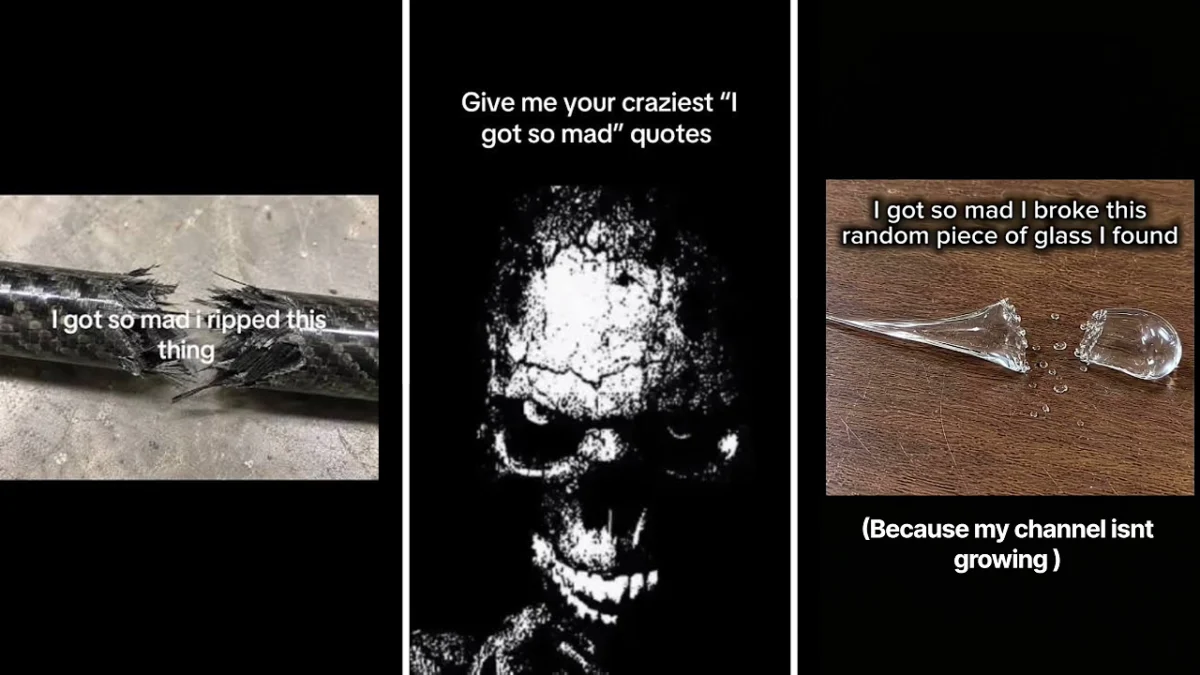
The appeal of these statements lies in their anti-climactic nature. In traditional storytelling, a character who is "so mad" might be expected to engage in a confrontation or a destructive act. However, the meme replaces these expected outcomes with actions that only serve to punish the narrator or present an image of inexplicable behavior. This juxtaposition creates a form of "cringe humor" or "anti-humor" that resonates with Gen Z and Alpha audiences, who frequently utilize irony to navigate online discourse. By late 2026, the trend had evolved to include imagery—often AI-generated or heavily edited—to provide "evidence" of these impossible feats, such as ripping metal bars or causing structural damage with lightweight objects.
Chronology of the Trend: From Niche Comment to Global Phenomenon
The chronological development of the I Got So Mad trend can be traced back to the late days of October 2026. While the sentiment of hyperbolic anger has always existed in digital spaces, it crystallized into a specific format during the Halloween season of that year.
On October 31, 2026, a TikTok creator operating under the handle elisha67865 uploaded a photo slideshow that is widely credited as the catalyst for the trend’s explosive growth. The post featured a screenshot of a comment from a previous day in which a user claimed they had become so enraged that they threw a common housefly at a window with such force that the glass shattered. The slideshow meticulously documented the absurdity of the claim, including a mock consultation with Google’s Gemini AI. The AI’s response—stating that even with infinite muscular strength, a fly lacks the mass to break glass—served as the "straight man" in the joke, highlighting the impossibility of the feat. Within the first two weeks of its publication, this foundational post generated thousands of views and a flurry of engagement, setting the stage for a wave of imitation.
Following this initial spark, the first half of November 2026 saw a rapid escalation in content volume. On November 1, 2026, TikToker zyncuz1 shared a compilation of similar comments, paired with various "reaction images" that depicted shock, fear, or confusion. This post served as a distribution hub, garnering over 203,000 likes and more than 12,000 comments in less than a fortnight. This signaled a shift from a single joke to a participatory "challenge" where users vied for the most creative or ridiculous scenario.
By November 4, 2026, creators like heisenbergwithbur and foolybob began producing high-production-value edits. These videos synthesized the best examples from across the platform, often set to dramatic or eerie soundtracks to heighten the irony. Foolybob’s post on November 4 alone reached over 165,000 likes, while a subsequent upload on November 8 skyrocketed to nearly one million likes, firmly establishing the trend as a dominant force in the TikTok algorithm for the month.
Statistical Overview and Reach
The metrics associated with the I Got So Mad trend reflect a high level of user retention and participation. Unlike "passive" memes that users merely watch, this trend is "active," requiring users to contribute their own text-based anecdotes in the comment sections.
An analysis of the top-performing posts between October 31 and November 15, 2026, reveals the following engagement patterns:
- Total Likes: Top-tier compilation videos averaged between 150,000 and 950,000 likes per post.
- Comment Volume: The trend is notable for its extremely high comment-to-like ratio. Some posts, such as those by user kfc5.5, saw upwards of 68,000 comments, as users flocked to share their own "I got so mad" stories.
- Content Diversity: Approximately 40% of the content utilized the TikTok slideshow feature, while 30% consisted of video edits, and the remaining 30% was found in the form of text-based interactions within comment threads.
These figures suggest that the trend’s longevity was sustained by the low barrier to entry. Any user with a smartphone could participate by simply typing a short, humorous sentence, making it one of the most accessible viral movements of the year.
Analysis of Subcategories and Varied Examples
The "I Got So Mad" ecosystem quickly branched into several distinct subcategories, each catering to different comedic sensibilities:
1. The Mundane Self-Sabotage
These examples focus on the narrator performing a task that is mildly unpleasant for themselves.
- “I got so mad I did my homework without AI.” This highlights the modern student’s reliance on technology, suggesting that doing work manually is a form of self-inflicted punishment.
- “I got so mad I went to the toilet without my phone.” This plays on the common cultural habit of using mobile devices in the bathroom, framing the absence of the device as a radical act of defiance.
2. The Physically Impossible
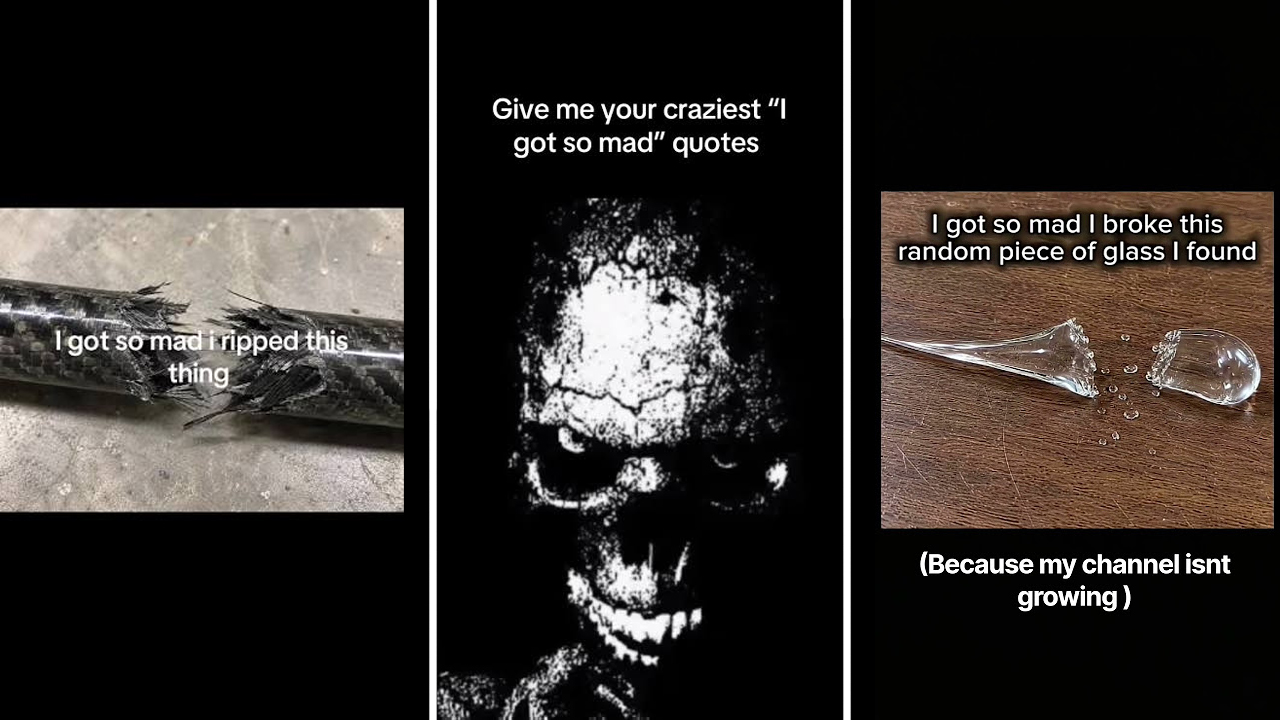
This category relies on "deep-fried" or AI-generated imagery to support claims of superhuman strength.
- “I got so mad I ripped a baseball.”
- “I got so mad I broke this random glass thing.” (Accompanied by a photo of a thick, industrial glass block shattered).
- “I got so mad I bent a rebar.”
3. The Absurdist and Ironic
These posts often involve niche digital cultures, particularly gaming.
- “I got so mad I killed my own dog in Minecraft.” This is a particularly poignant example within gaming communities, as the "Minecraft dog" is a symbol of loyalty and emotional attachment. To destroy it in a fit of rage is seen as the ultimate, albeit tragic, ironic gesture.
- “I got so mad I deleted the App Store.” This is a technical impossibility on most devices, adding a layer of surrealism to the claim.
Broader Cultural Impact and Media Implications
The emergence of the I Got So Mad trend underscores a broader shift in digital communication toward "performative irrationality." In an era where online platforms are often criticized for being hotbeds of genuine outrage and toxicity, this trend repurposes the language of anger for the sake of play. It allows users to vent the frustrations of daily life—slow internet, academic stress, or family friction—through a lens of absurdity rather than actual aggression.
Furthermore, the trend highlights the evolving role of Artificial Intelligence in meme culture. The use of Gemini AI in the origin story of the "fly" meme demonstrates how users are now incorporating large language models (LLMs) into their jokes, using the AI as a factual anchor to make the punchline more effective. This suggests that as AI becomes more integrated into daily life, its role in "fact-checking" memes will become a recurring comedic trope.
From a sociological perspective, the trend also reflects the "desensitization" of the internet. Because genuine displays of anger are so common on social media, they have lost some of their impact. By exaggerating anger to the point of ridiculousness, the "I Got So Mad" trend effectively mocks the very concept of "internet rage," turning what could be a negative emotion into a collaborative creative exercise.
Conclusion and Future Outlook
As of mid-November 2026, the I Got So Mad trend remains a staple of the social media landscape, though it is beginning to show signs of reaching its saturation point. Like many viral sensations, its future likely lies in its evolution into other formats or its absorption into the broader lexicon of internet slang. Brands and digital marketers have already begun to take notice, with some attempting to leverage the format to highlight minor "annoyances" solved by their products, though these efforts often struggle to replicate the organic, surrealist humor of the original creator community.
Ultimately, the trend serves as a testament to the creativity of the digital-native generations. By taking a simple, universal emotion—anger—and stripping it of its power through irony and absurdity, the users of TikTok have created a shared language that celebrates the bizarre and the mundane in equal measure. Whether the trend survives into 2027 or fades into the archives of internet history, it has successfully captured a specific moment in the evolution of 21st-century humor.

