
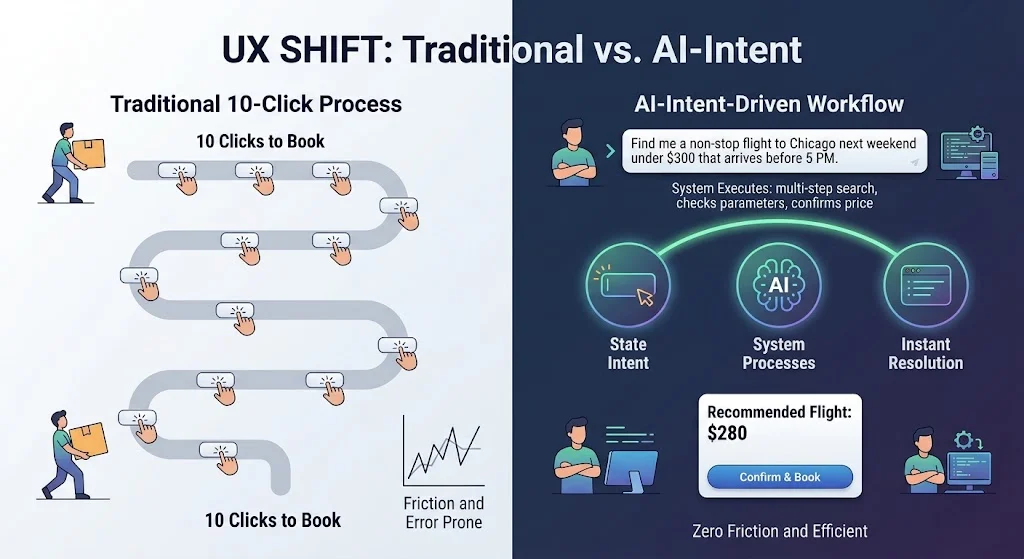
The digital landscape is currently undergoing its most significant structural transformation since the introduction of the Graphical User Interface (GUI) in the early 1980s. As artificial intelligence moves from a back-end processing tool to a front-end orchestrator, the fundamental "contract" between humans and software is being rewritten. For over four decades, software interaction has been defined by a point-and-click paradigm—a system where users navigate menus, toggle switches, and fill out forms to achieve specific ends. However, a new design philosophy known as Intent-Driven Design is emerging, promising to render these visible interfaces obsolete by focusing on high-level human goals rather than the mechanical steps required to achieve them.
The Historical Context of the Interaction Paradigm
To understand the magnitude of this shift, one must look at the chronology of human-computer interaction (HCI). The commercialization of the GUI, pioneered by the Xerox Star in 1981 and later popularized by the 1984 Apple Macintosh, replaced the abstract Command Line Interface (CLI) with visual metaphors. Users no longer had to memorize syntax; they could see "folders" and "trash cans." While this was a massive leap in accessibility, it introduced a new form of cognitive load: the "10-click process."

In the decades that followed, the web became a labyrinth of interactive friction. Industry data suggests that a standard consumer task, such as booking a multi-city flight, can involve upwards of 20 browser tabs, dozens of form fields, and repeated cross-referencing of data. Users have effectively become the "orchestrators" of software, spending more time managing the interface than enjoying the outcome. The current transition toward Intent-Driven Design aims to reverse this, moving the burden of execution from the user to the system.
The Core Pillars of Intent-Driven Design
The shift from command-based interaction to intent-based resolution is built upon three technological and philosophical pillars. These pillars represent a departure from traditional UX (User Experience) standards and require a fundamental re-evaluation of how digital products are built.
1. High-Level Goal Capture
In traditional design, the system waits for micro-actions—a click on a specific filter or a selection from a dropdown. Intent-driven systems, however, utilize Natural Language Processing (NLP) and contextual awareness to capture "high-level goals." Instead of a user manually setting price ranges and date toggles for a vacation, they provide a single prompt: "Find me a quiet beach house in Portugal for under $200 a night for the first week of July." The software interprets the constraints, searches the database, and presents a curated result. This leverages what Apple’s Human Interface Guidelines refer to as "Contextual and Ambient Design," where the system anticipates needs based on environmental metadata and past habits.
2. Generative User Interfaces (GenUI)
Unlike static websites where every user sees the same layout, Intent-Driven Design utilizes Generative UI. In this model, the interface is rendered dynamically and uniquely for the specific task at hand. If a user expresses an intent to analyze a budget, the AI might generate a temporary, functional spreadsheet widget. Once the task is complete, that interface element recedes. This approach aligns with the Nielsen Norman Group’s recent analysis of AI as a new UX paradigm, where computing moves from "instruction-based" to "specification-based."
3. Autonomous Execution via AI Agents
The final pillar is the shift from manual execution to autonomous agency. Traditional interfaces act as passive containers of data. Intent-driven interfaces utilize background agents to perform the "grunt work." This includes comparing prices across multiple platforms, summarizing lengthy terms of service, or coordinating schedules between different software ecosystems. The user provides the "what," and the AI determines the "how."
Case Studies in Intent-Based Resolution
Several platforms are already demonstrating the efficacy of this transition, moving away from traditional link-based or drag-and-drop architectures.
Perplexity AI and the Search Revolution:
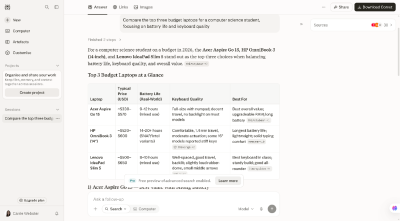
Traditional search engines like Google function as directories, providing a list of links that the user must then manually investigate. Perplexity AI represents a shift toward synthesized answers. By capturing the user’s intent to learn or find a specific fact, it skims multiple sources, resolves contradictions, and presents a final answer with citations. This eliminates the need for "tab-hoarding," where users open multiple windows to piece together information.
Vercel v0 and Generative Development:
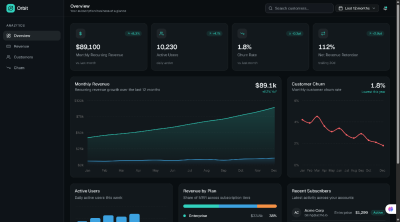
In the realm of software development and design, Vercel v0 has introduced a system where UI components are generated through natural language prompts. Rather than manually drawing rectangles in a design tool like Figma or writing hundreds of lines of CSS, a designer describes the intent—"Create a dashboard for a fintech app with a dark mode and a line chart for monthly revenue." The system generates the functional code and the visual interface simultaneously, bypassing hours of manual labor.
Goblin.tools and Functional Accessibility:
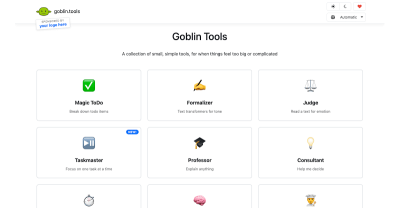
Perhaps the most human-centered application of this technology is found in Goblin.tools. Designed primarily for neurodivergent individuals who may struggle with "executive function," the suite of tools takes a single, overwhelming task (e.g., "Clean the kitchen") and breaks it down into a granular, manageable checklist using AI. The interface is intentionally sparse, focusing entirely on the transition from intent to actionable steps.
Data-Driven Analysis of Productivity Gains
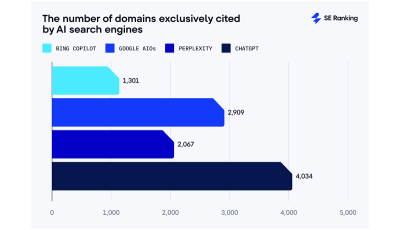
Recent studies into AI-integrated workflows support the move toward intent-driven systems. Research from the Massachusetts Institute of Technology (MIT) indicated that professionals using generative AI tools completed tasks 25% faster and produced work that was rated 40% higher in quality compared to those using traditional software interfaces.
Furthermore, engagement metrics are being redefined. For decades, the tech industry measured success through "Time Spent in App." However, as the Center for Humane Technology points out, this metric often rewards friction and "dark patterns" that keep users clicking. Intent-driven design prioritizes "Time to Value." The success of a digital product is now increasingly measured by how quickly it can solve a problem and "get out of the user’s way."
Navigating the Risks: The Black Box and the Illusion of Control
Despite the efficiency gains, the removal of visible controls introduces significant technical and ethical challenges. Product designers and engineers are raising concerns regarding the "Black Box Problem"—the difficulty of diagnosing an error when the process is hidden from the user. In a traditional UI, if a filter is set incorrectly, the user can see it. In an intent-driven UI, if the AI misinterprets a prompt, the user may receive a confidently delivered but incorrect result.
To mitigate this, the Google PAIR (People + AI Research) Guidebook suggests the implementation of transparent feedback loops. Systems must "narrate" their reasoning (e.g., "I’m looking for flights under $300 because you mentioned a budget constraint").
Another risk is the "Illusion of Control." When software makes decisions autonomously, users can feel patronized or disempowered. The Stanford Human-Computer Interaction Group emphasizes that designers must maintain "clear boundaries," particularly for high-stakes decisions. While an AI might autonomously summarize an email, it should never autonomously send a financial wire transfer without an explicit, human-in-the-loop confirmation.
The Evolving Role of the UX Designer
The transition to intent-driven design necessitates a radical re-evaluation of the design profession. The role is shifting from "interface architect" to "intent mapper."
- From Pixels to Logic: Designers will spend less time on the aesthetic polish of buttons and more time defining the logic of how an AI should interpret various human goals.
- From Static to Fluid: Instead of designing fixed screens, designers will create "design systems" that allow generative AI to assemble components in real-time while maintaining brand consistency and accessibility standards.
- From Prevention to Reversibility: Traditional UX focuses on preventing errors through confirmation modals. Intent-driven UX focuses on easy reversibility. Because the system acts on behalf of the user, a prominent and universal "Undo" function becomes more important than a "Confirm" button.
Broader Impact and Future Implications
The move toward "No Interface" marks the beginning of the ambient computing era. As wearable technology, voice interfaces, and AI agents become more sophisticated, the screen itself may become a secondary medium. The long-term implication for the web is a move away from the "site" as a destination and toward the "service" as a background utility.
Industry analysts predict that within the next five years, the majority of web interactions will be mediated by personal AI agents. These agents will interact with the "intent-layer" of websites, bypassing the visual GUI entirely. For businesses, this means that the "findability" of their services will depend not on SEO-optimized copy for humans, but on how well their data is structured for AI consumption.
The ultimate goal of modern web design is no longer to build prettier buttons or more captivating animations. As the philosophy of Golden Krishna’s "The Best Interface Is No Interface" gains mainstream traction, the industry is finally acknowledging that the most sophisticated technology is the one that disappears. The future of the web is not more interaction; it is seamless, invisible completion. In this new era, the most successful products will be those that require the fewest clicks to turn a human thought into a digital reality.

