
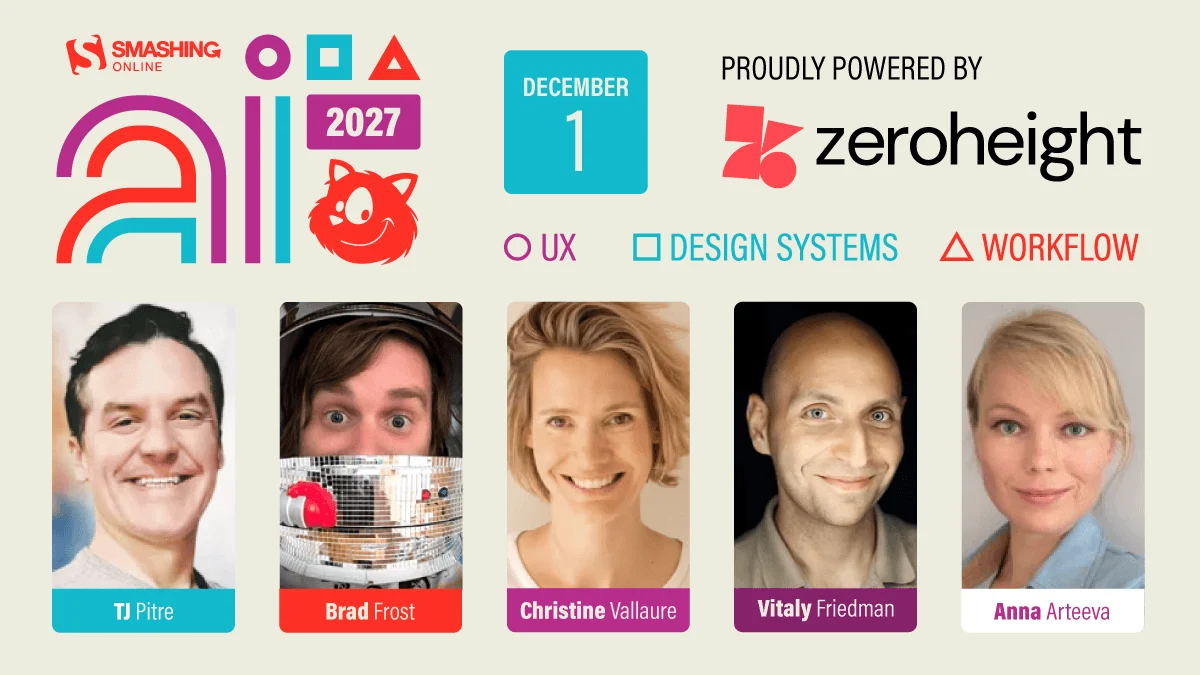
The global web design and development community is preparing for a significant shift in workflow methodologies as SmashingConf officially announces the AI 2027 Conference. Scheduled for December 1, 2026, this live online half-day event is designed to provide a comprehensive technical assessment of the state of artificial intelligence within the design and engineering sectors. As industry leaders move beyond the initial phase of AI experimentation, the conference aims to establish a roadmap for the year 2027, focusing on the practical integration of AI into design systems, Figma workflows, and agentic UX patterns.
The event comes at a critical juncture for the technology industry. By late 2026, the initial "hype cycle" of generative AI has largely transitioned into a demand for sustainable, scalable enterprise solutions. SmashingConf, an organization known for its focus on high-level technical execution and user experience, has curated a lineup of industry veterans to address the growing complexities of "AI-ready" design systems. The primary objective is to move away from theoretical discussions and toward "showing, not telling," with a schedule dominated by live demonstrations of tools, setups, and workflows that have proven effective in professional environments.
The Evolution of AI in Design Systems: Background and Context
The emergence of the AI 2027 Conference reflects a broader trend in the software development lifecycle (SDLC). Since the mainstream adoption of Large Language Models (LLMs) in 2023, designers and engineers have struggled to find a balance between automated generation and manual precision. In the early stages, AI was primarily used for content generation and basic code snippets. However, as 2027 approaches, the focus has shifted toward "agentic AI"—systems capable of performing multi-step tasks with minimal human intervention.
Design systems, which serve as the "source of truth" for large-scale digital products, are currently undergoing a fundamental transformation. Traditional design systems require extensive manual documentation and maintenance. The AI 2027 Conference intends to explore how AI can automate these processes, ensuring that design tokens, components, and documentation remain synchronized across various platforms. The event will specifically address the role of Figma—the industry-standard design tool—and how its Model Context Protocol (MCP) and other AI-driven features are redefining the handoff between designers and developers.
Event Chronology and Technical Schedule
The conference is structured as a condensed, high-impact half-day session, beginning with an early door opening to accommodate a global audience across multiple time zones. The schedule is meticulously planned to cover the full spectrum of AI integration, from high-level UX strategy to granular engineering workflows.
The proceedings commence at 8:10 AM with a session titled "Designing AI Experiences in 2027." This opening talk sets the stage for the technological landscape expected in the coming year, emphasizing the shift from static interfaces to dynamic, AI-driven user experiences. Following this, at 8:45 AM, the focus shifts to "Prototyping AI Functionality," a session dedicated to the rapid iteration of AI-powered features without the need for extensive backend infrastructure.
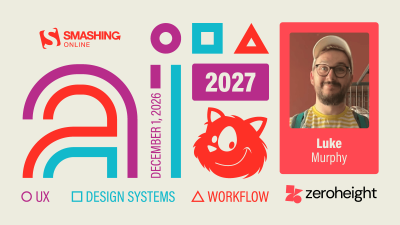
A significant portion of the mid-morning is dedicated to the intersection of AI and documentation. At 9:20 AM, Luke Murphy of zeroheight will present "Nobody Will Read Your Documentation," a partner talk that addresses the systemic failure of traditional documentation and how AI agents can bridge the gap by "reading" and implementing design system rules automatically.
The technical core of the event continues at 9:40 AM with a deep dive into "Design Systems and Figma MCPs." This session is particularly relevant for teams using Figma as their primary collaborative hub, exploring how new protocols allow AI to better understand and manipulate design files. The final hours of the conference, starting at 10:15 AM and 10:50 AM, are reserved for "Alternative Workflows for AI and Design Systems" and "Real-World AI & Design Systems Workflow," respectively. These sessions are designed to provide a look at the internal operations of leading tech teams, revealing the "clever tricks" and "practical tips" that are often omitted from standard marketing materials.
Expert Contributions and Industry Perspectives
SmashingConf has secured six prominent speakers, each bringing a unique perspective on the intersection of design and engineering. The host of the event, Vitaly Friedman, a renowned UX consultant and founder of Smashing Magazine, has spent the last several years conducting workshops on AI design patterns. Friedman’s involvement signals a commitment to solving complex performance and usability problems rather than merely following trends.
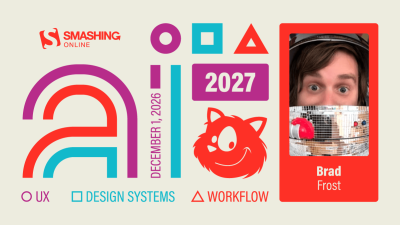
"Everywhere I look, it’s the same story: people don’t want more AI hype, they want to actually get better at using it," Friedman stated regarding the organization of the event. This sentiment is echoed by the inclusion of Brad Frost, the author of Atomic Design. Frost’s participation is noteworthy, as his methodology has defined the way modern design systems are built. His focus at the conference will be on the evolution of these systems in an era where AI can generate the very "atoms" and "molecules" he once conceptualized.
Other key speakers include:
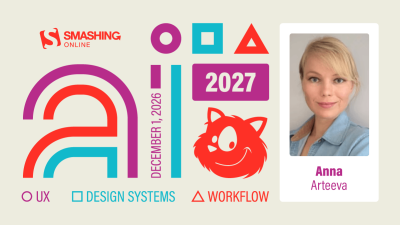
- Anna Arteeva: A product design leader and agentic coding instructor who specializes in helping designers move beyond "one-shot" prototypes toward technical fluency with coding agents.
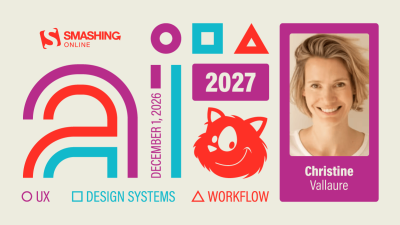
- Christine Vallaure: An educator and founder of Moonlearning.io, who focuses on blurring the lines between design and code through hands-on teaching.
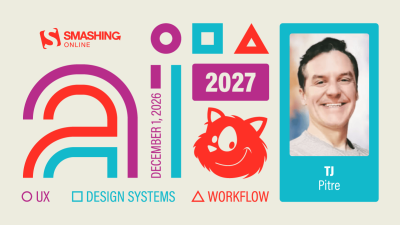
- TJ Pitre: Product Architect for AI and Design Systems at Figma, who provides an insider’s view of how the platform is evolving to support AI-driven workflows.
- Luke Murphy: Principal Design Advocate at zeroheight, representing the event’s partner and providing expertise on the management of design system documentation.
Supporting Data and the Economic Shift in UI/UX
The necessity for a conference like AI 2027 is supported by recent industry data. According to various tech employment reports from 2025 and 2026, the demand for "Design System Engineers" with AI proficiency has increased by over 40% year-over-year. Furthermore, a recent survey of frontend developers indicated that nearly 65% of teams are now using some form of AI-assisted coding agent in their daily production environment.
However, the same data reveals a significant skill gap. While many teams use AI for basic tasks, fewer than 15% have successfully integrated AI into their core design system infrastructure in a way that is reproducible and scalable. The AI 2027 Conference aims to address this discrepancy by providing a centralized forum for sharing "what works and what doesn’t," potentially saving organizations hundreds of hours in trial-and-error experimentation.
The partnership with zeroheight further emphasizes the importance of the "documentation economy." As AI agents become more prevalent, the quality of a design system’s documentation becomes the primary factor in whether an AI can accurately implement a design. In this context, documentation is no longer just for human consumption; it is the training data for the organization’s internal AI tools.
Broader Impact and Industry Implications
The implications of the AI 2027 Conference extend beyond the immediate schedule. By hosting this event, SmashingConf is helping to define the professional standards for the next generation of web workers. The move toward "agentic AI UX patterns" suggests a future where designers will act more as "creative directors" or "system architects" rather than pixel-pushers.
One of the most significant anticipated outcomes of the conference is the normalization of "harness engineering" within the design process. This involves creating the environments and constraints (the "harnesses") within which AI agents can safely and effectively operate. As the industry moves into 2027, the ability to build these harnesses will likely become a foundational skill for both designers and frontend engineers.
The event will conclude with moderated breakout rooms, a feature designed to foster direct peer-to-peer communication. In these sessions, attendees can bring their specific workflow challenges to the experts, ensuring that the conference functions not just as a broadcast, but as a collaborative problem-solving environment.
In an era where technology cycles are measured in months rather than years, the AI 2027 Conference represents a proactive attempt to stabilize and professionalize the use of artificial intelligence in the creative industry. By focusing on the "boring" but essential aspects of AI—such as documentation, system architecture, and structured context—SmashingConf is positioning itself at the forefront of a more mature, post-hype digital landscape.
Registration for the event is currently open, with the organizers expecting a diverse turnout of UX designers, UI engineers, and product managers. As the tech world looks toward the end of 2026, the insights shared at this conference may well dictate the competitive advantages of design teams throughout the coming year.

