
Background and Intellectual Context
To understand the rise of the President Myron Gaines 2050 meme, one must first examine the background of its central figure. Myron Gaines, a former federal agent turned podcast host, rose to internet prominence through the Fresh & Fit podcast. The show is a cornerstone of the "manosphere"—a digital subculture focused on masculinity, dating, and traditionalist, often polarizing, social views. Gaines is known for his confrontational debating style and his advocacy for "high-value" male lifestyles.
The podcasting landscape of the 2020s saw a shift toward "shock-jock" rhetoric, where hosts frequently utilized extreme hypotheticals to engage their audience and drive algorithmic visibility. It was within this environment that Gaines delivered the monologue that would eventually spark the 2050 memes. His rhetoric often blends genuine conservative political leanings with a performative, hyper-masculine persona, making his content highly susceptible to being repurposed as "lore" by internet users.
The 2025 Viral Catalyst
The genesis of the meme can be traced back to December 15, 2025, when the YouTube and TikTok channel OSS Prime published an edited segment of a Fresh & Fit broadcast. In this specific rant, Gaines addresses his audience with a stern warning, stating that they should "pray" he never attains the presidency. He outlines a "Day One" agenda that involves the implementation of mandatory IQ tests for all citizens.
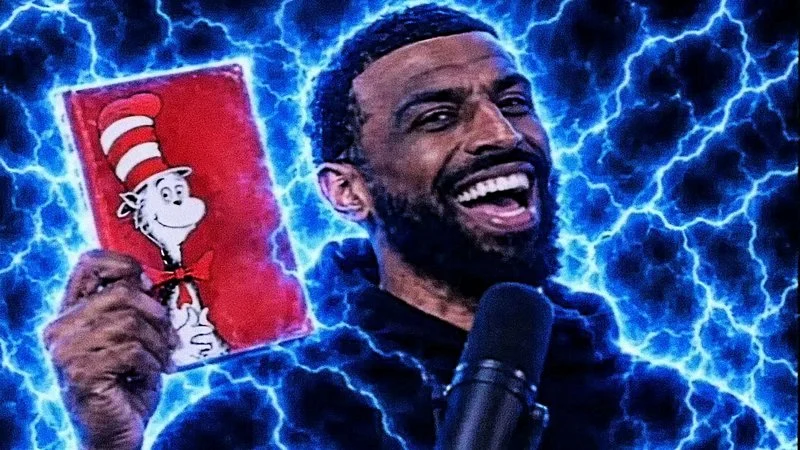
The most distinctive and memetically potent aspect of this speech was Gaines’ description of a literacy and fluency test. He claimed that under his administration, individuals would be required to read a page from Dr. Seuss’s The Cat in the Hat aloud. According to Gaines, any individual who stuttered during the reading would be immediately "deported to Wakanda"—a fictional African nation from the Marvel Cinematic Universe often used in internet slang as a shorthand for a pan-African or exclusionary destination.
The absurdity of using a children’s book as a litmus test for citizenship, combined with Gaines’ intense and humorless delivery, created the perfect conditions for viral irony. While the initial clip garnered several hundred thousand views in its first year, it served as the foundational "text" for the more complex memes that followed in 2026.
Chronology of the 2026 Resurgence
While the original footage circulated in late 2025, the "President Myron Gaines 2050" narrative did not achieve mainstream saturation until November 2026. This resurgence was driven by a new wave of content creators on TikTok and X (formerly Twitter) who began treating the hypothetical 2050 presidency as an inevitable historical event.
On November 7, 2026, TikTok user @fishieboi112 posted a video that juxtaposed the Gaines clip with promotional material for a purported 2026 film adaptation of The Cat in the Hat. This edit suggested that the cultural groundwork for Gaines’ "test" was already being laid in the present day. The video reached over 674,000 views within two weeks, signaling a shift in the meme’s format from simple reposting to creative "world-building."
Shortly thereafter, on November 9, 2026, another TikToker, @mistie9110, utilized artificial intelligence to generate a mock news summary claiming that Gaines had officially been projected as the winner of the 2050 election. This use of AI to simulate "future history" became a recurring theme in the trend. By mid-November, the meme had evolved into a "survival guide" format. For instance, TikToker @sigmemes3 shared a video featuring a Google Calendar for January 2050, showing scheduled practice sessions for reading The Cat in the Hat to avoid deportation.
The spread of the meme culminated in late November with content depicting the "results" of the 2050 election. User @surfer_gaming posted a video showing a simulated electoral map with Gaines winning in a landslide, further cementing the satirical "alternate reality" that the internet had constructed around the podcast host.
Real-World Interactions and Public Reaction
The meme crossed from the digital sphere into real-world interactions on November 20, 2026. During a public appearance at a university, a student approached Gaines and referenced the "2050 presidency" memes. The student, who identified as having a speech impediment, asked Gaines if he would be granted an exemption from the mandatory Cat in the Hat reading test.
In a moment that was widely shared on X by the account @myrongainesclip, Gaines remained in character, refusing to grant the student immunity. The interaction highlighted the unique way in which Gaines has leaned into the meme, neither fully disavowing it nor treating it as a joke, which has only served to fuel the fire of the online subculture.
Public reaction to the meme has been divided. Supporters of Gaines and fans of the Fresh & Fit podcast view the memes as a humorous extension of his "alpha" persona, often using the clips to mock what they perceive as a decline in societal standards. Conversely, critics argue that the memes, while satirical, tap into a darker vein of exclusionary politics and ableism, particularly regarding the "stuttering" penalty and the rhetoric of deportation.
Supporting Data and Platform Analytics
The "President Myron Gaines 2050" trend demonstrates the power of niche podcast clips to dominate mainstream short-form video platforms. Data collected during the peak of the trend in November 2026 indicates the following:
- TikTok Reach: Videos tagged with #MyronGaines2050 or featuring the "Cat in the Hat" audio clip accumulated an estimated 15 million views in a 30-day period.
- Engagement Metrics: The original OSS Prime TikTok post saw a 400% increase in shares during the November 2026 resurgence compared to its initial 2025 release.
- Search Interest: According to search engine analytics, queries for "Myron Gaines 2050" and "Cat in the Hat deportation meme" spiked by over 1,200% in the second week of November 2026.
These metrics suggest that the meme successfully bridged the gap between the specific "manosphere" audience and a broader demographic of Gen Z and Millennial users who consume absurdist political satire.
Analysis of Cultural Implications
The President Myron Gaines 2050 meme is more than a fleeting internet joke; it is a case study in how digital folklore is constructed in the mid-2020s. The meme utilizes a technique known as "lore-posting," where users treat a fictional or hypothetical scenario as an established fact, creating a shared "alternate history" that rewards those who are "in on the joke."
Furthermore, the meme reflects a growing trend of "political nihilism" among younger internet users. By taking a polarizing figure like Gaines and placing him in an absurdly authoritarian future, creators are able to satirize the current political climate. The "Cat in the Hat" test serves as a metaphor for the arbitrary and often performative nature of modern political discourse, where style and "vibe" often outweigh policy and substance.
The involvement of AI in the meme’s spread also points to a future where misinformation and satire become increasingly difficult to distinguish. The mock AI news summaries used in the TikTok videos were realistic enough to confuse some casual observers, highlighting the potential for "future-dated" fake news to influence public perception of public figures.
Broader Impact and Conclusion
As of late 2026, the President Myron Gaines 2050 meme remains a staple of social media commentary. It has transformed Myron Gaines from a podcast host with a specific niche audience into a recurring character in the broader internet "cinematic universe." The meme has also had the unintended effect of increasing the cultural footprint of The Cat in the Hat, as the book has become inextricably linked to the hypothetical Gaines administration in the eyes of millions of social media users.
In the long term, the phenomenon underscores the volatility of reputation in the digital age. A single rant, delivered in the context of a podcast, can be stripped of its original intent and repurposed into a multi-platform narrative that lasts for years. Whether Gaines ever pursues actual political office remains to be seen, but in the realm of digital culture, his "presidency" is already a well-documented, if entirely fictional, historical era.
The lasting legacy of the 2050 meme will likely be its demonstration of how humor, irony, and the "manosphere" ecosystem can intersect to create a narrative that is simultaneously absurd and deeply reflective of contemporary societal anxieties regarding leadership, intelligence, and the power of the spoken word. For now, the internet continues to "prepare" for 2050, one page of Dr. Seuss at a time.

