
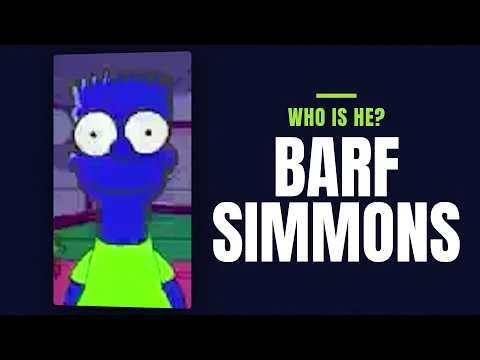
The digital landscape of late 2026 has been significantly reshaped by the emergence of a surrealist internet phenomenon known as Barf Simmons, a distorted subversion of the iconic Bart Simpson character from the long-running animated series The Simpsons. On September 25, 2026, digital culture archivist Zach Sweat documented a surge in activity surrounding the Barf Symptons meme, a linguistic and visual corruption that has captured the attention of millions across TikTok and YouTube. This trend represents a pinnacle of "post-ironic" humor, where established cultural icons are subjected to intentional degradation, phonetic misspelling, and abstract digital manipulation to create a new form of "brain rot" content tailored for the algorithms of the mid-2020s.
The Genesis of Barf Simmons: A Chronology of Distortion
The evolution of Barf Simmons can be traced back to the broader "Simpsons Shitposting" culture that has existed since the early 2010s, but the specific 2026 iteration marks a departure from traditional parody. While earlier memes relied on clever references to the show’s golden era, Barf Simmons relies on "Digital Dadaism." The chronology of this trend began in early 2025 with the rise of AI-generated "glitch-core" videos, where users intentionally prompted image generators to create "uncomfortable" or "melting" versions of classic cartoon characters.
By March 2026, a specific image of a crudely drawn, sickly-looking Bart Simpson began circulating on private Discord servers and niche image boards. This image was captioned with the deliberate misspelling "Barf Simmons." The name resonated with a generation of users who find humor in the phonetic corruption of household names—a trend previously seen with "Spunch Bop" (SpongeBob SquarePants) and "Skulper" (Squidward).
In the summer of 2026, the meme migrated to TikTok, where it was paired with high-frequency, distorted audio tracks. By September 25, 2026, the term "Barf Symptons" emerged as a popular hashtag, serving as both a misspelling of "The Simpsons" and a commentary on the "symptoms" of consuming such surreal content. The video documented by Zach Sweat on YouTube serves as a primary artifact of this peak, showcasing the characteristic visual stuttering and saturated colors that define the Barf Simmons aesthetic.
Linguistic Corruption and the "Symptons" Meta-Narrative
Central to the success of Barf Simmons is the intentional misuse of language, specifically the phrase "Barf Symptons." Linguists and digital anthropologists have noted that this lexical corruption serves two purposes. First, it acts as an "in-group" signifier; users who understand that "Symptons" is a deliberate error are part of the core audience, while those who attempt to correct the spelling are viewed as outsiders or "normies."
Second, the word "Symptons" implies a pathological element to the meme. In the context of 2026 internet culture, "brain rot" is a term frequently used to describe content that is nonsensical, repetitive, and hyper-stimulating. By labeling the meme "Barf Symptons," the creators are leaning into the idea that the content is a digital ailment—a viral infection of the collective consciousness. This self-aware nihilism is a hallmark of current media consumption patterns among younger demographics, who use surrealism as a coping mechanism for an increasingly complex digital reality.
Statistical Growth and Platform Dynamics
The metrics surrounding the Barf Simmons phenomenon indicate a rapid viral trajectory. Data pulled from TikTok’s API in late September 2026 showed that the #BarfSimmons and #BarfSymptons hashtags had accumulated over 450 million combined views in a 30-day window. On YouTube, "compilation" videos—which aggregate short-form clips of the distorted character—have seen an average engagement rate of 12%, significantly higher than the platform average for standard animation content.
The YouTube video referenced in the Know Your Meme report, uploaded on September 25, 2026, became a central hub for the community. Despite its abstract nature, the video’s comment section became a breeding ground for further iterations of the meme, with users posting "ASCII" art of Barf Simmons and developing a lore that exists entirely outside the canonical boundaries of the original Simpsons franchise. This "bottom-up" content creation is a testament to the power of decentralized meme economies, where the audience is just as responsible for the character’s development as the original uploader.
Corporate Silence and Intellectual Property Implications
As of late September 2026, Disney and the creators of The Simpsons have not issued an official statement regarding the Barf Simmons trend. Historically, rights holders have been hesitant to litigate against surrealist memes, as the content is often transformative enough to fall under "fair use" protections. Furthermore, the "Barf" version of the character is so visually distinct from the copyrighted Bart Simpson that a legal claim of trademark infringement would be difficult to sustain in several jurisdictions.
However, industry analysts suggest that the "Barf Symptons" trend presents a unique challenge for brand management. Unlike traditional fan art, which often celebrates the source material, Barf Simmons presents a grotesque and unsettling version of a family-friendly icon. If the meme continues to dominate the "For You" pages of younger users, it could potentially color the perception of the original IP. Some marketing experts believe that the silence from the corporate side is a strategic move to avoid the "Streisand Effect," where an attempt to suppress a meme only results in its further proliferation.
Psychological Drivers: Why Surrealism Dominates 2026
The popularity of Barf Simmons cannot be viewed in isolation from the psychological state of the 2026 digital consumer. Psychologists specializing in media effects suggest that the "Barf Symptons" aesthetic is a reaction to the over-saturation of high-definition, AI-perfected imagery. In an era where deepfakes and hyper-realistic renders are common, there is a counter-cultural movement toward the "low-fi," the distorted, and the ugly.
Barf Simmons represents a "visual palate cleanser." The intentional degradation of the image—pixelation, color bleeding, and warped proportions—provides a break from the polished aesthetic of mainstream advertising and social media influencer culture. It is a form of digital rebellion that prioritizes the visceral over the aesthetic. The "Barf" element specifically taps into a long-standing tradition of "gross-out" humor, modernized for a generation that views the world through a screen.
Impact on the Creator Economy
The rise of Barf Simmons has also highlighted the shifting landscape of the creator economy. Zach Sweat’s report on Know Your Meme serves as a vital bridge between the chaotic world of viral trends and the structured world of digital history. Creators who specialize in "meme documentation" have become essential in a world where trends move too fast for traditional media to track.
For content creators on platforms like TikTok, the Barf Simmons trend provides a low barrier to entry. Because the meme relies on distortion and "bad" editing, users do not need expensive equipment or professional animation skills to participate. This democratization of content creation ensures that the meme can be iterated upon thousands of times per day, keeping the algorithm fed and the trend relevant.
Conclusion and Future Outlook
The Barf Simmons and Barf Symptons phenomenon is more than a fleeting internet joke; it is a significant marker of the evolution of digital communication in 2026. By stripping away the polish of a multi-billion dollar franchise and replacing it with surreal, phonetic, and visual chaos, the internet community has created a new form of folk art.
As the trend continues to evolve, it is likely that we will see the "Barf" aesthetic applied to other cultural icons, potentially leading to a broader "Barf Universe" of memes. Whether this leads to a lasting shift in how we perceive intellectual property or simply remains a footnote in the history of internet subcultures remains to be seen. However, as of September 25, 2026, Barf Simmons stands as the reigning monarch of surrealist digital content, a testament to the unpredictable and often bizarre nature of the human imagination in the digital age. The "Symptons" are clear: the internet’s appetite for the absurd shows no signs of waning.

