
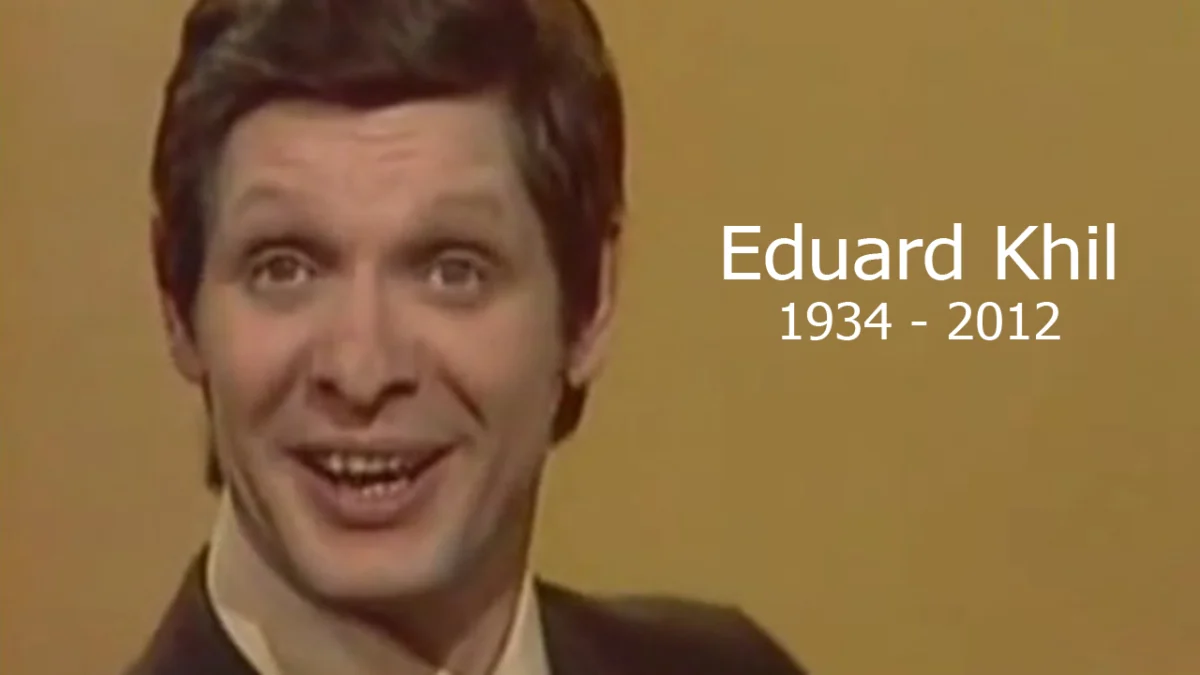
The digital age has a unique capacity for resurrecting forgotten relics of the past, transforming them into global symbols that transcend linguistic and geographic boundaries. Among the most prominent examples of this phenomenon is the "Trololo" video, a 1976 recording of the Soviet-era baritone Eduard Khil. What began as a televised performance of a non-lexical vocalization song eventually evolved into one of the most recognizable internet memes of the 21st century. This performance did more than just provide entertainment; it bridged the cultural divide between the Cold War-era Soviet Union and the modern Western internet, ultimately cementing Eduard Khil’s place in the pantheon of global pop culture.
The Origins of a Soviet Masterpiece
The performance that would eventually take the internet by storm features Eduard Khil singing a piece titled "I am Glad, ’cause I’m Finally Returning Back Home" (Russian: Я очень рад, ведь я, наконец, возвращаюсь домой). Composed by Arkady Ostrovsky, the song belongs to the "Vokaliz" tradition—a style of singing that eschews lyrics in favor of melodic syllables, similar to the American tradition of scat singing or the European pantomime style.
While the song is famous for its lack of lyrics, its history suggests a more complex origin. According to various accounts, the song originally contained lyrics about a cowboy riding across the American prairie to his home in Kentucky. However, during the height of the Soviet era, such overtly American themes were often viewed with suspicion by state censors. Khil and Ostrovsky reportedly decided to strip the lyrics entirely rather than rewrite them to suit Soviet sensibilities, resulting in the iconic "tro-lo-lo" and "ha-ha-ha" vocalizations that define the track.
Eduard Anatolyevich Khil was not an obscure figure in his homeland prior to his internet fame. Born in 1934 in Smolensk, he was a classically trained vocalist who became a pillar of the Soviet "Estrada" music scene. His talent was recognized early and often; he was named an "Honored Artist of the RSFSR" in 1968 and a "People’s Artist of the RSFSR" in 1974. For decades, Khil was a staple of Soviet television, known for his baritone range, impeccable stage presence, and a trademark smile that would later become a focal point of his digital resurgence.
The Digital Renaissance: 2009–2010
The transition of Eduard Khil from a Soviet icon to an internet sensation began on November 26, 2009. A YouTuber under the handle "RealPapaPit" uploaded a clip of Khil’s 1976 performance. The video, characterized by its vibrant yellow background, Khil’s expressive facial movements, and his synchronized rhythmic walking, immediately struck a chord with the burgeoning "meme culture" of the late 2000s.
By early 2010, the video had migrated to Reddit, specifically the /r/WTF subreddit, where it was titled "Trololololololololo." The repetitive, nonsensical nature of the vocalization, combined with the "troll" nomenclature already prevalent in internet slang, led to the performance being dubbed the "Trololo song." The term "trolling"—the act of provoking or baiting people online—found a perfect mascot in Khil’s joyful, seemingly mocking laughter throughout the song.
The spread of the video was exponential. Major media outlets and viral content aggregators like BuzzFeed and The Huffington Post began covering the video in February 2010. BuzzFeed labeled Khil a "Lyrical Genius," while The Huffington Post questioned if he was the "best lyricist of all time." On March 4, 2010, Ray William Johnson, then the host of the most-watched show on YouTube, Equals Three, featured the clip and suggested it could become the "next Rickroll." This comparison was apt; like the Rick Astley "Rickroll" meme, the Trololo video became a staple of bait-and-switch pranks, where users would click a link expecting one thing, only to be met with Khil’s infectious performance.
A Chronology of Global Impact
The year 2010 marked the peak of "Trololo-mania." Following its viral explosion, a single-serving website was created that played the video on a continuous loop, drawing millions of visitors. The song’s influence reached the highest levels of entertainment; it was referenced in television shows, parodied by actors like Christoph Waltz on Jimmy Kimmel Live!, and even used in various advertisements.
Eduard Khil’s reaction to his sudden, unexpected international fame was a testament to his character. He did not discover his new status through a talent agent or a news report, but rather through his grandson, whom he heard humming the tune. Upon seeing the parodies and the millions of views his decades-old performance had garnered, Khil expressed a mixture of surprise and genuine amusement. In a 2010 interview with Radio Free Europe/Radio Liberty, he remarked that he found the parodies "brilliant" and was touched that a new generation of listeners from across the globe had found joy in his work.
In an effort to connect with his new audience, Khil’s family helped him launch an official YouTube channel, "saitEdHil." He even performed an "encore" version of the song on a snow-covered street in Russia, proving that even in his 70s, he retained the charisma and vocal ability that had made him a star in the 1970s.
The Final Act and Posthumous Legacy
The "Trololo" narrative took a somber turn in May 2012. It was reported that Eduard Khil had suffered a severe stroke that resulted in irreversible brain damage. He fell into a coma and was hospitalized in St. Petersburg. The news sent shockwaves through the internet community that had adopted him as an unofficial mascot. Despite the efforts of medical professionals, Khil passed away on June 4, 2012, at the age of 77.
The reaction to his death was a global event. Tributes poured in from around the world. On Reddit, a post announcing his passing reached the front page within hours, accumulating tens of thousands of upvotes and thousands of comments from fans expressing their gratitude for the joy he had brought them. Major international news organizations, including The Washington Post and NPR, published obituaries that recognized him not just as a meme, but as a distinguished artist whose career spanned half a century.
Khil’s legacy continued to flourish after his death. During the opening ceremonies of the 2014 Winter Olympics in Sochi, Russia, the "Trololo" song was included in the musical program, a nod to its status as a piece of Russian cultural heritage that had achieved global recognition.
In 2017, on what would have been his 83rd birthday, Google honored Khil with a "Google Doodle." The animated tribute featured Khil in his iconic brown suit, performing on the familiar yellow stage. This gesture solidified his status as a permanent fixture of digital history. The accompanying retrospective published by The Telegraph noted that Khil had achieved a rare feat: he had become a symbol of pure, unadulterated happiness in an internet landscape often defined by cynicism.
Analysis of the Trololo Phenomenon
The success of the Trololo meme offers several insights into the nature of modern culture. First, it highlights the "democratization of fame." In the traditional media landscape of the 20th century, Khil’s fame was largely confined to the Soviet bloc. The internet removed those barriers, allowing a performance from 1976 to compete for attention with modern pop stars.
Second, the meme serves as a study in "contextual re-appropriation." The original intent of the Vokaliz—to bypass censorship or experiment with vocal technique—was entirely lost on the western audience of 2010. To them, it was an absurdist masterpiece, a "weird" relic of a bygone era. Yet, this lack of context did not diminish the work; rather, it allowed the audience to project their own meanings onto it, turning it into a tool for humor and social interaction.
Finally, Eduard Khil’s legacy is a reminder of the power of the human spirit. In every interview following his rise to internet fame, Khil displayed a humility and openness that endeared him to millions. He did not seek to litigate the unauthorized use of his likeness or complain about being "reduced" to a meme. Instead, he embraced the "Trololo" persona, recognizing that his music was doing exactly what it was meant to do: bring people together through a shared sense of wonder and mirth.
Today, the Trololo video remains a cornerstone of internet history. With over 26 million views on its original upload and countless millions more across various platforms, it continues to be a go-to reference for digital creators. Eduard Khil may have passed away, but "Mr. Trololo" remains eternal, a smiling reminder of a time when a simple, lyricless song could capture the imagination of the entire world.

