
The philosophical landscape of the late 2020s has witnessed an unexpected revival of radical individualism, centered on the works and persona of Johann Caspar Schmidt, better known by his pseudonym Max Stirner. Throughout November 2026, digital platforms including TikTok, X (formerly Twitter), and Instagram experienced a significant surge in content dedicated to the 19th-century German philosopher. This phenomenon, characterized by a blend of high-concept philosophical discourse and absurdist internet humor, has brought Stirner’s critique of "spooks"—or fixed social constructs—to a new generation of digital natives. The resurgence represents a unique intersection of historical nihilism and contemporary meme culture, signaling a shift in how political and philosophical ideologies are consumed and disseminated in the mid-21st century.
Historical Context and Philosophical Foundations
Johann Caspar Schmidt was born on October 25, 1806, in Bayreuth, Germany. A member of the Young Hegelians—a group of intellectuals who critiqued the Prussian state and religious orthodoxy—Stirner remains one of the most enigmatic figures in Western philosophy. His magnum opus, Der Einzige und sein Eigentum (published in 1844 and translated variously as The Ego and Its Own or The Unique and Its Property), proposed a radical form of egoism that challenged the very foundations of contemporary society.
Stirner’s philosophy posits the individual—the "Unique"—as the center of their own universe. He argued that most concepts held sacred by society, including the state, religion, morality, and even the concept of "humanity," are merely "spooks" (German: Spuk). In Stirner’s view, these are mental constructs that individuals allow to hold power over them, thereby limiting their personal freedom. Unlike his contemporaries who sought to replace one system of belief with another—such as the transition from Christianity to secular humanism—Stirner advocated for the total dissolution of all external authorities in favor of the individual’s self-interest.
His radicalism was so pronounced that it drew a massive, albeit delayed, rebuttal from Karl Marx and Friedrich Engels. In their 1845 work The German Ideology, the duo dedicated the majority of the text to a polemic against "Saint Max," as they mockingly called him. Marx and Engels viewed Stirner’s individualism as an impractical and bourgeois fantasy that ignored the material realities of class struggle. Despite this critique, Stirner’s influence persisted quietly, later cited as a precursor to existentialism, post-structuralism, and various forms of anarchism.
The November 2026 Viral Surge
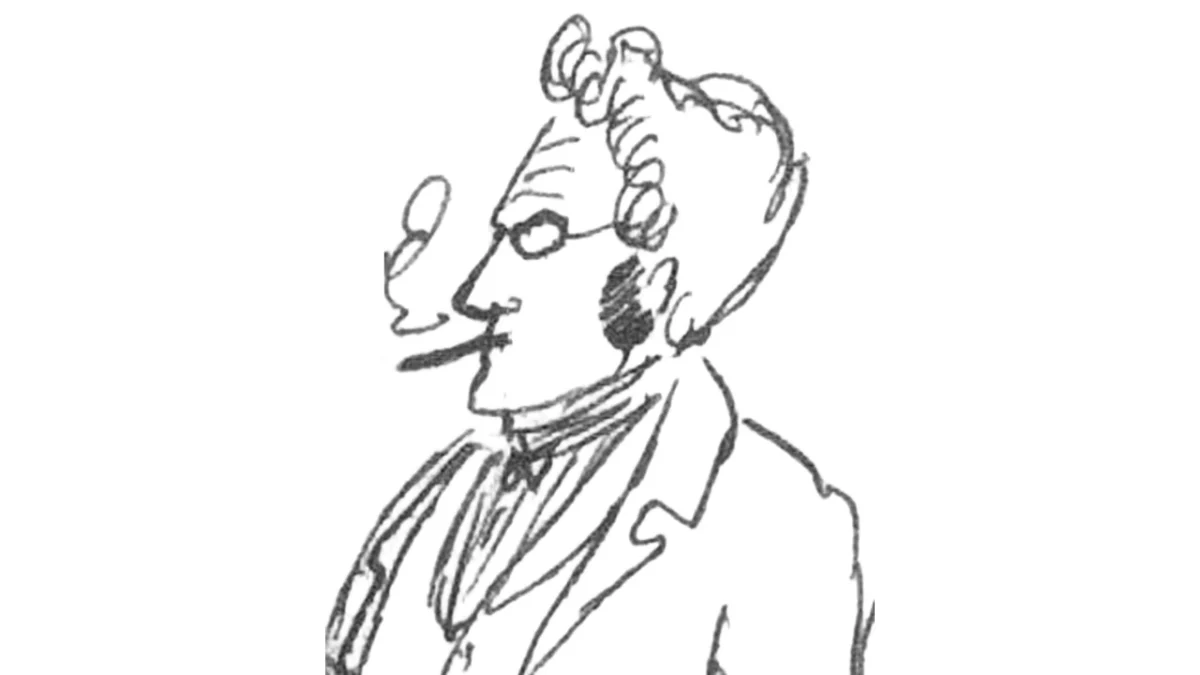
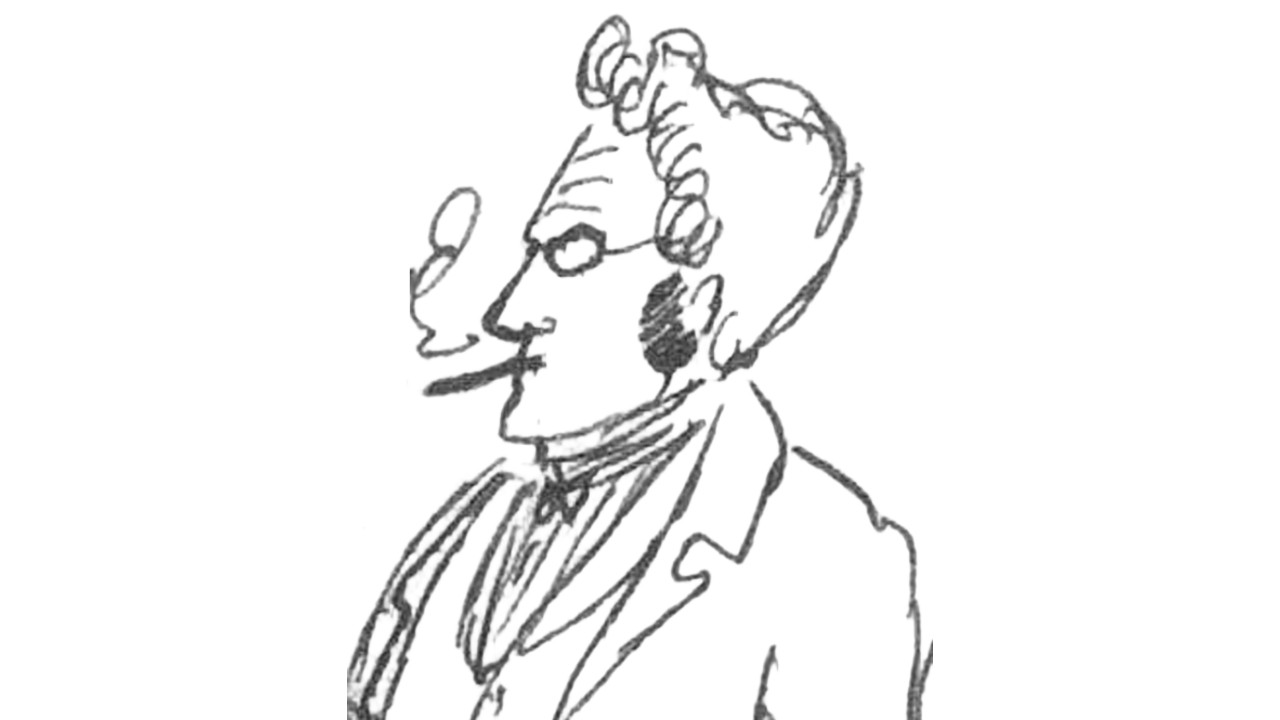
The sudden transition of Max Stirner from an academic footnote to a social media icon began in early November 2026. Data from social media analytics firms indicate that mentions of "Max Stirner" and "Egoism" increased by over 450% between November 1 and November 25. The trend was largely driven by short-form video content and "fan art" that utilized the only known visual representations of the philosopher: two sketches drawn from memory by Friedrich Engels.
On November 4, 2026, a TikTok user under the handle @grouwvy uploaded a highly stylized video edit featuring a portrait of Stirner sourced from the 1984 publication Anarchy: A Graphic Guide. The video, which utilized "phonk" music and fast-paced visual transitions, garnered over one million views within three weeks. This sparked a wave of similar "aesthetic" edits, where Stirner’s image was juxtaposed with quotes about the "Union of Egoists" and the rejection of social norms.
By mid-November, the trend migrated to X, where users began to satirize the philosopher’s lack of photographic evidence. On November 9, user @Wane34565real shared a collage of Stirner’s sketches, noting the consistent side-profile angle used by Engels. The post, which humorously suggested Stirner was "spamming" his best angle, received over 29,000 likes. This lighter, more irreverent approach to the philosopher’s image helped bridge the gap between serious political theory and mainstream internet humor.
Chronology of the Digital Movement
The timeline of the 2026 Stirner resurgence reveals a rapid evolution from historical appreciation to modern subversion:
- November 1–5, 2026: Initial "Phonk" edits appear on TikTok, focusing on the "bad boy" image of a philosopher who rejected all laws and gods.
- November 9–12, 2026: Discourse moves to X, focusing on the historical rivalry between Stirner and Marx. Memes depicting the two as bitter rivals in a modern context become common.
- November 14, 2026: The emergence of "Maxine Stirner." TikToker @wi_ci posted an edit featuring gender-swapped artwork of the philosopher. This introduced the concept of "Rule 63" (an internet adage stating that for every male character, there is a female version) to the trend, further expanding the fan art community.
- November 16, 2026: Physical participation begins. TikTok user @matheogoose uploaded a video of himself cosplaying as Stirner, complete with the signature high forehead and round glasses, performing a dance. The video reached nearly half a million views in nine days.
- November 22, 2026: The trend reaches its peak with the publication of high-quality fan art by users such as @murkablyad on X, signaling that the movement had attracted professional-level digital artists.
Supporting Data and Demographic Reach
Market analysis of the trend suggests that the primary demographic engaging with Stirner-related content consists of individuals aged 16 to 25. This group, often referred to as "Gen Alpha" and late "Gen Z," has shown an increasing interest in "Dark Academia" and "Literary TikTok" subcultures. However, unlike previous interests in Stoicism or Nihilism, the Stirner trend is marked by a more aggressive rejection of traditional societal structures.
Search engine data from November 2026 shows a spike in queries for "What is a spook philosophy?" and "The Ego and Its Own summary." Furthermore, digital libraries and open-source philosophy archives reported a 30% increase in downloads of Stirner’s primary texts during this period. The interest is not merely aesthetic; there is a quantifiable increase in the consumption of the source material.
Sociopolitical Implications and Analysis
Sociologists and digital culture analysts suggest several reasons for Stirner’s sudden relevance in 2026. The current era is defined by high levels of institutional distrust, ranging from skepticism toward government bodies to the rejection of corporate-driven social movements. Stirner’s philosophy provides a framework for individuals to opt out of these systems entirely.
"Stirner offers a radical form of agency," says Dr. Elena Vance, a researcher in digital humanities. "In a world where algorithms and social credit systems feel like modern ‘spooks,’ the idea that an individual can simply declare these constructs irrelevant is incredibly seductive. It’s not just about being selfish; it’s about reclaiming the self from a digital landscape that seeks to commodify every aspect of identity."
The "Maxine Stirner" and "Rule 34" aspects of the trend—while controversial to some—demonstrate the internet’s ability to deconstruct even the most serious intellectual figures. The mention of Stirner on adult-content indexing sites, as noted by X user @punishedlinusst on November 15, serves as a testament to the "meme-ification" process. Once a figure enters the digital zeitgeist, they are subjected to the same transformative forces as any pop-culture icon, regardless of their historical weight.
Reactions and Institutional Responses
While the academic community has largely remained silent on the meme-driven resurgence, some educators have noted the trend’s utility in the classroom. "It’s easier to teach the Young Hegelians when the students already know who Stirner is from TikTok," noted one philosophy professor from the University of Berlin. "Even if they come to him through a dance video or a stylized edit, they are still engaging with the core questions of autonomy and authority."
Conversely, some political commentators have expressed concern over the "egoist" trend, fearing it promotes a form of hyper-individualism that undermines collective social efforts. Critics argue that Stirner’s rejection of morality and the state could be misinterpreted by a younger audience as a justification for antisocial behavior or a lack of civic responsibility.
Conclusion and Future Outlook
The Max Stirner trend of November 2026 highlights a significant shift in the lifecycle of philosophical ideas. In the digital age, a 180-year-old book can become a viral sensation overnight, stripped of its dense academic prose and repackaged into 15-second visual bursts. While the "spooks" that Stirner identified in 1844 have changed—from the Prussian church to the modern data-driven algorithm—his fundamental call for individual sovereignty remains a potent force.
As the viral wave subsides, the lasting impact will likely be found in a renewed interest in individualist anarchism and a more critical eye toward the social constructs of the 21st century. Whether Stirner remains a mainstay of internet culture or fades back into the archives, his 2026 resurgence has proven that even the most radical ideas of the past are only one "edit" away from a global audience.

