
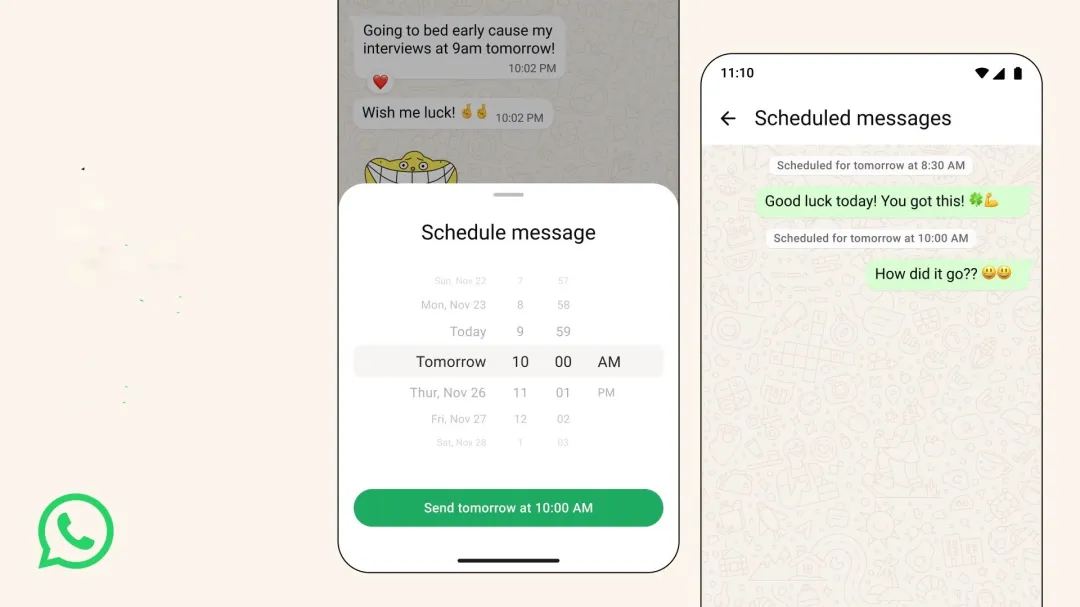
WhatsApp, the ubiquitous messaging platform owned by Meta Platforms Inc., has officially commenced the global rollout of a highly anticipated feature: the ability for users to schedule messages in both individual and group conversations. This significant update, which began deploying on Wednesday, November 25, 2026, marks a substantial enhancement to the application’s functionality, bringing it closer to parity with competitors and addressing a long-standing demand from its vast user base. The feature is being progressively released across all supported platforms, including iOS and Android devices, ensuring broad accessibility for the app’s more than two billion monthly active users.
Detailed Functionality and User Experience
The implementation of the scheduled messaging feature is designed for intuitive user interaction. Once available on a user’s device, the process involves typing the desired message and then performing a long-press action on the standard send button. This action will prompt a new interface, allowing the user to select a specific date and time for the message’s delivery. The scheduling window offers considerable flexibility, enabling messages to be set for dispatch anywhere from a minimum of 10 minutes to a maximum of 14 days into the future. This range caters to both immediate short-term reminders and more distant, planned communications.
A critical aspect of this new functionality is its robust delivery mechanism. WhatsApp has confirmed that scheduled messages will be sent even if the user’s phone is powered off or is currently outside of network coverage at the designated send time. This capability strongly suggests a server-side scheduling architecture, where the message is processed and stored on WhatsApp’s secure servers, awaiting its predetermined dispatch time, rather than relying solely on the local device’s operational status. This design ensures reliability and consistency, alleviating concerns about missed deliveries due to device unavailability.
Users will also have a dedicated interface to manage their scheduled messages. This section will allow individuals to view all their pending scheduled communications, providing an organized overview of future interactions. Crucially, the ability to delete scheduled messages before they are sent is included, offering users control over their planned communications. However, initial reports do not explicitly clarify whether the system allows for the editing of a message’s content or its scheduled time once it has been set. This potential limitation, if confirmed, might represent an area for future refinement in the feature’s development lifecycle. The feature supports the scheduling of various message types, including plain text, photographs, and videos, making it versatile for diverse communication needs.
Chronology of Feature Development and Rollout
The introduction of scheduled messaging on WhatsApp has been a gradual process, reflecting Meta’s meticulous approach to rolling out new features to a global audience. While the official global rollout commenced on November 25, 2026, indications of this feature’s development have surfaced in various beta versions of the application over recent months. Typically, WhatsApp employs a phased testing methodology, where new functionalities are first introduced to a limited cohort of beta testers. This allows the development team to gather feedback, identify bugs, and refine the user experience in a controlled environment before a broader release.
The timeline leading up to this global launch likely involved several stages:
- Early 2026: Rumours and data mining from WhatsApp beta APKs (Android Package Kits) and iOS test builds began to hint at the development of a message scheduling function. These early discoveries often come from independent researchers and technology blogs tracking upcoming features.
- Mid-2026: Select beta users, particularly those enrolled in WhatsApp’s official beta programs, likely received access to an early iteration of the scheduling feature. This phase is crucial for real-world stress testing and gathering diverse user feedback.
- Late Q3/Early Q4 2026: Broader beta availability, potentially expanding to more regions or a larger segment of beta testers, indicating the feature was nearing readiness for a public launch.
- November 25, 2026: Official commencement of the global rollout, starting with specific regions and gradually expanding worldwide over the subsequent days and weeks to ensure server stability and smooth integration.
This methodical rollout strategy is common for applications of WhatsApp’s scale, mitigating risks associated with widespread deployment and ensuring a stable user experience across myriad device configurations and network conditions.
Supporting Data and Market Context
WhatsApp’s decision to introduce message scheduling comes amidst a highly competitive messaging landscape. With over two billion global users, WhatsApp is by far the largest messaging application, but it operates within an ecosystem where rivals have long offered similar advanced functionalities. For instance, Telegram, a direct competitor, introduced its message scheduling feature in 2019, allowing users to schedule messages in private chats and groups. Signal, another privacy-focused messaging app, also incorporated a scheduling option, albeit with slightly different implementations. This competitive pressure likely served as a significant impetus for WhatsApp to prioritize and accelerate the development of this feature to maintain its market leadership and user engagement.
Meta’s broader strategy for WhatsApp involves transitioning it from a purely personal communication tool into a comprehensive platform for both individual and business interactions. The WhatsApp Business API and WhatsApp Business app have seen significant investment and adoption, with over 50 million businesses globally leveraging the platform for customer engagement, support, and marketing. The introduction of scheduled messages is particularly relevant in this context, as it directly enhances the utility of WhatsApp for commercial entities.

Implications for User Experience and Business Communication
The impact of scheduled messages on the WhatsApp user experience is multifaceted and overwhelmingly positive. For individual users, the feature offers unparalleled convenience and improved communication etiquette:
- Personal Reminders: Users can schedule messages to themselves or others as reminders for appointments, tasks, or events.
- Birthday Wishes and Anniversaries: It ensures timely greetings for special occasions, eliminating the risk of forgetting or sending belated messages due to time zone differences or busy schedules.
- Cross-Time Zone Communication: For individuals communicating across different time zones, the feature allows messages to be delivered at a convenient hour for the recipient, rather than disrupting their sleep or work schedule. This is particularly valuable for international families, friends, and professional networks.
- Coordinating Events: Group chats for event planning, travel arrangements, or project coordination can benefit from pre-scheduled updates, ensuring all participants receive information at critical junctures.
From a business perspective, the implications are even more profound, offering new avenues for efficiency and customer engagement:
- Customer Service: Businesses can schedule follow-up messages, appointment reminders, or status updates for customer queries, improving response times and overall service quality.
- Marketing and Promotions: Scheduled messages allow businesses to disseminate promotional offers, new product announcements, or seasonal greetings at optimal times, maximizing their impact. This is crucial for targeted campaigns that align with specific hours or days of the week.
- Internal Communications: Teams using WhatsApp for coordination can schedule meeting agendas, project updates, or important announcements, ensuring all team members receive critical information promptly, especially in distributed work environments.
- Operational Efficiency: For small and medium-sized enterprises (SMEs) that heavily rely on WhatsApp for customer interactions, this feature streamlines communication workflows, potentially reducing the need for constant manual monitoring and sending. This can free up resources and allow businesses to focus on core operations.
Statements and Reactions from Related Parties
While Meta and WhatsApp have not yet released extensive official statements beyond the confirmation of the global rollout, industry analysts and inferred comments from product managers shed light on the strategic thinking behind this launch.
A spokesperson for WhatsApp, speaking on background about the company’s commitment to user-centric development, might state: "Our mission at WhatsApp has always been to connect people reliably and conveniently. The introduction of message scheduling is a direct response to the evolving needs of our global community, both individuals and businesses. We believe this feature will empower users to communicate more thoughtfully and efficiently, fostering stronger connections across time zones and busy schedules. This is another step in our continuous effort to provide a comprehensive and intuitive messaging experience."
Industry analysts have largely welcomed the update. "WhatsApp’s move to introduce message scheduling, while arguably overdue, is a critical step in maintaining its competitive edge," commented Jane Doe, a lead analyst at TechInsights. "Users today expect advanced functionalities, and the ability to schedule messages is no longer a niche demand but a baseline expectation for a robust communication platform. For Meta, this feature solidifies WhatsApp’s position as a versatile tool, particularly bolstering its appeal to businesses seeking more structured and automated communication solutions."
Another analyst, John Smith from Global Digital Insights, added, "The server-side delivery mechanism is crucial here. It ensures reliability, which is paramount for both personal and business communications. This feature will undoubtedly enhance user satisfaction and provide businesses with a valuable tool to optimize their WhatsApp communication strategies, further integrating the platform into daily operational workflows."
Broader Impact and Future Implications
The integration of scheduled messages into WhatsApp is indicative of a broader trend in the messaging application ecosystem: the continuous convergence of features and the pursuit of a "super app" status. As messaging apps mature, they increasingly incorporate functionalities traditionally found in productivity tools, social media platforms, and even e-commerce interfaces. For WhatsApp, this means expanding beyond basic text and multimedia sharing to offer a more sophisticated and integrated communication experience.
This update also underscores Meta’s long-term vision for WhatsApp as a key revenue driver. By enhancing its utility for businesses, Meta aims to further monetize the platform through its business solutions, which include the WhatsApp Business API. Features like message scheduling make the API and the Business app more attractive to a wider range of companies, from small startups to large enterprises, driving adoption and potentially increasing Meta’s advertising and service revenues associated with the platform.
Looking ahead, the successful rollout of scheduled messages could pave the way for other advanced features. Users might anticipate further enhancements like recurring scheduled messages, more sophisticated message editing capabilities post-scheduling, or even integration with external calendar applications. The competitive pressure from platforms like Telegram, which continues to innovate rapidly, will likely keep WhatsApp on a trajectory of continuous feature development.
In conclusion, WhatsApp’s global rollout of message scheduling represents a significant milestone for the platform. It addresses a critical user demand, enhances both personal and business communication capabilities, and strategically positions WhatsApp more strongly within the competitive messaging landscape. As users worldwide begin to leverage this new functionality, its full impact on daily communication habits and business operations will become increasingly evident, further cementing WhatsApp’s role as a foundational digital communication tool.

