
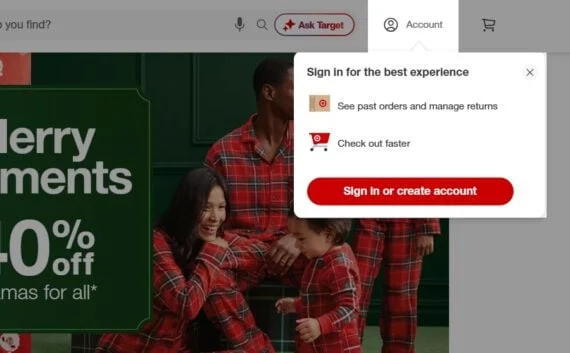
The evolving landscape of e-commerce is increasingly defined by the delicate balance between personalized customer experiences and the imperative to gather valuable user data. In an era marked by heightened privacy concerns and a growing demand for seamless online interactions, retailers are seeking innovative strategies to encourage shoppers to create accounts. While full profiles of logged-in users offer unparalleled opportunities for personalization and targeted marketing, the methods employed to achieve this goal are under scrutiny, with many traditional approaches proving counterproductive.
The core challenge lies in the inherent tension between a visitor’s initial desire to explore and a retailer’s ambition to foster a lasting relationship. Privacy restrictions have undeniably made it more difficult to track anonymous visitor behavior, leaving a significant portion of the customer journey in the digital shadows. This lack of detailed insight hinders the ability to offer tailored recommendations and personalized promotions, essential components of a modern e-commerce strategy. In response, many online stores have adopted a direct approach, implementing pop-up notifications on landing pages that prominently feature the benefits of account creation. These incentives often include promises of faster checkout processes, simplified order tracking, and exclusive discounts, all designed to entice visitors into establishing an account.
However, the timing of these overt solicitations is frequently perceived as premature. First-time visitors typically arrive with the primary intention of browsing, discovering products, and evaluating the overall trustworthiness and appeal of the e-commerce platform. Introducing incentives for account creation at this initial stage often feels like an imposition. It asks shoppers to commit to a relationship before they have even decided if they are interested in the store’s offerings, let alone its long-term value proposition. This jarring interruption to the discovery phase can lead to immediate disengagement, with closing the pop-up becoming the easiest and most immediate response for a visitor seeking to continue their exploration unhindered.
A Shift Towards Non-Intrusive Engagement
Recognizing the limitations of aggressive pop-up tactics, a growing number of e-commerce platforms are exploring more subtle and user-centric methods to encourage account creation. This alternative strategy focuses on integrating account-related prompts into the user interface in a manner that is both familiar and unintrusive. Instead of interrupting the browsing experience with a full-screen modal, these retailers are opting for a minimalist approach: a small, often animated notification integrated near the "account" icon, typically located in the website’s header.

This subtle indicator can manifest as a colored dot – often red – or a numerical badge, frequently displaying the number "1." Appearing a few seconds after the page loads, these visual cues serve as quiet invitations, prompting visitors to click and explore what awaits them. The underlying philosophy is to guide visitors toward account creation by piquing their curiosity and offering a low-commitment interaction, rather than demanding an immediate decision. This approach respects the user’s initial exploratory phase, allowing them to engage with the site at their own pace while gently nudging them towards a more personalized experience.
The Psychology Behind the "Irresistible Dot"
The effectiveness of these subtle notifications, often referred to as the "dot" or "badge" strategy, can be attributed to several psychological principles. Firstly, there is the element of familiarity. Consumers are accustomed to seeing similar visual indicators on a wide array of digital platforms, including email clients, messaging applications, and social media feeds. These familiar icons have become ingrained signals, intuitively understood to represent pending notifications or new information requiring attention. This pre-existing understanding lowers the cognitive load for the user and makes the e-commerce prompt feel less alien and more intuitive.
Secondly, these notifications tap into a fundamental human trait: curiosity. The presence of an unread notification creates a gap in knowledge, a sense of the unknown that prompts investigation. Users are naturally inclined to discover what information is being presented to them, especially when it is subtly highlighted. This curiosity is further amplified when the notification is specific, such as a numerical badge displaying "1." This numerical cue suggests that there is a singular item or piece of information waiting to be discovered, rather than a complex process or an overwhelming list. This focused message makes the prospect of investigation seem less daunting and more manageable.
Crucially, engaging with these notifications requires minimal effort and commitment. Clicking on a dot or a number is a low-stakes action. It does not obligate the user to create an account, subscribe to a service, or agree to any terms and conditions. This contrasts sharply with the immediate commitment required by a full-screen pop-up that demands account creation. The low-friction nature of clicking a small icon allows users to satisfy their curiosity without feeling pressured, making it a far more palatable first step towards potentially engaging with account-related features.
Case Studies: Typology and Nectar

Two prominent examples illustrate this nuanced approach to encouraging account engagement. The skincare brand Typology employs a discreet red dot positioned next to its account icon. This minimalist design is subtle, signaling that something is awaiting the user’s attention without providing explicit details about its importance. This approach relies heavily on the user’s pre-existing understanding of notification indicators, trusting that curiosity will drive them to investigate.
In contrast, Nectar, a prominent mattress and bedding retailer, utilizes a more explicit visual cue. Their website features a pale blue badge displaying the number "1" next to the account icon. This badge is not only specific but also subtly animated, designed to draw the user’s eye and further encourage interaction. While more overt than Typology’s approach, Nectar’s notification remains integrated within the user interface, avoiding the disruptive nature of a full-screen pop-up.
Despite the potential benefits of these subtle notifications, a common pitfall has emerged: when these indicators are clicked, they often lead directly to a login or account creation pop-up. This can reintroduce the very problem the subtle notification aimed to solve – presenting the benefits of an account before the user has established a genuine need or interest. This disconnect can lead to confusion and a repeat of the disengagement observed with earlier pop-up strategies.
The Ideal Scenario: Contextual Relevance
The most effective approach, therefore, appears to be a hybrid model that combines the unobtrusive nature of subtle notifications with contextual relevance. This means that the notification should appear not just arbitrarily, but in direct relation to the user’s current actions or interests on the site. For instance, a notification could appear on a post-purchase page, prompting the user to track their order by logging in or creating an account. Similarly, on a product detail page, a notification could highlight saved preferences or items added to a wishlist, encouraging account creation to preserve these selections. On a cart page, the notification could subtly suggest faster checkout options available to account holders.
By making the notification directly relevant to the user’s immediate task or interest, the perceived value proposition becomes significantly stronger. The user is no longer being asked to commit to a relationship in the abstract; they are being offered a solution to a current need or a way to enhance their current experience. This contextual integration transforms the notification from a general prompt into a helpful suggestion, significantly increasing its likelihood of being acted upon positively.

Data-Driven Insights and Future Directions
The effectiveness of these strategies can be rigorously assessed through data analysis. Retailers are encouraged to test different variations of these subtle notifications on their own platforms. This testing should encompass at least three distinct versions:
- A simple dot: This minimalist approach relies solely on the user’s ingrained understanding of notification icons.
- A numbered badge: This offers a more specific indication of pending information, potentially piquing curiosity more effectively.
- An animated badge: This version adds a dynamic element to attract attention, aiming for higher visibility.
Crucially, the success of these tests should be measured not only by the number of login starts and completions but also by the percentage of sessions associated with account holders. Furthermore, it is imperative to monitor add-to-cart and overall purchase rates to ensure that these account-encouraging notifications do not inadvertently introduce friction that negatively impacts conversion rates. The ultimate objective is to foster deeper, more meaningful customer relationships and leverage the benefits of personalized experiences without hindering the fundamental purchase journey.
The broader implications of this shift are significant. As privacy regulations continue to evolve and user expectations for seamless online interactions rise, e-commerce businesses must adapt their strategies. The move away from intrusive tactics towards subtle, contextually relevant prompts represents a maturation of the industry, prioritizing user experience and building trust. By understanding the psychology of engagement and leveraging data to refine their approach, retailers can effectively encourage account creation, unlocking the potential for enhanced personalization and long-term customer loyalty. This evolution underscores a fundamental truth: the most successful e-commerce strategies are those that empower users while simultaneously achieving business objectives, creating a win-win scenario for both the shopper and the retailer. The data suggests that when done thoughtfully, encouraging account creation can be a powerful tool for growth, provided it is implemented with a deep respect for the user’s journey and preferences.

