
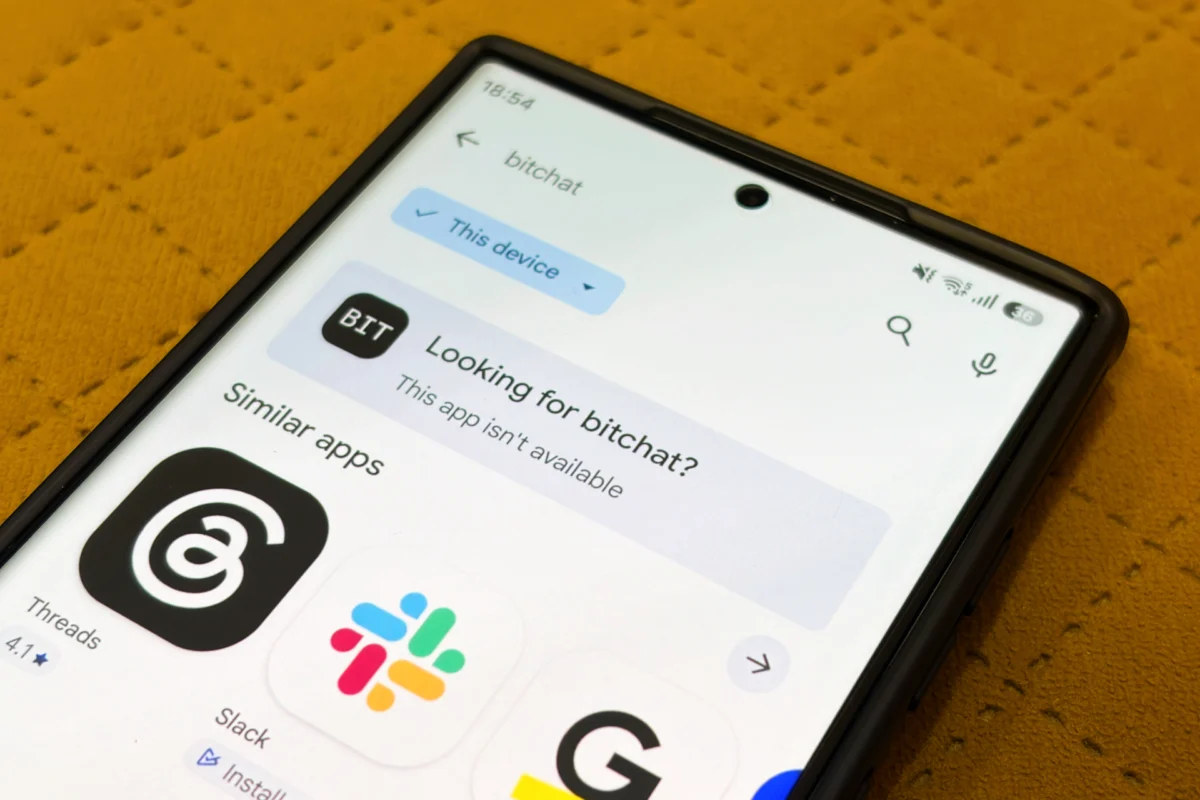
The removal, confirmed by Jack Dorsey himself on Saturday, follows a direct order from the Indian government to Apple. Dorsey, co-founder of Twitter (now X) and a vocal proponent of decentralized technologies, posted a notice from Apple revealing that India’s Ministry of Electronics and Information Technology (MEITY) had issued the demand under Section 69A of the Information Technology Act. This specific provision is India’s primary legal instrument for government-mandated online content blocking. The move marks a critical juncture in the ongoing tension between state control over digital communication and the principles of free expression and privacy championed by decentralized platforms.
Apple’s communication clarified that while Bitchat would remain available on its App Store outside India, access to the app through its TestFlight beta-testing service would also be blocked within the country. Concurrently, TechCrunch reported that Bitchat was no longer available for download via Google Play in India, and its official website had become inaccessible across a variety of local internet service providers. The precise directives issued to Google and these ISPs, however, were not immediately clear, as Apple, Google, and India’s IT ministry did not respond to requests for comment regarding these developments.
Bitchat’s Genesis and Decentralized Architecture
Launched in July 2025, Bitchat was conceived by Jack Dorsey as a robust communication tool designed to operate independently of traditional internet infrastructure. The application leverages Bluetooth mesh networking, a technology that allows nearby devices to form a self-organizing network, enabling them to exchange encrypted messages without relying on cellular networks, Wi-Fi, or centralized servers. This innovative design offers a critical lifeline for communication in scenarios where internet access is either unavailable, unreliable, or deliberately curtailed, such as during natural disasters, in remote areas, or amidst civil unrest where authorities might implement internet shutdowns. Dorsey’s vision for Bitchat aligns with his broader advocacy for decentralized internet protocols and platforms that empower users with greater control over their data and communications, free from corporate or governmental intermediaries.
A History of Government Scrutiny and Escalating Restrictions
The recent app store removals are not an isolated incident but rather the culmination of a series of actions taken by the Indian government against Bitchat. The first significant public confrontation occurred in July 2026, when Dorsey revealed that Indian authorities had ordered GitHub, the world’s leading software development platform, to take down repositories associated with the open-source messaging app. This earlier directive immediately sparked widespread concern and debate among digital rights advocates and legal experts regarding the legal basis for restricting software purely based on its inherent functionality rather than specific unlawful content.
At the time of the GitHub order, the Indian government articulated its concerns, stating that Bitchat’s architecture presented substantial challenges for law enforcement agencies seeking to intercept communications or trace users. Crucially, authorities also highlighted the app’s capability to continue operating effectively during internet shutdowns, a feature perceived as problematic from a national security and public order perspective. The legal foundation for this 2026 order was a provision of India’s information technology law concerning intermediaries and their liability for third-party content. This differs notably from Section 69A of the Information Technology Act, which was cited in Apple’s latest notice regarding the app store removal, indicating a shift in the government’s legal strategy and potentially a broader interpretation of its powers.
Legal Challenge and Constitutional Questions
The latest order has drawn sharp criticism from civil society organizations. The Internet Freedom Foundation (IFF), a New Delhi-based digital rights advocacy group, swiftly condemned the government’s directive as unconstitutional. The IFF argued that Section 69A of the IT Act is specifically designed to allow the government to block access to unlawful information, not to an entire messaging application based solely on its architectural design or its ability to function during internet shutdowns. The foundation underscored that the government’s rationale conflates the medium with the message, effectively penalizing a technological tool for its resilience rather than for any specific illegal content transmitted through it.
Further exacerbating concerns about transparency and due process, the IFF pointed out that neither the blocking order itself nor any allegedly illegal content cited as the basis for the action had been made public. This lack of transparency is a recurring criticism leveled against India’s content blocking regime, which often operates under sealed orders, preventing affected parties from understanding the specific charges or mounting an effective legal challenge. Digital rights advocates argue that such opaque processes undermine fundamental rights to free speech and access to information, creating an environment where executive power can be exercised without adequate public oversight or judicial review.
The Context of Protests and Internet Shutdowns
The latest restrictions on Bitchat unfold against a backdrop of heightened political sensitivity and ongoing civil unrest in India. The country has been experiencing a fresh wave of youth-led protests, particularly over proposed changes to the country’s voter rolls. On Saturday, police detained several individuals during demonstrations in New Delhi, as protesters demanded the resignation of India’s chief election commissioner over alleged manipulation of electoral rolls. These protests have been met with strong state responses, including pre-emptive measures to control communication. Notably, authorities suspended internet services around New Delhi’s Jantar Mantar for 12 hours on Friday, precisely during the period of these demonstrations.
India has a documented history of frequently imposing internet shutdowns, often citing public order and national security concerns. According to reports from organizations like Access Now, India consistently leads the world in the number of internet shutdowns, with hundreds of instances recorded annually across various states and union territories. These shutdowns have become a common tool for authorities to quell dissent, prevent the spread of information, and disrupt the organization of protests. It is precisely in such environments that applications like Bitchat and its rival, Briar, gain significant traction. During previous protests in July 2026, demonstrators reportedly turned to these offline messaging apps after authorities suspended internet services, highlighting their critical role as tools for resilience in the face of state-imposed communication blackouts.
Data from market intelligence firm Sensor Tower corroborates this surge in interest. The country accounted for approximately 85% of Bitchat’s global downloads between July 17 and July 23, 2026, a dramatic increase from roughly 1% in the preceding 30 days. This exponential growth underscores the direct correlation between internet shutdowns and the demand for decentralized, offline communication solutions, making Bitchat a direct challenge to the government’s ability to control information flow during periods of social unrest.
Implications for Digital Rights, Tech Companies, and the Future of Decentralization
The removal of Bitchat from major app stores in India carries significant implications across several fronts. For digital rights and freedom of speech advocates, it represents a worrying precedent where a government targets a technological tool not for specific unlawful content, but for its fundamental design features that enable resilient and private communication. This raises fundamental questions about the right to communicate freely, especially in contexts where traditional communication channels are subject to state control. If an app’s ability to circumvent internet shutdowns is deemed grounds for blocking, it could pave the way for broader restrictions on privacy-preserving technologies and end-to-end encrypted services.
For global tech companies like Apple and Google, the incident highlights the complex tightrope walk they must navigate when operating in diverse regulatory environments. As major platforms, they are often caught between government demands in large, lucrative markets and their stated commitments to user privacy and free expression. Complying with such blocking orders, even if legally mandated within a jurisdiction, can draw criticism from human rights groups and users globally. Conversely, non-compliance could lead to severe penalties, including market exclusion or fines, underscoring the immense pressure exerted by powerful states. The lack of public comment from these companies is indicative of the delicate political and economic calculus involved.
From a broader perspective, this episode underscores the ongoing global battle between states seeking to assert greater control over the digital sphere and the decentralized technology movement striving for greater individual autonomy and resilience against censorship. The targeting of Bitchat signals that governments are increasingly aware of, and willing to act against, technologies that can bypass traditional points of control. This could accelerate the innovation cycle for decentralized tools, as developers seek to build even more robust and censorship-resistant communication platforms, potentially leading to a perpetual cat-and-mouse game between regulators and technologists.
The Bitchat case is a stark reminder of the challenges inherent in building truly open and resilient communication infrastructure in a world where digital authoritarianism is a growing concern. As India continues to expand its digital economy and infrastructure, the precedents set by such actions will profoundly shape the landscape of digital rights, innovation, and freedom for its vast population. The unfolding narrative around Bitchat will undoubtedly serve as a critical case study for how governments balance national security concerns with fundamental freedoms in the digital age.

