
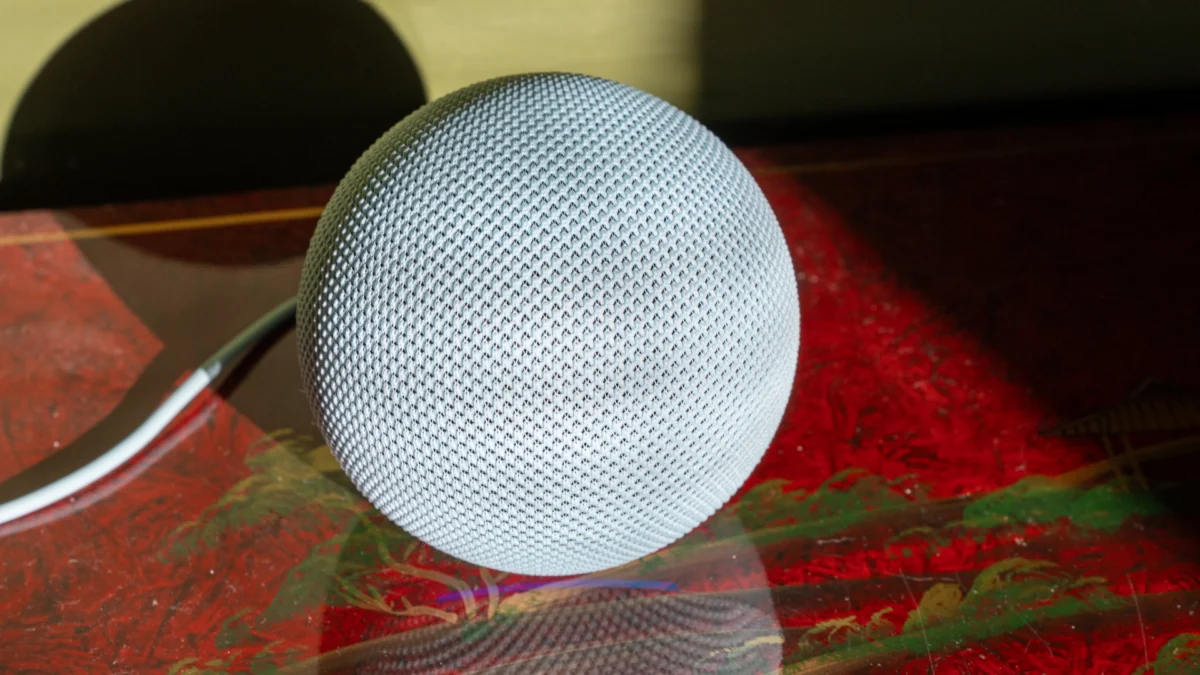
The latest iteration of Amazon’s popular compact smart speaker, the Echo Dot (6th generation), arrives with a significant upgrade in its smart home capabilities, directly inheriting key technologies from its more premium sibling, the Echo Dot Max. This new model integrates the advanced AZ3 processor, along with built-in Zigbee, Thread, and Matter support, positioning it as a capable smart home hub in a smaller, more affordable package. Coupled with the enhanced Alexa+ voice assistant and Omnisense presence detection, the Echo Dot (6th generation) promises a more intelligent and responsive smart home experience. However, its value proposition is complex, with the Echo Dot Max offering superior audio quality for a modest price increase, creating a nuanced purchasing decision for consumers.
The introduction of the Echo Dot Max in the previous year signaled a shift in Amazon’s strategy for its entry-level smart speakers. Moving beyond purely voice-driven devices, the Max aimed to compete with established audio-focused small speakers like the Apple HomePod mini by prioritizing sound quality. Now, Amazon is reintroducing a more accessible option with the Echo Dot (6th generation). While it scales back on audio ambition, it doubles down on smart home prowess, featuring the same powerful AZ3 processor and native support for Zigbee, Thread, and Matter. This dual focus on advanced connectivity and the evolving Alexa+ assistant makes the new Dot a compelling device, yet its proximity in features and sometimes price to the Echo Dot Max complicates its standing in Amazon’s own product lineup.
Design Evolution and User Interface Considerations

The Echo Dot (6th generation) succeeds the Echo Dot (5th generation) released four years prior. While a new generation is typically cause for celebration, the presence of the Echo Dot Max, which shares many of its smart home functionalities, introduces a degree of market overlap. At its standard retail price, the new Dot is listed at £94.99/$99.99, a step up from its predecessor, while the Echo Dot Max commands £119.99/$119.99. However, during the review period, both models were observed to be available at a discounted price of £69.99, a factor that significantly influences the purchasing decision. This price parity at times erodes the clear distinction between the two devices, prompting a deeper examination of their respective merits.
Amazon has introduced four distinct color options for the Echo Dot (6th generation): Graphite, Agave Green, Coral Pink, and Glacier White. A thoughtful detail is the color-matching of the power adapter and cable to the speaker itself, demonstrating Amazon’s attention to aesthetic coherence. This level of detail, while minor, contributes to the overall premium feel of the product.
The design of the new Dot subtly bridges the gap between the older Dot models and the Max. Unlike its immediate predecessor, which fully encased the speaker in fabric, the 6th generation Dot features a combination of fabric and an exposed plastic section. This two-tone aesthetic, reminiscent of the Echo Dot Max, breaks up the speaker’s surface and lends it a more modern, layered appearance.
A notable departure from previous designs is the placement of the physical controls. While the Echo Dot Max strategically positions its buttons on the front for easy access, the 6th generation Dot tucks them around the rear. This choice enhances the device’s visual tidiness but can make locating and operating the buttons more challenging without direct line of sight. The controls include volume up and down buttons and a microphone mute button, which deactivates the four-microphone array. A light bar integrated into the front of the speaker provides a visual indicator, illuminating as the volume is adjusted, offering a helpful visual cue.

This light bar also serves its familiar role in displaying Alexa’s status: blue when the assistant is active and responding, red when the microphones are muted, and yellow to signal notifications. The top surface of the speaker is touch-sensitive, allowing users to pause or resume playback, or to snooze an alarm with a simple tap. Notably absent is a dedicated "action button" for invoking Alexa without using the wake word. However, the review suggests that the improved voice pickup capabilities of the four-microphone array render this omission less impactful, as direct voice commands are reliably recognized.
An optional stand is available, designed to elevate the Echo Dot from its resting surface. While its aesthetic contribution is subjective, it offers an alternative display option for users who prefer the speaker to be more prominently positioned.
Internally, the Echo Dot (6th generation) houses a single 1.73-inch full-range driver, consistent with the size of the previous generation’s driver. However, Amazon claims an enhancement in bass performance, reporting a 1.5-fold increase in bass output compared to the 5th generation model.
Enhanced Intelligence and Smart Home Integration

The Echo Dot (6th generation) arrives with Alexa+ Early Access, offering users the opportunity to transition to Amazon’s generative AI-powered voice assistant. Based on prior evaluations of Alexa+, the generative AI capabilities represent a substantial leap forward from the original Alexa. It facilitates more natural conversational exchanges, allows for more complex queries, and crucially, reduces the need for users to repeatedly re-contextualize their requests. The assistant can also leverage previously shared information, demonstrating a more personalized interaction. For instance, after initial setup and a query about dinner recommendations for a couple, where one individual was previously identified as vegetarian, Alexa+ intelligently offered vegetarian-specific suggestions.
The integration of the AZ3 processor, also found in the Echo Dot Max, significantly contributes to improved response times. Benchmarking against the Echo Dot (5th generation) reveals a noticeable reduction in latency between issuing a command and receiving a response from Alexa+. The four-microphone array is lauded for its impressive voice pickup, capable of registering whispered commands even amidst loud music playback. This robust voice recognition system likely explains why the absence of a physical action button was not a significant drawback during testing.
The enhanced capabilities of Alexa+ extend beyond general conversation to smart home control. The hardware itself has been significantly upgraded to support this. Mirroring the Echo Dot Max, the new Dot incorporates built-in Zigbee and Thread connectivity, alongside Matter support. This integrated hub functionality allows the Echo Dot (6th generation) to directly connect with and control a wide array of compatible smart home devices, bypassing the need for separate, dedicated hubs that were required by previous standard Echo Dot models lacking Zigbee and Thread.
Furthermore, the inclusion of Omnisense, an ultrasound-based presence detection system coupled with a temperature sensor, opens up new possibilities for smart home automation. These sensors can be leveraged within Alexa Routines, enabling actions based on room occupancy or environmental conditions, rather than solely relying on voice commands or pre-set schedules. The presence detection was observed to function reliably, even detecting stationary occupants, making it a valuable tool for automating lighting, climate control, or other device behaviors based on whether a room is actively being used. This capability effectively reduces the reliance on separate motion or presence sensors. For core smart home functionalities, the Echo Dot (6th generation) and the Echo Dot Max are remarkably similar, with audio performance emerging as the primary differentiator.

Audio Performance: A Measured Improvement
Amazon’s claim of a 1.5-fold increase in bass performance for the Echo Dot (6th generation) translates to an audible enhancement over the 5th generation model, though it does not transform the device into a bass-heavy powerhouse. Testing with Spotify, which defaulted to "Very High" quality during the review period (lossless playback was not supported), provided insights into its audio capabilities.
During playback of bass-intensive tracks like OK Go’s "This Too Shall Pass," the kick drum delivered more impact than previously experienced with the 5th generation Dot, without introducing muddiness or distortion. However, the limits of its audio output become apparent with more demanding tracks. The device cannot produce room-shaking bass, nor does it possess the sonic weight required for tracks like Rage Against the Machine’s "Bombtrack." While there is an increase in punch, it falls short of satisfying dedicated bass enthusiasts. In direct comparison, the similarly sized Apple HomePod mini is perceived to offer a superior audio experience.
For less demanding musical genres, the Echo Dot (6th generation) performs more competently. Frank Sinatra’s "That’s Life" was rendered with a well-balanced sound profile, featuring clear, detailed vocals and no distortion, even at high volumes. The single-driver design inherently limits stereo separation. Consequently, sonic effects designed to pan across channels, such as the opening guitar riff in Foo Fighters’ "Enough Space," manifest as changes in volume rather than a distinct sense of spatial movement. The midrange and treble frequencies are more clearly defined than the low end, although some finer sonic details and nuances can still be lost in translation.

Evaluated on its own merits as a compact smart speaker, the Echo Dot (6th generation) delivers a respectable audio performance. It provides sufficient clarity for Alexa’s responses and is enjoyable for casual listening. However, it does not present a significant challenge to competitors like the HomePod mini or its own stablemate, the Echo Dot Max.
Final Assessment: A Smart Home Contender with Caveats
The Amazon Echo Dot (6th generation) positions itself primarily as a compact smart home hub that also offers music playback capabilities. Its integration of Alexa+, robust voice pickup, and comprehensive smart home connectivity – including Zigbee, Thread, Matter, and presence detection – provides significant appeal, largely mirroring the smart home advantages of the Echo Dot Max.
The ultimate decision between the Echo Dot (6th generation) and its alternatives hinges on a careful consideration of price and individual priorities. At its full retail price of £94.99/$99.99, the new Dot offers a cost saving of £25/$20 over the Echo Dot Max, making it an attractive option for users who prioritize voice control and smart home automation over high-fidelity audio.

However, for consumers who intend to use the device regularly for music listening, the modest price premium for the Echo Dot Max is arguably justified by its superior sound quality. Furthermore, when discounts bring the two models to the same price point, the rationale for choosing the standard Echo Dot (6th generation) becomes significantly weaker, with the Max presenting a more compelling all-around package.
The ongoing evolution of smart home technology and voice assistants, as exemplified by the advancements in the Echo Dot (6th generation) and Alexa+, suggests a future where integrated hubs become increasingly commonplace. The device’s strong smart home foundation, coupled with its accessibility, ensures its relevance in a market that continues to prioritize convenience and interconnectedness.
Testing Methodology and Commitment to Objectivity
The reviews published by The Ambient are the culmination of extensive, long-term testing, designed to provide a comprehensive understanding of a device’s performance in real-world scenarios. Recognizing that smart speakers are integral components of larger ecosystems and are designed to offer diverse audio and smart home functionalities, a superficial evaluation over a short period is deemed insufficient.

With a dedicated focus on testing smart home technology on a daily basis, the team possesses the expertise to identify critical features and benchmark devices against their closest competitors. This commitment ensures that reviews are thorough, objective, and impartial, providing consumers with reliable guidance. The publication’s policy strictly prohibits direct payment for reviews, maintaining editorial independence and ensuring that all assessments are based solely on product merit. Further details on the rigorous testing protocols for smart speakers can be found in the dedicated guide on the subject.
Frequently Asked Questions
Does the Amazon Echo Dot (6th generation) function as a smart home hub?
Yes, the Echo Dot (6th generation) is equipped with built-in Zigbee and Thread connectivity and supports Matter. This allows it to directly connect with and manage compatible smart home devices, eliminating the need for a separate hub.
What are the key differences between the Amazon Echo Dot (6th generation) and the Echo Dot Max?
Both devices share the AZ3 processor, Alexa+ capabilities, Omnisense presence detection, and support for Zigbee, Thread, and Matter. The primary distinction lies in audio performance, with the Echo Dot Max offering superior sound. The standard Dot is smaller and retails for approximately £25/$20 less at full price.

Is Alexa+ supported on the Amazon Echo Dot (6th generation)?
Yes, the Echo Dot (6th generation) comes with Alexa+ Early Access, providing users with the option to utilize Amazon’s advanced generative AI assistant.
Specifications of the Amazon Echo Dot (6th generation)
| Feature | Specification |
|---|---|
| Type (Colours & Style) | Compact smart speaker; Graphite, Agave Green, Coral Pink, Glacier White |
| UK RRP | £94.99 |
| US RRP | $99.99 |
| Dimensions | 99.8 x 99.3 x 93mm |
| Weight | 265g |
| Release Date | 2026 (Note: This date appears to be a placeholder or error in the original text) |
| Smart Home Ecosystems | Alexa; built-in Zigbee, Thread, and Matter hub |
| Voice Assistant | Alexa+ (Early Access) |
| Speaker | 1x 1.73-inch front-firing full-range driver |
| Microphones | Four-microphone array |
| Processor | AZ3 |
| Sensors | Omnisense ultrasound presence detection, temperature sensor |
| Connectivity | Wi-Fi (eero Built-in extender), Bluetooth, Zigbee, Thread, Matter |

