
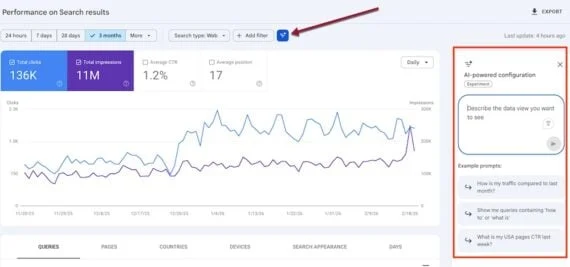
Last week marked a significant evolution in how digital marketers and website owners can dissect their organic search performance with the public rollout of Google Search Console’s (GSC) new AI-powered analysis feature. Previously accessible only to a select group of beta testers, this innovative tool is now available to all users within the "Performance > Search results" tab, allowing for a more intuitive and dynamic exploration of website traffic and query data. This advancement signals Google’s ongoing commitment to integrating artificial intelligence into its core search management tools, aiming to empower users with deeper, more actionable insights into their SEO strategies.
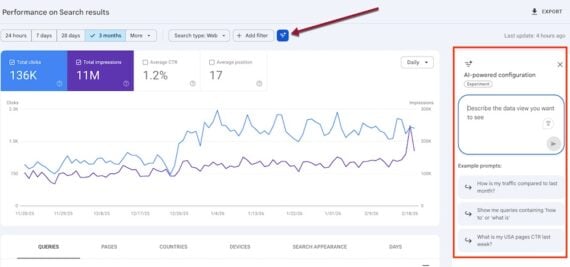
The new functionality introduces a generative AI-like prompting system, moving beyond the traditional, often rigid, pre-built filters. Instead of manually selecting dropdown options or constructing complex regular expressions from scratch, users can now articulate their analytical needs in natural language. This shift is designed to democratize data analysis, making sophisticated insights more accessible to a broader range of users, from seasoned SEO professionals to those new to the intricacies of search engine optimization. The underlying mechanism translates these natural language prompts into regular expressions, which then filter the GSC data, providing targeted results that were previously more cumbersome to obtain.
A New Era of Query Analysis
The core of this AI integration lies in its enhanced query analysis capabilities. Historically, identifying specific types of search queries within GSC has relied on a combination of manual filtering, understanding of keyword patterns, and the application of regular expressions for more nuanced segmentation. The AI feature streamlines this process significantly.
For instance, a user seeking to understand informational queries can now simply type "Show queries with informational intent." The AI then generates a corresponding regular expression, such as (what|how|why|guide|tutorial|explain|definition|example|best way to|steps to|tips for|reasons why|benefits of|difference between). This regex effectively captures common patterns indicative of users seeking knowledge or understanding. Upon applying this generated filter, the user can immediately view the specific queries that align with informational intent, allowing for a more focused approach to content creation and optimization.

Similarly, identifying product research queries, a crucial segment for e-commerce and service-based businesses, is now more straightforward. A prompt like "Show product research queries" yields a regex like (best|review|compare|vs|price|buy|alternatives|guide|recommendations |features|specs|cost|discount|deal|sale|where to buy|how to choose|top rated|pros and cons). This allows businesses to pinpoint the searches that indicate purchase intent or a strong interest in evaluating products and services. The ability to generate these filters on the fly, tailored to specific analytical goals, represents a substantial time-saving and insight-generating leap.
Understanding Brand Visibility
The AI analysis has also demonstrated surprising efficacy in segmenting brand-related searches. For businesses heavily invested in building brand awareness and recognition, understanding how users search for their brand is paramount. A prompt such as "Show branded queries" can be met with a regex that intelligently identifies the user’s specific brand name and common variations, like (brandname|brand name). This capability allows marketers to quickly assess the volume and nature of direct brand traffic, a key indicator of brand recall and customer loyalty. The implications here are profound; a deeper understanding of branded search can inform brand messaging, customer service strategies, and even indicate the success of broader marketing campaigns.
Diagnosing Traffic Fluctuations
One of the most critical functions of Search Console is identifying and understanding shifts in organic traffic. The AI feature can now assist in assembling more nuanced reports on traffic changes. For example, a user might prompt: "Show me queries that have seen a significant drop in clicks last week compared to the week before." The AI’s ability to interpret such a request and translate it into a data-driven analysis of traffic fluctuations can be invaluable for troubleshooting SEO issues or identifying emerging trends.
This feature can also be leveraged to identify periods of unexpected growth or decline. By asking questions like, "What queries contributed to the traffic surge in the last month?" or "Which search terms experienced a sharp decline in impressions over the past quarter?", businesses can gain immediate insights into the drivers of their organic performance. This proactive approach to monitoring traffic changes allows for quicker responses to both positive and negative developments, enabling marketers to capitalize on opportunities and mitigate potential problems.
Geographic Performance Insights
Understanding how a website performs across different geographical regions is crucial for businesses with an international or localized presence. The AI-powered analysis extends to country-specific performance evaluations. Users can prompt the system with queries like, "Show organic search performance for queries originating from the United Kingdom." This allows for a focused examination of how the site ranks and attracts traffic from specific countries, enabling more targeted international SEO strategies.
Furthermore, the AI can assist in analyzing traffic changes within specific regions. A prompt such as, "Identify queries that have experienced a decline in clicks in Canada over the past month," can provide granular data for optimizing campaigns tailored to that market. This level of detail was previously achievable but required more intricate manual filtering, making the AI-driven approach a significant enhancement for global SEO management.
Limitations and Future Potential
Despite its impressive capabilities, the new AI feature in Google Search Console is not without its limitations, and it’s important to approach it with realistic expectations. While it offers a more intuitive interface for data exploration, it may not be a "game-changer" for every user. Inexperienced users might struggle to formulate effective prompts, not knowing precisely what questions to ask to uncover the most valuable insights. Conversely, seasoned SEO professionals, already adept at using the existing pre-built filters and regular expressions, might find that the AI offers incremental improvements rather than a revolutionary shift in their workflow.
A key constraint is that the AI integration currently operates primarily with the top-level filters available within the Performance reports. It cannot, for example, process requests that involve more complex, nested, or advanced filtering criteria that are not directly exposed in the primary interface. For instance, a prompt requesting queries with an average position greater than a specific threshold (e.g., "Show queries with an average position greater than 2") is currently beyond the AI’s processing capability within this feature. Such advanced filtering often requires direct manipulation of filters or more sophisticated data extraction and analysis outside of the immediate GSC interface. This indicates that while the AI simplifies many common analytical tasks, it doesn’t entirely replace the need for deeper technical SEO knowledge for highly specific or advanced investigations.
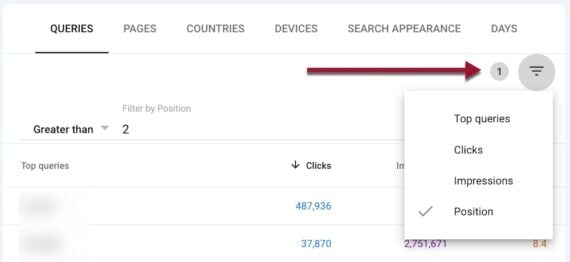
The image provided in the original article, showing a Performance report filtered only for position 1, serves as a visual reminder of the granular control available through traditional filters. The AI aims to bring a layer of conversational ease to accessing data that might be found through such specific, pre-built filters, but its current scope is limited to the readily available filtering dimensions.
Broader Implications for SEO and Data Analysis
The introduction of AI-powered analysis in Google Search Console signifies a broader trend in how search engines and digital marketing tools are evolving. By embedding generative AI capabilities, Google is not only making its platform more user-friendly but also encouraging a more inquisitive and analytical approach to SEO. This move could lead to a more informed digital marketing landscape, where insights are more readily accessible, and data-driven decision-making becomes the norm across businesses of all sizes.
For SEO professionals, this feature offers a valuable tool for faster hypothesis generation and validation. Instead of spending time constructing complex queries, they can use the AI to quickly get a sense of data segments and then dive deeper using more traditional methods if necessary. This can significantly accelerate the pace of SEO audits and ongoing optimization efforts.
The potential for future enhancements is also considerable. As Google refines its AI models and expands the capabilities of Search Console, we might see the AI being able to handle more complex queries, integrate with other Google tools like Google Analytics 4, and even offer predictive insights or recommendations based on the analyzed data. The long-term impact could be a more dynamic and responsive approach to SEO, where strategies are constantly refined based on real-time, AI-assisted data analysis. This represents a significant step towards making sophisticated search analytics accessible and actionable for everyone.

