
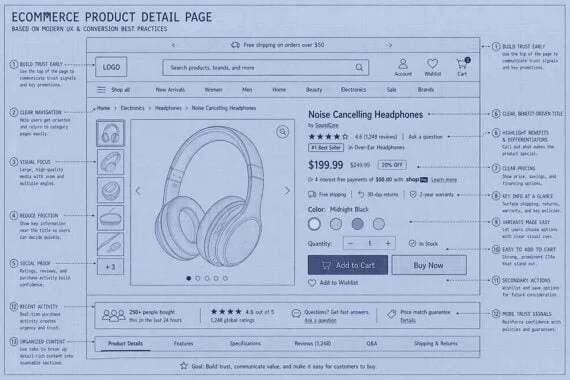
The foundational purpose of an e-commerce product page has long been clear: to convert a visitor into a customer. For years, a close second priority has been its ability to rank highly in traditional search engine results pages (SERPs). However, the digital landscape of 2026 has fundamentally shifted this hierarchy, introducing a complex new trifecta of objectives that product pages must now satisfy. The advent and rapid integration of generative artificial intelligence (AI) into search and product discovery mechanisms are redefining how consumers interact with online retail, demanding a more sophisticated approach to product page optimization.
The notion that search and product discovery are undergoing a transformation in 2026 is no longer a novel observation; it’s a near cliché. Yet, the implications of this evolution are profound and far-reaching for e-commerce businesses. Features like AI Overviews, AI Mode, various answer-centric solutions, conversational AI chat interfaces, and the emerging class of sophisticated shopping agents are actively reshaping the consumer journey. From the discerning pursuit of luxury items to the routine acquisition of everyday goods, the path to purchase is being rerouted through AI-powered discovery channels. This seismic shift necessitates a recalibration of e-commerce strategy, placing a renewed emphasis on how product pages are constructed and optimized to thrive in this new, AI-driven ecosystem.
The core challenge for e-commerce businesses in this new era is ensuring their product detail pages are not only conversion-optimized but also comprehensible and actionable for AI systems. This means product pages must become “AI consumable,” capable of delivering direct answers to user queries and presenting products as structured, identifiable entities. To achieve this, product detail pages must now be meticulously designed to excel across three distinct, yet interconnected, optimization layers: traditional Search Engine Optimization (SEO), Answer Engine Optimization (AEO), and Generative Engine Optimization (GEO). Each layer aligns with familiar practices but demands a more integrated and nuanced application. SEO continues to support organic ranking in traditional search results. AEO focuses on ensuring product information is easily extracted by AI systems to provide direct answers. GEO, a newer discipline, addresses how AI systems understand and utilize product data to model entities and facilitate complex queries. Ultimately, a single, effective product page must now demonstrably address all three of these critical areas simultaneously.
To gain a comprehensive understanding of the current state of product page optimization in light of these AI advancements, an in-depth analysis was conducted, leveraging AI to review product detail pages across a diverse spectrum of online retailers. This review encompassed major marketplaces like Amazon, large-scale retailers such as Walmart and Target, established specialty retailers like L.L.Bean, a curated selection of direct-to-consumer (D2C) brands representing various strategic approaches (structured, hybrid, and aesthetic-focused), and numerous smaller e-commerce businesses operating on platforms like Shopify. The primary focus of this AI-driven assessment was not on technical markup such as structured data, but rather on the intrinsic content of the pages themselves and its effectiveness in addressing the three key optimization pillars: rankability, extractability, and understandability as an entity. The AI generated subjective scores for each retailer segment based on these criteria, providing valuable insights into prevailing strategies and identifying areas for improvement.
Data-Driven Analysis: Segment Performance in the AI Era
The AI review yielded a granular assessment of how different e-commerce segments are performing across the three crucial optimization layers: rankable, extractable, and understandable as an entity.
| Segment | Example Sources | Rankable | Extractable | Understandable as Entity |
|---|---|---|---|---|
| Marketplaces | Amazon | Very High | Medium | Very High |
| Large Retailers | Walmart, Target | High | Medium–High | High |
| Specialty Retail | L.L.Bean | Medium | High | Medium–High |
| D2C (Structured) | AG1, Beekman 1802 | Low–Medium | High | Medium |
| D2C (Hybrid) | Casper, Allbirds | Medium | Medium | Medium |
| D2C (Aesthetic) | Vuori, Glossier | Low | Low | Low–Medium |
| Small Merchants | Mixed Shopify stores | Low | Low–Medium | Low–Medium |
Rankable: The Enduring Power of Traditional Search
Traditional search engines continue to be a significant driver of online visibility, and virtually all product detail pages reviewed passed a basic content audit for search engine optimization. However, a clear distinction emerged in performance, with larger retailers and marketplaces demonstrating superior capabilities. This is largely attributable to their use of expansive product titles, detailed attribute listings, and robust internal linking strategies. These pages are engineered to align with a wide array of potential search queries, not merely a singular, highly specific one.
For instance, Amazon’s product pages are characterized by comprehensive information architecture. They typically include:
- Extensive Titles: Often incorporating brand, product name, key features, and intended use.
- Detailed Bullet Points: Highlighting core benefits and specifications.
- Rich Product Descriptions: Providing in-depth narratives about the product’s functionality and value.
- Technical Specifications: A dedicated section for precise measurements, materials, and performance metrics.
- Customer Reviews: A substantial volume of user-generated content that often extends the product information significantly, sometimes reaching tens of thousands of words, although the average composite information volume hovers around 2,000 words.
In contrast, many D2C brands prioritize concise, brand-consistent language and clean product names. While this approach enhances readability and brand aesthetic, it can inadvertently limit organic search reach. Smaller merchants’ product pages often mirror this D2C approach, suggesting an opportunity to emulate the information-rich strategies of larger players like Amazon to broaden their organic visibility.

Extractable: Clarity for AI-Powered Answers
The ability for product information to be directly extracted by AI systems is becoming paramount for visibility within answer-centric search results. For a product page to be considered "extractable," it must clearly and concisely articulate what the product is, what it does, and for whom it is intended. These answers need to be easily isolatable by AI. The implementation of discreet content sections, clearly labeled features, and question-and-answer formats are critical in achieving this.
The review revealed that many product pages underperform in this crucial area. The exception, once again, was found among large retail marketplaces and their associated entities, which frequently feature extensive information readily digestible by AI. This highlights a significant opportunity for even small retailers to improve extractability by incorporating dedicated FAQ sections and ensuring key product attributes are presented in a clear, unambiguous manner. Without this clarity, AI systems struggle to pull accurate and relevant information, hindering their ability to provide satisfactory answers to consumer queries.
Understandable: Products as Entities for AI
Data accuracy and consistency are increasingly dictating visibility in AI-driven search. Search engines and AI systems are evolving to treat products not just as pages of text, but as distinct entities or objects possessing a defined set of attributes. These attributes can include brand, category, price, technical specifications, and relationships to other products within a catalog. While structured data markup (like Schema.org) plays a vital role in communicating these product entities to machines, the content on the page itself is also a significant factor.
To be effectively understood as an entity, a product page’s content must consistently and clearly define these attributes. This includes the product’s name, its various configurations or variants, and its technical specifications. Product pages from major retailers, particularly marketplaces, consistently excel in this regard. They typically present products with clearly defined attributes, employ normalized naming conventions across their catalogs, and handle product variants with a high degree of consistency. This meticulous approach enables these products to appear prominently in a wide array of AI-driven outputs, including comparative shopping features, structured data listings, and personalized recommendations. For smaller merchants, a lack of consistent attribute definition can lead to their products being overlooked by AI, even if they are present in the search index.
The Synergy of Three Layers: A New Blueprint for Success
The integration of these three optimization layers—rankable, extractable, and understandable—is essential for driving traffic from both traditional search channels and the rapidly expanding generative AI ecosystem. The AI-driven site review identified distinct patterns related to the individual goals of each layer. However, it also highlighted a pervasive gap: while marketplaces demonstrate a remarkable proficiency in providing comprehensive product information across all three dimensions, many other retailers lag behind.
This pronounced difference underscores a critical imperative for all merchants, regardless of their size. Product content must be strategically developed to address SEO, AEO, and GEO with equal rigor. The days of prioritizing one aspect at the expense of others are over. In 2026, achieving sustained visibility and driving conversions requires a holistic approach that acknowledges and actively optimizes for the nuanced ways in which AI systems are interacting with e-commerce content.
The implications of this evolving landscape are significant. Retailers who fail to adapt their product page strategies risk diminishing visibility in an AI-dominated search environment. This could translate directly into lost sales and a weakening competitive position. Conversely, businesses that embrace this new paradigm, focusing on creating content that is not only persuasive for human consumers but also intelligible and structured for AI, are poised to capture a larger share of the market. This necessitates a strategic investment in content creation and optimization, potentially involving new skill sets and tools. The future of e-commerce success hinges on mastering this intricate interplay between human engagement and machine understanding, ensuring that product pages serve as robust conduits for both conversion and AI-driven discovery.
The underlying trend is clear: AI is no longer a peripheral tool; it is a fundamental component of the consumer’s search and discovery process. As AI shopping agents become more sophisticated and integrated into everyday digital interactions, the ability of product pages to be easily understood, extracted, and ranked by these systems will directly correlate with their visibility and ultimately, their commercial success. Therefore, the strategic evolution of product page content from a purely conversion-focused artifact to a multi-faceted informational asset that caters to both human and artificial intelligence is not just advisable—it is an essential prerequisite for thriving in the contemporary e-commerce arena. The challenge for businesses lies in synthesizing these often-competing demands into a cohesive and effective content strategy, one that can adapt to the ongoing advancements in AI technology and the ever-changing behaviors of online consumers.

