
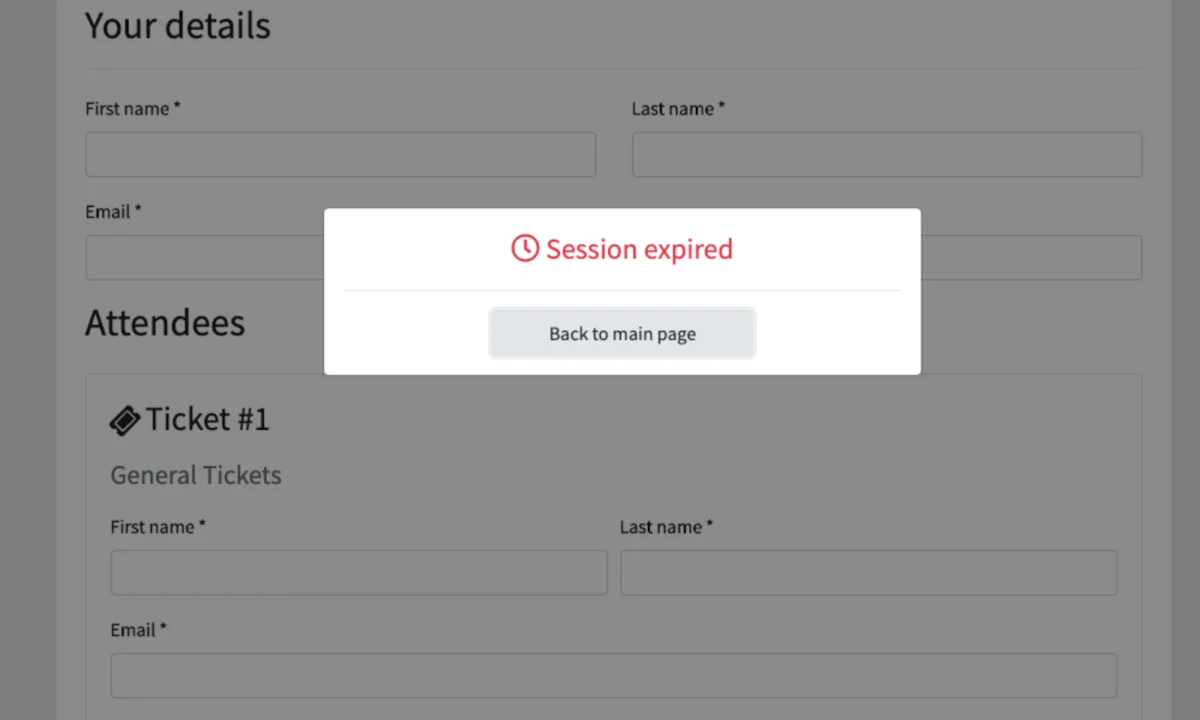
The intersection of cybersecurity and user experience has long been a point of contention for web developers, but for the 1.3 billion people worldwide living with significant disabilities, this tension often manifests as a hard barrier to essential services. Session timeouts—automated mechanisms designed to log users out after a period of perceived inactivity—frequently fail to account for the diverse ways individuals interact with technology. While intended to protect sensitive data and manage server resources, poorly implemented session management can effectively lock out users with motor, cognitive, or visual impairments, turning routine tasks like applying for a loan or purchasing a ticket into insurmountable obstacles.
The Evolution of Session Management and Accessibility Standards
The history of session management is rooted in the early architecture of the World Wide Web. Because HTTP is a stateless protocol, developers had to create methods to "remember" users as they moved from page to page. This led to the development of cookies and session tokens. As digital security became a paramount concern in the early 2000s, the National Institute of Standards and Technology (NIST) and other regulatory bodies began advocating for strict session expiration to prevent unauthorized access on shared devices.
However, the rapid push for security often outpaced the development of inclusive design. It was not until the release of the Web Content Accessibility Guidelines (WCAG) 2.0 in 2008 that the industry received formal guidance on "Timing Adjustable" content (Success Criterion 2.2.1). This guideline established that users should be able to turn off, adjust, or extend time limits. Despite these standards being updated in WCAG 2.1 and 2.2, a significant portion of the modern web remains non-compliant, leaving millions of users in a state of digital disenfranchisement.
Dissecting the Impact on Diverse User Groups
The impact of session timeouts is not uniform; it varies significantly based on the nature of a user’s disability. For many, the "inactivity" detected by a server is actually a period of intense activity—processing information, navigating with adaptive hardware, or listening to screen readers.
Motor Impairments and Input Latency
For individuals with motor impairments, such as cerebral palsy, Parkinson’s disease, or multiple sclerosis, the physical act of inputting data is a time-intensive process. Muscle stiffness, tremors, and the use of switch-access scanning or eye-tracking software can slow down form completion by a factor of five or ten compared to a non-disabled user.
Disability rights advocate Matthew Kayne has documented the "breaking point" experienced by users with cerebral palsy. When a timed form expires without warning, it does not just cause a minor delay; it can erase hours of physical effort. In a professional or governmental context, such as a visa application or a pension claim, this loss of progress can lead to missed deadlines and the loss of critical benefits.
Cognitive Differences and Information Processing
Approximately 20% of the global population is neurodivergent, including individuals with ADHD, autism, dyslexia, and memory-related conditions. For these users, strict timeouts create an environment of "undue pressure." Those with ADHD frequently experience "time blindness," a cognitive phenomenon where the perception of passing time is impaired. When a website relies on a user to estimate how much time they have left, it effectively excludes those who cannot reliably track that duration.
Furthermore, individuals with processing speed differences may require more time to read and comprehend complex instructions. If a session expires while a user is mid-sentence, the resulting frustration often leads to "task abandonment," where the user gives up on the service entirely.
Visual Impairments and Screen Reader Overhead
Blind and low-vision users face a unique challenge: the "navigation overhead." A sighted user can scan a page in seconds to find a "Submit" button; a screen reader user must listen to headings, links, and form labels sequentially. This linear navigation is inherently slower.

Bogdan Cerovac, a web developer and accessibility expert, has highlighted the "spamming" effect of poorly designed countdown timers. Some timers are programmed to announce the remaining seconds to screen readers. If a timer announces "59 seconds… 58 seconds… 57 seconds," it creates a wall of sound that prevents the user from actually filling out the form.
Data and Supporting Evidence for Digital Inclusion
The scale of the problem is reflected in broader digital ownership trends. Data from the Pew Research Center indicates that 62% of adults with disabilities in the United States own a desktop or laptop computer, and 72% have high-speed internet access. These figures are nearly identical to those of non-disabled adults, suggesting that the "digital divide" is no longer about access to hardware, but rather about the accessibility of the software and interfaces themselves.
A 2023 analysis of the "WebAIM Million"—an accessibility audit of the top one million homepages—found that while progress is being made, nearly 96% of homepages still have detectable WCAG 2 failures. Timing issues remain a top-tier concern because they are often "silent failures" that automated testing tools cannot always catch.
Official Responses and Regulatory Frameworks
Governments and international bodies have begun to take a harder line on digital accessibility. In the United Kingdom, the Department for Work and Pensions (DWP) has pioneered highly accessible session management patterns. Their Pension Credit application, for instance, warns users at least two minutes before a session expires and provides a clear, one-click option to extend the time.
In the United States, the Department of Justice (DOJ) has increasingly interpreted the Americans with Disabilities Act (ADA) to apply to digital "places of public accommodation." This has led to a surge in litigation against companies whose websites—including those with inaccessible session timeouts—prevent equal access to services.

Conversely, some government platforms still struggle. The Consular Electronic Application Center’s DS-260 visa form has been criticized for its 20-minute idle timeout, which provides no warning and results in the total loss of unsaved work. Such examples highlight the ongoing gap between policy and implementation.
Engineering Solutions: Balancing Security and Usability
The technical solution to session timeout barriers is not the removal of security, but the implementation of "thoughtful management." Web professionals are encouraged to adopt three primary strategies:
- Advance Warning and Extension: Before a session starts, users should be informed of the time limit. As the limit approaches, a modal dialog should appear—accessible via keyboard and screen reader—asking if the user needs more time.
- Activity-Based vs. Absolute Timeouts: While absolute timeouts (logging out after X hours regardless of activity) are useful for high-security environments like banking, activity-based timeouts should be generous. Developers should ensure that "activity" includes more than just clicks; it should include typing, scrolling, and even mouse movement where appropriate.
- State Preservation and Auto-Save: Perhaps the most effective way to mitigate timeout frustration is the use of client-side storage mechanisms like
localStorageorsessionStorage. By automatically saving form data at regular intervals, developers can ensure that even if a session expires, the user’s progress is restored the moment they log back in.
Analysis of Broader Impact and Ethical Implications
The ethical imperative for accessible session management is mirrored by a clear economic incentive. Inaccessible websites represent a significant loss of potential market share. When 20% of a target audience is neurodivergent and 1.3 billion people have disabilities, an inaccessible timeout is essentially a "closed" sign to a massive demographic.
Furthermore, the "inclusive design" philosophy posits that improvements made for people with disabilities often benefit all users. A parent being interrupted by a child, a professional multitasking in a busy office, or a user with a slow internet connection all benefit from extendable sessions and auto-save features.
In conclusion, the issue of session timeout accessibility is a solvable technical challenge that requires a shift in priority. By moving away from "silent" and "absolute" timeouts toward transparent, extendable, and state-preserving systems, web developers can fulfill their ethical obligations while improving the overall robustness and usability of the internet. A website that respects a user’s time and effort is not just accessible—it is a better product for everyone.

