
The City of San Jose finds itself at a critical juncture regarding its use of Automated License Plate Reader (ALPR) technology, as a growing coalition of civil rights advocates, legal experts, and community leaders demand the immediate termination of the city’s contract with surveillance vendor Flock Safety. The controversy, which has intensified throughout early 2026, centers on allegations that these mass surveillance tools are being weaponized by federal agencies, including Immigration and Customs Enforcement (ICE), to bypass local "sanctuary" protections and target immigrant populations. This movement follows a rapid domino effect across the San Francisco Bay Area, where neighboring municipalities have begun dismantling their ALPR networks due to documented data breaches and unauthorized federal access.
The Mechanics of Mass Surveillance: How ALPR Systems Operate
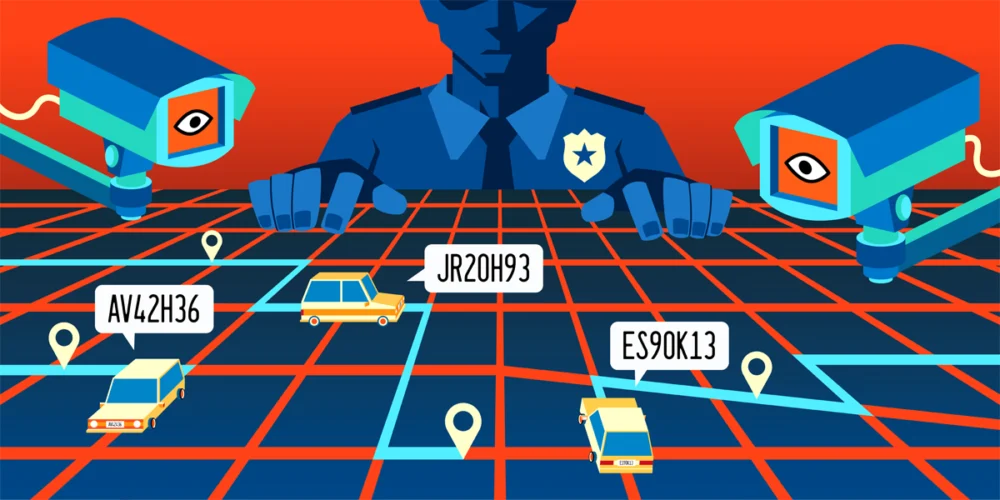
Automated License Plate Readers are high-speed, computer-controlled camera systems typically mounted on street poles, overpasses, or police cruisers. Unlike traditional security cameras, ALPRs utilize optical character recognition (OCR) to capture the license plate numbers of every passing vehicle, along with the date, time, and precise GPS coordinates. This data is then uploaded to centralized databases—in San Jose’s case, managed by the private firm Flock Safety—where it can be stored for months or even years.
While law enforcement agencies market these tools as essential for locating stolen vehicles or suspects in violent crimes, privacy advocates argue the technology functions as a dragnet. The system does not merely "ping" on suspect vehicles; it records the movements of the entire driving population. By aggregating these data points, authorities can reconstruct a detailed map of an individual’s life, identifying patterns that reveal where they work, where they worship, which medical clinics they visit, and with whom they associate. For vulnerable communities, particularly undocumented immigrants and political dissidents, this level of granular tracking represents a significant threat to personal safety and constitutional freedoms.
A Regional Rejection: Chronology of the ALPR Backlash
The push for San Jose to abandon its ALPR program is part of a broader regional shift that began in late 2025 and accelerated into the first quarter of 2026. Concern over the "surveillance state" has transitioned from theoretical debate to policy changes as local governments uncover evidence of systemic data sharing violations.
January 13, 2026: Santa Cruz Leads the Way
The Santa Cruz City Council voted to terminate its contract with Flock Safety, citing rising tensions with federal immigration authorities. City leaders expressed concern that the vendor’s infrastructure made it impossible to guarantee that local data remained shielded from ICE, effectively undermining the city’s status as a safe haven for immigrants.
January 20, 2026: Los Altos Hills Terminates Contract
Following a series of public hearings, Los Altos Hills officials decided to remove all ALPR cameras. The decision was spurred by reports from the Electronic Frontier Foundation (EFF) indicating that ALPR data from California was being accessed by agencies in states with restrictive reproductive healthcare laws, as well as federal immigration units.
January 30, 2026: The Mountain View Breach
In perhaps the most significant blow to Flock Safety’s reputation in the region, the Mountain View Police Department abruptly deactivated its entire camera network. The move came after an internal audit revealed that federal and other unauthorized agencies had gained direct access to the city’s data through a software "glitch" or backdoor. The cameras remain inactive pending a comprehensive security overhaul and further direction from the City Council.
February 2026: East Palo Alto and Santa Clara County Reconsider
In the weeks leading up to the current debate in San Jose, both East Palo Alto and the Santa Clara County Board of Supervisors initiated formal reviews of their surveillance programs. In East Palo Alto, local residents raised alarms after a neighbor’s license plate data was reportedly leaked, highlighting the potential for the technology to be used for stalking or personal harassment.
The San Jose Context: Warrantless Searches and Legal Challenges
San Jose’s ALPR program is currently the subject of intense litigation. Two prominent nonprofit organizations, SIREN (Services, Immigrant Rights and Education Network) and CAIR-SFBA (Council on American-Islamic Relations), represented by the EFF and the ACLU of Northern California, have filed a lawsuit against the city. The litigation seeks to halt what it describes as a pervasive pattern of warrantless searches.
Data obtained through public records requests reveals the scale of the San Jose Police Department’s (SJPD) reliance on the system. In a period of just over one year, SJPD logged more than 261,000 ALPR searches—averaging nearly 700 searches every day. Crucially, these searches were conducted without a warrant and often without any documented "reasonable suspicion" of criminal activity. Under current city policy, officers can query the database, which contains hundreds of millions of records spanning a year of vehicle movements, at their own discretion.
This practice stands in stark contrast to California’s privacy laws. Senate Bill 34, passed in 2015, was designed to prohibit local law enforcement from sharing ALPR data with out-of-state or federal agencies unless specific legal criteria are met. However, investigations have shown that at least 75 California police agencies were still sharing records out-of-state as recently as 2023. In San Francisco, records from 2025 indicated that police allowed out-of-state access for searches that were later linked directly to ICE investigations and efforts to track individuals seeking reproductive care.
The Role of Private Vendors and "Function Creep"
A central figure in this controversy is Flock Safety, a private company that has rapidly become the dominant provider of ALPR technology in the United States. Flock markets its "Talent" AI software as a revolutionary tool for public safety, but critics point to the company’s business model as a primary source of the problem. Flock creates a "mesh network" where data from private homeowners’ associations, businesses, and police departments can be interconnected.
This interconnectedness facilitates "function creep"—the use of a technology for purposes far beyond its original intent. While a city might purchase cameras to solve car thefts, the integration of that data into a national network allows federal agencies to use local infrastructure for immigration sweeps or the monitoring of political protests.
Investigations by media outlets like 404 Media have documented over 4,000 instances where local police conducted ALPR searches on behalf of federal law enforcement. This "policing by proxy" allows federal agencies to circumvent local sanctuary laws by simply asking a local officer to run a search for them, or by utilizing the shared database access provided by the vendor.
Official Responses and the Public Safety Debate
The San Jose Police Department and proponents of the ALPR system argue that the cameras are an indispensable tool in modern law enforcement. They point to cases where ALPR "pings" have led to the recovery of kidnapped children via Amber Alerts or the rapid apprehension of suspects in hit-and-run accidents. In public statements, law enforcement officials have emphasized that they have no interest in "routine" immigration enforcement and that the technology is used strictly for criminal investigations.
However, the efficacy of ALPR systems in reducing overall crime rates remains a subject of academic debate. Some studies suggest that while ALPRs can increase the rate of stolen vehicle recovery, they have a negligible impact on violent crime rates. Furthermore, the high rate of "false positives"—where a system misreads a plate or flags a vehicle no longer associated with a crime—can lead to high-risk traffic stops of innocent civilians.
The authors of the February 12 op-ed—Huy Tran, Jeffrey Wang, and Jennifer Pinsof—argue that these marginal benefits do not outweigh the systemic risks. They contend that the mere existence of the database creates an "unacceptable risk" to the safety of immigrant families, who may begin to avoid public spaces, schools, or hospitals out of fear that their movements are being tracked and shared with ICE.
Broader Impact and Implications for Civil Liberties
The outcome of the debate in San Jose will likely set a precedent for other "Sanctuary Cities" across the United States. If a major tech hub like San Jose decides that the privacy risks of ALPR technology are insurmountable, it could signal the beginning of the end for the unchecked expansion of private surveillance networks in public spaces.
The legal battle also touches on fundamental Fourth Amendment protections against unreasonable searches and seizures. As surveillance technology outpaces existing legislation, courts are increasingly being asked to define the boundaries of privacy in the digital age. The SIREN v. San Jose lawsuit argues that the "mosaic theory" of privacy applies here: while a single photograph of a license plate in public might not violate privacy, the continuous, automated tracking of a vehicle over a year constitutes a search that requires judicial oversight.
Conclusion: A Call for Immediate Action
As of mid-February 2026, the San Jose City Council is facing intense pressure to follow the lead of Mountain View and Santa Cruz. Advocates stress that every day the cameras remain active, more sensitive location data is harvested, increasing the potential for misuse. The demand is clear: local leaders must choose between the convenience of a pervasive surveillance tool and the fundamental rights of their constituents.
The prevailing sentiment among civil rights groups is that public safety cannot be achieved through the sacrifice of community trust. For a city that prides itself on diversity and inclusion, the continued use of a system that facilitates federal immigration crackdowns is viewed by many as a betrayal of local values. The coming months will determine whether San Jose remains a participant in the Flock Safety network or joins the growing list of California cities choosing to pull the plug on mass surveillance.

