
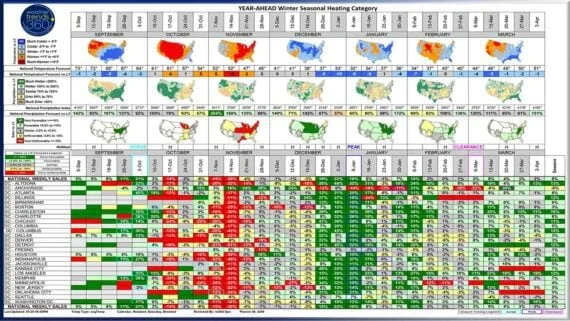
The pervasive influence of weather on consumer purchasing habits is a fundamental truth for retailers, yet its granular application has historically remained a complex challenge. While long-range meteorological forecasts have been available for decades, translating this data into actionable business strategies has been an area ripe for innovation. Now, the advent of artificial intelligence (AI) promises to bridge this gap, offering e-commerce businesses unprecedented opportunities to leverage weather patterns for enhanced sales, optimized operations, and a significant competitive edge.
The Untapped Potential of Weather Data in Retail
For years, retailers have understood that a sweltering summer day can boost ice cream sales, while a blizzard can drive demand for snow shovels and warm apparel. However, the practical application of such insights has often been limited by the sheer complexity of integrating often-vague long-term forecasts into daily business decisions. Vendors like Weather Trends, established over two decades ago, have provided accurate, long-range meteorological predictions. Yet, the true value lies not merely in forecasting the weather, but in understanding and acting upon its implications. This is where AI is poised to revolutionize the retail landscape.
The inherent volatility of weather presents a unique set of challenges for e-commerce operations. Predicting demand, setting optimal prices, personalizing customer experiences, managing fulfillment logistics, and executing targeted marketing campaigns all become significantly more intricate when meteorological factors are introduced. The traditional approach often involved broad assumptions or reactive adjustments, leading to inefficiencies and missed opportunities.
E-commerce Grapples with Weather-Related Challenges
Artificial intelligence is emerging as a powerful solution to a myriad of common e-commerce obstacles, with weather-related issues being a particularly potent area of impact. The ability of AI to process vast datasets, identify complex patterns, and make predictive adjustments is fundamentally changing how businesses can navigate these environmental influences.
Demand Forecasting: From Reactive to Proactive
A pivotal moment that underscored the limitations of traditional demand forecasting occurred in 2017 when Boise, Idaho, was struck by "Snowmageddon." A farm and ranch retailer, where the author previously worked, had access to long-term weather prediction data that accurately warned of impending record snowfall. Armed with this foresight, the company did increase wholesale orders for snow-related merchandise. However, this increase was cautious, hampered by leadership’s inherent skepticism of the data’s predictive power.
The concern was understandable: the cost of an erroneous forecast could be substantial. Underestimating demand, as happened in this instance, leads directly to stockouts, resulting in lost sales and customer dissatisfaction. Conversely, overestimating demand incurs significant carrying costs, increases the risk of markdowns to clear excess inventory, and in the case of perishable goods, can lead to spoilage. The delicate balancing act between potential losses and benefits made such forecasting decisions incredibly difficult. Looking back, AI could have offered a more objective framework for this decision-making process, not by predicting the snowfall itself, but by clarifying the quantifiable risks associated with different inventory levels.
By analyzing historical sales data in conjunction with granular weather forecasts, AI algorithms can provide more precise demand projections. For example, an AI model could identify that a specific temperature drop in a particular region historically correlates with a 30% increase in demand for winter coats within 48 hours. This level of predictive accuracy allows businesses to proactively adjust inventory levels, reducing the likelihood of both stockouts and costly overstock situations. Supporting data from meteorological services often indicates that extreme weather events, such as heatwaves or prolonged cold spells, can shift consumer spending patterns by as much as 10-15% in affected regions.
Pricing Optimization: Tailoring Prices to Local Conditions
Pricing and markdown strategies are essentially expressions of demand forecasts translated into monetary terms. Retailers meticulously estimate the sales velocity of their products and adjust prices accordingly to maintain healthy profit margins. Weather, however, introduces a significant variable that complicates these calculations. An online merchant operating in the perpetually sunny climate of Florida might be inclined to discount winter apparel, while a competitor in Bismarck, North Dakota, bracing for a severe snowstorm, would be experiencing a surge in demand for the very same items. This geographical mismatch in demand perception can lead to suboptimal pricing decisions.
AI-powered pricing solutions can effectively address this disparity. Instead of presenting a uniform price to all customers across different regions, AI can dynamically incorporate localized variables. These variables include specific regional weather patterns, the probability of forecast weather events, and the historical conversion behavior of shoppers in those areas. This allows for the determination of a "just-right" price for each region, tailored to the prevailing and forecasted weather conditions. Consequently, rather than applying a single, blanket markdown logic, AI-driven pricing engines can adjust promotions based on anticipated demand in a shopper’s specific locale, ensuring that prices remain competitive and aligned with actual market needs. Research from pricing analytics firms suggests that dynamic, weather-informed pricing can lead to a 5-8% increase in revenue and a 2-4% improvement in gross margin.

Personalization: Weather as a Powerful New Signal
Personalization tools in e-commerce aim to understand shopper intent by analyzing their behavior and contextual cues. Weather represents a potent, often overlooked, signal that can significantly enhance these personalization efforts. Shoppers browsing online during a cold snap, a prolonged heatwave, or a severe storm are likely experiencing unique needs and motivations. The demand for seasonal goods, products that offer comfort, or items for specific events often shifts dramatically in response to immediate weather conditions.
AI-driven personalization engines can seamlessly integrate weather data, whether real-time or forecasted, to refine various aspects of the customer experience. This includes adjusting product recommendations, optimizing site search results to prioritize relevant items, emphasizing specific product categories, and tailoring promotional messaging. For instance, during a cold snap, outerwear, thermal wear, and indoor entertainment products might be prominently displayed. Conversely, during a heatwave, hydration products, cooling devices, and outdoor leisure items could be highlighted. The beauty of these merchandising decisions, unlike pricing, is that they typically carry low risk. They influence what shoppers see rather than obligating the merchant to commit to large inventory purchases, making them an agile and effective tool for engaging customers. Studies have shown that hyper-personalized recommendations, incorporating contextual factors like weather, can lead to a 10-15% uplift in conversion rates.
Fulfillment Expectations: Navigating Weather-Related Delays
The impact of weather extends beyond consumer demand to the very infrastructure of e-commerce logistics. Snowstorms, severe storms, and extreme temperature fluctuations can significantly disrupt carrier networks, leading to shipment delays and ultimately reshaping customer delivery expectations. Unfortunately, many e-commerce platforms continue to generate delivery estimates based on static, often outdated, assumptions that fail to account for these dynamic environmental factors.
This disconnect poses a significant problem. The modern consumer increasingly expects rapid delivery, and dissatisfaction often escalates quickly, sometimes resulting in chargebacks when orders are delayed. AI-powered fulfillment models offer a solution by intelligently incorporating weather variables, historical carrier performance data, and regional risk factors into the calculation of estimated arrival windows. This allows for more realistic and transparent delivery timelines to be communicated to customers, managing expectations proactively and mitigating the negative consequences of unforeseen delays. For example, an AI system might identify that during winter months, shipments to a certain mountainous region are delayed by an average of two days due to snow, and factor this into the estimated delivery time, providing a more accurate window to the customer. Industry reports indicate that improved delivery time accuracy can reduce customer service inquiries related to shipping by up to 25%.
Triggered Marketing: Capitalizing on Fleeting Opportunities
Weather conditions can also create short-lived, but significant, spikes in demand. The classic example is the immediate need for umbrellas on a rainy day. AI agents, when connected to advertising platforms like Meta Ads, can be programmed to automatically trigger marketing campaigns based on weather-influenced demand. This sophisticated automation can extend to AI writing ad copy, generating relevant images or video content, setting appropriate budgets, and even learning from the success or failure of past campaigns to continuously optimize performance.
Imagine a scenario where an AI detects a sudden, unforecasted drop in temperature in a specific metropolitan area. It could then immediately launch a targeted ad campaign for hot beverages and cozy home goods, complete with localized messaging and compelling visuals, reaching consumers at the precise moment they are most receptive. This ability to react instantaneously to ephemeral market opportunities provides a distinct advantage over traditional, more manual marketing approaches. The speed and precision of AI-triggered marketing can capture impulse purchases that might otherwise be missed, potentially boosting campaign ROI by a significant margin.
The Path to a Competitive Advantage
The convergence of AI and weather data presents a potent opportunity for e-commerce merchants to gain a substantial competitive edge. However, discerning genuine innovation from mere hype will necessitate rigorous testing and implementation. By leveraging AI to not only predict weather-related shifts in consumer behavior but also to proactively optimize business operations in response, retailers can navigate the complexities of environmental influences with unprecedented agility.
The implications of this integration are far-reaching. Businesses that effectively harness AI and weather data will be better positioned to:
- Enhance customer satisfaction: By providing more accurate delivery estimates and relevant product recommendations.
- Improve operational efficiency: Through optimized inventory management and streamlined logistics.
- Boost profitability: By leveraging dynamic pricing strategies and capturing fleeting market opportunities.
- Build stronger brand loyalty: By demonstrating a keen understanding of customer needs and providing a seamless shopping experience, regardless of external environmental factors.
As AI technologies continue to mature and become more accessible, their integration with meteorological data will undoubtedly become a standard practice for forward-thinking e-commerce businesses. The retailers who embrace this synergy will be the ones best equipped to thrive in an increasingly dynamic and unpredictable marketplace. The forecast for the future of retail, it seems, is significantly influenced by the intelligent application of weather insights.

