
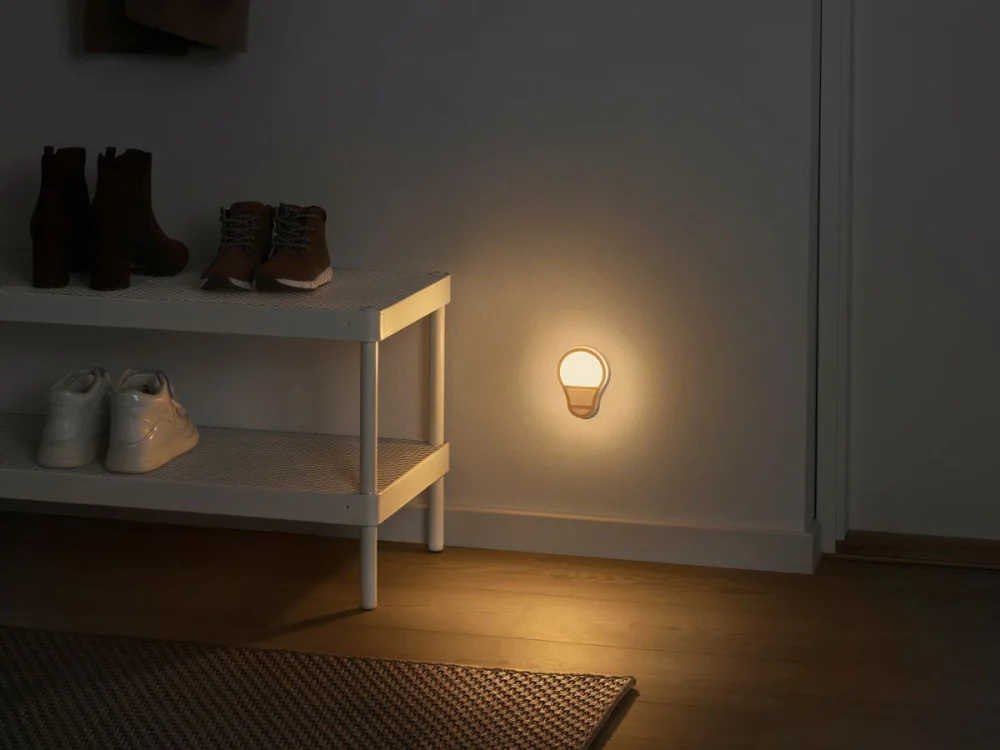
IKEA has unveiled the Ankarlägg, a novel battery-operated, motion-sensitive light designed for effortless installation on virtually any surface, marking a significant expansion of its smart home ecosystem. This compact, wirelessly powered luminary, with a design reminiscent of a stylized cartoon light bulb, offers unparalleled adaptability, allowing users to introduce intelligent lighting solutions into previously inaccessible or unwired areas of their homes. The Ankarlägg’s self-adhesive backing and complete lack of external wiring position it as a versatile and user-friendly addition to IKEA’s increasingly integrated smart home offerings.
Seamless Integration and Unparalleled Convenience
The Ankarlägg is engineered with user simplicity at its core. Its primary function is to provide immediate and responsive illumination precisely when and where it is needed. Potential applications are extensive, ranging from illuminating dimly lit hallways upon entry, serving as a gentle night light in bedrooms, to providing convenient light within cupboards, pantries, or under cabinets. To optimize battery life and ensure a seamless user experience, the Ankarlägg incorporates an intelligent motion-sensing mechanism that automatically deactivates the light after 30 seconds of inactivity, conserving power without requiring manual intervention.
IKEA’s product specifications indicate an estimated battery life of approximately six months, based on a usage scenario of ten motion triggers per day. This impressive longevity, coupled with the device’s operation independent of a smart hub, underscores its commitment to offering accessible smart home technology. The Ankarlägg utilizes three standard AAA batteries, which are readily available and straightforward to replace, further enhancing its practical appeal and reducing long-term ownership costs.
Strategic Market Positioning and Affordability
The pricing strategy for the Ankarlägg positions it as a highly competitive offering in the smart lighting market. Priced at €2.99 in Europe, with anticipated international release prices around £4 / $7 / AU$5, the Ankarlägg presents a compelling value proposition. This price point is significantly lower than the combined cost of a typical smart bulb and a separate motion sensor, which can often range from several times the Ankarlägg’s price. This affordability makes smart lighting solutions accessible to a broader consumer base, democratizing the adoption of intelligent home technology.
Information emerging from IKEA’s French website further emphasizes the Ankarlägg’s inherent flexibility. The combination of battery power and a robust adhesive backing allows for installation in a multitude of locations where traditional wired lighting solutions would be impractical or prohibitively expensive. This is particularly advantageous for homeowners seeking to enhance the functionality and ambiance of areas lacking pre-existing electrical infrastructure, such as alcoves, stairwells, or awkward corners. The ability to install these lights without the need for electricians or complex wiring significantly lowers the barrier to entry for smart home upgrades.
A Growing Smart Home Portfolio
The introduction of the Ankarlägg is not an isolated event but rather a continuation of IKEA’s strategic expansion into the smart home sector. This latest offering joins a growing roster of interconnected devices designed to enhance home automation and convenience. Previous additions to IKEA’s smart home collection include the Bilresa remote control kit, the Timmerflotte temperature sensor, and the Myggspray wireless motion sensor. Each of these products, while contributing to a more connected home, has often been integrated within IKEA’s broader smart home ecosystem, frequently requiring a Thread hub such as the company’s own Dirigera hub for full functionality.
However, the Ankarlägg distinguishes itself by operating independently of any central hub. This standalone functionality is a key differentiator, offering a simplified and cost-effective entry point for consumers who may be hesitant to invest in a comprehensive smart home system or who simply desire specific smart lighting functionalities without the need for additional hardware. This independent operation broadens its appeal, making it an attractive option for individuals looking for targeted smart solutions rather than a complete overhaul of their home’s technological infrastructure.
The Evolution of Smart Lighting and IKEA’s Role
The smart lighting market has witnessed exponential growth over the past decade, driven by advancements in LED technology, increased consumer awareness of energy efficiency, and the growing desire for personalized home environments. Early smart lighting solutions often required complex setup procedures, including Wi-Fi network configuration and integration with proprietary apps. The advent of protocols like Zigbee and Z-Wave, and more recently Thread and Matter, has aimed to simplify interoperability and enhance user experience.
IKEA has strategically positioned itself within this evolving landscape by focusing on affordability and ease of use. Their approach often involves creating devices that are intuitive to set up and operate, even for consumers with limited technical expertise. The Ankarlägg exemplifies this philosophy by removing the need for a hub altogether, streamlining the installation and operation process to its most basic components: battery, adhesive, and motion sensor. This focus on user-centric design and accessible pricing has allowed IKEA to capture a significant segment of the market, making smart home technology less of a niche luxury and more of a practical everyday utility.
Broader Implications for Home Automation
The Ankarlägg’s independent operation and affordable price point have several significant implications for the broader home automation market. Firstly, it lowers the barrier to entry for consumers interested in smart lighting. Many individuals may have been deterred by the perceived complexity or cost of setting up a fully integrated smart home system. The Ankarlägg offers a low-risk, high-reward entry point, allowing users to experience the benefits of motion-activated lighting without a substantial investment.
Secondly, its versatility in installation opens up new possibilities for smart home applications. Beyond the typical uses in hallways and closets, the Ankarlägg could be deployed in rental properties, temporary living spaces, or even for outdoor applications where traditional wiring is infeasible. Its adhesive nature means it can be attached to furniture, mirrors, or decorative elements, allowing for creative and personalized lighting schemes.
Furthermore, the Ankarlägg’s success could encourage other manufacturers to develop similar standalone, hub-free smart devices. This trend towards greater device autonomy and reduced reliance on central hubs could lead to a more fragmented but ultimately more accessible smart home ecosystem, where users can mix and match devices from different brands based on specific needs and budgets. The focus shifts from a singular, all-encompassing system to a collection of specialized, interoperable devices.
The environmental impact of such devices also warrants consideration. While the Ankarlägg offers energy savings through its motion-activated shut-off, the reliance on disposable AAA batteries raises questions about sustainability. As the smart home market matures, there will likely be a greater emphasis on rechargeable battery solutions and more energy-efficient power management systems. However, for the immediate term, the convenience and affordability of AAA batteries likely outweigh these concerns for many consumers.
Future Prospects and Market Trends
IKEA’s ongoing commitment to smart home innovation suggests that the Ankarlägg is likely to be followed by further developments. The company’s integration with Matter, the new industry-wide smart home standard, indicates a long-term strategy to ensure its devices remain compatible and interoperable with a wide range of other smart home products. While the Ankarlägg currently operates independently, future iterations or complementary products might leverage Matter for enhanced connectivity and control.
The continued growth of the smart lighting sector is projected to be robust, with market research firms forecasting significant expansion in the coming years. Factors driving this growth include increasing consumer demand for convenience, energy efficiency, enhanced security, and personalized home environments. IKEA’s strategy of offering affordable, user-friendly solutions directly addresses these evolving consumer needs, positioning the company as a key player in democratizing smart home technology. The Ankarlägg, with its simple yet effective design, stands as a testament to this strategy, offering a glimpse into a future where intelligent lighting is an accessible and integral part of every home.

