
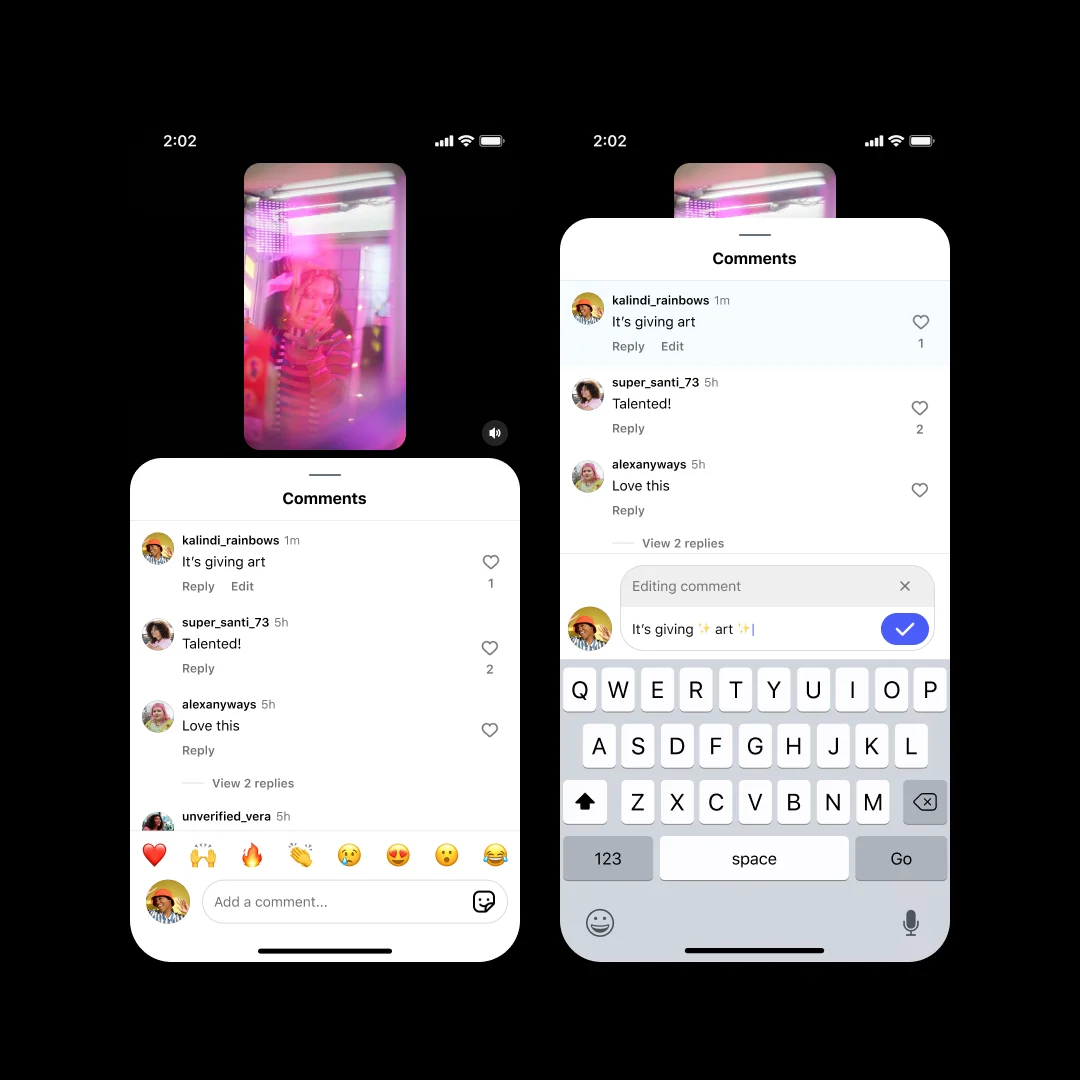
The popular photo and video sharing platform, Instagram, has officially rolled out a long-anticipated feature allowing users to edit their comments, addressing a persistent demand from its global community. This update, announced on Thursday, offers a critical enhancement to the user experience, providing a much-needed solution for correcting typos, grammatical errors, or clarifying statements without the cumbersome process of deleting and reposting comments. The new functionality, however, comes with specific parameters designed to balance user flexibility with content integrity.
Users now have a 15-minute window from the moment a comment is posted to make any desired alterations. Within this quarter-hour timeframe, individuals can modify their comment as many times as necessary, offering ample opportunity for revisions. Once a comment has been edited, a clear "Edited" label will become visible to other users, signaling that changes have been made. Crucially, Instagram’s implementation differs from some other messaging and social platforms, such as Apple’s iMessage, in that it does not provide a public history of the original comment or subsequent edits. The content of the original comment remains private, with only the final, edited version displayed to the public. Another significant limitation is that only the text portion of a comment can be modified; any accompanying photos or media within a comment remain unchangeable once posted.
The introduction of comment editing marks a significant step for Instagram in refining its user interface and interaction capabilities. For years, users have voiced frustration over the inability to correct minor mistakes, often leading to the deletion of an otherwise thoughtful comment and its subsequent reposting, disrupting conversation flows and user engagement metrics. This functionality, while seemingly minor, represents a response to widespread feedback, demonstrating Instagram’s commitment to iterative improvements based on community input. Reports from various online forums and social media platforms over the past few weeks indicated that Instagram had been quietly testing this feature among a subset of users. These anecdotal observations, which surfaced on platforms like Reddit and X (formerly Twitter), showed early signs of the feature’s impending public release, generating considerable positive anticipation. Reactions to the official announcement have largely been enthusiastic, with many users expressing sentiments ranging from "It’s about time" to humorous remarks about the feature’s long-awaited arrival, highlighting the deep-seated demand for this particular tool.
This update places Instagram in a competitive landscape with other major social media platforms, each of which has adopted varying approaches to comment and post editing. Facebook, Instagram’s parent company, has long offered editing capabilities for posts and comments, often with a visible edit history. Platforms like Twitter (now X) introduced post editing much later, also with a limited window and a clear indicator of modification. The choice by Instagram not to display edit history for comments suggests a strategic decision, potentially aimed at simplifying the user experience and preventing potential complications related to content interpretation or misrepresentation that might arise from publicly viewable historical versions of comments. This approach could be seen as prioritizing a clean, current conversational thread over full transparency of revision history, distinguishing it from platforms where context is often derived from the evolution of a statement.
The development cycle for such features on platforms with billions of users is typically extensive, involving rigorous testing to ensure stability, scalability, and security. While the technical complexities might seem straightforward, integrating a new feature across a vast and diverse user base, ensuring compatibility with various devices and operating systems, and addressing potential moderation challenges can be a formidable task. The 15-minute window is likely a carefully considered compromise, offering enough time for immediate corrections without allowing for extensive post-facto alteration of meaning that could complicate content moderation or lead to historical revisionism in online discourse. This short window minimizes the risk of users drastically changing the sentiment or content of a comment after it has been seen and potentially responded to by others, thereby preserving a degree of conversational integrity.
Beyond the immediate enhancement of user convenience, this update is part of a broader strategic push by Instagram and Meta Platforms, Inc., to refine the overall user experience and foster a more positive and engaging digital environment. As social media platforms mature, the focus increasingly shifts from mere novelty to utility, ease of use, and the cultivation of healthy online communities. Features that empower users to self-correct and maintain a higher standard of communication contribute directly to these goals. Improving the quality of interactions on the platform is crucial for retaining its vast user base, which surpasses 2 billion monthly active users globally, and for attracting new demographics in an intensely competitive digital landscape dominated by rivals such as TikTok, which constantly innovates on user engagement features.
However, the announcement of this user experience improvement did not occur in isolation. On the very same day, Instagram also unveiled significant updates regarding its content restriction policies for teen accounts. These new measures aim to limit the exposure of younger users to certain types of content, drawing parallels to the established 13+ movie rating system. This move is a direct response to the escalating scrutiny and intense pressure Meta has faced concerning the impact of its platforms on the mental health and safety of young users. The simultaneous timing of these two distinct announcements underscores a complex strategic balancing act: on one hand, enhancing user satisfaction and engagement through sought-after features, and on the other, proactively addressing critical regulatory and public safety concerns that threaten the company’s reputation and financial stability.
The backdrop to Instagram’s new teen safety measures is a series of significant legal challenges and public outcry that have intensified in recent months. Just last month, Meta experienced two major legal setbacks that underscored the gravity of the allegations against its platforms. In New Mexico, a court delivered a landmark ruling, holding Meta accountable for endangering child safety, a decision that has sent ripples through the tech industry and is being closely watched across the country. This ruling established a precedent that social media companies can be held liable for the design and operation of their platforms when they contribute to harm against minors.
Following closely, a jury in Los Angeles found Meta and YouTube negligent in a pivotal social media addiction trial. The verdict concluded that Meta specifically designed its applications, including Instagram, to be inherently addictive for children and teenagers, directly contributing to adverse impacts on their mental health. This decision, emerging from a highly publicized trial, provided tangible evidence and legal validation to the long-standing concerns raised by parents, child safety advocates, and mental health professionals regarding the psychological effects of excessive social media use on developing minds. The jury’s findings highlighted specific design choices, such as infinite scroll, notification systems, and algorithmic content delivery, as contributing factors to addictive behavior.
These legal defeats are not isolated incidents but rather symptomatic of a much larger legal battle confronting Meta. Thousands of similar cases are currently pending across various jurisdictions, reflecting a widespread societal concern. Furthermore, a coalition of 40 state attorneys general across the United States has initiated legal action against the company, alleging that Meta’s platforms exploit and harm young users. These lawsuits often focus on the addictive nature of the platforms, the inadequacy of age verification systems, and the exposure of minors to harmful content. The sheer scale of these legal challenges represents an existential threat to Meta’s operational freedom and financial health, compelling the company to adopt more stringent safety protocols.
The introduction of content restrictions based on a 13+ movie rating system for teen accounts can therefore be interpreted as a strategic and necessary measure by Instagram to mitigate regulatory risks and demonstrate a commitment to corporate responsibility. By proactively implementing these safeguards, Instagram aims to reduce the likelihood of further legal entanglements and to appease concerned parents, policymakers, and advocacy groups. This move signifies a shift towards a more protective online environment for younger users, aligning the platform’s policies with external standards of age-appropriate content. It is a tacit acknowledgment of the company’s role and responsibility in safeguarding its most vulnerable users, especially given the current legal climate.
In conclusion, Instagram’s latest updates present a dual narrative: one of user-centric innovation and another of regulatory compliance and corporate accountability. The comment editing feature, a small but significant quality-of-life improvement, reflects Instagram’s ongoing effort to enhance the daily interactions of its vast user base. Concurrently, the implementation of stricter content restrictions for teens underscores the profound and growing pressure on Meta to address the ethical and societal implications of its platforms, particularly concerning child safety and mental well-being. These parallel developments illustrate the complex challenges faced by leading social media companies as they navigate the intricate balance between fostering engaging digital communities and fulfilling their responsibilities as custodians of public online spaces. The future trajectory of Instagram, and indeed Meta as a whole, will likely continue to be shaped by this ongoing tension between innovation and regulation, user demand and public expectation.

