
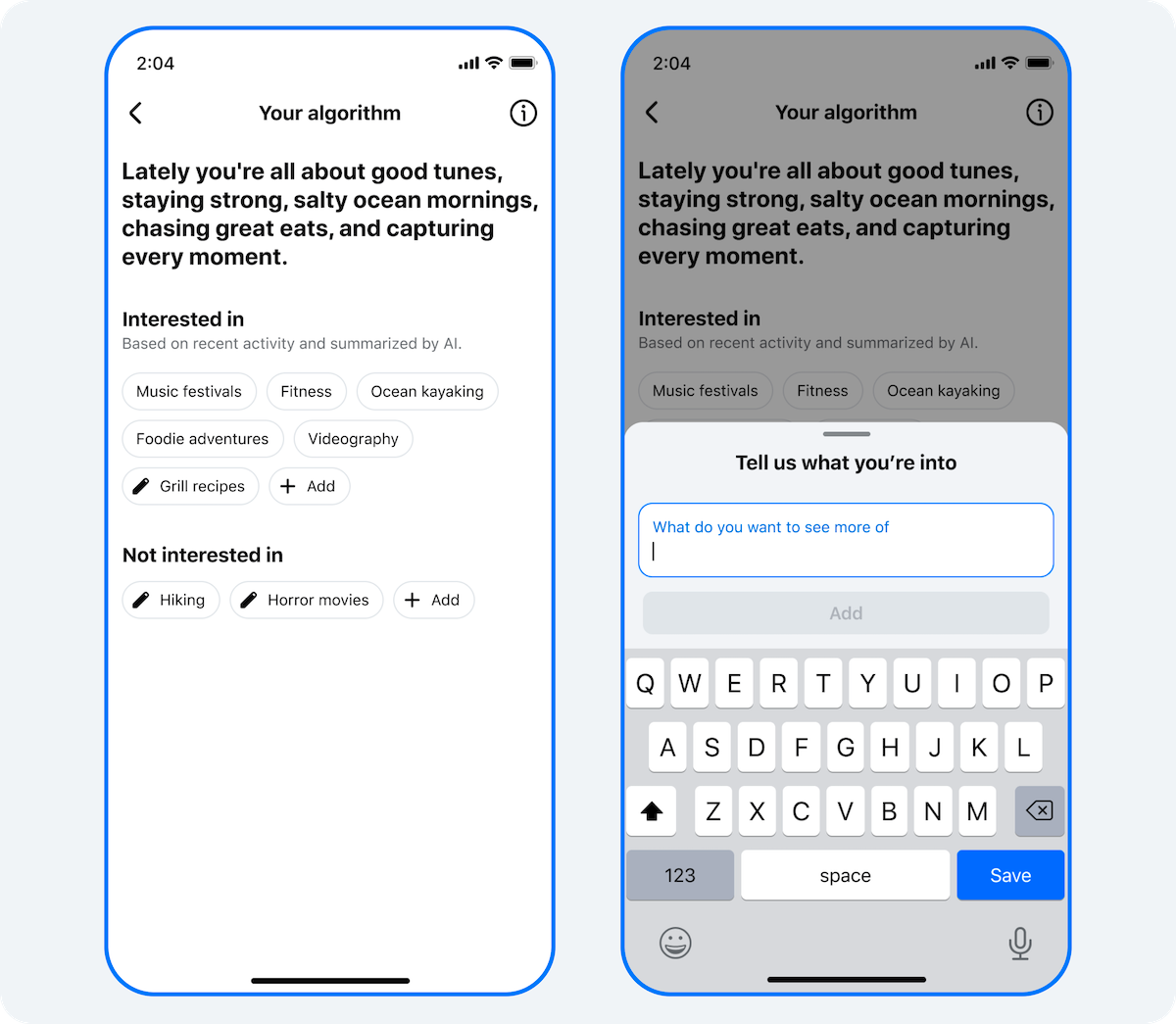
Facebook, a flagship platform of Meta Platforms Inc., has become the latest social media giant to grant its users significantly enhanced control over the intricate algorithms that dictate the content appearing in their personalized feeds. This pivotal development, announced by Meta on Tuesday, October 14, 2026, marks the official launch of "Your Algorithm" on Facebook, an advanced AI-powered feature that initially debuted on Instagram and represents a substantial evolution in how individuals interact with and shape their digital experiences. The new tool empowers Facebook users to directly influence the content they encounter across their Feed and Reels by articulating their preferences in natural language, moving beyond traditional binary feedback mechanisms. This initiative shifts the paradigm from purely automated recommendations to a more interactive and user-driven discovery process, allowing individuals to communicate explicitly with the platform about the topics and content they wish to see more or less frequently.
The Genesis of Algorithmic Control: A Shifting Landscape
The introduction of "Your Algorithm" is not an isolated event but rather the culmination of years of algorithmic evolution and growing user demand for transparency and agency within social media platforms. For much of the past decade, social media feeds transitioned from simple chronological displays to highly sophisticated algorithmic systems designed to maximize user engagement. These algorithms, powered by complex machine learning models, analyze vast amounts of data—including past interactions, connections, and demographic information—to predict what content a user is most likely to engage with. While effective in increasing time spent on platforms and driving targeted advertising revenue, these "black box" algorithms have frequently drawn criticism for fostering echo chambers, contributing to the spread of misinformation, and sometimes negatively impacting user mental well-being by prioritizing sensational or polarizing content.
Users have long expressed frustration over the perceived lack of control, often feeling that the algorithm dictates their experience rather than serving their interests. Previous attempts by platforms to offer customization, such as "hide post" or "see less of this," were often seen as superficial, lacking the depth required for genuine personalization. This rising dissatisfaction, coupled with increasing scrutiny from regulators worldwide concerning algorithmic transparency and data privacy, has compelled social media companies to re-evaluate their approach. Meta’s strategic pivot towards greater user control, therefore, reflects both an industry-wide trend and a direct response to these pressures.
A Phased Rollout Across Meta’s Ecosystem
The "Your Algorithm" feature has been meticulously developed and incrementally deployed across Meta’s family of applications, underscoring the company’s commitment to a unified approach to user empowerment. The journey began in December 2025, when Instagram first introduced a version of "Your Algorithm" specifically for its short-form video product, Reels. This initial rollout allowed users to provide more granular feedback on the video content they were shown, marking the first step towards a more conversational interaction with the recommendation engine.
Building on the insights gained from Instagram Reels, Meta extended similar capabilities to its burgeoning microblogging platform, Threads, in February 2026. Under the moniker "Dear Algo," Threads users were given tools to influence their feed, further testing the efficacy of natural language processing (NLP) in personalizing algorithmic outputs for text-based content. The positive reception and learning from these deployments paved the way for Instagram to expand "Your Algorithm" in June 2026, making it available across its main Feed and Explore sections. This progressive expansion allowed Meta to refine the underlying AI models and user interface, ensuring a robust and intuitive experience before the flagship Facebook launch. The current Facebook implementation, therefore, benefits from extensive prior testing and user feedback across sister platforms, signifying a mature and refined iteration of the technology.
How "Your Algorithm" Works: Natural Language and Real-Time Refinement
At its core, "Your Algorithm" leverages advanced artificial intelligence, particularly in the domain of Natural Language Processing (NLP), to bridge the communication gap between users and the complex recommendation systems. Instead of simply clicking a "like" or "dislike" button, users can now articulate their preferences in their own words. For instance, a user might type, "Show me more content about sustainable living and less about celebrity gossip," or "I’m interested in local news updates and recipes, but not political debates." This direct, qualitative input is a significant leap from previous feedback mechanisms.
According to Meta, these user-expressed preferences are fed directly into the algorithms responsible for ranking and recommending posts. The system is designed to process and interpret these natural language commands, translating them into adjustments in the user’s content stream. A key aspect highlighted by Meta is the real-time reflection of these changes. Users are expected to see immediate shifts in their recommendations as they adjust their preferences, offering a dynamic and responsive experience. This real-time feedback loop is crucial for user satisfaction, providing tangible evidence that their input is actively shaping their feed.
To further streamline the user experience, Meta has also updated Facebook’s familiar three-dot menu, which appears on individual posts. By accessing this menu, users can now directly engage with "Your Algorithm" or utilize the more immediate "Interested" and "Not interested" options. This contextual feedback allows for granular control at the post level, complementing the broader natural language input. Furthermore, Meta indicates that the platform may proactively ask follow-up questions to better understand the nuances of a user’s likes or dislikes. For example, if a user indicates "not interested" in a particular type of content, the system might prompt, "Was it the topic, the creator, or the format you disliked?" This deeper level of inquiry allows users to provide more detailed feedback, enabling Facebook to refine its recommendations with greater precision and avoid over-generalization.
Supporting Data and Technical Underpinnings
The technological backbone of "Your Algorithm" relies heavily on breakthroughs in AI and machine learning. NLP models, specifically large language models (LLMs) and transformer networks, are central to interpreting the diverse and often nuanced ways users express their preferences. These models are trained on vast datasets of text to understand context, sentiment, and intent, allowing them to accurately parse user commands like "more engaging travel content" or "fewer sensational headlines."
The real-time adjustment capability is facilitated by sophisticated machine learning infrastructure that can rapidly update user preference vectors and re-rank potential content. This involves low-latency data pipelines that ingest user feedback, update user profiles in near real-time, and then re-query content recommendation engines. The challenge lies in balancing personalization with computational efficiency, especially given Facebook’s immense scale of billions of users and trillions of content items. Data scientists and engineers at Meta have likely invested heavily in optimizing these systems to ensure responsiveness without compromising system stability.

The success of "Your Algorithm" will likely be measured by several key metrics beyond simple engagement. Meta will be keenly observing indicators such as:
- User Satisfaction Scores: Direct surveys and sentiment analysis related to feed quality.
- Content Diversity: Whether users are exposed to a broader range of topics and creators, or if personalization leads to extreme filter bubbles.
- Time Spent on Relevant Content: Focusing on quality engagement rather than just quantity.
- Reduced Negative Interactions: A decrease in users reporting irrelevant, offensive, or otherwise undesirable content.
- Ad Relevance and Performance: As user preferences become more precise, advertising targeting can become more accurate, potentially increasing ad effectiveness and value for advertisers.
Official Responses and Industry Perspectives
While Meta has not released specific official statements beyond its initial announcement, the underlying message is clear: the company is positioning itself as a leader in empowering user agency within AI-driven environments. A hypothetical statement from a Meta spokesperson might emphasize: "We believe ‘Your Algorithm’ represents a significant step forward in our commitment to giving users greater control and transparency over their online experience. By leveraging advanced AI, we are transforming the way people interact with their feeds, making them more relevant, engaging, and reflective of individual preferences. This is a crucial part of our vision for a more user-centric metaverse."
Industry analysts have largely welcomed Meta’s move, viewing it as a necessary evolution for social media platforms. Dr. Anya Sharma, a leading expert in human-computer interaction at the Institute for Digital Ethics, commented, "This initiative by Meta reflects a growing societal demand for algorithmic transparency and user agency. For too long, users have felt powerless against the ‘black box’ of algorithms. While not a complete overhaul, allowing natural language input is a meaningful step towards giving users a more intuitive and powerful way to sculpt their digital environments."
However, some advocacy groups and researchers maintain a cautious optimism. The Digital Rights Foundation, for instance, issued a statement suggesting, "While greater user control is commendable, the devil will be in the details. True algorithmic transparency and accountability require more than just preference settings; they demand a clear understanding of how data is collected, how models are trained, and what inherent biases might still exist, even with user input. We will be closely monitoring how effectively ‘Your Algorithm’ truly empowers users versus simply providing an illusion of control." These perspectives highlight the ongoing tension between platform innovation and the broader calls for ethical AI and user protection.
Broader Impact and Future Implications
The introduction of "Your Algorithm" on Facebook carries profound implications for the future of social media, user experience, and the broader digital ecosystem.
Enhanced User Experience and Well-being: For individual users, the most immediate impact will be the potential for a more personalized and less frustrating online experience. By actively shaping their feeds, users may find their time on Facebook more enjoyable and relevant, potentially leading to improved digital well-being by reducing exposure to unwanted or harmful content. This could mitigate some of the negative perceptions associated with social media overuse.
The Filter Bubble Dilemma: While personalization is beneficial, it also amplifies the long-standing concern of "filter bubbles" or "echo chambers." If users exclusively opt for content that reinforces existing beliefs, they might become isolated from diverse perspectives and critical information. Meta will face the challenge of designing "Your Algorithm" to balance personalization with serendipitous discovery and exposure to diverse viewpoints, potentially through curated suggestions or subtle algorithmic nudges. The follow-up questions feature could be an attempt to guide users towards more nuanced preferences rather than absolute exclusion.
Monetization and Advertising Evolution: For Meta, refining user preferences through "Your Algorithm" could lead to even more precise advertising targeting. If the platform genuinely understands what users want to see more or less of, it can deliver ads that are perceived as more relevant and less intrusive, potentially increasing conversion rates for advertisers and thus Meta’s revenue. This precision, however, will also require Meta to continue navigating privacy concerns related to granular data collection and usage, even when driven by user input.
Competitive Landscape and Industry Standards: Meta’s move sets a new benchmark for user control in the social media industry. Competitors like TikTok, YouTube, and X (formerly Twitter) are likely to observe the impact of "Your Algorithm" closely. If successful, this feature could catalyze an industry-wide shift towards more interactive and user-driven algorithmic personalization, pushing platforms to innovate in offering similar or even more advanced controls.
Platform Responsibility and Regulatory Compliance: By giving users more control, Meta might proactively address some regulatory concerns about algorithmic transparency and accountability. However, the company’s ultimate responsibility for content moderation and maintaining a healthy information environment will remain. Even with user-guided algorithms, platforms are expected to prevent the spread of illegal, harmful, or dangerous content. This feature could be seen as an attempt to shift some of the burden of content curation onto the user, while still requiring robust back-end moderation systems.
The Future of AI in Social Media: "Your Algorithm" is a testament to the increasing sophistication of AI in consumer applications. It signifies a move towards more conversational and adaptive AI interfaces, where users can communicate with intelligent systems in a natural, intuitive manner. This trend suggests a future where AI acts less as an opaque gatekeeper and more as a personalized, responsive assistant, continuously learning and adapting to individual needs and preferences.
In conclusion, Facebook’s launch of "Your Algorithm" represents a significant inflection point in the ongoing evolution of social media. It underscores a growing industry commitment to user empowerment and algorithmic transparency, driven by both user demand and regulatory pressures. While offering unprecedented levels of personalization and potentially enhancing user well-being, the feature also introduces new complexities and challenges, particularly concerning the delicate balance between tailored content and content diversity. As Meta continues to refine and expand these capabilities, the social media landscape is poised for a transformative shift, placing users firmly in the driver’s seat of their digital experiences.

