

This week’s release of new services for merchants highlights a significant acceleration in the adoption of advanced technologies across the e-commerce landscape. The innovations span critical areas including sophisticated cross-channel marketing, robust B2B commerce platforms, cutting-edge agentic marketing, immersive shoppable media, streamlined payment solutions, AI-driven product descriptions, intelligent e-commerce operations, and predictive behavioral intelligence. These developments signal a concerted effort by technology providers to equip businesses of all sizes with the tools needed to navigate an increasingly complex and dynamic digital marketplace.
Pioneering B2B Commerce for Niche Markets
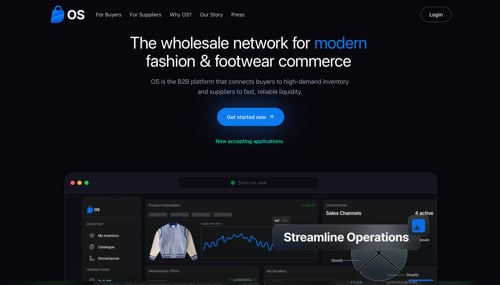
OS Group has launched a groundbreaking B2B e-commerce platform specifically designed for the secondary consumer markets in fashion and footwear. This proprietary marketplace aims to provide qualified retailers and business buyers with immediate wholesale access to high-demand sneakers and streetwear. By centralizing inventory from globally recognized brands such as Nike, Adidas, and ASICS, OS Group addresses a critical need for efficient sourcing in a rapidly evolving fashion industry. The platform’s immediate fulfillment capabilities are expected to significantly reduce lead times for retailers, enabling them to respond more agilely to consumer trends and demand fluctuations. This initiative comes at a time when the resale market for sneakers and streetwear is experiencing exponential growth, with some estimates projecting the global sneaker resale market to reach $30 billion by 2030, underscoring the strategic importance of platforms that can efficiently connect wholesale suppliers with retail buyers. The ease of access to authenticated, in-demand products is poised to democratize access to premium inventory for a wider range of businesses.

Redefining the Shopper Journey with Agentic Shoppable Media
Ampd is set to revolutionize the consumer’s path to purchase with its new agentic shoppable media. This innovative solution directly connects shoppers with their preferred retailers, ensuring they are fully logged in and ready to make a purchase. Brands can now manage their gross merchandise allocations across various retail partners, including giants like Amazon, Walmart, and Target, through a single, unified link. This approach maximizes the likelihood that consumers will complete their purchase within their chosen retail ecosystem, a crucial factor in today’s fragmented digital retail environment. The complexity of managing disparate retail integrations has long been a challenge for brands, often leading to diluted brand experiences and lost sales opportunities. Ampd’s agentic model simplifies this by creating a seamless, brand-controlled experience that guides consumers to their preferred purchasing point, thereby enhancing both brand loyalty and conversion rates. Industry analysts suggest that frictionless checkout experiences can boost conversion rates by as much as 20-30%, making this a significant advancement.
AI-Powered Automation and Experience Enhancement
Airship is expanding its AI Agent Fleet, introducing powerful new conversational interfaces designed to automate and accelerate campaign management, and to enhance cross-channel customer experiences. The Campaigns AI Agent will drive automation and speed in marketing efforts, while the Native Experience AI Agent will enable the creation of engaging app and web experiences from simple text descriptions or image uploads. The Journeys AI Agent is poised to streamline the creation and refinement of complex, multi-channel customer journeys. This move by Airship reflects a broader trend in the customer experience platform market, where AI is increasingly being leveraged to reduce the manual effort involved in campaign creation and personalization. The ability to generate dynamic content and personalized journeys based on AI analysis of customer behavior can lead to significant improvements in customer engagement and retention. For instance, research by McKinsey indicates that AI-driven personalization can boost revenue by 5-15% and marketing spend efficiency by 10-30%.
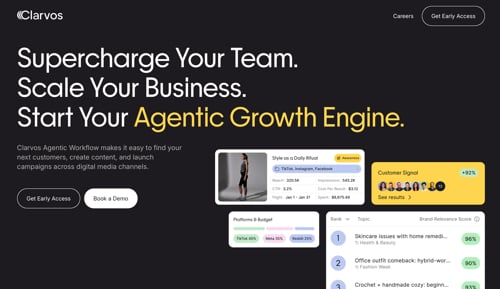
Clarvos is also empowering small and medium-sized businesses (SMBs) with its new agentic marketing workflow platform. This innovative solution assists SMBs in planning, creating, and executing marketing campaigns with unprecedented ease. By coordinating campaign strategy, creative generation, and activation across major platforms like Google, Meta, and TikTok, Clarvos utilizes AI to simulate customer responses, compare campaign options, and guide users through the setup process. This democratizes sophisticated marketing campaign management, traditionally a complex and resource-intensive undertaking. SMBs often lack the dedicated marketing teams and budgets of larger enterprises, making tools that offer intelligent automation and strategic guidance invaluable. Clarvos’s platform can help these businesses compete more effectively by optimizing their ad spend and reaching the right audiences with relevant messaging.
Optimizing Pricing and Global Operations
In a strategic move to enhance its market presence in Europe, Joybuy, the new retail destination from JD.com, has adopted Competera’s retail pricing platform. This collaboration aims to automate Joybuy’s European market operations by implementing a centralized system for real-time competitive analysis. Joybuy’s teams will now receive daily market insights to identify pricing discrepancies and adjust their strategies before peak shopping hours, a critical advantage in the competitive European e-commerce landscape. Effective dynamic pricing is crucial for online retailers, as research indicates that retailers using dynamic pricing strategies can see revenue increases of up to 10%. Competera’s solution provides the granular data and analytical capabilities necessary to achieve this, especially in a diverse and price-sensitive market like Europe.
DropsyneX is making significant strides in global e-commerce with the debut of its comprehensive, AI-powered system. This one-stop solution integrates live commerce, merchant services, and global logistics, featuring a worldwide warehouse network, intelligent inventory and warehouse management, and virtual livestream commerce. The company highlights its AI-powered livestream commerce tool as a key differentiator, capable of automating product promotion, boosting conversion rates, and reducing reliance on manual operational teams. The global e-commerce market is projected to reach $8.1 trillion by 2026, and platforms like DropsyneX are addressing the complex logistical and operational challenges inherent in cross-border trade, making it more accessible and efficient for businesses to reach international customers.
Leveraging AI for Predictive Insights and Enhanced Customer Support
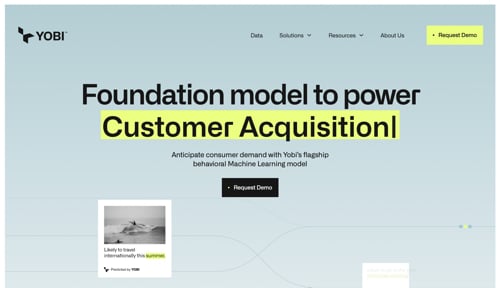
Yobi, a leader in behavioral AI, has partnered with Microsoft to unlock predictive consumer intelligence for enterprises. Built on the Microsoft Azure platform, Yobi’s ethically sourced, consented consumer database provides organizations with access to behavioral datasets for predictive AI models. These models leverage real-world data, including purchase history, store visits, and marketing conversions, to understand and forecast consumer intent. This capability allows businesses to personalize outcome modeling around key metrics that align with their strategic priorities, a crucial aspect of modern customer relationship management. The ability to predict consumer behavior with a high degree of accuracy can lead to more effective marketing campaigns, improved product development, and enhanced customer satisfaction. According to industry reports, companies that excel at personalization can see a 5-8% increase in their overall profit margin.
Zendrop has launched a groundbreaking Model Context Protocol (MCP) server, bridging the gap between AI assistants and live store data for dropshipping and e-commerce fulfillment. This innovation grants AI assistants like Claude, ChatGPT, OpenClaw, and Gemini access to a merchant’s store, with granular permissions controlling what the AI can read or write, from catalog browsing to order management. This integration is available to all Zendrop merchants and works with any MCP-compatible AI assistant. The implications for e-commerce operations are vast, potentially automating tasks that currently require significant human intervention, thereby improving efficiency and scalability. The integration of large language models into core business operations is a defining trend, and Zendrop’s MCP server is a significant step in making this a reality for e-commerce merchants.
Yuma AI has introduced "Ask Yuma," a conversational AI designed to streamline e-commerce customer support operations. This interface allows merchants to manage their support automation through natural language queries directly within the Yuma dashboard. Users can access and manage tickets, automations, knowledge bases, performance metrics, integrations, and brand voice by simply asking Yuma. This real-time interaction empowers customer experience teams to build, investigate, and optimize their automation workflows efficiently. As customer expectations for immediate and personalized support grow, AI-powered solutions like Ask Yuma are becoming essential for businesses looking to scale their customer service operations without compromising quality. Studies show that 80% of customers expect immediate responses from brands, a demand that AI can help meet.
Streamlining Multi-Channel Operations and Payments
Katana has launched a unified platform designed to serve as the "Modern Merchant Operating System" for brands selling across multiple channels. This platform now includes a native Amazon FBA integration, enabling seamless synchronization of FBA stock with Katana’s inventory management system. It also supports multi-marketplace integration and a robust product mapping system, alongside native connections to popular platforms like Shopify, WooCommerce, QuickBooks, and Xero. This comprehensive approach to inventory and channel management is critical for businesses operating in today’s omnichannel retail environment, where consistent inventory visibility and efficient order fulfillment across all touchpoints are paramount for customer satisfaction and operational efficiency. With the increasing complexity of multi-channel retail, businesses are seeking integrated solutions that can simplify operations and provide a holistic view of their business.
Visa has unveiled Intelligent Commerce Connect, a new initiative designed to facilitate business participation in AI-powered commerce. Through a single integration with the Visa Acceptance Platform, this service enables secure payment initiation, tokenization, spend controls, and authentication. It integrates Visa Intelligent Commerce APIs with other network APIs, allowing AI agents to process purchases using both Visa and non-Visa cards. This development is a significant step towards enabling agentic commerce, where AI systems can autonomously make purchases on behalf of businesses. The potential for efficiency gains and new business models is substantial, as AI agents can optimize purchasing decisions based on predefined parameters and real-time market data.
BlytzPay has introduced Blytz, an intelligent payments and collections platform encompassing BlytzPay, BlytzCollect, and BlytzCash. BlytzPay facilitates text-first, bankless payments, while BlytzCollect leverages AI-driven voice and text payment links to automate outreach and improve on-time payments. BlytzCash expands payment options by allowing customers to pay in cash at a network of retailers. This multi-faceted approach addresses key challenges in payment processing and collections, particularly for businesses seeking to reduce payment friction and improve cash flow. The ability to offer diverse payment methods and automate collection efforts can significantly impact a business’s financial health. For example, implementing AI in collections can reduce delinquency rates by up to 15%.

Selro, a multichannel e-commerce management platform, has launched an AI-powered product description generator. This feature integrates directly into the Selro platform, allowing users to create product titles, descriptions, and summaries using existing product data, images, or title snippets. The tool is designed to efficiently manage product listings across large catalogs and multiple sales channels. In the competitive e-commerce landscape, compelling product descriptions are crucial for attracting customers and driving sales. AI-generated descriptions can save businesses significant time and resources, while also ensuring consistency and quality across their product offerings. The market for AI-powered content generation tools is rapidly expanding, with businesses increasingly recognizing their value in optimizing online presence and marketing efforts.
These recent product and service releases underscore a pivotal moment in e-commerce, where artificial intelligence, advanced data analytics, and integrated platforms are converging to create more efficient, personalized, and profitable experiences for both merchants and consumers. The ongoing innovation in areas such as B2B commerce, agentic marketing, and payment solutions indicates a strong future trend towards automated, intelligent commerce operations.

