
India, now the world’s most populous nation, stands at a pivotal juncture in its digital evolution. With an online commerce penetration significantly lower than global leaders like China and the United States, the country is poised for a dramatic e-commerce expansion. This growth is fueled by a young demographic, with half the population under 25, and a staggering 840 million smartphone users. However, this impending boom presents a complex challenge for policymakers: how to foster digital transformation while safeguarding the millions of small, traditional "kirana" merchants who currently account for 75% of national consumer goods sales.
To navigate this delicate balance, the Indian government has implemented a two-pronged strategy. Firstly, the wildly popular United Payments Interface (UPI), a government-backed peer-to-peer digital payment infrastructure, has revolutionized financial transactions across the nation. Complementing this, the Open Network for Digital Commerce (ONDC) initiative, launched in 2021, aims to provide these kirana merchants with a pathway to establish an online presence, thereby democratizing digital commerce.
The Genesis of ONDC: A Response to Market Dynamics
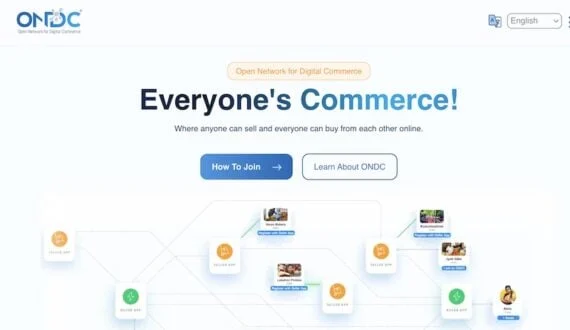
The ONDC initiative emerged as a strategic response to the dominance of large, closed e-commerce marketplaces. Unlike platforms such as Amazon India and Flipkart, which operate as walled gardens, ONDC functions as an open-source framework. It connects a diverse ecosystem of applications, payment providers, and logistics companies through standardized protocols and open rules. This decentralized approach is designed to prevent merchants from being locked into any single marketplace, offering them greater autonomy and control over their online operations.
The ONDC network facilitates transactions by enabling buyer applications to discover and connect with seller applications. Merchants register their products and manage their inventory through dedicated seller applications. Conversely, consumers use buyer applications to browse, search, and make purchases. This architecture ensures that a shopper using one buyer app can seamlessly purchase goods from a seller listed on a different seller app, fostering a truly interconnected digital marketplace.
The genesis of ONDC can be traced back to the government’s broader vision of "Digital India," a flagship program launched in 2015 to transform the nation into a digitally empowered society and knowledge economy. As e-commerce began to gain traction, concerns grew about the potential for market monopolization and the marginalization of small businesses. ONDC was conceived as a mechanism to create a level playing field, ensuring that the benefits of digital commerce are accessible to all, from the smallest kirana store to global brands.
ONDC’s Architecture and Key Players
At its core, ONDC is a decentralized network that operates on principles of interoperability and open standards. This means that different applications and services can communicate and exchange data seamlessly, fostering a more dynamic and competitive digital commerce landscape. The network is comprised of several key components:
- Seller Applications: These platforms enable merchants to list their products, manage inventory, process orders, and handle fulfillment. Prominent seller applications within the ONDC ecosystem include Mystore, CostBo, and GoFrugal, which cater to a wide range of business needs.
- Buyer Applications: These are the consumer-facing interfaces where shoppers can discover products, compare prices, and complete purchases. Popular buyer applications include Paytm, Bajaj Finserve, and Magicpin, offering a familiar and convenient shopping experience.
- Logistics Providers: A crucial element of any e-commerce operation, ONDC integrates with various logistics partners to ensure efficient delivery of goods across the country.
- Payment Gateways: Secure and reliable payment processing is facilitated through integrated payment gateways, ensuring smooth financial transactions for both buyers and sellers.
The fee structure on ONDC is a significant differentiator. Selling fees typically range from 3% to 10%, a substantial reduction compared to the 18% to 40% commissions charged by many traditional marketplaces. This cost-effectiveness is a major draw for small businesses, allowing them to retain a larger portion of their revenue. Furthermore, ONDC’s transparent algorithm and non-discriminatory sorting mechanisms ensure that sellers are not disadvantaged by opaque platform policies, and portable ratings allow businesses to build a consistent reputation across different buyer apps.
Expanding Reach: From Kiranas to Global Brands
While ONDC was initially conceived with the primary objective of empowering kirana merchants, its scope has expanded to include a diverse range of participants. Local brands are increasingly leveraging ONDC as an additional distribution channel, complementing their existing sales strategies rather than replacing them entirely. This allows them to reach a wider audience without the constraints of a single marketplace.
Significantly, foreign companies that adhere to India’s regulatory framework can also access the ONDC seller app ecosystem. This presents an attractive opportunity for international brands seeking to enter the burgeoning Indian market. Global giants such as Red Bull, Unilever, Nestle, PepsiCo, Procter & Gamble, L’Oréal, and Johnson & Johnson are already participating in the ONDC network. Many of these brands, particularly those already active in India’s quick commerce sector through platforms like Blinkit, Swiggy Instamart, and Zepto, can access ONDC at minimal additional cost, leveraging their existing product portfolios and supply chains.
The categories of goods and services available on ONDC are also expanding rapidly. The network currently spans retailers, restaurants, hotels, and logistics service providers. Sectors like grocery, food delivery, and home and kitchen items are experiencing faster growth due to their higher order frequency. While fashion, pharmaceuticals, and hospitality are also present, their scaling may be influenced by different market dynamics and consumer purchasing patterns.
The Regulatory Landscape and Foreign Seller Considerations
For foreign brands considering entering the Indian e-commerce market, understanding the regulatory landscape is paramount. As previously detailed, the available selling options include traditional marketplaces, engaging with distributors, establishing direct-to-consumer (D2C) websites, and cross-border e-commerce. ONDC offers a novel avenue that integrates aspects of these models, particularly by enabling D2C-like presence through seller apps while facilitating broader market access.
The Indian government’s approach to foreign investment in e-commerce has historically been cautious, aiming to protect domestic businesses and consumers. The implementation of Foreign Direct Investment (FDI) policies has dictated the operational models allowed for foreign players, often restricting them from directly selling to consumers on inventory-based models. ONDC, by providing an open network where various entities can participate, offers a potentially more inclusive framework for foreign sellers, provided they align with India’s regulatory requirements.
Implications and Future Outlook
The ONDC initiative represents a significant policy intervention with far-reaching implications for India’s digital economy.
For Small Merchants: ONDC offers a lifeline, providing them with the tools and infrastructure to compete in the digital age. By lowering the barrier to entry for online sales and reducing transaction costs, it empowers kirana stores and independent retailers to expand their customer base beyond their immediate geographical vicinity. This democratization of e-commerce can lead to increased revenue, greater business sustainability, and improved livelihoods for millions.
For Consumers: The proliferation of choice and increased competition fostered by ONDC can translate into better prices, a wider selection of products, and improved service quality. The ability to access goods from a diverse range of sellers through familiar buyer apps enhances the overall online shopping experience.
For the E-commerce Ecosystem: ONDC has the potential to disrupt the existing marketplace model, fostering a more open and competitive environment. The emphasis on interoperability and open standards encourages innovation and the development of new e-commerce solutions. It also promotes a more balanced distribution of economic power within the digital space, preventing the concentration of market dominance in the hands of a few large players.
For Foreign Brands: ONDC presents a structured and compliant pathway for foreign companies to tap into India’s vast consumer market. By integrating with the ONDC ecosystem, brands can gain access to a broad customer base without necessarily establishing a full-fledged local subsidiary or navigating the complexities of traditional marketplace agreements. This can significantly reduce the cost and time to market.
The success of ONDC, while promising, is still in its developmental stages. Its widespread adoption and impact will depend on continued government support, the active participation of businesses across the value chain, and ongoing technological advancements. The journey from traditional commerce to a fully digital and inclusive economy is complex, but initiatives like ONDC signal India’s commitment to harnessing the power of digital transformation for the benefit of all its citizens and businesses. As the nation continues its ascent as a global economic powerhouse, the role of such innovative platforms in shaping its future digital landscape will be keenly observed. The current trajectory suggests a future where digital commerce in India is not just about large platforms, but about an interconnected network empowering a multitude of sellers and reaching a vast, diverse consumer base.

