

Google has officially launched its new "Generative AI" section within Search Console, making it widely available to website owners. This significant update, detailed on the Google Search Central blog, introduces a dedicated reporting area to track a website’s visibility within Google’s burgeoning generative AI features, including AI Overviews and AI Mode, as well as AI-powered enhancements in Google Discover. The rollout signifies Google’s continued integration of artificial intelligence into its core search products and provides webmasters with a new, albeit nascent, tool to understand their content’s performance in this rapidly evolving environment.
The new section, accessible via Performance > Search Results > Generative AI, is designed to offer insights into how often a page’s content appears within these AI-driven search experiences. This development comes at a critical juncture for SEO professionals and content creators, who are grappling with the implications of AI-generated search results on organic traffic and user engagement. While the precise impact on website traffic remains a subject of ongoing analysis, the availability of this reporting tool is a clear indication of Google’s commitment to transparency regarding the performance of content within its AI features.
Understanding "Impressions" in the Generative AI Context
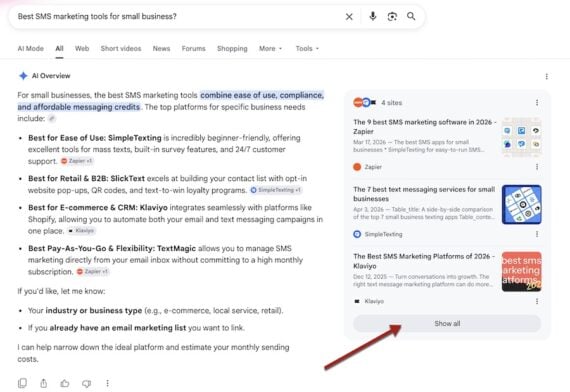
A key metric presented in the Generative AI section is "impressions." However, the definition of an impression within this new context has generated some discussion. According to Google’s John Mueller, an impression is recorded "when a URL appears anywhere in an AI answer." Crucially, this definition implies that an impression does not necessarily equate to a human user viewing the content. This distinction is particularly relevant for AI Overviews, which often require users to interact with the search results page – for instance, by clicking "Show more" or "Show all" buttons – to reveal all cited sources.

The implication is that a URL can be counted as an impression even if the user does not actively click through to view it or expand the full AI-generated answer. For example, in an AI Overview, a URL listed as a citation might be present in the initial display, but it will only become fully visible after a user clicks "Show more" to expand the complete AI-generated response. Similarly, the "Show all" button, when clicked, reveals a more comprehensive list of cited sources, each of which would then register as an impression. This broad definition means that raw impression numbers might not directly correlate with actual user engagement or clicks.
The nuances extend to other AI features. In the case of "People also ask" boxes, which often present AI-generated summaries, an impression for a cited URL is understood to be recorded only after a user clicks on a question to reveal the answer. This suggests a tiered approach to impression tracking, where certain user interactions are prerequisites for registering an impression. Furthermore, if a user asks a follow-up question within AI Mode, the cited URLs from the subsequent AI response are also likely to be counted as impressions, even if they were part of a previous AI-generated answer. This broad interpretation of "impression" underscores the need for careful analysis of the data provided in the Generative AI report.
Timeline and Rollout of Generative AI Reporting
The introduction of the Generative AI section in Search Console follows a period of extensive testing and development by Google. While the exact date of the initial internal testing is not publicly disclosed, the formal announcement and widespread availability signal a mature phase of integration for AI-generated content within Google Search. The Search Console team has been progressively rolling out new features and refining existing ones to accommodate the evolving search landscape, with AI being a central theme.
The blog post from Google Search Central, dated June 2026, confirms the widespread availability of this feature, indicating that webmasters globally can now access and utilize this new reporting tool. This timing aligns with Google’s broader strategy to integrate AI capabilities across its product suite, aiming to provide users with more direct and synthesized answers to their queries. The availability of this section allows website owners to begin gathering data on their presence within these new search formats, providing a crucial baseline for understanding future performance trends.

The development of AI Overviews and AI Mode has been a gradual process, with early iterations appearing in specific search queries and evolving over time. The Search Console reporting tool is a direct response to the industry’s need for visibility into the performance of content within these AI-powered experiences. Previously, website owners had to rely on indirect indicators or anecdotal evidence to gauge their content’s impact within AI-generated results.
Supporting Data and Analysis of Implications
The Generative AI report, in its current iteration, primarily offers impression data. It lacks granular filters to differentiate between impressions generated by AI Overviews, AI Mode, or Discover’s AI features. This absence of segmentation means that interpreting the data requires a holistic view, acknowledging that the total impression count is an aggregation of various AI-driven placements.
For website owners, the primary implication is the need to adapt their SEO strategies to optimize for visibility within these AI features. This might involve focusing on producing high-quality, authoritative, and well-structured content that is easily digestible by AI models. Understanding which of your pages are appearing in AI Overviews can provide valuable insights into the types of queries your content is best suited to answer in an AI-generated format.
The lack of click-through data in this initial report is a significant limitation for direct performance analysis. While impressions indicate presence, they do not measure user engagement or traffic generation. This means that a high number of impressions does not automatically translate to increased website visits. SEO professionals will need to correlate the impression data from the Generative AI section with their overall traffic analytics in tools like Google Analytics to understand the true impact on their website’s performance.
An analysis of the implications suggests that content that provides clear, concise, and comprehensive answers to user queries is likely to perform better within AI Overviews. Furthermore, content that is well-cited and authoritative may be favored by Google’s AI models. The ability to export data to an Excel spreadsheet offers a rudimentary way to analyze trends over time, enabling a comparative study of impression performance across different pages and query types.
The new report also allows for filtering by date, query, and country, providing some level of segmentation. However, the absence of filters for specific AI features (e.g., AI Overviews vs. AI Mode) remains a notable gap. Website owners can, however, leverage the "query" filter to understand what search terms are driving impressions within the AI context. This information can be invaluable for content strategy refinement, allowing creators to focus on topics that are being surfaced by Google’s generative AI.
Blocking AI Content: A New Control for Webmasters
Concurrent with the launch of the Generative AI performance reporting, Google has introduced a new feature in Search Console that allows website owners to block their content from appearing in AI answers. This control, located under Settings > AI controls > Search generative AI, defaults to allowing content to be used. A separate toggle enables users to opt out of having their content featured in AI-generated responses.
While this feature provides webmasters with a degree of control, the article notes that there is currently "no reason for ecommerce businesses to do that." This perspective suggests that for most businesses, the potential benefits of appearing in AI-generated search results – such as increased brand visibility and potential traffic, even if indirectly measured by impressions – outweigh the perceived risks. Blocking content might inadvertently limit a website’s reach and visibility within the evolving search ecosystem. The decision to block content should be carefully considered, taking into account the potential loss of exposure in AI-driven search experiences.

Future Outlook and Industry Reactions
The introduction of the Generative AI section in Search Console marks a significant step in Google’s ongoing integration of artificial intelligence into its search products. While the current reporting capabilities are basic, they provide a foundational understanding of content performance in this new paradigm. Industry experts anticipate that Google will continue to refine these tools, potentially adding more granular data and sophisticated filtering options in the future.
The SEO community is actively analyzing the implications of generative AI on search engine optimization. Some view these AI features as a potential threat to organic traffic, as users may find satisfactory answers directly within the search results, reducing the need to click through to websites. Others see it as an opportunity to adapt and optimize for a new type of search interaction, focusing on providing high-quality, authoritative content that AI models can leverage.
The broader impact of AI in search is still unfolding. As Google continues to develop and deploy its generative AI capabilities, website owners and marketers will need to remain agile and adapt their strategies accordingly. The Search Console’s Generative AI report, despite its current limitations, serves as an essential tool for navigating this transformative period, offering the first glimpse into how content is performing in the age of AI-powered search. The ongoing evolution of these tools and features will undoubtedly shape the future of online visibility and content strategy.

