
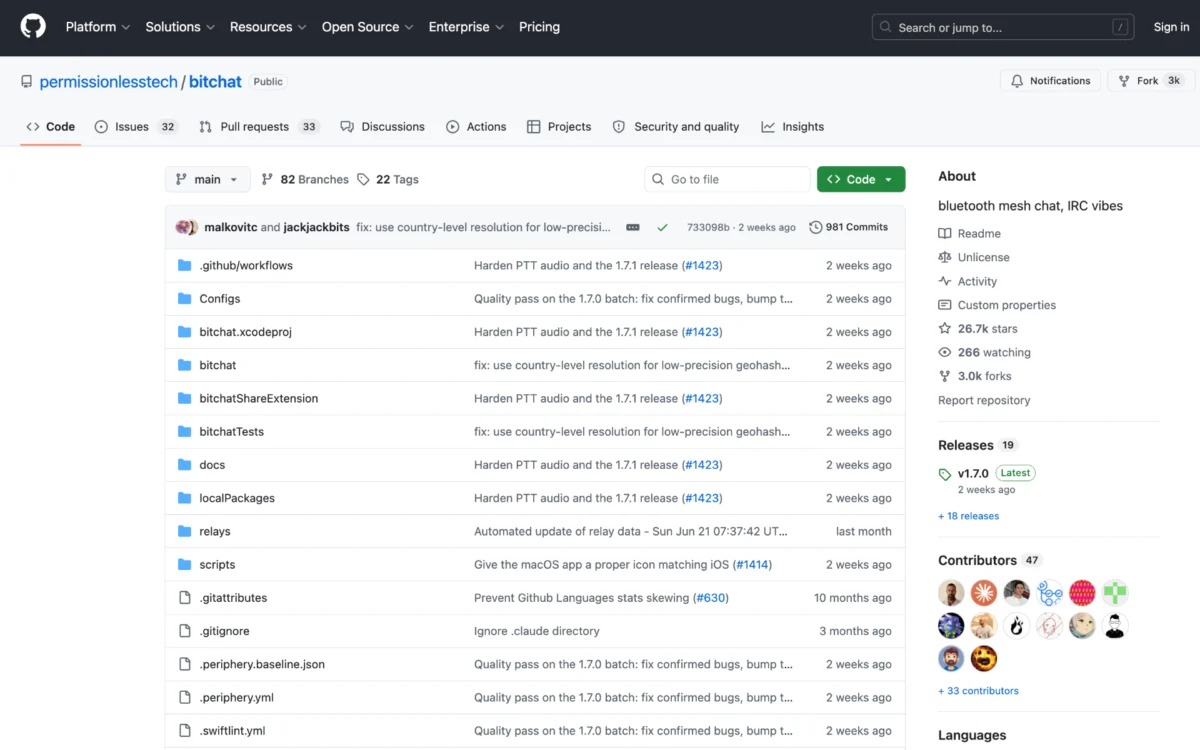
An unprecedented move by the Indian government to compel GitHub to remove repositories associated with Jack Dorsey’s offline Bluetooth-powered messaging application, Bitchat, has sent ripples through the global tech and digital rights communities. The directive, revealed by Dorsey himself on X (formerly Twitter) on Friday, July 26, 2026, cites concerns over the app’s decentralized and anonymous architecture, arguing its potential to facilitate unlawful activities and circumvent lawful interception, particularly during internet shutdowns. This incident marks a significant escalation in India’s efforts to control digital communications, setting a potentially worrying precedent for open-source software development worldwide.
The controversy erupted when Jack Dorsey, co-founder of Twitter and a prominent advocate for decentralized technologies, posted what he identified as a notice from India’s Ministry of Home Affairs. Dated July 23, 2026, the notice reportedly demanded GitHub restrict access to three Bitchat repositories within a mere three-hour window. The core of the government’s argument rests on Bitchat’s inherent design: its ability to enable communication "even during network restrictions" and "internet shutdowns." This functionality, the notice claims, allows users to "circumvent lawful restrictions" and hinders "lawful interception, attribution, and traceability" – critical capabilities for law enforcement in the digital age. This order, seemingly issued by the Indian Cybercrime Coordination Centre (I4C), operating under the Home Ministry, does not target specific illicit content but rather the fundamental operational mechanism of the software itself.
The Context: India’s "Cockroach Movement" and Escalating Internet Restrictions
This governmental action unfolds against a backdrop of heightened political tension and widespread student-led protests across India. For weeks, New Delhi has been the epicenter of the "Cockroach Movement," a significant youth uprising ignited by allegations of widespread examination paper leaks. Thousands of young people have taken to the streets, demanding accountability and the resignation of Indian Education Minister Dharmendra Pradhan. The movement, characterized by its grassroots organization and determination, has faced severe governmental pushback, including the imposition of strict restrictions on marches toward the parliament and, crucially, repeated internet service suspensions.
India has a well-documented history of employing internet shutdowns as a tool to manage public unrest and maintain law and order. According to reports from organizations like Access Now and the Internet Shutdowns Tracker, India consistently leads the world in the number of internet shutdowns annually, often citing national security or public safety. These shutdowns, which can range from localized mobile data suspensions to complete communication blackouts, severely impact daily life, economic activity, and the ability of citizens to communicate, organize, and access information. In the context of the "Cockroach Movement," authorities have specifically asked telecom companies to disable mobile data services around protest sites, further intensifying the communication challenge for demonstrators.
It was precisely in this environment of digital isolation that offline messaging applications like Bitchat and Briar gained immense traction. Local media outlets reported extensively on how protesters, facing communication blackouts, turned to these peer-to-peer apps to coordinate their activities and share information. These applications, leveraging Bluetooth or Wi-Fi Direct, allow users to create local mesh networks, enabling communication without relying on traditional internet infrastructure or central servers. This capability, designed for resilience in low-connectivity environments, inadvertently placed Bitchat in the crosshairs of Indian authorities seeking to quell the protests.
Bitchat’s Explosive Growth in India

The impact of the internet shutdowns and the subsequent adoption by protesters is clearly reflected in Bitchat’s recent usage statistics. Market intelligence provider Sensor Tower shared compelling data with TechCrunch, illustrating a dramatic surge in the app’s popularity in India. Between July 17 and July 23, 2026, India accounted for an astonishing 85% of Bitchat’s global downloads, a stark contrast to the mere 1% recorded during the preceding 30 days. This period directly coincided with the intensification of the "Cockroach Movement" and associated internet restrictions.
In just five days, Bitchat was downloaded more than 91,000 times in India. The most significant jump occurred on July 19, 2026, when downloads surged thirty-two-fold compared to the previous day. Furthermore, the app’s daily active users (DAU) in India peaked at over 330,000 on Thursday, July 25, 2026, marking the highest recorded level for the application in the country. This data unequivocally demonstrates the critical role Bitchat began to play for Indian citizens navigating a restricted digital landscape, and highlights the government’s motivation for targeting the platform.
A Novel Approach to Digital Censorship: Targeting Open-Source Code
Legal experts and digital rights advocates have highlighted that the Indian government’s directive concerning Bitchat represents a significant departure from its established methods of content removal. Historically, the government has primarily relied on Section 69A of the Information Technology Act, 2000, and the associated 2009 Blocking Rules, to demand the nationwide removal of specific online content deemed unlawful. These provisions typically target posts, messages, or websites containing material like hate speech, incitement to violence, or content that threatens national security.
However, Mishi Choudhary, founder of SFLC.in, a prominent Indian digital rights legal advocacy group, told TechCrunch that the Bitchat notice takes a "new approach." She observed that while the document resembled the format of recent government takedown notices, the legal provisions it cites do not clearly grant authorities the power to demand the removal of an entire software project based on its operational design, rather than specific instances of illegal content facilitated by it. The notice, as Dorsey shared, does not identify particular unlawful posts or messages within Bitchat, but instead focuses on the app’s underlying architecture – its anonymity, decentralization, and ability to function during internet shutdowns – as the basis for its removal request. This signifies a shift from targeting "what is said" to "how it can be said," raising profound questions about freedom of expression and technological design.
Digital Rights Advocates Raise Alarms
The Internet Freedom Foundation (IFF), a New Delhi-based digital rights advocacy group, swiftly questioned the efficacy and legality of the apparent takedown request. In a statement on X, the IFF underscored a crucial technical reality: "The order also fails on its own terms as deleting a repository does not delete the application from any phone that carries it, and the mesh keeps functioning without servers. What the takedown actually prevents is scrutiny of the underlying code." This highlights the inherent resilience of decentralized applications and the potential futility of such a blocking order, while simultaneously pointing to a more insidious outcome: hindering transparency and the ability of developers and users to examine the software’s security and functionality.
Raman Chima, global program director at the Association for Progressive Communications, a global digital rights network, echoed these concerns. He emphasized to TechCrunch that the notice goes beyond merely targeting the messaging service. "They’re [the Indian government] not just targeting the designated service provider, but they’re trying to say that open source development of this type of product… should not occur," Chima stated. This perspective underscores the broader implications for the open-source community, where sharing and collaborative development of code are foundational principles. Targeting open-source repositories could be perceived as an attack on the very methodology of transparent software development.

Namrata Maheshwari, senior policy counsel at digital rights group Access Now, further articulated the human rights dimension of the issue. She told TechCrunch that blocking an offline messaging platform during internet restrictions risks transforming shutdowns into a "communication blackout," a severe infringement on fundamental rights. Maheshwari stressed that in any democracy, protesters retain the right to communicate privately and coordinate peacefully. The ability to use resilient communication tools becomes even more critical when traditional channels are deliberately suppressed by the state.
GitHub’s Stance and the Global Implications for Open Source
As of Friday, July 26, 2026, Bitchat’s primary GitHub repositories remained accessible from India. GitHub, a subsidiary of Microsoft and the world’s largest platform for software development, did not immediately confirm whether it had received the specific directive from the Indian government. However, the company pointed to its public repository of government takedown requests, which, at the time, did not contain any recent entries related to Bitchat. This suggests that either GitHub had not yet acted on the request, or the request had not yet been formally processed and published according to their transparency protocols.
GitHub’s stated policy on government takedown requests is designed to promote transparency and due process. Rose Coogan, the company’s principal online safety counsel, reiterated this in a statement: "When we receive a complete government takedown request, we notify the affected account owners and give them an opportunity to appeal. We share every government takedown request we take action on publicly." This policy aims to balance compliance with legal demands with the rights of developers and users, and to ensure public scrutiny of government censorship efforts.
The Indian Home Ministry did not respond to requests for comment regarding the Bitchat directive, leaving many questions unanswered about the specific legal basis and the government’s long-term strategy. The incident, nevertheless, has ignited a global discussion about the future of open-source software, digital sovereignty, and the expanding reach of state control over online and offline communications.
The implications of such a move are far-reaching. If governments can successfully demand the removal of open-source code based on its potential for misuse rather than actual unlawful content, it could create a chilling effect on developers working on privacy-enhancing technologies, encryption tools, and resilient communication platforms. It challenges the very ethos of open source, which thrives on the free exchange and collaborative improvement of code. Furthermore, it places technology companies like GitHub in an increasingly difficult position, caught between complying with national laws and upholding principles of digital freedom and transparency.
The Bitchat controversy serves as a stark reminder of the ongoing global struggle between state control and individual digital rights. As technology continues to evolve, offering new avenues for communication and organization, governments worldwide are grappling with how to regulate these tools, often prioritizing national security and public order over privacy and freedom of expression. The outcome of this particular challenge in India, and GitHub’s ultimate response, will undoubtedly set an important precedent for the future of open-source software and digital rights in the interconnected world.

