
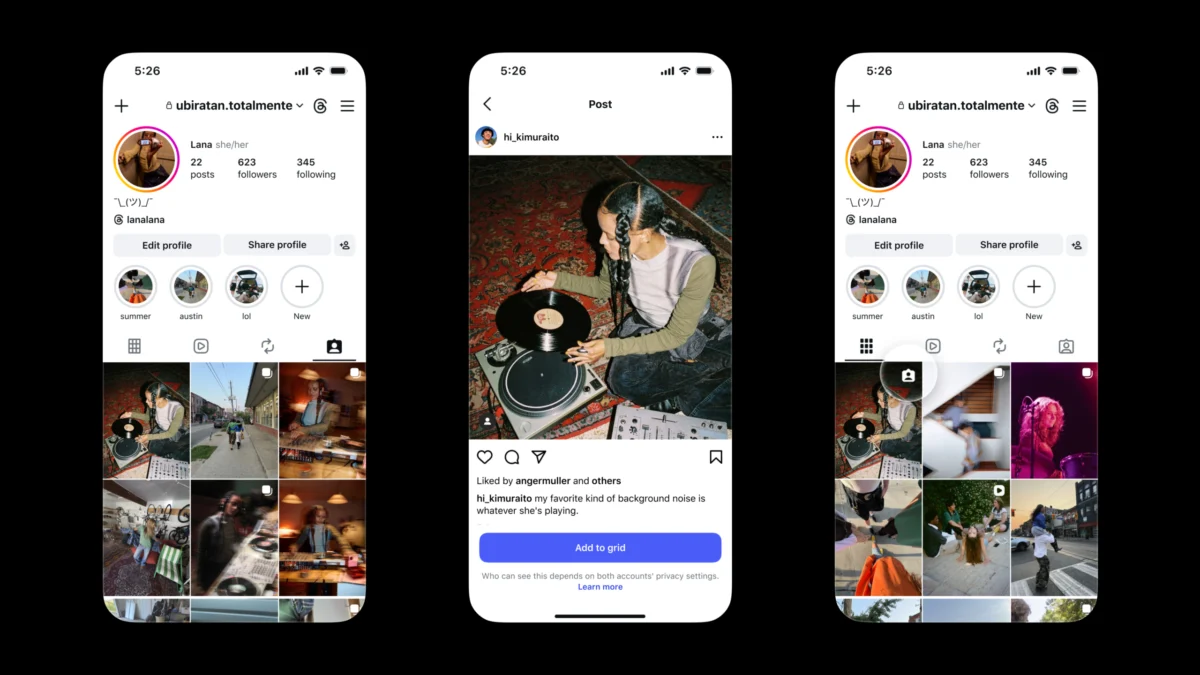
Instagram, a dominant force in the visual social media landscape, has commenced the rollout of a significant, albeit subtle, update designed to grant users greater autonomy over the content displayed on their personal profiles. Effective immediately, users now possess the capability to incorporate posts in which they have been tagged directly onto their primary profile grid, moving beyond the confines of the dedicated "Tagged" tab. This enhancement represents a strategic move by the platform to empower its vast global user base with more granular control over their digital identity and content presentation.
A Solution to a Common Social Dilemma
The introduction of this feature addresses a frequently encountered social media predicament. In an era where shared experiences – from vibrant concerts and memorable vacations to casual nights out with friends – are almost immediately immortalized online, users often find themselves in a race to post the "best" group photo. It is not uncommon for one friend to preemptively share an exceptional image, tagging all participants, thereby presenting a dilemma for others who might wish to feature the same cherished memory prominently on their own profiles. Historically, the options were limited: either repost the identical photo, which could feel redundant or even awkward, or relegate it to the less-visible "Tagged" section. Instagram’s new functionality provides an elegant solution, eliminating the need for duplication while allowing users to elevate relevant tagged content to their curated main feed.
This seemingly minor adjustment carries considerable weight in the context of user experience. According to recent industry reports, user engagement with visually appealing and personally relevant content remains paramount across social platforms. A well-curated profile is often seen as a digital resume or a personal brand statement, and the ability to seamlessly integrate high-quality, authentic content from others, without the friction of reposting, streamlines this crucial aspect of online self-presentation. The feature is accessible through multiple intuitive pathways: users will receive a direct message (DM) notification when tagged, from which they can opt to add the post; alternatively, the option is available directly on the post itself or within the existing "Tagged" tab. Flexibility is key, as users can easily remove the post from their grid at any point, without affecting the original post or its presence in their "Tagged" section. This non-destructive integration ensures that the original creator’s content remains intact, while individual users gain unprecedented control over their personal display.
Expanding Horizons for Creators and Brands
Beyond individual users, this update holds substantial implications for the burgeoning creator economy and brand collaborations. Instagram has explicitly highlighted the utility of this feature for content creators. In a landscape increasingly defined by collaborative projects, creators frequently find themselves tagged in joint campaigns or shared content. Previously, showcasing such collaborations prominently on their profiles often necessitated either republishing the content – an often inefficient and sometimes contractually complex process – or relying solely on the "Invite Collaborators" option, which, while useful, serves a slightly different function by co-authoring a post from its inception.
This new capability offers an alternative, more streamlined avenue. A creator can now effortlessly feature a brand campaign post, a joint project with another influencer, or a highlight reel from an event where they were tagged, directly on their main feed. This not only amplifies their visibility for that specific content but also reinforces their professional image and involvement in diverse projects. For brands, this translates into greater organic reach and more authentic endorsement. Imagine a multi-creator campaign where several influencers are tagged in a central piece of content. Each creator can now easily display this content on their individual grids, significantly broadening the campaign’s exposure and strengthening its impact without requiring each participant to create a separate post. This fosters a more interconnected and efficient ecosystem for digital marketing and content dissemination, potentially leading to higher engagement rates and more impactful collaborations.
A Broader Strategic Push Towards User Control
This latest feature is not an isolated incident but rather a continuation of Instagram’s strategic initiative to empower users with enhanced control over their profile aesthetics and content management. The platform has been steadily rolling out updates aimed at improving the user experience and catering to the evolving demands of its community.
A notable precursor to this update was the "Reorder Your Grid" feature, introduced in June [202X, inferring from the original text’s date context]. This groundbreaking tool allowed users, for the first time, to manually rearrange the order of posts on their main profile grid. Prior to this, posts were strictly displayed in chronological order. The ability to reorder posts transformed profiles from mere chronological archives into dynamic, curated portfolios, allowing users to highlight specific content, tell a visual story, or simply present their favorite posts more prominently. This move underscored Instagram’s recognition of the psychological importance of profile curation – how users meticulously craft their online presence to reflect their identity, interests, and aspirations. The new tagged-post integration further solidifies this philosophy, offering another layer of control over the visual narrative of one’s profile.

Beyond profile aesthetics, Instagram has also been innovating in content creation and editing tools to simplify the creative workflow. In August [202X], the platform unveiled "First Draft," a sophisticated editing feature designed to streamline the video creation process, particularly for Reels. First Draft automatically analyzes selected video clips, identifies key moments, trims extraneous footage, and removes awkward pauses, compiling an initial cut that significantly reduces the time and effort required for editing. This empowers creators of all skill levels to produce polished, engaging video content more efficiently.
Another recent addition, launched in July [202X], is the "Replace Audio" tool. This feature allows users to update the background music on existing posts, offering a crucial element of flexibility. Music often plays a vital role in setting the mood and context of a video, and the ability to swap out audio tracks post-publication means users can refresh older content, adapt to changing music trends, or correct previous choices without having to delete and re-upload entire posts. These tools collectively demonstrate Instagram’s commitment to providing a comprehensive suite of features that support both content consumption and creation, recognizing that a vibrant platform thrives on both.
The Evolution of Tagging and Content Ownership
The concept of tagging on social media platforms has undergone significant evolution since its inception. Initially, tagging served primarily as a way to identify individuals in photos, linking them to their respective profiles. However, its utility has expanded dramatically. Tags now function as powerful mechanisms for content discoverability, community building, and cross-promotion. The "Tagged" tab itself was an early iteration of giving users a dedicated space for content they were part of but didn’t necessarily create. While useful, it often felt like a secondary archive rather than an integral part of one’s main digital storefront.
The new feature blurs the lines between user-generated content and content featuring the user, acknowledging that in a highly interconnected digital world, personal identity is often co-constructed through shared experiences. This move also subtly addresses the complexities of digital ownership and consent. By giving users the power to choose whether a tagged post appears on their main grid, Instagram empowers individuals to curate their public image more actively, moving away from a passive acceptance of all tagged content. This is particularly relevant in an age where digital footprints have tangible real-world consequences, from professional networking to personal branding.
Implications for Engagement and Platform Health
From a broader platform perspective, this update is likely to have several positive implications. By reducing friction in sharing and curating high-quality content, Instagram can expect an increase in overall content visibility and engagement. Users are more likely to interact with and share content that they feel truly represents them, and by making it easier to integrate such content into their primary feed, Instagram encourages deeper participation.
Furthermore, in a competitive social media landscape dominated by visual content, retaining and attracting creators is paramount. Features that simplify collaboration, enhance content presentation, and offer more control are crucial for keeping creators invested in the platform. With the rise of TikTok and other short-form video platforms, Instagram has been aggressively rolling out new functionalities, particularly around Reels, to maintain its competitive edge. This new tagging feature, while not directly related to video creation, contributes to a holistic ecosystem that supports diverse content types and user behaviors.
The focus on user control also resonates with growing privacy concerns and the demand for more transparent and customizable online experiences. By granting users explicit control over what appears on their main grid, Instagram is subtly reinforcing its commitment to user agency, which can contribute to greater trust and loyalty among its user base.
Conclusion: A Step Towards a More Personalized and Empowered Instagram
In summation, Instagram’s latest update, allowing users to add tagged posts directly to their main profile grid, represents more than just a minor technical tweak. It is a thoughtfully implemented enhancement that addresses genuine user pain points, streamlines content curation, and significantly empowers both individual users and the creator community. By building upon its recent efforts to provide greater control over profile aesthetics and content management tools, Instagram is reinforcing its position as a platform that understands the evolving needs of its diverse user base. This move is a clear indication of Instagram’s ongoing commitment to fostering a more personalized, intuitive, and ultimately, more engaging social media experience, where users are not just passive recipients of content but active architects of their digital identities. As the platform continues to evolve, such nuanced yet impactful features will be crucial in shaping its future trajectory and maintaining its relevance in an ever-changing digital world.

