
For years, search engine optimization (SEO) professionals meticulously crafted meta descriptions, viewing them as a cornerstone of organic search performance. These concise summaries, appearing under a page’s title in search engine results pages (SERPs), were designed with a singular, potent purpose: to entice users to click. The prevailing wisdom dictated that a well-optimized meta description, peppered with relevant keywords and compelling copy, could significantly influence a user’s decision to visit a website. However, the digital landscape is in constant flux, and Google’s algorithms, the engines that power our online searches, have evolved. In recent times, search engine behavior has shifted, with Google increasingly opting to generate snippets directly from a page’s content, often bypassing the meta description entirely, especially when that content is deemed more relevant to a specific user query. This evolution raises a crucial question for website owners and marketers: are meta descriptions still necessary in the modern SEO era?
Google’s Stance: A Nuanced Approach to Snippets
Despite the observable trend of Google dynamically generating snippets, the search giant itself maintains that meta descriptions retain a role. According to Google’s official Search Central blog, the company explicitly states that it "primarily uses the content on the page to automatically determine the appropriate snippet." However, the blog post also clarifies, "We may also use descriptive information in the meta description element when it describes the page better than other parts of the content." This nuanced statement suggests that while dynamic content extraction is the default, a well-written meta description can still serve its intended purpose by providing a more accurate or compelling summary than what the algorithm might otherwise assemble.
Further underscoring the continued relevance, albeit with caveats, is a recent recommendation from Google’s John Mueller, a prominent figure in Google’s Search Relations team. In a discussion on Reddit last month, Mueller addressed the utility of meta descriptions. He acknowledged that while "sometimes it [a meta description] helps you to figure out a clear focus for a page," he also stated, "Overall, I think it’s still worthwhile to do so for individual pages that you care about, but it’s definitely not a requirement." This sentiment echoes Google’s official blog post, emphasizing that meta descriptions are not mandatory but can be beneficial for pages of particular importance. The implication is that for high-value pages, investing time in a meta description can offer a strategic advantage.
The rationale behind this continued, albeit conditional, use of meta descriptions can be understood by considering the primary objective of search engines: to provide users with the most relevant and helpful results. In instances where a page’s content is highly technical, dense, or exceptionally well-summarized within its meta description, Google’s algorithm might find that pre-written description to be the most efficient and effective way to communicate the page’s essence to a potential visitor. This is particularly true for pages that contain extensive product details, complex service offerings, or intricate specifications, where extracting a concise and accurate summary from the body content can be challenging for automated systems.
The Strategic Value of Meta Descriptions in a Dynamic Search Landscape
The shift in Google’s snippet generation strategy does not render meta descriptions obsolete. Instead, it reframes their purpose and highlights their strategic importance for specific types of web pages. For critical URLs, such as homepages, prominent landing pages, and product or category pages, the inclusion of a meta description remains a sound practice. These pages often house crucial information that is not easily condensed by algorithms. Think of detailed product specifications, comprehensive service descriptions, customer testimonials, or pricing tables. In such cases, a well-crafted meta description acts as a vital bridge, ensuring that users and even generative AI crawlers can quickly grasp the essence of the page.
The benefits extend beyond organic search. Generative AI platforms, such as ChatGPT and Claude, are increasingly being trained on vast datasets of web content, and they too often leverage meta descriptions to formulate their answers and summaries. A clear, concise, and keyword-rich meta description can provide these AI models with a direct and reliable source of information, leading to more accurate and relevant AI-generated snippets. This is particularly relevant as AI continues to integrate into search experiences, offering users direct answers and synthesized information.
Historical Context: The Rise and Reimagining of Meta Descriptions
The evolution of meta descriptions is intrinsically linked to the history of search engine optimization. In the early days of the internet and search engines, meta descriptions were a direct and powerful tool for SEO. They were explicitly designed to be read by search engines and displayed as snippets, directly influencing click-through rates. SEO professionals focused heavily on keyword stuffing and persuasive language to capture user attention in the SERPs.
As search engine algorithms became more sophisticated, they began to understand that simply relying on what a website owner said about a page was not always the best indicator of its actual content. This led to the development of more advanced content analysis techniques. Google, in particular, started to prioritize understanding the actual text on a page, its structure, and its relevance to a user’s query. This shift was a gradual process, but the observable trend over the past decade has been a move away from a strict reliance on meta descriptions towards a more dynamic and context-aware approach to snippet generation.
The transition has been marked by several algorithmic updates from Google, each aiming to improve the relevance and user experience of search results. While specific algorithmic changes are rarely disclosed in full detail, the observable outcome has been a decreased predictability of meta description usage. This has led some in the SEO community to question their ongoing value, while others, like those advocating for best practices on important pages, have continued to integrate them into their strategies.
Supporting Data and Case Studies
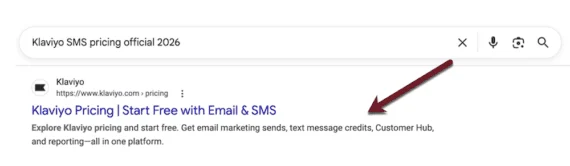
While comprehensive, publicly available data directly quantifying the impact of meta descriptions on click-through rates in the current algorithm environment is scarce, anecdotal evidence and specific case studies offer valuable insights. For instance, consider the example of Klaviyo’s SMS pricing page. The meta description reads: "Explore Klaviyo pricing and start free. Get email marketing sends, text message credits, Customer Hub, and reporting – all in one platform." When searching for "Klaviyo SMS pricing official 2026," both Google and ChatGPT utilized this meta description to form their search result snippets. This demonstrates that, even in a context where dynamic content extraction is common, a well-crafted meta description can still be directly employed by major AI and search platforms.

The effectiveness of a meta description often hinges on its ability to succinctly convey the core value proposition of a page. For product pages, this might involve highlighting key features, benefits, or pricing information. For service pages, it could emphasize solutions offered or unique selling points. The Klaviyo example effectively communicates the core offerings and a call to action ("start free"), making it an attractive and informative snippet for potential customers.
The importance of meta descriptions is further amplified for large-scale websites. For sites with thousands of products or pages, manually optimizing each meta description is an impossible task. In such scenarios, Google recommends generating meta descriptions programmatically. This can be achieved through sophisticated scripting or by leveraging generative AI platforms. However, the crucial caveat remains: human oversight is indispensable. While AI can automate the generation process, a manual review by human experts is essential for high-traffic, high-conversion pages, or those featuring popular products. This ensures that the automatically generated descriptions are accurate, compelling, and aligned with the brand’s messaging.
Expert Opinions and Industry Reactions
The ongoing debate about the utility of meta descriptions has generated a spectrum of opinions within the SEO and digital marketing community. Some SEO practitioners have adopted a more minimalist approach, focusing their efforts on on-page content optimization and technical SEO, viewing meta descriptions as a lower priority. This perspective is often driven by the observation that their meta descriptions are frequently ignored by search engines.
Conversely, a significant segment of the SEO community, including industry veterans and influential figures like John Mueller, continues to advocate for their strategic use. Their reasoning is rooted in the understanding that while not a guaranteed ranking factor or snippet source, a well-written meta description offers several benefits:
- Enhanced Control: It provides website owners with a degree of control over how their page is represented in search results, especially for critical pages.
- Improved User Experience: A compelling meta description can lead to higher click-through rates by accurately setting user expectations.
- AI Integration: As AI plays a larger role in information retrieval, meta descriptions serve as a valuable input for AI models.
- Internal Clarity: The process of writing a meta description can help clarify the page’s primary purpose and target audience, serving as a useful internal SEO exercise.
There is a general consensus that there is "no downside" to adding meta descriptions, particularly for important pages. The effort involved in crafting a good meta description is often seen as a worthwhile investment, especially when compared to the potential gains in visibility and user engagement.
Writing Effective Meta Descriptions in the Current Climate
Given the evolving role of meta descriptions, the approach to writing them needs to be strategic. Instead of solely focusing on keyword stuffing, the emphasis should be on creating clear, concise, and compelling summaries that accurately reflect the page’s content and entice users to click. For product pages, this involves highlighting key features, benefits, and unique selling propositions. For category pages, it might involve summarizing the range of products or services offered.
Here are some best practices for writing meta descriptions in the current SEO landscape:
- Focus on User Intent: Understand what a user is looking for when they search for terms related to your page. Your meta description should directly address that intent.
- Be Concise and Compelling: Aim for a length of around 150-160 characters to ensure it displays fully in most search results. Use strong action verbs and persuasive language without resorting to sensationalism.
- Include Relevant Keywords Naturally: While keyword stuffing is detrimental, naturally incorporating relevant keywords that users are likely to search for can help your page appear more relevant to the search query.
- Highlight Unique Value: What makes your page or offering stand out? Briefly convey this unique value proposition to encourage clicks.
- Call to Action (When Appropriate): For certain pages, a subtle call to action, like "Learn more," "Shop now," or "Start free," can be effective.
- Accuracy is Paramount: The meta description must accurately represent the content of the page. Misleading descriptions can lead to high bounce rates and negatively impact user experience.
- Review and Refine: Regularly review your meta descriptions, especially for your most important pages, and refine them based on performance data and evolving search trends.
For large, database-driven websites, programmatic generation is often the only scalable solution. However, the prompt engineering for AI models needs to be precise to ensure high-quality, accurate, and compelling descriptions. For example, a prompt might instruct the AI to identify the primary purpose of the page, extract key features and benefits, and then summarize them within a character limit, emphasizing a specific user benefit.
Broader Impact and Future Implications
The ongoing evolution of how search engines and AI platforms generate snippets has significant implications for website owners and SEO professionals. It underscores the importance of a holistic approach to on-page optimization, where meta descriptions are just one piece of a larger puzzle. The primary focus must remain on creating high-quality, user-centric content that genuinely answers search queries.
The trend also highlights the increasing interconnectedness of organic search and AI-driven information retrieval. As AI continues to integrate more deeply into search experiences, the clarity and accuracy of a website’s content, including its meta descriptions, will likely become even more critical. Websites that provide well-structured, easily digestible information are more likely to be leveraged by AI models for generating informative and helpful responses.
In conclusion, while Google’s algorithms have become more adept at dynamically generating search snippets, meta descriptions have not become irrelevant. Instead, their role has evolved. They remain a valuable tool for website owners seeking to exert some control over their search result presentation, particularly for critical pages. By focusing on accuracy, clarity, and user intent, meta descriptions can still play a significant role in enticing clicks and ensuring that both human users and AI systems understand the essence of a web page in the ever-evolving digital landscape. The strategic implementation of meta descriptions, alongside a robust content strategy and technical SEO foundation, continues to be a prudent approach for maximizing online visibility and user engagement.

