
The failure of a branding project is rarely a result of poor technical execution in the final design stages; rather, it is often the consequence of a fundamental disconnect occurring long before the first logo is drafted. In the contemporary design landscape, a significant gap exists between high-level brand strategy—often defined by broad adjectives such as "modern," "trustworthy," or "disruptive"—and the visual reality required to communicate those values to a specific audience. This critical interval, termed the "pre-concept" phase, serves as a bridge between abstract verbal strategy and concrete visual foundations, ensuring that design teams and stakeholders are aligned before high-fidelity work begins in tools like Figma.
The Strategic Necessity of the Pre-Concept Phase
In the traditional branding workflow, designers often transition directly from a kickoff meeting or a brief to the creation of visual concepts. However, industry data suggests that this leap is where many projects falter. According to research on brand management, consistent brand presentation can increase revenue by up to 23%, yet achieving that consistency requires an initial alignment that words alone cannot provide. The "pre-concept" phase is designed to mitigate the risk of "visual misalignment," a scenario where a client’s internal definition of a word like "premium" contradicts the designer’s interpretation.
The problem lies in the inherent subjectivity of language. While a stakeholder may request a "disruptive" brand, their actual requirement may be for a design that is merely a slight evolution of category norms to maintain credibility. Without a pre-concept phase to uncover these hidden assumptions, designers risk spending weeks developing directions that are destined for rejection, not because they are "bad" designs, but because they solve the wrong problem.
A Chronological Framework for Brand Identity Development
To understand where the pre-concept phase fits, one must examine the standard chronology of a professional brand identity project. This timeline ensures that every visual decision is rooted in a strategic "why" rather than aesthetic "what."
- Kickoff and Discovery: The initial gathering of business goals, target audience demographics, and competitive landscapes.
- Strategic Definition: The establishment of the brand’s mission, vision, and core values.
- The Pre-Concept Phase (The Bridge): Researching brand context, mapping perceptions, and establishing "design codes."
- Concept Development: The creation of original logos, color palettes, and typography based on the established pre-concept foundation.
- Refinement and Implementation: Finalizing assets and creating brand guidelines for consistent cross-platform use.
By isolating the third step, teams can treat "visual direction" as a collaborative discovery process rather than a "surprise reveal" at the concept stage.

Stage 1: Researching Brand Context and Clarifying Perception
The pre-concept phase begins with a deep dive into perception. As brand strategist Marty Neumeier famously noted in The Brand Gap, "A brand is a person’s gut feeling about a product, service, or company." Because a brand ultimately lives in the mind of the consumer, the designer’s task is to curate the inputs that shape that perception.
During this stage, workshops focus on clarifying the "context" of brand attributes. For example, a health tech firm aiming to be "disruptive" faces a different challenge than a consumer fashion brand using the same word. In the healthcare sector, disruption must be balanced with extreme credibility and regulatory trust. If the visual direction leans too far into "rebellious" aesthetics, it may alienate the government medical institutions that form the client base.
To navigate this, designers must ask targeted perception questions:

- What does the brand need to make people believe?
- Where does the brand need to feel the most credible?
- Which category assumptions should be followed, and which should be challenged?
Stage 2: Methodologies for Stakeholder Alignment
To move from verbal strategy to visual reality, the pre-concept phase employs specific exercises that force stakeholders to think through images and associations. This removes the "passivity" of traditional strategy presentations and requires active participation.
Competitor Perception Mapping
This exercise involves placing competitor brands on a two-axis map based on perceived attributes, such as "Traditional vs. Progressive" or "Understated vs. Bold." The value of this exercise lies not in the final map, but in the disagreements it generates among stakeholders. If one executive views a competitor as "innovative" while another views them as "generic," it reveals a misalignment in how the team defines success. Resolving these discrepancies during the pre-concept phase prevents them from resurfacing during the final design review.
The Visual Brand Driver Exercise
In this exercise, stakeholders select images from unrelated categories—such as architecture, transportation, or furniture—to represent the company’s character. This use of metaphor helps separate personal aesthetic preference from brand identity. For instance, if a team chooses a "high-speed train" as a transport metaphor, they might define its meaning as "reliability, structure, and efficiency." If they choose a "bicycle," the meaning might shift toward "agility, sustainability, and personal connection." These associations provide the designer with a "design code" that informs the eventual visual system.

Stage 3: Establishing the Visual Foundation
Once the research and mapping are complete, the pre-concept phase culminates in a visual foundation meeting. This is not a presentation of finished logos, but a discussion of three distinct layers:
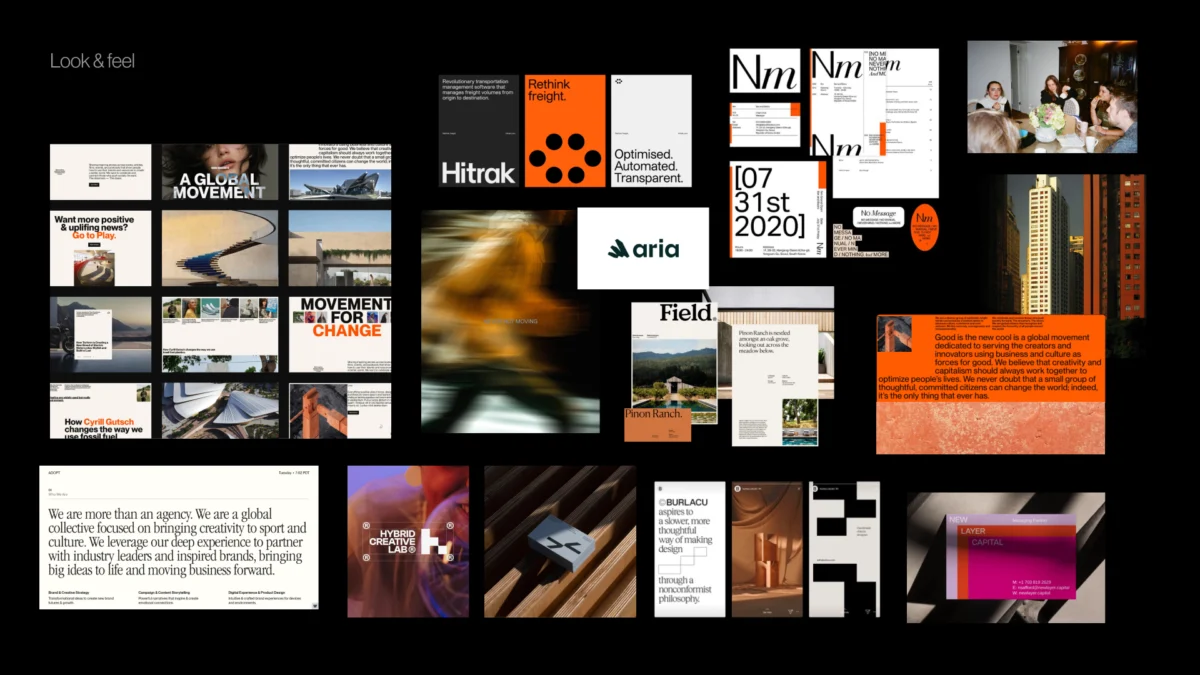
1. Look and Feel (Perception Boards)
These are collections of third-party references that represent the desired "mood" of the brand. They allow the client to react to visual styles—such as "minimalist and institutional" versus "warm and editorial"—before any original design work is commissioned.
2. Design Code (Visual Principles)
The design code translates brand ideas into specific visual metaphors. For a parenting application, the idea of "research-backed support" might translate into a design code involving data snapshots, clean infographics, and editorial layouts. Conversely, the idea that "parenting is messy" might lead to a code involving organic shapes, handwritten lines, and playful irregularity.

3. Early Brand Asset Direction
The final layer involves discussing the building blocks of the identity:
- Typography: Should the brand use a sturdy serif for authority or a clean sans-serif for modern accessibility?
- Color Strategy: Does the category require "trust-based blues," or is there an opportunity to use a "disruptive" palette to stand out?
- Photography Style: Should imagery be candid and "real-life," or highly polished and aspirational?
Data Analysis: The Impact of Early Alignment
The business case for the pre-concept phase is supported by data regarding project efficiency. Industry surveys of creative agencies indicate that projects with a defined "visual discovery" or "pre-concept" phase see a 30% reduction in the number of revision rounds required during the final concept stage. Furthermore, these projects are 40% more likely to be approved on the first or second presentation.
By establishing boundaries—clarifying not just what the brand is, but also what it is not—the pre-concept phase reduces the "guesswork" inherent in creative production. When a team agrees that a brand should be "bold but not loud," or "premium but not exclusive," they provide the designer with a sharper problem to solve.

Broader Implications for the Design Industry
The shift toward a more robust pre-concept phase reflects a broader maturation of the design industry. As digital products become more commoditized, brand identity is no longer just a "wrapper" but a core component of the user experience and business strategy. In high-stakes sectors like Fintech or Infrastructure AI, the cost of a brand "re-do" can run into the hundreds of thousands of dollars, not including the lost market momentum.
The pre-concept phase democratizes the design process, allowing non-design stakeholders to contribute to the visual strategy in a structured way. This leads to higher "buy-in" and a more resilient brand identity that can survive the transition from a designer’s portfolio to the real-world marketplace.
Conclusion: Moving Beyond the "Surprise Reveal"
In conclusion, the strongest visual concepts do not emerge from a vacuum; they are the result of a rigorous pre-concept phase that aligns strategy with perception. By researching brand context, uncovering hidden assumptions through mapping and metaphor, and establishing a shared "design code," teams can ensure that the first concept presented is not a guess, but a logical next step.

The pre-concept phase does not stifle creativity; rather, it provides the necessary constraints that allow creativity to flourish in a way that serves the business. In an era where brand consistency is a primary driver of consumer trust, the bridge between what a brand means and how it looks has never been more vital. The goal of this process is to move the conversation from subjective "likes" and "dislikes" to a more meaningful question: "Does this visual direction express the brand we agreed to become?"

