
In the contemporary web development landscape, the disparity between the necessity of external libraries and the capabilities of native browser platforms is rapidly diminishing. For over a decade, developers have relied on a sprawling ecosystem of NPM packages to fill gaps in browser functionality, ranging from date formatting to complex UI positioning. However, as the major browser engines—Chromium, Gecko, and WebKit—converge on standardized features through the Baseline initiative, the technical debt associated with maintaining these dependencies has come under increased scrutiny. Industry data suggests that a typical mid-sized JavaScript application may harbor between 60KB and 90KB of redundant code, representing features that are now natively supported by modern web platforms.
The Evolution of the Baseline Standard
The concept of "Baseline" emerged from the WebDX Community Group, a collaborative effort involving major stakeholders such as Google, Microsoft, Mozilla, and Apple. Launched formally in 2023, the initiative aims to provide developers with a clear, standardized signal regarding when a web feature is safe to use across all major browser engines.
The Baseline status is categorized into three distinct stages. "Limited Availability" refers to features that are supported by some, but not all, major browsers. "Newly Available" signifies that a feature has reached interoperability across all major engines, marking the start of a 30-month countdown. Once this period concludes, the feature is designated as "Widely Available," indicating it is safe for use in the vast majority of production environments without the need for extensive polyfills. This structured timeline allows engineering teams to move away from the "install and forget" mentality, replacing it with a strategic audit cadence based on platform maturity.
The Performance Cost of Dependency Bloat
The primary driver for auditing dependencies is the impact of JavaScript on performance. Unlike static assets like images, JavaScript carries a high execution cost. Every kilobyte of code added to a bundle must be downloaded, decompressed, parsed, and executed. According to performance metrics, 90KB of minified and gzipped JavaScript can translate to several hundred milliseconds of main-thread blocking time on lower-end mobile devices. By shifting these responsibilities to the browser, developers can significantly improve Core Web Vitals, particularly Total Blocking Time (TBT) and Largest Contentful Paint (LCP).

Chronology of Web Platform Advancements
The transition from library-reliance to platform-native functionality has followed a steady trajectory over the last five years:
- 2017-2020: The "Evergreen" browser era matures. The
Fetch APIbecomes the standard for HTTP requests, and theIntl(Internationalization) API begins to expand beyond basic date formatting. - 2022: The
<dialog>element reaches broad interoperability, offering a native way to handle modals and focus management.structuredCloneis introduced, providing a native method for deep-copying objects. - 2023: The Baseline initiative is launched at Google I/O. The Popover API begins shipping in Chromium, simplifying the creation of tooltips and menus.
- 2024:
Object.groupByand newSetmethods (such asintersectionandunion) land in all major engines, rendering several Lodash utilities obsolete. - 2025:
Intl.DurationFormatreaches "Newly Available" status, and the CSS Anchor Positioning API begins its rollout across the major engines, targeting the replacement of heavy positioning libraries like Popper.js.
Strategic Audit Cluster 1: Internationalization and Formatting
The most significant immediate gains in bundle reduction are often found in the internationalization cluster. Historically, libraries like moment.js, numeral, and timeago.js were essential for handling the complexities of localized strings. The modern Intl namespace now provides comprehensive alternatives that are "Widely Available."
For instance, Intl.RelativeTimeFormat allows developers to generate phrases like "3 days ago" or "yesterday" using the browser’s internal localization data. This eliminates the need for shipping large locale dictionaries to the client. Similarly, Intl.NumberFormat handles currency, percentages, and compact notations (e.g., "1.2M") with native performance. Engineering teams replacing these four common libraries can expect to remove approximately 14KB to 20KB of gzipped JavaScript from their final bundle.
Strategic Audit Cluster 2: UI Primitives and Accessibility
The UI cluster represents a shift not just in performance, but in accessibility. Implementing accessible modals and tooltips is notoriously difficult, requiring complex logic for focus trapping, keyboard navigation (the Escape key), and screen reader compatibility.
The native <dialog> element now handles these requirements by default. When invoked via the showModal() method, the browser automatically manages the "Top Layer" rendering, preventing z-index conflicts, and makes the rest of the page inert. This replaces the need for libraries like a11y-dialog or focus-trap. Furthermore, the Popover API and the emerging CSS Anchor Positioning standard are poised to replace positioning engines like Tippy.js and Popper. These libraries often weigh between 14KB and 25KB; replacing them with native primitives ensures that the UI remains performant and accessible with zero additional JavaScript overhead.

Strategic Audit Cluster 3: Utility Functions and Data Manipulation
Utility libraries, most notably Lodash, have long been the backbone of JavaScript data manipulation. While Lodash is highly optimized, the platform has integrated its most frequently used functions.
- Grouping:
Object.groupByprovides a native, high-performance way to reorganize arrays, a task previously dominated bylodash.groupby. - Cloning:
structuredCloneoffers a robust solution for deep-copying objects, handling circular references and various data types that traditionalJSON.parsemethods could not. - Set Logic: New methods for the
Setobject, includingunion,intersection, anddifference, allow for complex mathematical operations on data sets without external dependencies.
Case Study in Caution: The Temporal API
While the momentum toward native APIs is strong, the industry also recognizes the need for caution. The Temporal API is the designated successor to the flawed Date object in JavaScript. It offers an immutable, time-zone-aware solution for date and time management.
However, as of early 2026, Temporal serves as a case study for why the Baseline status is critical. While it has reached Stage 4 in the TC39 process and is shipping in Chromium and Firefox, it remains in "Limited Availability" due to its pending status in stable Safari releases. Current polyfills for Temporal can exceed 40KB gzipped, which is significantly larger than lightweight libraries like dayjs (3KB). In this instance, the professional recommendation is to maintain existing dependencies until the native feature achieves "Widely Available" status, illustrating that the goal is bundle optimization, not merely the adoption of new technology for its own sake.
Professional Framework for Dependency Auditing
To maintain a lean production environment, engineering departments are encouraged to adopt a three-tier decision framework when reviewing their package.json:
- Audience Compatibility: Is the native replacement "Widely Available" or "Newly Available"? Teams must cross-reference the feature’s Baseline status with their own
browserslistconfiguration. For B2B applications where users are on modern hardware, "Newly Available" features are often acceptable. For broad consumer sites, "Widely Available" is the safer benchmark. - Cost-Benefit Analysis: Does the removal of a library necessitate a polyfill? If the polyfill is larger than the library being replaced, the swap is counter-productive unless the polyfill can be loaded conditionally for older browsers only.
- Feature Parity: Does the platform feature cover the specific use case? For example, while
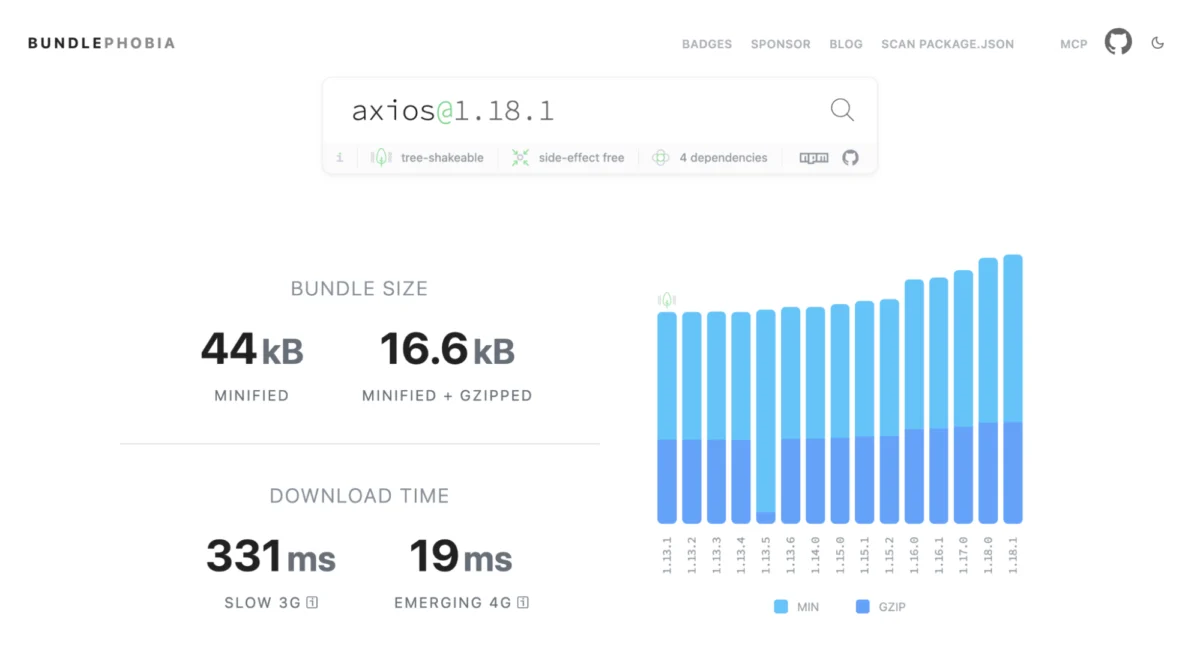
fetchreplaces the core functionality ofaxios, it does not natively support request interceptors or automatic retries. If those features are critical, a thin wrapper or the retention of the library may be justified.
Implications for the Future of Web Development
The shift toward the web platform as a comprehensive toolkit has profound implications for the industry. First, it reduces the security surface area of applications. Every NPM dependency is a potential vector for supply-chain attacks; by utilizing native APIs, developers reduce their reliance on third-party maintainers. Second, it simplifies the onboarding process for new developers, as knowledge of standard web APIs is more transferable than knowledge of specific, proprietary libraries.

Industry analysts suggest that the "Baseline" movement represents a maturing of the web. The era of "JavaScript fatigue," characterized by the need to learn a new library for every basic task, is being replaced by a more stable, platform-centric approach. As browsers continue to synchronize their release cycles and feature sets, the role of the web developer is shifting from a manager of dependencies to an orchestrator of native platform capabilities.
In conclusion, the strategic reduction of JavaScript dependencies is no longer a matter of preference but a core component of modern performance engineering. By conducting quarterly audits and leveraging the Baseline initiative, organizations can ensure they are shipping only the code that is strictly necessary, resulting in faster, more accessible, and more maintainable web applications.

